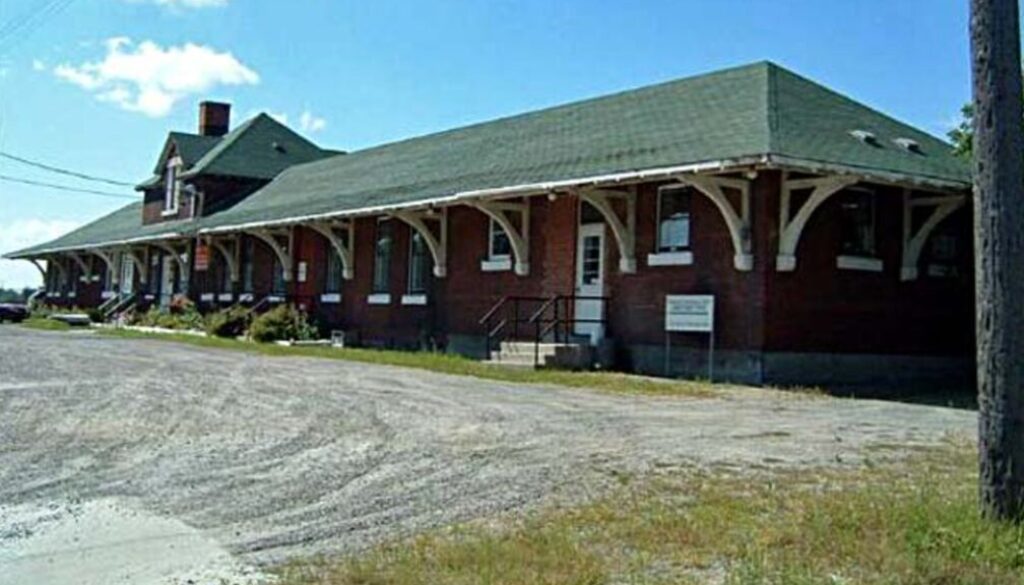
Remembering Our Past: Townspeople/zombies brawl in Fort Frances
Zombies in Fort Frances?. Yes, it is true, but they were not the flesh-eating version that we come to know in Hollywood movies, television and video games.
These zombies were the creation of the Canadian government to help protect the country during World War II.
In 1940, the Liberal government under Prime Minister MacKenzie King brought forward the National Resources Mobilization Act (NRMA), which reorganized the Army into an Active force and a Reserve one.
Standing firm on a promise not to conscript men for active duty, Prime Minister King insisted on keeping the Active force open to those who volunteered while all other single, able-bodied men between 18 and 40 would be drafted into Reserves, later known as NRMA men or the Home Defence Army.
By 1945, the Home Defence Army numbered over 100,000 but was controversial as the men were not immediately pressed into active duty.
Training regiments for NRMA men were initially only 30 days before extended to 4 months.
In some cases, men who volunteered for Active duty trained with the Reservists, creating dissension between the two.
Active force members often showed prejudice and, in some cases, physical violence towards those not required to fight overseas.
A year after the passing of the NRMA, the term Zombie was applied to describe the reservists’ lack of interest in volunteering for Active duty.
The term soon became one of general acceptance and frequently used in newspaper reports of the Home Defence troops.
The federal government faced increased pressures to have NRMA men trained for overseas and finally relented late in 1944.
About 32,000 would eventually see action, but those who did not were assigned a variety of routine tasks at military camps across Canada or provided support work for other organizations but facing ongoing pressures from the politicans, the public and World War I veterans to turn to active duty.
One such group from Quebec was assigned to assist with the laying of railway track for the Canadian National Railway to the Steep Rock iron ore mine in Atikokan to help move ore to Port Arthur.
A derailment in late November 1944 near Nickle Lake resulted in about 150 being brought in for the cleanup.
Upon completion, the draftees arrived in Fort Frances, where they were given a three-hour leave to enjoy an evening of entertainment before shipping off to Camp Shilo near Brandon, Manitoba.
Word soon got around that the “Zombies” were in the community.
The Home Defence members soon encountered local enlisted airmen, sailors and soldiers on leave, World War I veterans, that was bolstered by as many as one hundred or more high school students.
A series of arguments first arose at around 11 p.m. in front of the Fort Frances Hotel at the corner of Scott St. and Mowatt Ave., where many of the military men had gathered for alcoholic refreshments.
A fight broke out between one resident, described as a lumberjack, and a Home Defence members, which started as a tussle before the civilian gained the upper hand and knocked the man to the ground with his fist.
Eyewitnesses claimed the soldier lost his front teeth in the fracas.
Home Defence members began retreating back to the train station, while some of the locals turned their attention to the Peek-Inn Cafe, located about a half-block away, where two other NRMA men were eating.
Several enlisted men and high school youths yelled at those inside. One person was heard saying, “Why don’t you go active?”
Minor arguments and fighting soon broke out inside the cafe before the crowd spilled back onto the street, resulting in the arrival of Fort Frances police.
The NRMA men who were in the cafe were whisked away by taxi to the train station to ease the tension.
However, the locals quickly followed on foot and confronted the Home Defence members at the station, leading to a full-out brawl involving close to 300 people.
Fights broke out around the station building, spreading toward the railway tracks and a roundhouse, about 100 yards away, and lasting for nearly 30 minutes.
As the fighting took place, some locals called the Home Defence troops “Germans” and “saboteurs.”
Local air force and navy members came armed.
The NHRA men did the same by dragging out iron pipes, steel rods and bars from a nearby warehouse.
When injuries among the locals began to mount, NHRA commanders were called upon to call back their men and restore order.
In all, about a dozen people were hurt.
A few high school girls who waded into the fray with their boyfriends were among those coming away with bruises, minor cuts and black eyes.
Police arrived to keep the peace until the NHRA men boarded the train and departed Fort Frances at 2 a.m.
In official statements to news media, Fort Frances Police offered little information about the incident, only to confirm a fight had taken place.
Officials with the Military District No. 10 in Winnipeg also downplayed the incident, saying they had no official report of any clashes between the NRMA men and Fort Frances residents.
Accounts of the brawling appeared in newspapers across Canada and the United States.
While the incident was not the catalyst, the federal government announced a change in policy regarding NRMA troops, with plans to send them overseas to join in the fighting.
Many deserted upon reaching England.
A month after the decision to have NRMA men fight overseas, as many as 7,800 had been reported overdue or absent without leave.
Of the 12,908 sent overseas for the final months of the war, NRMA men suffered 315 casualties, of which 69 were fatal.