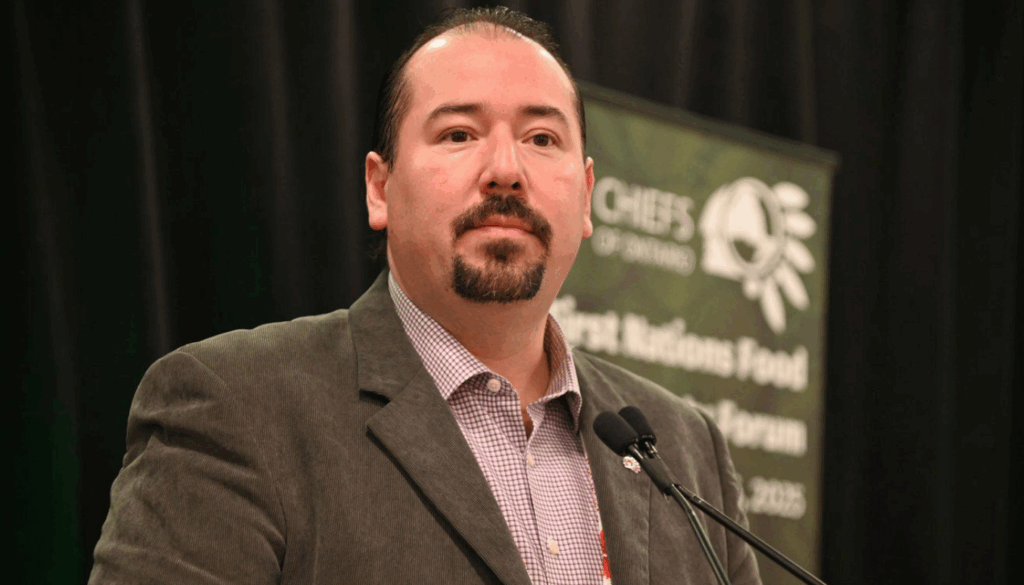
First Nations waiting on billions in delayed child welfare funding
By Sonal Gupta, Local Journalism Initiative reporter, Canada’s National Observer
For First Nations in Ontario, a multi-billion dollar child welfare agreement could be a lifeline for their communities, allowing them to run their own child welfare programs and raise their children closer to home and culture. But months after the signing, communities are still waiting for the funding to flow.
“The Chiefs in our region have been clear: our children cannot wait,” said Abram Benedict, Ontario regional chief for the Chiefs of Ontario in a press release. “We have a strong mandate from the Ontario Chiefs-in-Assembly to pursue this agreement and any attempts to delay its implementation will be considered unacceptable interference in our communities’ inherent jurisdiction.”
The Ontario deal stalled out because of opposition from the First Nations Child and Family Caring Society — one of the original complainants in a landmark human rights case that found Canada discriminated against First Nations children. The case kickstarted negotiations for compensation.
Now, the society has challenged the Ontario agreement at the Canadian Human Rights Tribunal and no money will be released until it rules.
Cindy Blackstock, the society’s executive director, said she is not opposed to the deal struck by the Chiefs of Ontario. Her concern is the nine-year funding window creates uncertainty about what happens after that. Additionally, federal funding is approved yearly, enabling Ottawa to reduce or cut support at its discretion. “The discrimination has to stop for multiple generations. So how do you do that in an agreement that has a fixed term and no enforcement after that?” she said.
Blackstock also fears the federal government might leverage the Ontario deal as a national template to impose the Ontario framework across all provinces, despite other First Nations chiefs nationwide having rejected it.
“That really feels like where they’re going,” she said.
The deal with Ontario chiefs was reached after First Nations chiefs across Canada rejected a $47.8 billion national child welfare reform offer from the federal government in October 2024. The national rejection prompted Ottawa to decide it would no longer negotiate a national deal. However, an $8.5 billion regional agreement to reform First Nations child and family services in Ontario alone was struck with the Chiefs of Ontario and Nishnawbe Aski Nation who had supported the original agreement terms.
The historic deal, called the Ontario Final Settlement Agreement, promises to hand control of child welfare to Ontario First Nations along with nine years of funding which was set to begin in April, 2015. The money is to be used for culturally based prevention services, youth support up to age 26, housing to keep families together and regional cost adjustments.
Benedict told Canada’s National Observer the delay continues to trap First Nations children in outdated frameworks that leave communities “unable to respond quickly or effectively.”
Indigenous children in Canada continue to be taken from their families and placed in foster care at much higher rates than non-Indigenous children — a crisis called the “Millennial Scoop,” with more Indigenous kids in care today than during the worst period of the residential school era.
The agreement “paves the way for Ontario” to break from that legacy by delivering child welfare reform designed around the unique cultures, traditions and needs of Indigenous families, Benedict said.
Archie Wabasse, chief of Wunnumin Lake, said the child welfare system in his community is broken. Children are often taken from their families and placed far away because local families are not always approved as foster homes.
The promised funding, he said, would let his community create culturally grounded prevention programs, train local leaders to guide a wellness plan and choose foster carers to keep children close to home. Planned programs will offer early support through parenting and life skills workshops. “It’s almost like restoring the ability and trust to our First Nation to manage our own child welfare program,” Wabasse said.
Blackstock said the government is pressuring for the agreement to be approved by the Tribunal “as is,” and is tying the release of funds for First Nations children to that approval. This approach she believes compromises Canada’s obligation to end discrimination against First Nations children and uses funding as leverage to gain legal immunity from the tribunal’s oversight.
A hearing schedule is now being set by the Canadian Human Rights Tribunal, with cross-examinations expected early next year.
The government has not stated when the money promised to First Nations children will actually be delivered without further delays or conditions, Blackstock said.
Blackstock added the government is blocking the release of funds for First Nations children in Ontario by including a clause that makes funding conditional on full tribunal approval. She added that the government could begin releasing some of the money immediately if it chose to do so.
“There’s no order required for Canada to provide Ontario Chiefs with additional funding for their children — none. They could do that tomorrow,” she said.
In an email response to Canada’s National Observer, Eric Head, a spokesperson for Indigenous Services Canada, said First Nations leaders in Ontario have stated that this is the best path forward for them and the motion before the Tribunal affirms this.
“As the OFA [Ontario Final Agreement] is being considered by the Tribunal, it would not be appropriate for Canada to comment on its contents,” he added.
Chiefs in Ontario remain firm on their decision to support their regional child welfare agreement, saying the deal reflects their sovereignty and right to self‑determination, even as Caring Society raises concerns about consultation and reform.
For Temagami First Nation, cut off from the mainland for much of the year, waiting for essential supplies and services is a constant challenge. Shelly Moore-Frappier, chief of the nation, called the Ontario agreement a long-overdue shift that will give Indigenous communities direct control over child welfare, without wading through government red tape.
While she acknowledged the advocacy of national groups like the Caring Society, she stressed that Ontario communities must proceed on their own terms because they need the resources immediately and any delays have real impacts.
She said the agreement would allow their community to direct “prevention dollars” straight to communities rather than channeling them through outside agencies or bureaucratic middlemen. These prevention funds are key to supporting families early and keeping children safely with their parents before crises escalate.
“Ontario was sufficiently engaged or had the opportunity to be,” Moore-Frappier said. “This is what we want and how we want to move forward.”
Sonal Gupta / Local Journalism Initiative / Canada’s National Observer