First Nations leaders discuss stalled child welfare agreement
By Mike Stimpson, Local Journalism Initiative Reporter
Source: Thunder Bay Source
About 200 delegates from First Nations across northern Ontario gathered in a local hotel Tuesday for three days of discussion on an agreement with the federal government to reform First Nations child and family services in the province.
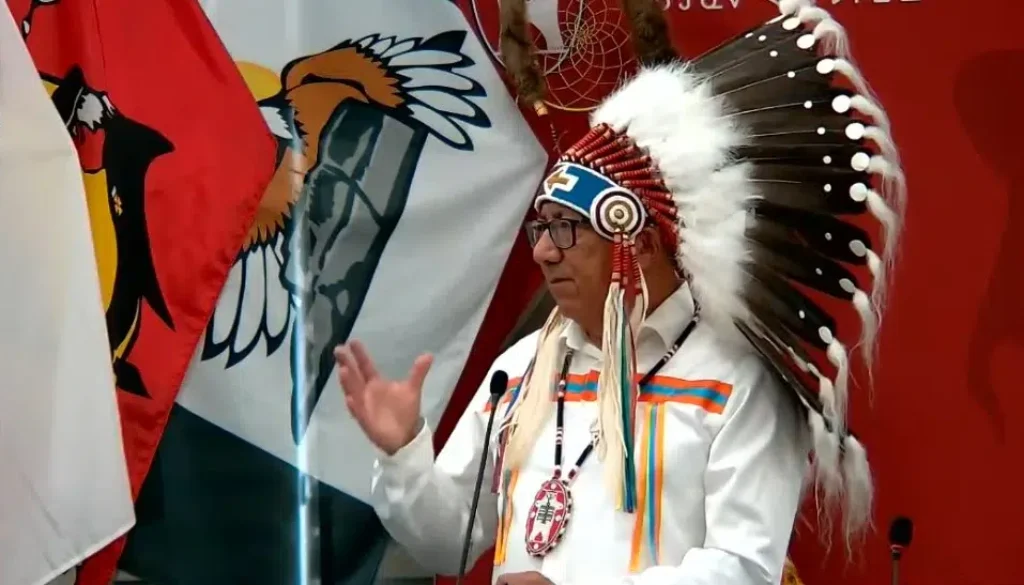
“We haven’t been able to get across the finish line on that agreement,” Nishnawbe Aski Nation (NAN) Grand Chief Alvin Fiddler said in his opening remarks.
The First Nations Child and Family Caring Society is still “standing in the way” but its appeal to the Canadian Human Rights Tribunal could be resolved soon, he said.
Representatives of NAN member nations are in Thunder Bay “to talk about the implementation of the Ontario Final Agreement,” he told Newswatch after his opening remarks.
“We just want to make sure that everyone — our leadership, the agencies that operate in NAN (First Nations), and ourselves at NAN — that all of us understand very clearly what our roles and responsibilities are in this new system that will be implemented once this agreement is signed off.”
The story of the Ontario Final Agreement starts in 2016, when the Canadian Human Rights Tribunal found that systemic racism in funding practices for child and family services was causing great harm to Indigenous families and communities.
A $48-billion Canada-wide child welfare package for First Nations was negotiated and approved by Ontario chiefs, but collapsed at an Assembly of First Nations special assembly in Calgary on Oct. 17, 2024.
Ontario chiefs, including NAN, negotiated an $8.5-million agreement with Canada after the nationwide agreement’s collapsed, and it was approved by the Chiefs of Ontario in Feb. 26, 2025.
Ontario Regional Chief Abram Benedict said at the time that the agreement “empowers First Nations in Ontario to determine how best to provide child and family services that reflect our values, our traditions and our rights.”
The Ottawa-headquartered Caring Society appealed to the Canadian Human Rights Tribunal to halt the Ontario agreement and restart national talks.
The society’s opposition is “unfortunate,” Fiddler told reporters on Tuesday, “but we’re hoping that the tribunal will make a final decision very soon, early into this new year, to approve the agreement so that we can begin to implement it.”
He said participants in this week’s gathering know “the current system does not work. In fact, it’s causing harm, and that’s a ruling that the tribunal made back in 2016, where they found that Canada is discriminating against our children.
“And so that’s why our chiefs directed us to negotiate a new package, to bring about reform and change, and that’s the agreement that we hope will be approved soon so that we can implement it.”
NAN Deputy Grand Chief Bobby Narcisse told delegates this week’s sessions “will give you a space to ask questions” and to plan and build relationships.
Besides First Nation leaders, the assembly also includes representatives of Indigenous Services Canada, the province, child welfare agencies and youth organizations, he said.
Narcisse said agencies such as Tikinagan Child and Family Services “will continue to play a critical role but it will look different” as First Nations get more control of child welfare services.