Indigenous-led critical minerals projects to receive new funds
The federal government is granting $850,000 to 14 Indigenous-led projects in Ontario, Saskatchewan, and British Columbia through the Critical Minerals Infrastructure Fund.
The new grant money is intended to help Indigenous communities improve their capacity to consult, coordinate with governments, and bring projects to fruition on their terms.
Minister for FedNor Patty Hajdu, who delivered the announcement on behalf of Minister of Energy and Natural Resources Tim Hodgson, says even when First Nations want to meaningfully participate in development, it can be challenging to execute.
She describes the situation as “like a chicken and an egg problem. How can you say you’re going to consult and engage and include First Nations if the capacity isn’t there to be able to do that?”
Hajdu, who served as the Minister for Indigenous Services in the last administration, believes that in order for Canada to build a better relationship with Indigenous communities going forward, the country must acknowledge that things can get done in “better, faster, safer” ways when everyone works together.

Among the projects to receive funding is the Greenstone Transmission Line, which is meant to bring higher-capacity electrical infrastructure to northern Ontario Indigenous communities.
Six communities, Bingwi Neyaashi Anishinaabek, Aroland First Nation, Animbiigoo Zaagi’igan Anishinaabek, Biinjitiwaabik Zaaging Anishinaabek, Ginoogaming First Nation, and the Red Rock Indian Band will each be receiving $50,000 to expand that aforementioned capacity for undertaking projects, which could help make the Greenstone project a reality.
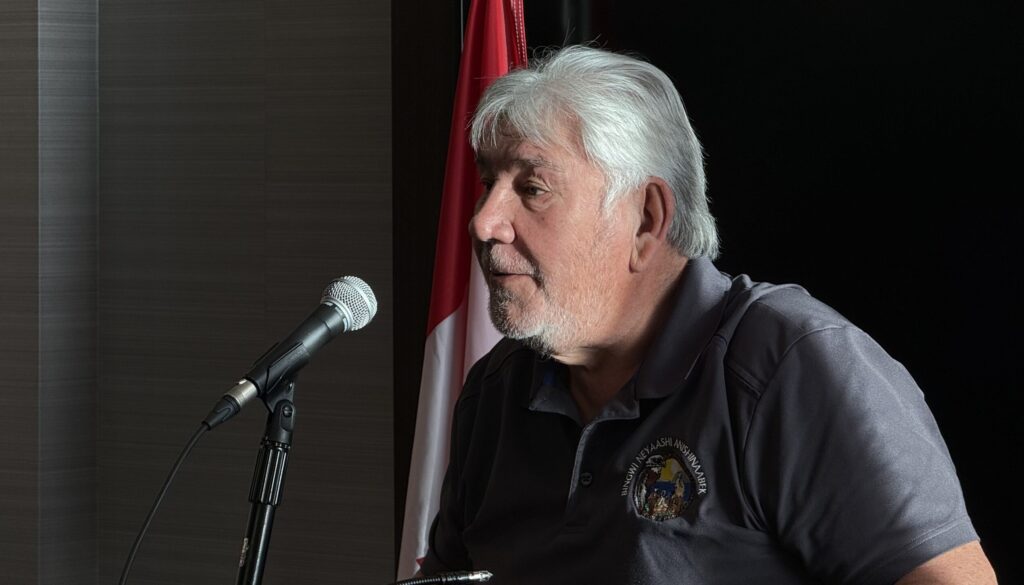
Chief Paul Gladu of the Bingwi Neyaashi Anishinaabek First Nation has advocated for cooperation between Indigenous communities in the region to make Ring of Fire developments happen.
“I never thought I’d see the day where we’re at right now, because at the time there was so much confusion, and not wanting to work together,” he remarks. “Now it’s a pleasure to sit in the same room with other chiefs, working on projects and moving forward.”