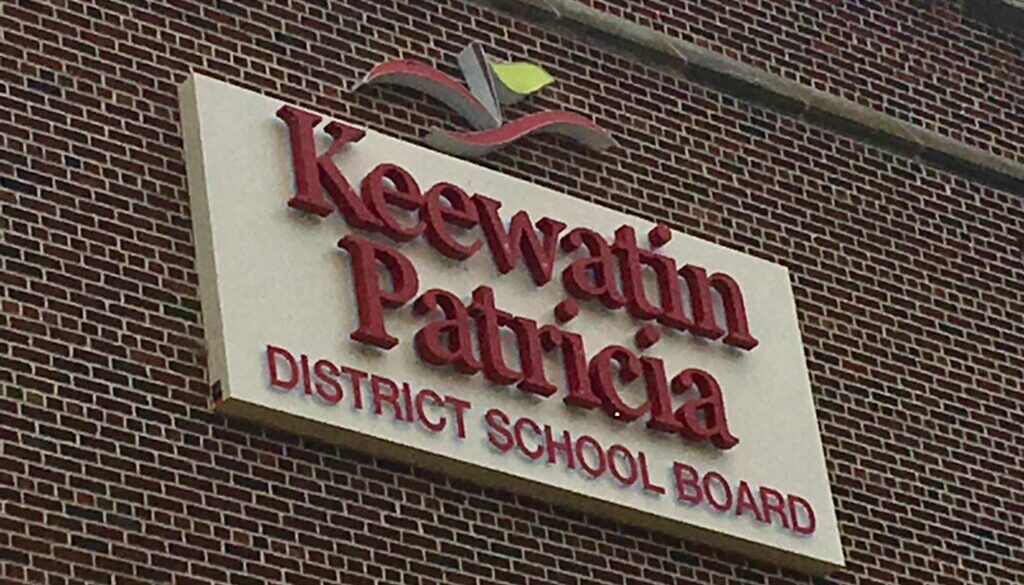
Key changes behind school’s perfect score: KPDSB
By Mike Stimpson, Local Journalism Initiative Reporter
Source: Thunder Bay Source
There are many factors behind Red Lake-Madsen Public School’s educational excellence, according to its school board’s education director.
But mostly, Christy Radbourne said from the Keewatin-Patricia District School Board’s head office, it comes down to “some practice changes” in how children and youth are taught reading and mathematics.
The Red Lake kindergarten-to-Grade 8 school recently scored a perfect 10, the highest score in Northwestern Ontario, in the Fraser Institute’s study of Ontario elementary schools.
The score is based on provincial Education Quality and Accountability Office (EQAO) testing of Grade 3 and 6 students in reading, writing and math.
Another KPDSB school, New Prospect Public School in Dryden, placed second in the region outside Thunder Bay with a score of 7.5.
“Well, there’s a number of things,” Radbourne said when asked how she accounts for such an outstanding result at Red Lake-Madsen.
“We do account for Red Lake’s success — and all of our other schools’ successes, and the board’s success this year, and the increases in EQAO scores — to just some practice changes we’ve done and our focus on literacy.
“Particularly the science of reading,” she added, “and a focus on what we call the science of mathematics. It’s yielding some really great results for students and staff.
“So we’re thrilled for Red Lake-Madsen to get an honourable mention there, for sure, but we do know that it just reflects really our strong commitment to reading, writing and math.”
Keewatin-Patricia schools have been teaching kids “decoding skills” for reading, she said.
Those skills include “morphology,” which is understanding how words are built.
“Morphology is when you start breaking down words into component parts and then they add meaning to it,” Radbourne explained.
“So if I say tired and then I say tiredness — two different words. How does ‘ness’ create meaning?”
Breaking words down into “meaningful chunks” helps a child develop reading comprehension, she said.
“Our real commitment to ensuring that all children are learning is where we got started,” she said.
“We use evidence-based practices, meaning ones that we know have an effect size on changing, student outcomes.
“So that’s a real critical point for us: evidence-based practices.”