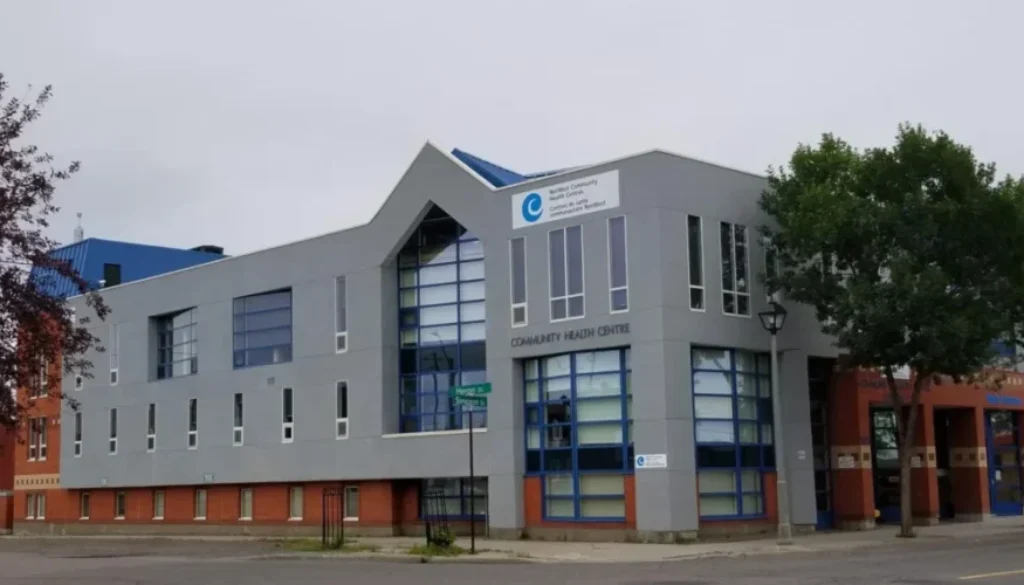
HART hub connects hundreds to care, but service gaps remain
By Clint Fleury, Local Journalism Initiative Reporter
Source: TBnewswatch.com
The city’s HART hub has seen some success since its inception in April but still faces barriers to getting people timely access to addiction treatment and supportive housing.
“We know that some people are accessing care for primary care that haven’t had a provider in years or decades. We see individuals coming in for chronic disease for really complex wounds, as well as stabilizing their current health and getting access to prescriptions that they might not otherwise have,” Brittany D’Angelo, director of mental health and substance use programs, told the city on Tuesday.
D’Angelo and the chief executive officer of NorWest Community Health Centres, Juanita Lawson, provided the city’s quality of life standing committee with a progress update — the first good look the public has gotten into operations of the HART (homelessness and addictions recovery treatment) Hub since it first opened.
The HART hub has seen 577 clients and 85 people accessed its rapid access addictions medicine clinic, according to NorWest, which is the lead agency heading up the initiative.
The HART hub offers a wide range of services that allow people to access a continuum of care, Lawson said.
Several partner organizations collaborate through the HART hub to provide access to support housing, primary care, substance use counselling, social services, cultural services, and long-term reintegration support.
“We know that we’re preventing the worsening of some of these conditions and being able to connect people to preventative measures such as health and social services, financial aid, getting them identifications, attaching them to employment services, and doing treatment applications as well,” D’Angelo said.
Coun. Kristen Oliver said she hears “chatter” throughout the community that wait times are an issue for people accessing mental health, addictions and detox programs.
She asked if the HART hub is seeing a breakdown in some of the time frames for people accessing services promptly.
D’Angelo said they are seeing some timely access to care. They are seeing people coming in to meet their needs for food, laundry, clothing, and primary care. However, wait times are still a barrier to accessing residential treatment because there are not enough treatment beds in the city.
“Often we do have to send people out of sometimes out of the province and sometimes to Southern Ontario,” she said.
Another barrier D’Angelo highlighted is that the city needs more supportive housing, especially in the winter months, “where we don’t have a stable place to house somebody.”
Having partnerships with PACE, Shelter House, Elizabeth Fry Society, and Alpha Court, Oliver asked about the HART Hub’s relationship with the Thunder Bay Police Service.
Lawson said she is open to working with the police service in matters associated with health but health services are not part of their workload.
She said the closure of the region’s only safe consumption site, Path 525, impacted people using substances and said they are also seeing “a lot of human trafficking.”
“I think even through the HART hub, we’re doing that as well in terms of seeing clients and trying to get them into safe spaces. I think that that probably is a good question in terms of us being more mindful about how do we really work in a more of a strategic way with the police,” Lawson said.