Minnesota legal experts; local ICE cases could turn heads
By Mike Moen – Producer/Minnesota News Connection
Minnesota is entering some rare legal waters, according to local law professors helping the public make sense of moves by area prosecutors, including possible charges against federal immigration officers following Operation Metro Surge.
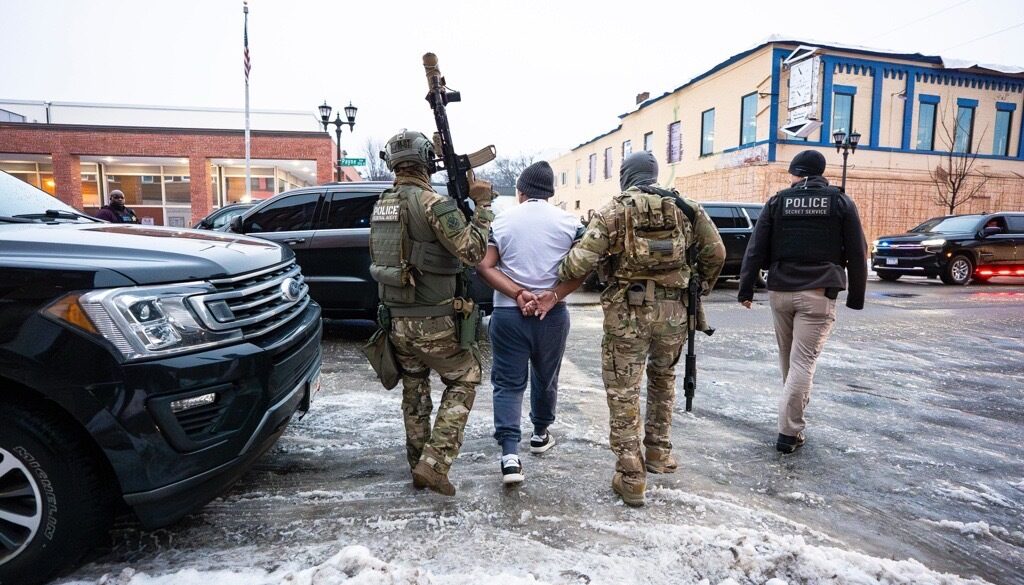
Saying the community is owed answers, the Ramsey County Attorney and Sheriff’s Office announced an investigation this week into whether federal immigration agents committed the crimes of kidnapping, burglary and false imprisonment.
Officials say as many as five cases may be looked into, but there’s a specific focus on the January arrest of a Hmong man.
He’s a U.S. citizen who was handcuffed and removed from his home without consent, dressed in little clothing despite freezing weather.
Jessica West, an assistant professor at Mitchell Hamline School of Law, said it’s appropriate for local officials to dig deeper.
“It’s part of their obligation to do that,” she said.
“It is set up constitutionally as a check on law enforcement, federal or state, no question. And U.S. Supreme Court jurisprudence makes that clear.”
West said it’s not uncommon for law enforcement to face accountability after questionable actions, but added that a state exploring charges against federal agents pushes this to an abnormal situation, noting there are added complexities.
Local authorities acknowledge the Department of Homeland Security’s refusal to cooperate, matching the tone from the Trump White House. DHS officials insist immigration officers don’t kidnap people.
Despite the complexities and arguments about the scope of federal supremacy, legal experts say there’s deference to the state baked into the criminal justice system when following through on cases.
Rachel Moran, a professor at the University of St. Thomas School of Law, agreed that this is rare territory, but said of these investigations result in convictions, they could serve as a blueprint.
“Other prosecutor’s offices, I’m sure, are looking to see how this all plays out,” she said.
“It would be instrumental in helping other offices decide how they would go about, when appropriate, charging a federal agent, and what are the likely sticking points along the way.”
Ideally, Moran said, the public would see that most federal agents aren’t suspected of committing crimes, and these investigations wouldn’t be needed.
But based on the Trump administration’s immigration crackdown here, she said, she observed a host of illegal activity carried out by ICE and Border Patrol officers.
She said the Twin Cities weren’t alone, pointing to high-profile incidents elsewhere around the country.