Border mayors pledge to promote Dark Sky initiatve
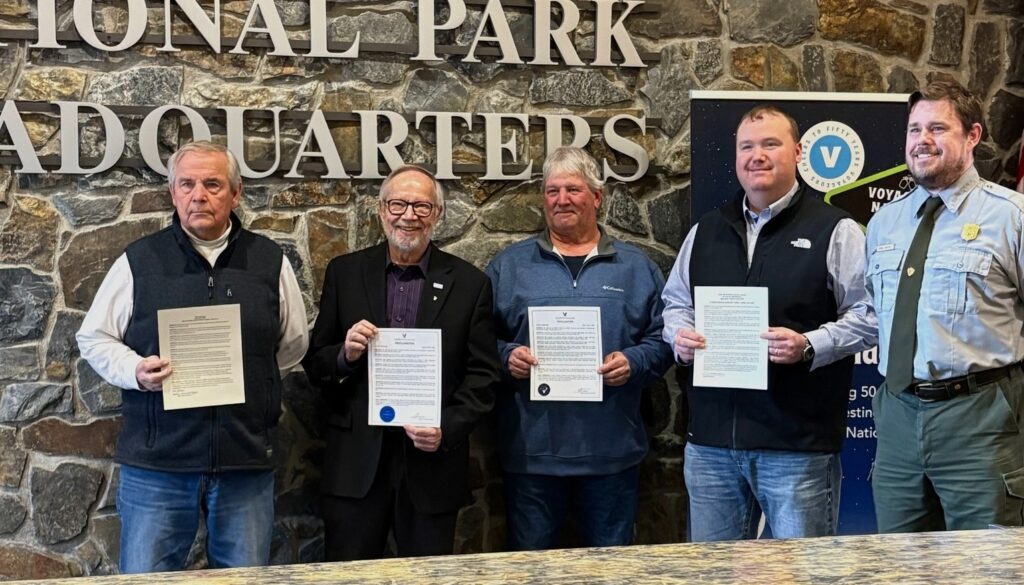
The mayors of Fort Frances, International Falls and Ranier (RAH-near) are raising awareness of light pollution.
They gathered this week at Voyageurs National Park to sign proclamations as part of International Dark Sky Week.
Fort Frances Mayor Andrew Hallikas (HAL-lih-kiss) says artificial light at night has an impact on energy consumption, wildlife and our health.
“It diminishes not only the visibility of the stars, but it disrupts ecosystems, and it negatively affects human health,” says Hallikas.
“We know that studies show that artificial light at night contributes to increased energy consumption
and it disrupts wildlife, particularly migratory birds and nocturnal animals.”
Hallikas says it is not about turning off every light in every town, but rather about using light purposefully.
“Those of us here who live in the north know how beautiful it is if you’re out on the lake and there’s no lights around and you just look up and gaze at the wonders of the cosmos,” says Hallikas.
“We want to preserve our dark skies, and we feel that it’s vital to ensure that future generations can continue to experience the beauty of our skies and to learn from it and really to find their own sense of awe.
He notes that there is also a tourism benefit, as people come to areas like northern Minnesota and Ontario for a better view of the night sky.
“People are coming from urban centers where there are huge amounts of light pollution. They can’t see their night sky, and they’re coming north for tourism purposes because they want to see the night sky.”
Quetico Provincial Park, Voyageurs National Park and the Boundary Waters Canoe Wilderness Area are among areas that have received Dark Sky designation as prime areas for stargazing.
Hallikas notes that Fort Frances has also changed its outdoor lighting to that recommended by the Dark Sky Organization and lighting engineers.