City council set for first meeting with new structure
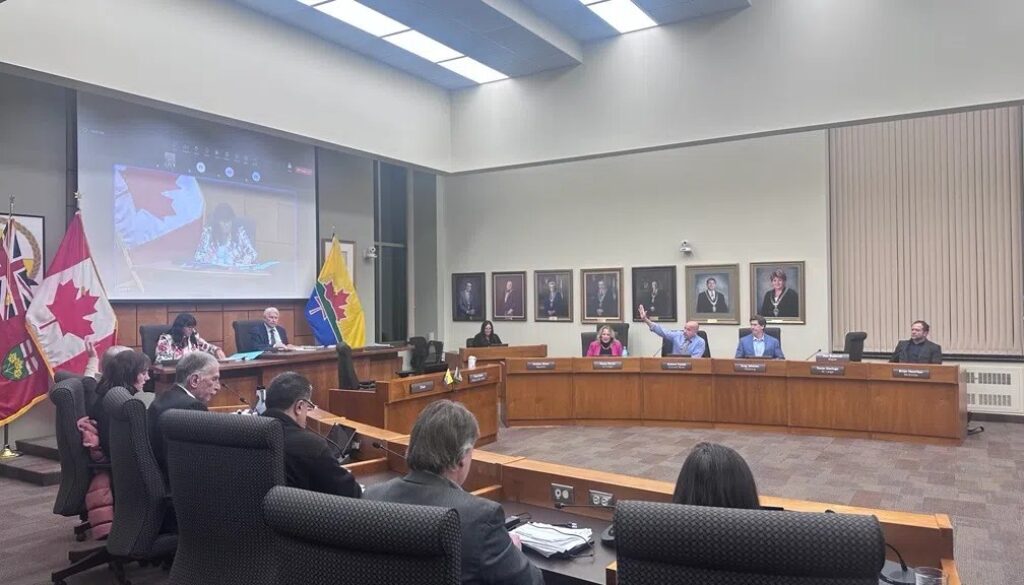
Thunder Bay’s city council has held its final meeting with the old committees, the Committee of the Whole, and City Council structure.
Starting on September 2, the city will implement its new structure, standing committees.
Only city council will take place this coming Tuesday, without a Committee of the Whole meeting beforehand.
“So on Tuesday, what they will see is a more formal City Council meeting, which will have opening ceremonies, which will include a land acknowledgement, the singing of O Canada by a member of the public or a local choir,” explained the Director of Legislative Services and City Clerk, Krista Power.
“They’ll also see all members of Council participating in debate and discussion, as they normally do at Committee of the whole, but they’ll see a bit of a longer meeting than they would normally, where they only previously approved the minutes at City Council.”
The standing committees are:
- Finance & Administration: Mayor Ken Boshcoff, Councillor Albert Aiello (Vice-Chair), Councillor Mark Bentz (Chair), Councillor Michael Zussino, Councillor Brian Hamilton
- Quality of Life: Mayor Ken Boshcoff, Councillor Andrew Foulds, Councillor Kristen Oliver (Chair), Councillor Shelby Ch’ng (Vice-Chair), Councillor Greg Johnsen
- Growth: Mayor Ken Boshcoff, Councillor Trevor Giertuga (Chair), Councillor Dominic Pasqualino, Councillor Kasey Etreni (Vice-Chair), Councillor Rajni Agarwal
Councillors Bentz and Aiello have also been appointed as the chair and vice chair, respectively, of the Special Committee of the Whole – Annual Budget meetings.
Councillor Brian Hamilton has been appointed as chair of all other Special Committee of the Whole meetings, including closed sessions.
Albert Aiello has been appointed to the vice-chair role.
Meanwhile, Councillor Andrew Foulds has been appointed as the Speaker for all City Council Meetings.
Councillor Greg Johnsen is the deputy speaker.
“One of the things I think that’s important is that Standing Committee doesn’t hold any authority,” explained Power. “Standing Committee doesn’t make decision, so those five members of Council provide input they consult.”
“There’s also an opportunity there for the public to consult on matters before they come to City Council. So City Council still holds the final authority on all decision-making for our city.”
The committees will meet regularly to review staff reports, provide feedback, and make recommendations to city council.
The hope is that the change will reduce the number of items requiring full council debate.
The work of the committees being dissolved will still continue under the direction of city administration, which will report its outcomes to the Standing Committees.
A few committees required by law, or that serve a special purpose, will remain, like the Heritage Advisory Committee, and the Mayor’s Taskforce on Building More Homes.
Committee of the Whole will no longer be a weekly discussion meeting for council.
Moving forward, only budget discussions, closed sessions, and significant issues that would span multiple standing committees will now be discussed at the Special Committee of the Whole meetings.
Other notable changes include the creation of a speaker and deputy speaker role, essentially replacing the chair in discussions.
In the Committee of the Whole model, the mayor typically chairs the meetings, which means they must manage debates and enforce the rules of council.
With a speaker, the mayor is freed from procedural duties, allowing them to focus on policy leadership and strategic direction.
The city council meeting schedule will also be changing, with meetings set to be held on Tuesdays.
Standing Committees will meet starting at 4:30 p.m., as well as 7:00 p.m. if two meetings are scheduled and City Council will start at 6:30 p.m.
The city clerk has also gained expanded authority to decline deputation requests if the matter can be addressed more efficiently by administration.
The hope is that this change will ensure public input remains focused and constructive.