Randy Thoms is a veteran news broadcaster with over 40 years' experience. He is based in Fort Frances and covers stories across northwestern Ontario. Contact Randy at thoms.randy@radioabl.ca.
Mary O’Connor, a client services coordinator with the Alzheimer Society of Kenora-Rainy River, says the focus is to make residents more aware of dementia and its impact.
“Mostly this month, I focus on Dementia 101. What is dementia? How do you have a great visit with somebody who has dementia? All of those kinds of things is our awareness month,” says O’Connor.
The Alzheimer Society offers a variety of services at no cost to residents, family members and caregivers.
They are paid for in part from donations or fundraising through events such as Coffee Break.
One of the programs offered is known as The Social, formerly Memory Cafe.
“That is a place to get together for people with dementia and their caregivers in the early stages,” says O’Connor.
“We don’t ever talk about dementia, but we get together, and we play music. We do a craft. We have a snack, and it’s just a chance to get out and visit with other people.”
More than half a million Canadians live with dementia today.
The number is expected to reach as high as one million over the next decade.
Area municipalities are also helping raise awareness.
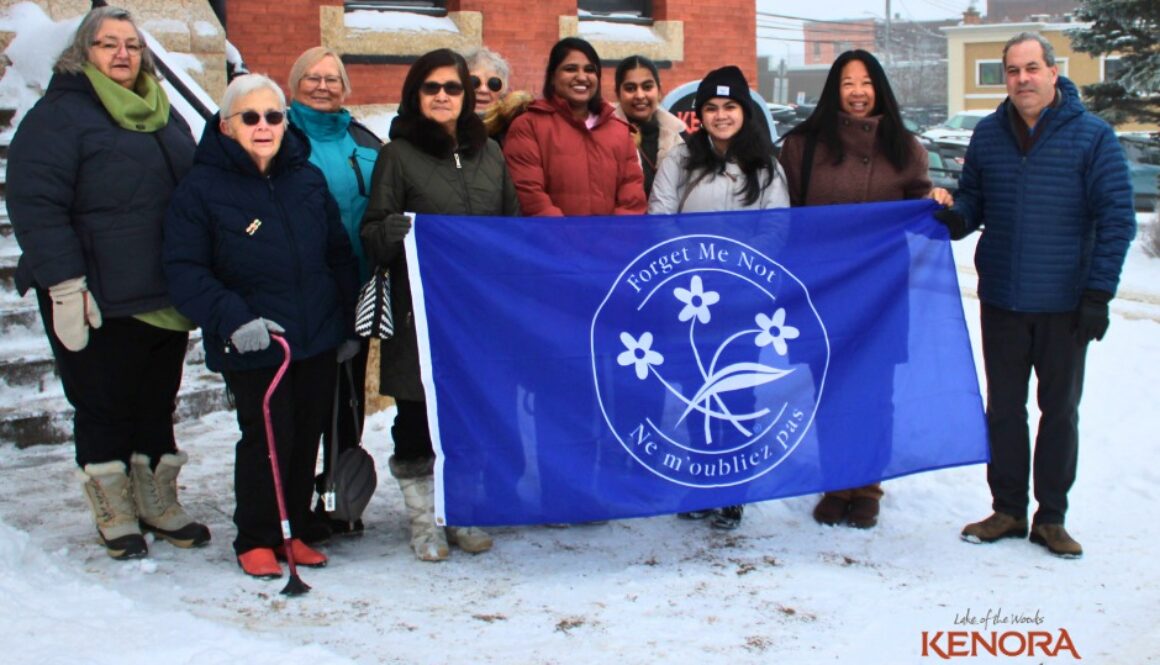
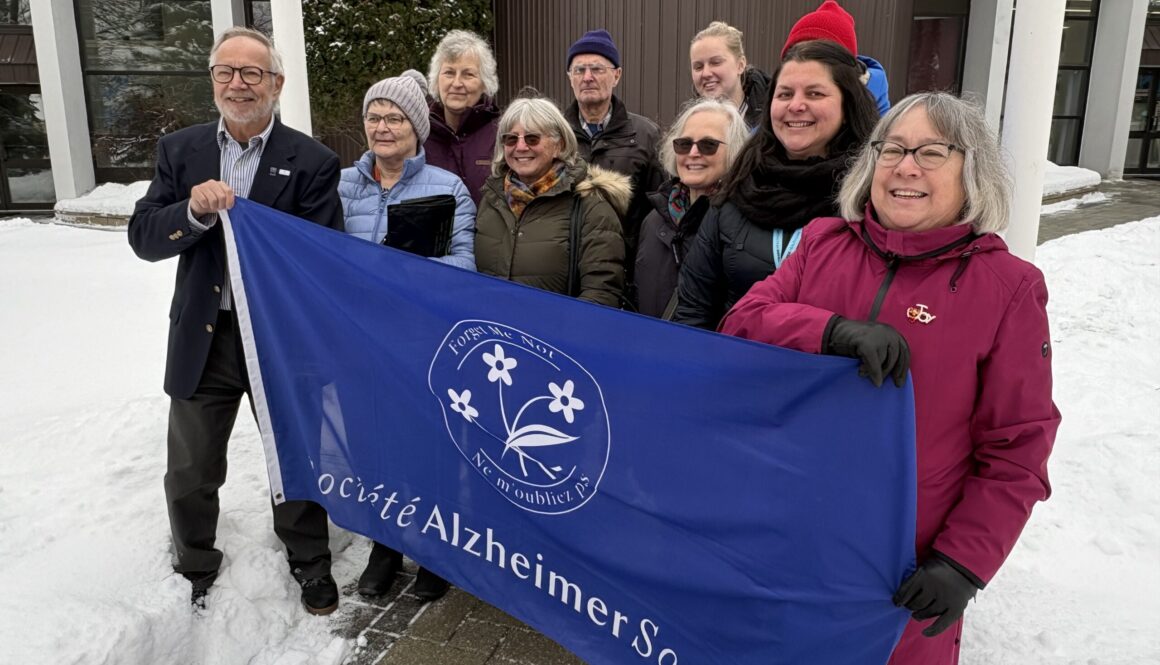
Many are raising the Alzheimer Society flag and offering proclamations in recognition of the month.
For more information, visit the Society’s website Alzheimer.ca/krr/en or click here.
You can also call their Kenora office at 1-800-682-0245.
Mary O’Connor, a client services coordinator with the Alzheimer Society of Kenora/Rainy River Districts, says the focus is to make residents more aware of dementia and its impact.
“Mostly this month, I focus on Dementia 101. What is dementia? How do you have a great visit with somebody who has dementia? All of those kinds of things is our awareness month,” says O’Connor.
The Alzheimer Society offers a variety of services at no cost to residents, family members and caregivers.
They are paid for in part from donations or fundraising through events such as Coffee Break.
One of the programs offered is known as The Social, formerly Memory Cafe.
“That is a place to get together for people with dementia and their caregivers in the early stages,” says O’Connor.
“We don’t ever talk about dementia, but we get together, and we play music. We do a craft. We have a snack, and it’s just a chance to get out and visit with other people.”
More than half a million Canadians live with dementia today.
The number is expected to reach as high as one million over the next decade.
Area municipalities are also helping raise awareness.
The town of Fort Frances is among those that have raised the Alzheimer Society flag this month.
Mayor Andrew Hallikasa encouraged others to learn more about dementia and its impact on Canadians.
He says no one should face dementia alone.
“Over half of Canadians are worried about developing Alzheimer’s or another form of dementia,” says Hallikas.
“Two-thirds of us worry about losing our independence if diagnosed. But even more troubling, one-quarter of us say that we would rather not know if we had dementia. This is stigma.”
“By understanding what people living with dementia experience in their day-to-day lives, their struggles, their successes, their hopes, together we can raise awareness of dementia throughout Canada and reduce stigma.”
Hallikas adds that the Alzheimer’s Society is the first place to turn for connection, support, community care, expertise and referrals.
For more information, visit the Society’s website Alzheimer.ca/krr/en or click here.
You can also call their Kenora office at 1-800-682-0245.
With the recent announcement of Canada’s Olympic ice hockey team for the upcoming Winter Olympics in Milan, Italy, northwestern Ontario can look back with fondness at the area players who have represented Canada in past competitions.
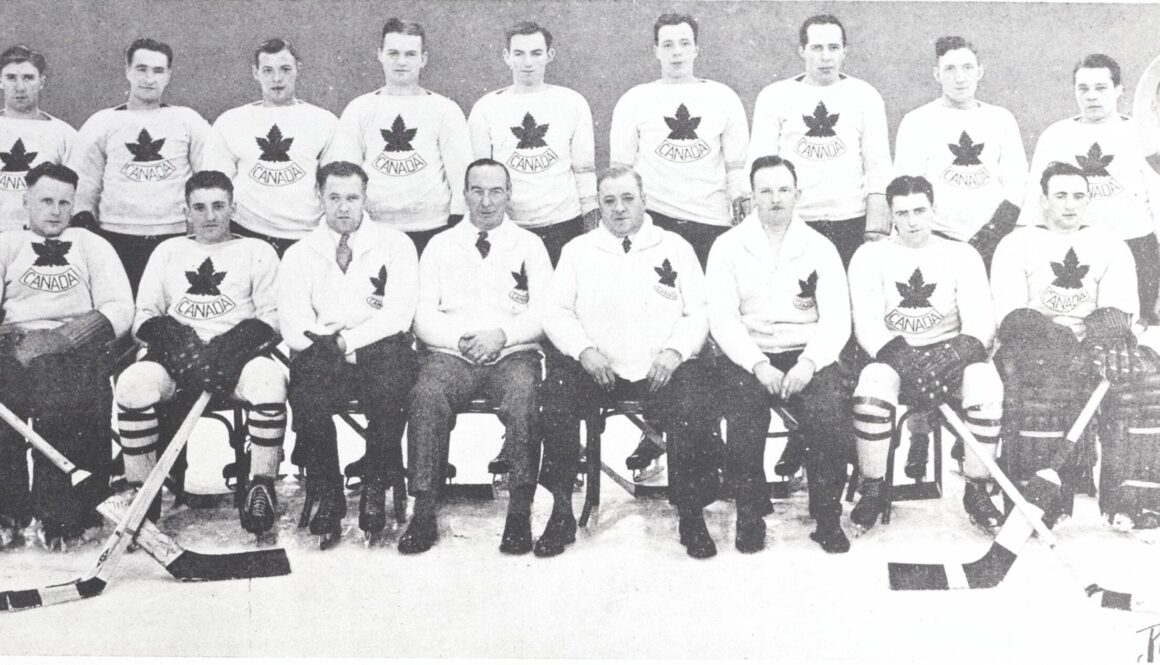
Most notable is in the 1936 games in Garmisch-Partenkirchen, where Canada, represented by the Port Arthur Bearcats, lost out on a gold medal because of a controversial decision regarding eligibility and the tournament’s format.
The Bearcats were granted the right to represent Canada after the Halifax Wolverines, winners of the 1935 Allan Cup over the Bearcats, disbanded prior to the 1935-36 season.
The Port Arthur club would eventually be supplemented with players from other clubs, but still had several members from the 1934-35 season, including Max Deacon of Schreiber, James Haggarty, Ray Milton, Jackie Nash, Alex Sinclair, and Bill Thompson.
Johnny Coward, who grew up in Fort Frances, was on the winning side of the 1936 Olympics, skating for Britain’s team.
Coward was playing in the English National League at the time of his selection.
Port Arthur-born Gerry Davey was also on Britain’s team.
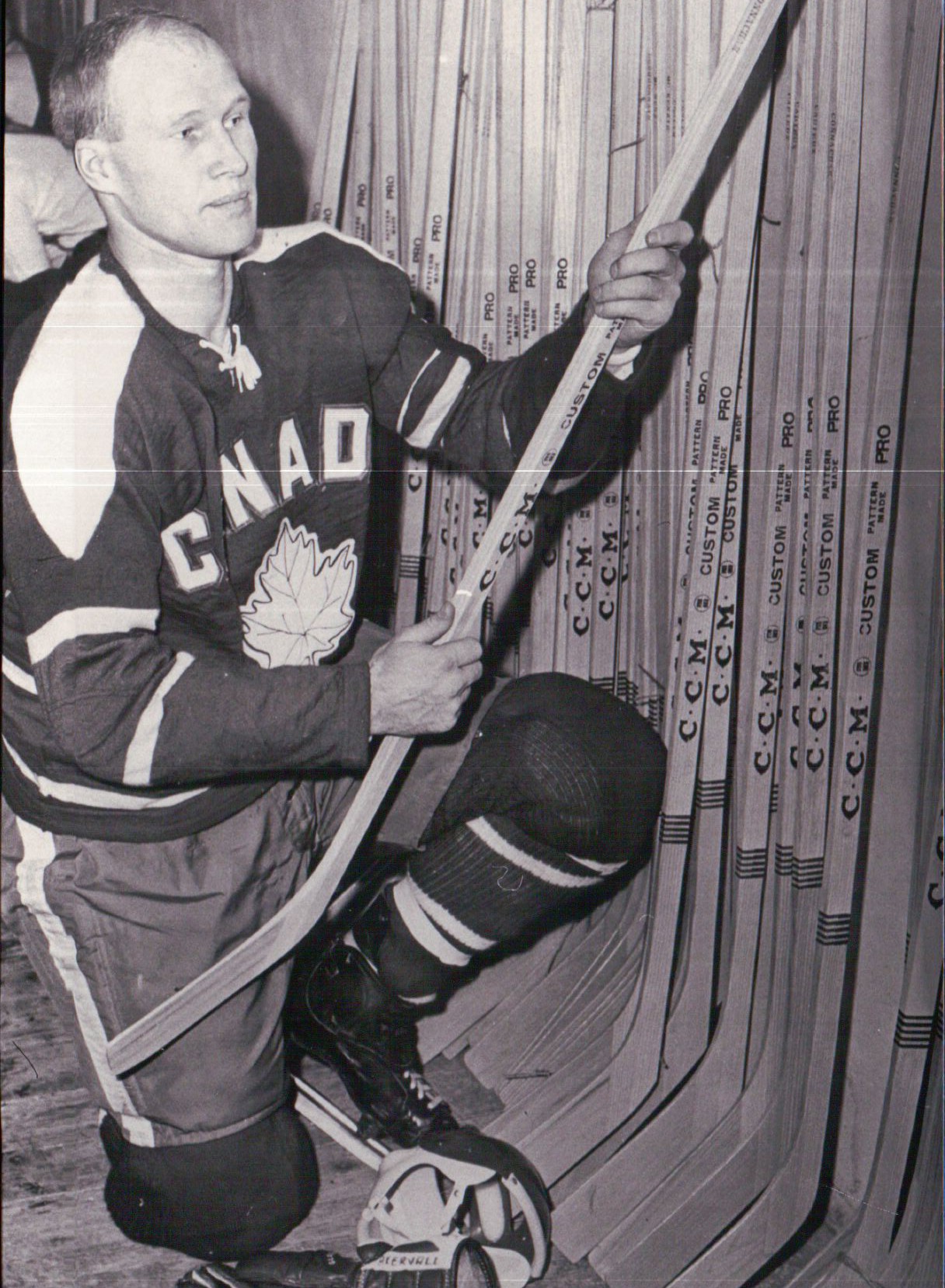
Henry Akervall in Germany at the Olympics, 1964, Cairine Budner fonds at Lakehead University Archives, accessed January 6, 2026, https://digitalcollections.lakeheadu.ca/items/show/3194
Hank Akervall captained Canada’s entry at the 1964 games in Innsbruck, Austria, where the team lost its final two games to miss out on a medal for the first time.
Wayne Stephenson, who was born in Fort William but learned to play hockey in Winnipeg, played in the next winter Olympics held in Grenoble, France, where Canada won bronze.
Chris Lindbergh of Fort Frances skated for Canada at the 1992 Winter Olympics in Albertville, France.
Lindbergh joined the national team the season before, and was among the team’s top scorers during the 1990-91 and 1991-92 seasons.
Canada finished in a three-way tie for first in their pool but earned the top seed over the Unified Team, recognizing nations of the former Soviet Union that broke up just before the games, and Czechoslovakia.
The Canadians edged Germany, then upset the Czechs to reach the gold-medal game against the Unified Team, but lost 3-1.
Lindberg scored Canada’s only goal.
The silver medal was Canada’s first Olympic medal in ice hockey in 32 years.
Two years later, Greg Johnson of Thunder Bay was the region’s representative on Team Canada in Lillehammer, Norway.
Canada earned silver after a shootout loss to Sweden in the final.
Northwestern Ontario’s representation continued when NHL players made up the Olympic teams in 1998.
Dryden’s Chris Pronger was part of the team that lost in the bronze medal game to Finland in Nagano, Japan.
Pronger would make four consecutive Olympic appearances, winning gold in 2002 and 2010.
Thunder Bay’s Eric Staal, Mike Richards of Kenora, and former Fort Frances resident Duncan Keith were also members of the 2010 team that won gold a dramatic overtime game over the United States in Vancouver.
Keith and Patrick Sharp of Thunder Bay were selected for the 2014 gold medal-winning team in Sochi, Russia.
Staal was back with Team Canada in 2022, selected as captain and helping to win bronze at Gangneung, South Korea.
There have been several players with ties to Fort Frances who have suited up for Team USA.
Robert Rompre of International Falls was selected to the 1952 team that earned a silver medal at the games in Oslo, Norway.
His college hockey career had been interrupted that year when he was drafted by the United States Marine Corps for the Korean War.
The Marine Corps allowed him to skate for the US when news of his selection was made.
Rompre scored eight goals in the tournament, including 4 in the team’s opener against Finland.
A 3-3 tie with Canada secured Rompre and his American teammates a silver medal.
Ed Sampson and Dick Dougherty were part of the 1956 USA team that won a silver medal at Cortina d’Ampezzo, Italy.
Both were born in Fort Frances, but held US citizenship and lived in International Falls.
Sampson was a member of the Fort Frances Canadians at the time of his selection, while Dougherty was starring with the Warroad Lakers senior club.
Dan Dilworth was selected to the 1964 American team that finished 5th at the Winter Olympics in Innsbruck, Austria.
Dilworth, who had played hockey in Fort Frances, was coming off a strong season with the USHL Waterloo Black Hawks, where he led the team in scoring in the 1962-63 season.
The 1972 Olympic team saw three from International Falls make the squad.
Keith Christianson and Tim Sheehy, who were born in Fort Frances but played hockey in the Falls, were members of the US National team for three years leading up to the games.
Fellow International Falls resident Mike Curran joined them and helped the American squad to a silver medal at Sapporo, Japan.
Bob Mason and Gary Sampson were the last from International Falls to make an Olympic team, selected for the 1984 US team, which had a 7th-place finish.
Sampson was born in Atikokan but raised in the Falls.
Mason and Sampson were also teammates at the University of Minnesota-Duluth before joining the national team after their college careers.
Northwestern Ontario has also had representation on the rosters of other countries than Canada and the US.
Bob Deperio and Tom Milani of Thunder Bay played for Italy in the 1984 Olympics.
The first games in this year’s winter Olympics will begin on February 5th.
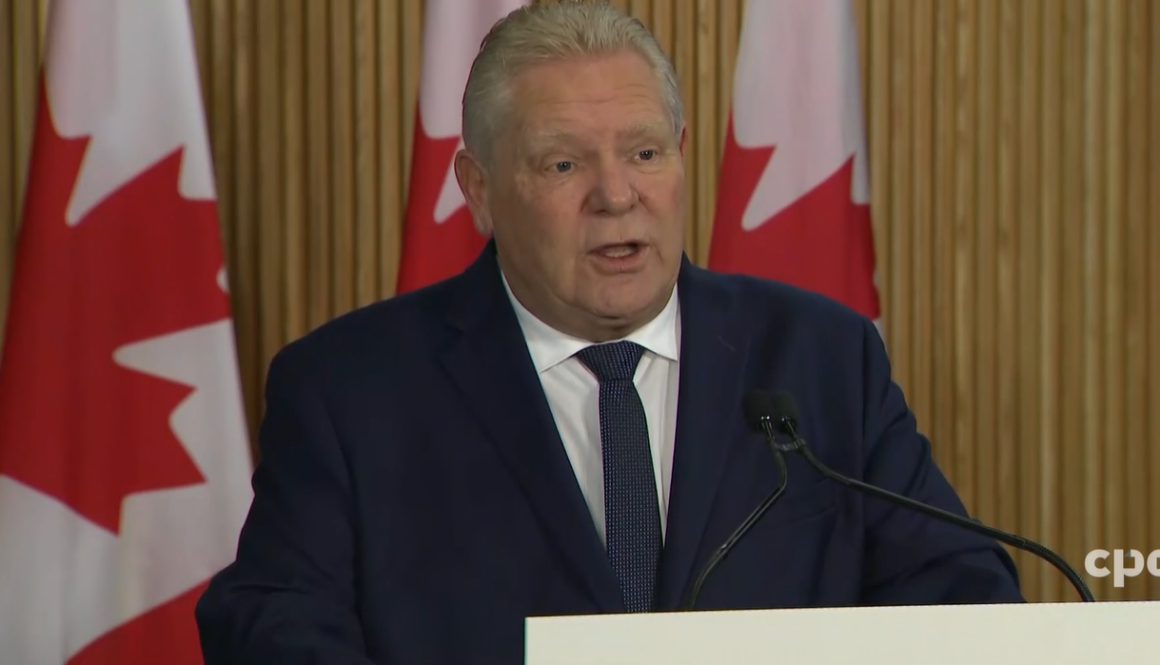
Premier Doug Ford is looking forward to work starting on the roads to the Ring of Fire mining area.
He says construction is poised to begin later this year.
Ford credits agreements with Marten Falls, Webequie and Aroland First Nations for helping push the project three years ahead of schedule.
The province promised to provide up to $39.5 million to each community for local infrastructure and services and to advance the Marten Falls Community Access Road and the Webequie Supply Road.
“These roads will unlock Ontario’s new mining opportunities in a region with the largest critical mineral reserves in the entire world, adding about $22 billion to Ontario’s economy and creating over 72,000 new jobs,” says Ford.
Ford also credits the federal government for helping to expedite the project.
He says his meetings with Prime Minister Mark Carney put an end to the duplication of provincial and federal environmental assessments so projects could get started sooner.
“We really focused on expediting permits as quickly as possible, not duplication,” says Ford.
“We’re doing one EA. They’re doing one EA. So that stopped. Now that’s why we’re able to get the road to the Ring of Fire with cooperation and collaboration with the First Nations.”
An assessment is currently underway by the Impact Assessment Agency of Canada that has committed to completing its review of the roads no later than June 2026.
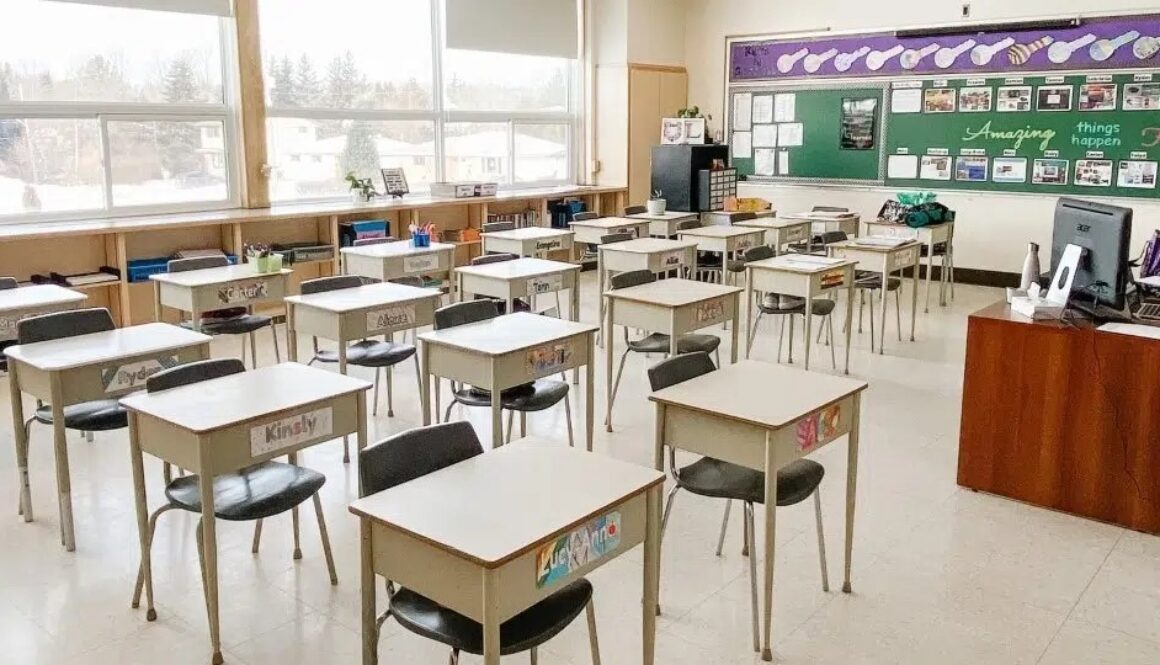
School boards in the Kenora, Dryden and Fort Frances areas are looking to start the next school year before Labour Day.
A draft calendar for the 2026-27 year proposes classes begin on September 1st and end on June 25th, 2027.
It is the only option being put out for public comment.
The boards state that starting school after Labour Day would extend the year to the last day of June or into early July.
They state that in previous years where the school ended that late, it was not well received by students, staff, parents or other community members.
This year’s school year started after Labour Day, with classes coming to an end on June 26th.
The proposed calendar would also see the winter break going from December 21st, 2026, to January 1st, 2027, with students returning to class on January 4th.
March break would take place from March 15th to March 19th
The Keewatin-Patricia District School Board, the Kenora Catholic District School Board, the Northwest Catholic District School, the Rainy River District School Board and the French-language Conseil scolaire de district catholique Aurores boreales have long followed a common calendar to help with staff training and school sports scheduling.
The boards are inviting the public to comment on the proposal.
Links to the survey can be found on each of the board’s websites, or click here.