Fort Frances and the District of Rainy River Services Board (DRRSB) are offering their support to the establishing of a rural immigration program within the Kenora-Rainy River region.
Confederation College and the Northwestern Ontario Municipal Association are leading the effort to have a second Rural Community Immigration Pilot (RCIP).
The program is designed to attract skilled workers from outside Canada to rural and remote communities and offer them an opportunity to obtain permanent residency in the country.
A pilot program was permitted for the Thunder Bay area, but it eliminates other communities in northwestern Ontario from participating.
Fort Frances Mayor Andrew Hallikas says it would help many businesses in his community.
“I’m in contact on a regular basis with local businesses such as Canadian Tire, La Place Rendezvous, Dairy Queen, McDonald’s, Boston Pizza and others who desperately need these workers,” says Hallikas.
“If you’ve gone to these establishments, you know how much the workers add to the whole dining experience.
Support is being sought from municipalities, organizations, and others.
In a letter, Charene Gilles, Chief Administrative Officer for the DRRSB, states that an additional RCIP site would help stabilize the region’s workforce.
“We continue to experience an aging population and limited local labour pool,” writes Gilles.
“For DRRSB, it would strengthen our ability to recruit and retain critical employees, particularly in child care, and support continuity of services that are essential to district families, employers, and community sustainability.”
Additional repairs are being made to the water tower in Fort Frances.
Piping used to flow warm water to the top has shown signs of cracking and is being replaced.
Initially, the town has to replace a faulty heat trace line, which caused the water to freeze.
An inspection revealed numerous holes and cracks.
When a new heat trace line was installed, additional cracks were spotted and repaired.
When water was allowed to flow back through the pipe, more leaks were noted.
As scaffolding was still in place from the previous tower upgrades and the high cost to install it afterward, it was decided to replace the piping.
“The risk is very high, given the leaks keep surfacing, that small cracks may be missed until after the tower is completely filled or worse, once the cladding is complete and scaffolding removed,” a report from Administration to council reads.
It will cost the town an additional $106,468.23, above the $175,000 estimated cost to replace the heat trace line.
Operations and Facilities Manager Travis Rob says the new heat trace line has been installed, along with a secondary one, should the initial one fail.
He says there is also a mechanism that will let staff know if the line fails to function.
“On the heat trace controls, there’s actually an indication of a fault. So we have some indication that it’s not working,” says Rob.
“The old heat trace line didn’t have any of that. The only way we found out that there was a problem was (the) signs of a leak.”
The water tower had been shut down for several months last year for crews to make several improvements.
The water was turned back on in early January, around the same time the faulty heat trace line was discovered.
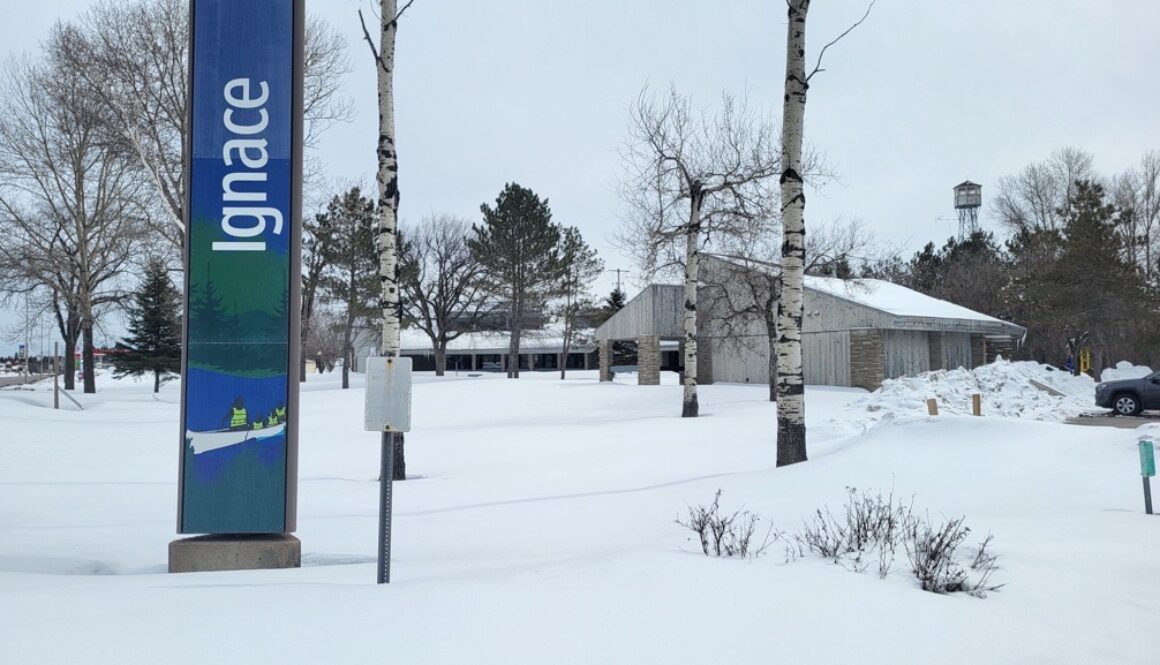
A lack of qualified staff has led Ignace to sign an agreement with a southern Ontario firm to handle chief building official services.
The deal with RMS Building Consultants is viewed as a temporary measure to ensure the town meets legislative requirements.
The agreement with the Cambridge, Ontario, firm was necessary because Ignace lacks sufficient qualified staff to handle building matters such as building permit reviews, inspections and enforcement.
The town also has a number of large projects in the works.
Chief Administrative Officer Aaron Gullins says recruitment for an in-house building official is underway.
“If we can’t find one who already is a CBO, we could hire somebody who potentially wants to be a CBO,” says Gullins.
“This company also does mentorship, and they provided a cost to mentor this person to a point at which they would be able to conduct those inspections for themselves.”
In the meantime, building matters will be left to RMS to handle for now.
Gullins says in many cases, it will handle communication with builders virtually.
“Normally, they don’t come up. Normally, they have an agreement with the person applying, and they’ve worked out a way where they’ll have a virtual interface, and they’ll say point to this, look at this,” says Gullins.
A set of fees has been established for the work that will be provided.
Thunder Bay’s young skiers had the chance to compete in their own backyard as the U16 provincial championships took place at Mount Baldy.
They delivered standout performances on the familiar snow. Four Thunder Bay locals will move on to represent Ontario at the Eastern Canada Championships in Quebec two weeks from now.
“Our local athletes are doing very well at these races,” said Port Arthur Ski Club head coach and program director Dave Bradley. “It’s nice to have home hill advantage, because we’ve been training hard on these hills and they’re taking advantage of it.”
Port Arthur Ski Club head coach and program director Dave Bradley at Mount Baldy for the U16 Provincial Championships (Jacob Henriksen-Willis/March 12 2026)
Over 160 of the top 14-16 year old skiers across the province were invited to the five-day event.
In the boy’s category, William Gerry finished 9th, Hudson Freeburn finished 7th and Reid Jones finished 3rd in the Giant Slalom event Thursday. All three will qualify for the next level.
Freeburn’s time of 35.95 in his first run topped the field, but he fell down the rankings after a slow finish in his second run. Bradley says it’s a valuable learning experience for him.
“You’ve got to look ahead and really stay on your line or you can lose a lot of time all of a sudden, which is what happened to Hudson,” Bradley said. “That can be really hard to deal with.”
Freeburn, 15, is a student at Westgate High School and races for Norwesters Alpine Ski Club in Thunder Bay.
“Second run I got a little late at the bottom, things got a little fast,” Freeburn said. “This event’s really fun though because it brings people from all over Ontario here. It’s very exciting because you see people you’ve never raced against and it’s a very high level.”
“There’s so many things I could say (to a novice skier), but the most important would be to just go out and ski and have fun. Stay in the sport. It’s really meaningful.”
Thunder Bay’s Hudson Freeburn finished 7th in the Giant Slalom Thursday (Jacob Henriksen-Willis/March 12 2026)
Reid Jones, 16, races for TB Fast ski club. He says young skiers should keep working hard through any adversity.
“I just try to get down as fast as I can,” Jones said.
Thunder Bay’s Reid Jones finished 3rd in the Giant Slalom Thursday (Jacob Henriksen-Willis/March 12 2026)
In the girl’s category, Ella Nichols of Thunder Bay finished 2nd in the Slalom event on Monday and will qualify for the Eastern Ontario Championships. She wasn’t available for interview.
Thunder Bay skiers and friends Madeline Hooke and Sophie Lechto, both 15, said they had fun and are happy with how they skiied.
“We’re hoping to continue on with this next year and see how this goes,” Hooke said.
As for advice to novice skiers, Hooke said not to let any negativity get to them.
“People chirp a lot. Don’t let the drama get to you,” she said. “Don’t get involved with it.”
Thunder Bay skiers Sophie Lechto and Madeline Hooke (Jacob Henriksen-Willis/March 12 2026)
Bradley says these athletes shouldn’t be too focused on results at such a young age.
“One thing about skiing, as in a lot of sports, is that every child is on a different growth curve,” Bradley said. “The playing field doesn’t really even out until adulthood. So right now some of the smaller skiers have to be patient and keep working because they’re going to catch up in strength, and some of the big guys that are winning now have to be ready to be challenged in a little bit.”
“Just keep your confidence. Keep working on your skills and having confidence that you’ll be competitive down the road.”
The Thunder Bay Museum has a new exhibit on its second floor.
Small Scale: Tall Tale offers Thunder Bay residents a chance to learn about Lake Superior’s maritime history though the use of model ships.
The exhibit will also tell the story of ship modelling, and look at how modelling interacts with the wider world of ships and shipbuilding.
Models of particularly notable ships for the region, such as the HMCS Port Arthur, will be on display.
Through the exhibit, attendees will be able to follow the region’s seafaring stories from Indigenous canoes and the fur trade, to the industrial revolution, to the city’s wartime shipbuilding tradition.
Four people have been arrested following a drug bust in Sioux Lookout.
Several OPP units across the region executed a search warrant in the Durantes Trailer Park on Tuesday.
Police seized about 250 grams of cocaine, 30 grams of methamphetamine and other controlled medications and about $40,000 in Canadian currency.
Two people from the Toronto area and a man and a woman from Sioux Lookout face three counts of drug trafficking and possession of property obtained by crime over $5,000.
Three of them had a bail hearing and have been remanded at the Kenora Jail and the fourth has been released pending an April 14th court date.
Spring is just around the corner, and area lakes will soon be losing their ice cover.
In Minnesota, crews are deploying the latest strategies to restore lake ecosystems overwhelmed by invasive plants, with hopes of making boating and other water activities easier.
Minnesota implemented a higher surcharge on boat licenses this year to help local entities pay for controlling aquatic invasive species.
In Scott County, southwest of Minneapolis, the Cedar Lake Improvement District hired PLM Lake and Land Management to drill holes through the ice and insert an herbicide that specifically targets invasive plants, such as curly-leaf pondweed.
Patrick Selter, vice president for PLM’s Midwest Region, says this plant grows throughout the winter, wreaking havoc when boating season arrives.
“About mid-to-late May, early June, that plant will top out,” he says.
“You can’t navigate through it, it’s hard to fish in, it really limits your recreational use of the lake.”
The nutrients that float away create a higher risk of toxic algae blooms.
Selter says getting an earlier start on targeted removal gives them a stronger chance to effectively manage invasive weeds over the course of an open-water season.
The progress they make allows native plants to grow.
The Department of Natural Resources has said available grant dollars for local prevention efforts more than doubled this year, to $1 million, but there’s strong competition for that money, and it can’t fund all applicants.
Selter says over the past decade or so, the response to aquatic invasive species in Minnesota lakes has shifted from weed control to restoration.
“The native plants – they are our biological control,” he says.
“We don’t have biological controls for some of these [invasive] species, and our only biological control is our native plants.”
The group Minnesota Lakes and Rivers applauds efforts like these.
It says when the Legislature makes additional funding available to protect natural resources, citizens respond with wonderful innovation.
The DNR adds it’s trying to bring more technical expertise to lake associations as they familiarize themselves with available solutions.
A new centralized phone service is up and running to support self-referral for abortion services in New Brunswick.
Health Minister John Dornan said ensuring access to abortion services is a priority for the government.
“Previously, New Brunswickers would need to call individual family planning clinics or other providers to find out availability and book appointments,” Dornan said in a statement.
“Now they will have one number to call to reach someone who can inform them of their options for medical and surgical abortion and help them secure a booking for the best appointment option.”
Dornan said the “best” option might be the soonest appointment available, or the one closest to the individual.
He said this will improve the patient experience and help them more easily access services during a “challenging time.”
The government expects this central intake system will reduce instances of patients booking multiple appointments as they try to find the one that works best.
The Department of Health has provided Horizon Health Network $188,187 to hire people to operate the service out the Moncton Hospital’s family planning clinic.
“Our trained clinicians and administrative professionals can provide clear, trauma-informed communication and streamlined navigation to the right service, offering non-judgmental, patient centred support from first contact through followup,” said Christa Wheeler Thorne, Horizon’s clinical executive director of women and children’s health.
Surgical and medical abortions are publicly funded for anyone with a valid medicare card.
Surgical abortions are available at three family planning clinics, located at the Chaleur Regional Hospital, the Dr. Georges-L.-Dumont University Hospital Centre and the Moncton Hospital.
Medical abortions can be accessed through a primary care provider, sexual health clinic or one of the family planning clinics.
People can access the toll-free service by calling 1-844-806-9205. They may be asked to leave a voicemail and will receive a callback during operating hours (8:30 a.m. to 3 p.m., Monday to Friday).
A developer has been asked to stop pumping water onto a marshy area by the Petitcodiac River.
Lafford Construction is building two 17-storey apartment buildings on Assomption Boulevard, next to the Hal Betts ball fields.
Activist Jean-Claude Basque raised concerns after spotting the hose draining brownish coloured dirty water from the construction site.
Video submitted by Jean-Claude Basque (March 2026)
We reached out to the City of Moncton for comment.
“The developer was advised and has ceased pumping and discharging accumulated water until a plan is submitted to the City and reviewed,” Spokesperson Aloma Jardine told our newsroom in an email.
The developer has stated that it was water being pumped from the construction site.
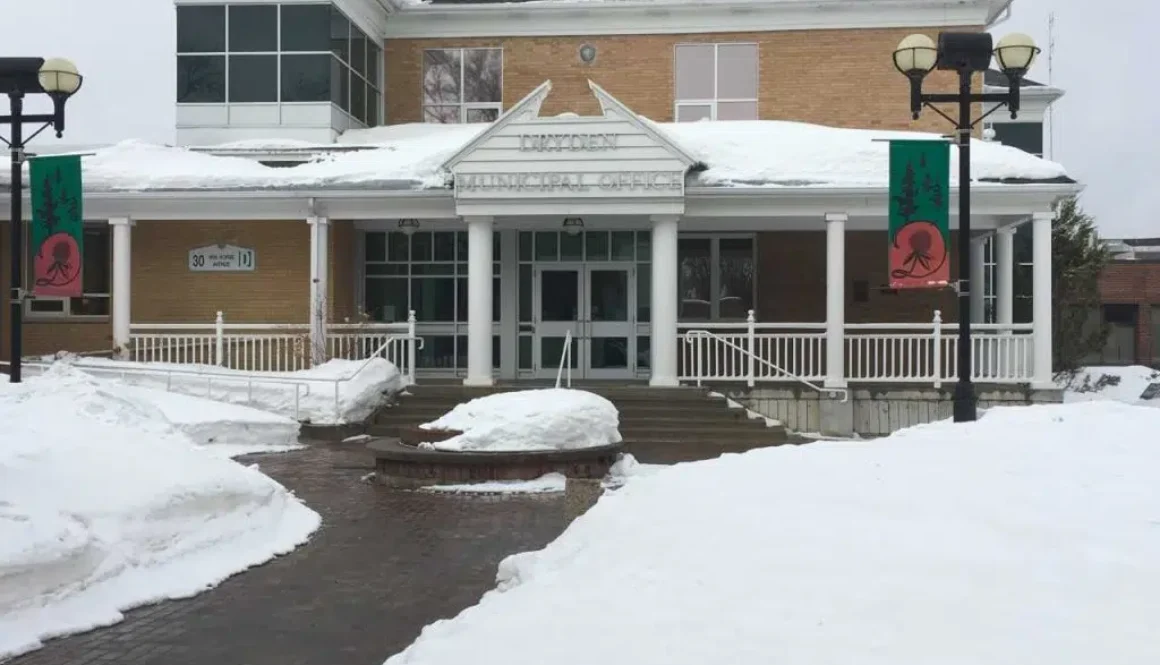
Dryden city council has approved a wage increase for the city’s non-union staff.
This year it will amount to a 2.7 percent increase.
In a report to council, several factors are taken into consideration when coming up with the increase.
The includes the increase unionized staff are getting, the inflation rate in the region and what comparable municipalities are paying their non-union staff.
In the past five years, the non-union increase has ranged from 1.1 percent in 2021 to 3 percent in 2024.
City administration says the increase for non-union staff supports recruitment and retention.