The Festival Arena in Shediac is temporarily closed.
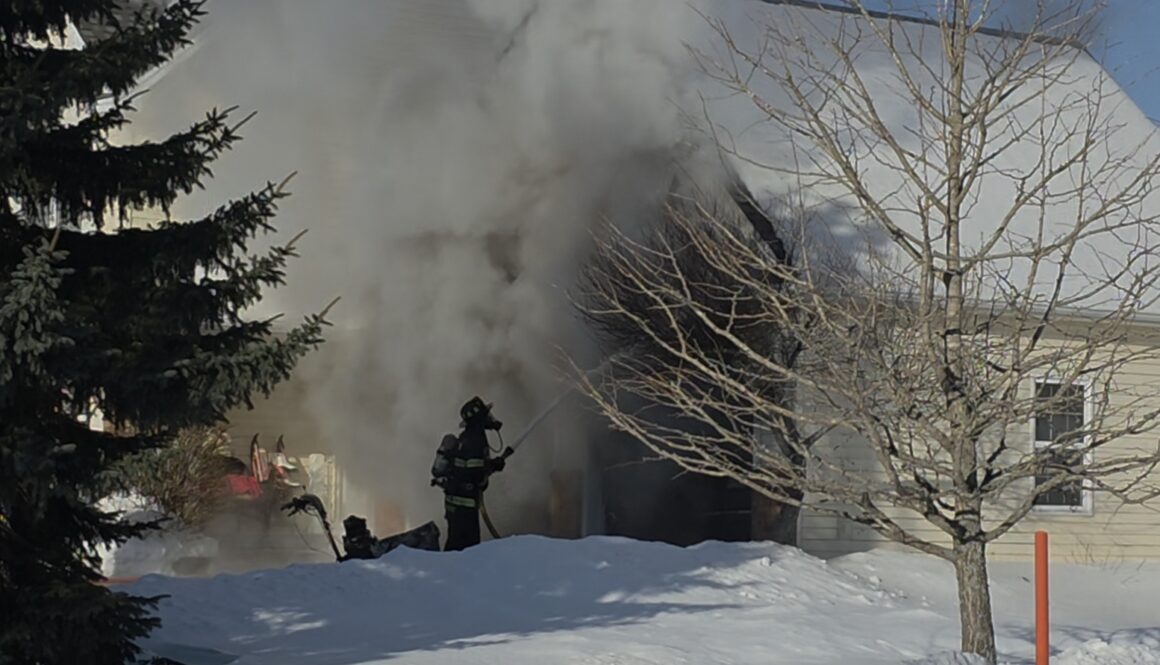
There was a fire on Saturday night in two of the building’s dressing rooms.
In a news release, the Town says an initial investigation found the fire was likely caused by the heating system, which ignited hockey equipment stored in one of the dressing rooms.
A full assessment of the damage, along with cleaning operations, will be done in the coming days.
“Fortunately, no one was injured, and I want to thank our emergency teams for their quick actions,” said Roger Caissie, Mayor of Shediac. “We understand the importance of the arena to our community, and we are doing everything we can to ensure a safe reopening as soon as possible.”
An update from the Town will be released once the arena is ready to reopen to the public. They expect it to be closed for at least a couple of days.
The premier of New Brunswick is confident a trade deal can be reached between Canada and India.
Susan Holt took part in a trade mission to India, joining Prime Minister Mark Carney.
“I think the conditions are there and we’re seeing a lot of receptivity from the Indian market and from the Canadian market,” Holt told media in Mumbai Friday.
She said it’s the best interests of all involved to establish these agreements to demonstrate the stability of the relationship.
“The commitment to the long term that will help reassure everyone that these relations are on the right track and they’re there for the long haul.”
Holt was asked if New Brunswick had the capacity to get its goods out to the rest of the world.
“Absolutely,” was the premier’s simple answer.
She went on to say the Port of Saint John can get a container from Saint John to India in 15 days.
“It’s not a problem for us to move the goods that we produce and some of the products to one of the largest and fastest-growing economies in the world,” Holt said.
The spectre of Donald Trump was also present. A reporter asked if Holt would have participated in the trip if not for the American president.
“New Brunswick set up offices in India through … Opportunities New Brunswick about three years ago,” Holt said. “So, before the Trump threat of tariffs was on the table because we saw a modernizing economy, a growing economy, and we already had a relationship from a people perspective.”
By Nathalie Sturgeon, Local Journalism Initiative Reporter, The Courier
This is the second article in a two-part series that examines the province of New Brunswick’s decision not to make training mandatory for municipal officials, instead providing a voluntary option. You can read Part 1 of the series here.
A long-time civil servant with roots in Charlotte County believes training for municipal officials would have prevented issues now being faced by several municipalities.
Brenda Knight was appointed as supervisor of the rural community of Miramichi River Valley by the Department of Local Government (ELG) after the municipality lost quorum due to resignations.
It is one of several municipalities that have come under the supervision of the department since local governance reform began in 2023.
“It has been an extremely interesting and eye-opening experience,” Knight wrote in an email to the department sharing her thoughts.
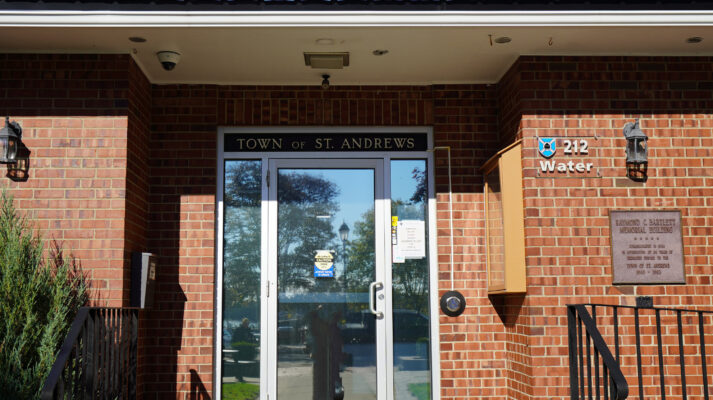
Town hall in Saint Andrews on Water Street. Image: Nathalie Sturgeon/Local Journalism Initiative reporter, The Courier
Knight worked as the town manager for St. Stephen from 2001 to 2005. She also served as the trustee for Regional Service Commission 8 in 2019, replacing the board of directors for a defined time to provide governance and broad oversight to the commission and its activities, according to the l’Université de Moncton.
In her letter to the department, Knight spoke to the challenges of amalgamating fire departments and said “there should have been training and/or a transition period guided by the local service managers” to better support the municipality in operating those services.
She also said rural plans should have been developed prior to annexing the areas into municipalities.
“Draft rural plans are being developed now, but it is too late for some residents who have been left blindsided by developers, with no one and no process to hear their concerns,” Knight wrote.
Additionally, she said the council was “knee-deep in administrative duties.”
“Had there been previous training of these elected officials, none of this would have occurred or be allowed,” Knight said. “As well, some administrators in the smaller local governments have been in their position for years and continue to do things ‘the way they’ve always been done.’”
Knight said training is “the key element” and “I can well imagine there are other municipalities in the province of New Brunswick in the same position” as Miramichi River Valley.
But training is not something that will become mandatory for municipal leaders and staff in New Brunswick after the provincial government rejected a request by the Local Government Commission (LGC).
The Department of Local Government said it will instead focus on addressing the barriers which may have prevented elected officials from engaging with the training offered in partnership with municipal associations.
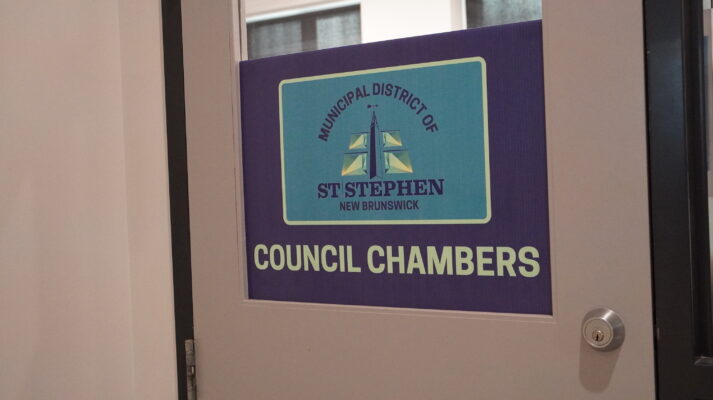
Municipal District of St. Stephen Mayor Allan MacEachern said legislating mandatory training might be difficult, but would be a good asset. Image: Nathalie Sturgeon/Local Journalism Initiative reporter, The Courier
However, many local governments and others across the province are backing the commission’s call for mandatory training, including City of Fredericton Chief Administrative Officer Steven Hart.
“The commission rightly highlights a widespread lack of understanding of both foundational principles of local governance and the specific regulations, such as codes of conduct,” he said. “Small communities, in particular, face challenges in navigating the full scope of legislation and responsibilities.”
Ray Riddell, chair of the Fundy Rural District Advisory Council, also expressed his support for mandatory training. He said councils and regional service commissions are often operating outside their legislated mandate due to a “lack of ability to interpret legislation.”
Local reaction to decision
Eastern Charlotte Mayor John Craig said he believes mandatory training would be an asset for local governments in New Brunswick.
“Especially now with amalgamation, you have a fair amount of people that will get elected [who] have never served on any municipal government,” he said, speaking with The Courier.
Craig said he believes training should be mandatory, with retraining mid-mandate.
“At the end of the day, it’s good for them too that people are getting trained because it helps them do their job properly,” he said. “We’re all going to make mistakes, but it helps.”
Craig has been a municipal leader for 19 years, serving three different communities, and said he is still learning.
“If you think you know everything about this business, it’s time to get out,” he said.
Municipal District of St. Stephen (MDSS) Mayor Allan MacEachern said he felt it would be difficult to mandate training, adding he is concerned about the patchwork that might emerge.
“Because then you’re counting on every municipality to provide the same training and have that expertise ready and available,” MacEachern said.
He said he knows the province is concerned about the level of turnover within municipalities and it seemed the department was listening, but has since backed away from the support for mandatory training.
“I think it would be better accepted if it came from the province because you’re depending on each municipality to do it [and] trust that’s the right direction to be led and to be taught,” he said.
Saint Andrews Mayor Kate Akagi said she received training when she was first elected and found it helpful.
“The training was great. We went to Fredericton, we spent the two days there learning all about how municipalities work and the operation,” she said. “I think it is imperative that they train new people [who] are trying to do this job as to what they have to do.”
Akagi said the time commitment was the most surprising thing about joining local government, adding it isn’t just one or two meetings a month.
“I think they need the province to step in and do the training,” she said. “I think that is imperative.”
Local Government Minister Aaron Kennedy said he welcomes the idea of councils doing their own orientation package, but training will be available from the province. In his time as chief administrative officer for the Town of Quispamsis, he said orientation was important in identifying the varying time commitments, salary expectations, among other aspects of the job.
He said he does understand the frustration municipalities feel, especially newly created ones and newly elected leaders.
“I think when you get the newly elected folks in the spring knowing that this is the way it is and maybe we’ve gotten beyond the frustration … with the changes that we weren’t totally thrilled with, then they’ll start to realize that this is the way it is,” he said. “We’re not going to get rid of the old structure that was put in place three years ago.”
Kennedy said that is why there should be more collaboration between municipalities and the department.
“If we have questions, you know, talk to the department,” he said. “If we have training that’s afforded to us, we should all make sure that we take part in that, and then that’s going to help us provide good governance to the people who rely on us and the people who elected us.”
Municipal elections are scheduled to be held May 11.
New Brunswickers reported losing more than $6.2 million to investment frauds and scams last year.
The majority were committed online.
According to the Financial and Consumer Services Commission of New Brunswick, the rise of artificial intelligence (AI) has opened new avenues for fraudsters to mislead people.
“These days, fraudsters are using AI and deepfakes to make scams look and sound real,” said Marissa Sollows, the FCNB’s director of communications and public affairs.
“You might hear a familiar voice, see a well-known face or receive a message that feels trustworthy, even though it isn’t.”
FCNB’s figure for 2025 is slightly above the $6 million lost to investment scams reported the year before to the Canadian Anti-Fraud Centre (CAFC), which collects information on fraud and identity theft nationally.
The CAFC estimates only five per cent of fraud is ever reported.
“So the actual amount of money scammed from New Brunswickers could be much higher,” Sollows said.
In an effort to educate the public, and as part of Fraud Prevention Month in March, the FCNB will host a free webinar designed to help New Brunswickers recognize financial fraud in the digital age.
“We’re sharing practical tips to help you protect yourself, your loved ones and the people you support from scams,” Sollows said.
The webinar, Fraud Has a New Face: AI, Deepfakes, and Why Scams Can Be So Hard to Spot, will be held in English on March 17 and in French on March 18 via Zoom.
It will outline how scammers operate and some warning signs to watch for.
Sollows said other tips are available on the FCNB website.
FCNB has also developed two online guides to educate the public.
The first is called Protecting yourself from AI and deepfake scams, featuring overviews of the common types of online scams.
The second, Celebrity Endorsements: Don’t have stars in your eyes, details how celebrities, politicians, journalists and other well-known personalities can have their images or voices manipulated or faked to try to lend legitimacy to offers of goods or services.
The federal government announced an investment in protecting and restoring the Saint John River.
Wade Grant, parliamentary secretary to the minister of environment, climate change and nature, unveiled more than $2.3 million to fund 14 partner-led projects on Saturday.
A press release from the Canada Water Agency described the Saint John River, or Wolastoq, as more than water.
“For the Wolastoqiyik people, the Wolastoq (or Beautiful and Bountiful River) is part of their identity, language and culture,” the release said. “
The river also supports critical economic sectors like hydroelectricity, agriculture, forestry, food manufacturing, and tourism. Moreover, its watershed is home to more than half of New Brunswick residents.”
Environment Minister Julie Dabrusin said there are numerous stressors affecting the health of the Saint John River freshwater ecosystem, including agricultural, industrial and urban activities.
“Its protection is crucial to many Indigenous communities and people living within its watershed,” Dabrusin said in a release.
“With strong community support, these local projects will enhance water quality and broader ecosystem health.
The investment targets several priorities, including reducing excess nutrients, science and knowledge advancement, and support for Indigneous-led efforts to understand and address water quality issues.
Among the recipients of the funding is the Maliseet Nation Conservation Council.
The MNCC will get $195,000 over two years to train Wolastoqey community members to conduct water quality monitoring and analysis throughout the watershed and to address the impacts of excess nutrients, harmful algal blooms and pollutants on river health.
“The Wolastoq is central to the culture, identity and stewardship responsibilities of the Wolastoqey Nations,” said MNCC executive director Aruna Jayawardane.
Jayawardane said this will allow the council to improve its ability to address various ecological challenges by bringing together Indigenous knowledge and scientific research.
“With this support, MNCC can advance meaningful, evidence-based action to protect the health and integrity of the Wolastoq for future generations,” he said.
The Belleisle Watershed Coalition will receive $133,000 over three years to assess per- and polyfluoroalkyl substances (PFAS) in the lower Saint John River.
“Learning about the impacts of these ‘forever chemicals’ is crucial to the long-term health of the river,” said coalition executive director Colin Forsythe.
“This initiative also provides an opportunity to build partnerships and engage local communities on PFAS and water protection.”