Some recognition to the organizers of hockey tournaments in Canada.
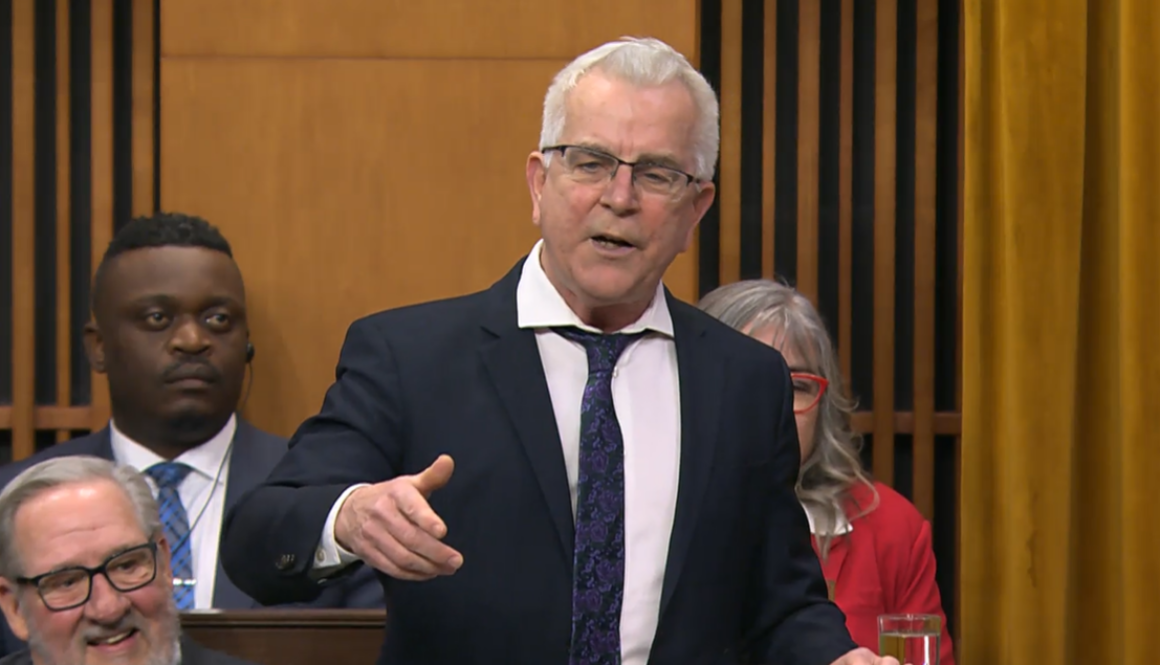
Thunder Bay-Rainy River MP Marcus Powlowski took time in the House of Commons to praise those who are behind them.
He says it was a recent visit to Fort Frances that led him to reflect on the importance of minor hockey tournaments.
Powlowski was at a local hotel where out-of-town teams, in for a tournament, were also staying.
He says a bunch of raucous 12-year-olds were playing floor hockey in the stairwells, while their parents were sitting on the first floor, pretending to drink ginger ale out of coffee cups.
“And as I listened to the halls filled with the laughter of kids and saw the parents having a good time with a bunch of people they previously hardly knew, all at the same time when it was 30 below outside and the wind was blowing, I realized, and this is with sincerity, what a wonderful thing minor league hockey tournaments are and how much they’re a part of our identity and the Canadian culture,” says Powlowski.
Powlowski concluded his statement by thanking tournament organizers and the referees; he admits to sometimes criticizing when watching his own sons play.
New Brunswick has updated its drinking water quality guidelines, bringing the province in line with national standards set by Health Canada.
The changes are part of ongoing work to keep water protections current as environmental conditions and community needs continue to shift.
Environment and Climate Change Minister Gilles LePage said the guidelines must be reviewed regularly to remain effective.
“New Brunswickers should have dependable access to clean drinking water and have confidence it is safe,” LePage said in a government release.
Chief medical officer of health Dr. Yves Léger said the updates reflect new scientific evidence.
“As the science evolves, so does the need to update our drinking water guidelines to ensure we are protecting the health of New Brunswickers and strengthening public trust in our water systems,” Léger said.
The province has also launched a new online portal that lets residents view drinking water quality data collected by their local government.
The Department of Environment and Local Government stated the portal is meant to increase transparency and follows a recommendation in A Water Strategy for New Brunswick 2018–2028 to make local water monitoring results public.
The strategy outlines long‑term goals for protecting drinking water, improving watershed management and expanding access to water‑related information.
The department also noted it met with water system owners last fall as part of its mandate to modernize the Clean Water Act.
Three Dryden residents are being treated for possible smoke inhalation after a house fire this morning.
The City of Dryden Fire Service responded to the call around 7 am. Responders ensured the family had been evacuated before making entry and extinguishing a fire confined to the bedroom of the house.
A total of 21 firefighters attended the scene. Crews cleared the area around 8:30.
The Dryden Fire Service says they would like to extend its appreciation to Ontario Provincial Police – North West Region & Kenora District Services Board for their prompt response, and to local citizens for their patience while the road was closed as crews worked in the area.
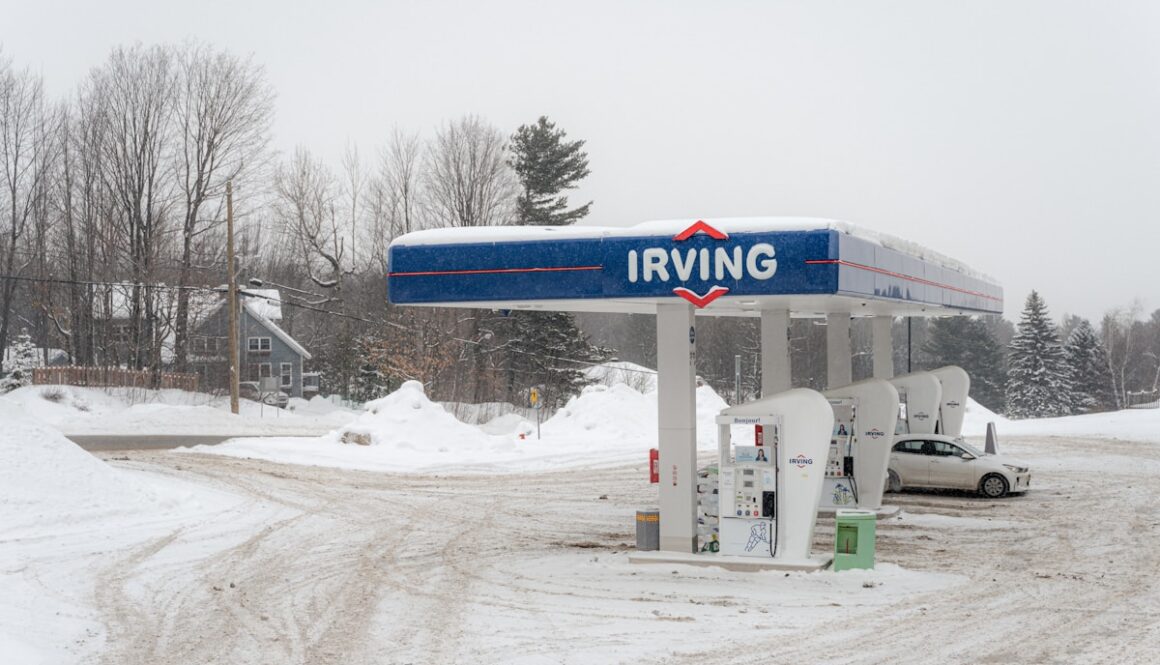
Fuel prices are expected to rise again in New Brunswick, according to an industry source.
Regular self‑serve gasoline is forecast to increase by more than one cent per litre, and diesel is expected to rise by more than 11 cents per litre in the next overnight adjustment.
Maximum prices currently range from $1.39 per litre for regular self‑serve to $1.90 for diesel, though most stations are selling for a few cents less.
In Nova Scotia, regular self-serve ranges from $1.36 to $1.40 per litre, while diesel is selling for between $1.80 and $1.85 per litre.
On Prince Edward Island, the price for regular self-serve is around $1.46 per litre, diesel costs around $1.91 per litre, and home heating oil is selling for a maximum of $1.33 per litre.
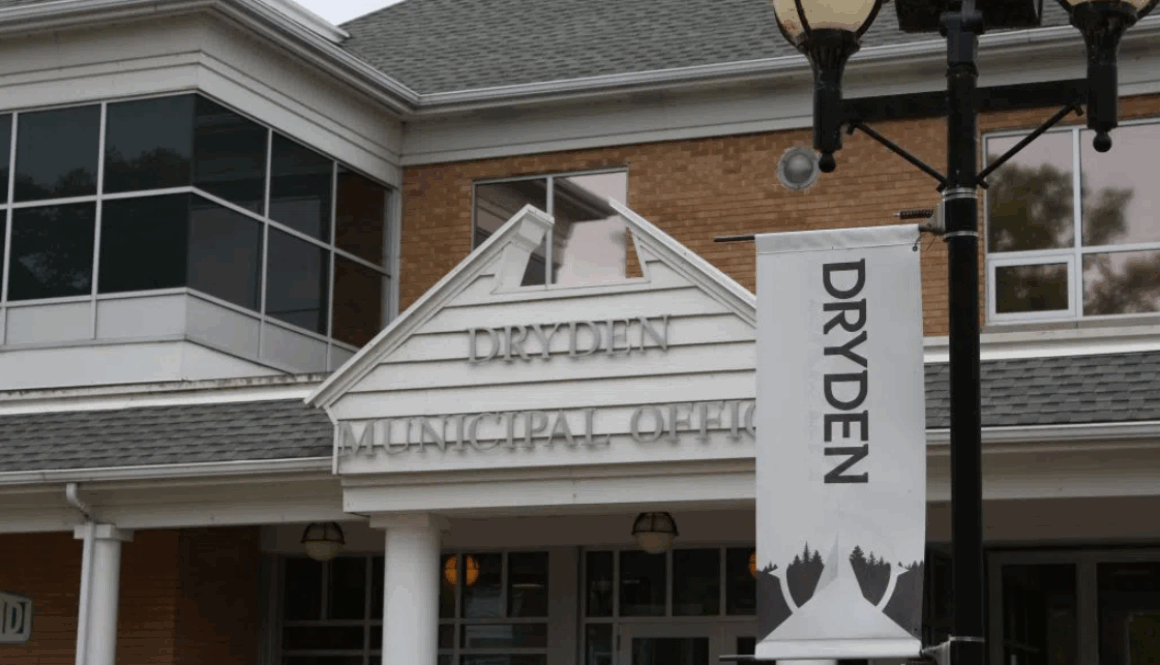
Dryden City Council is moving forward with their new 2026-2031 strategic plan.
Chief Administrative Officer Roger Nesbitt says the priority is to manage forecasted population growth in a sustainable manner by improving housing availability and affordability.
“I think it’s a foregone conclusion with many of the individuals that provided feedback that Dryden is destined for population growth,” Nesbitt said as he announced the strategic plan to council on Monday. “We need to preserve that quality of life that makes Dryden attractive to existing residents, new residents and businesses.”
Nesbitt outlined five strategic priorities for the city from 2026 to 2031:
Implement an Infrastructure-First Development Policy. The city plans to adopt a policy that mandates necessary infrastructure upgrades are completed ahead of, or concurrent with, the approval of major new housing or commercial developments.
Protect and Direct Development (Land Use Planning). The city plans to strategically define clear boundaries for growth, concentrating new development in specific, intended areas.
Support Housing Affordability and Diversity. The city plans to proactively foster a diverse housing supply to meet the needs of all income levels and life stages.
Proactive Investment in Critical Public Services. The city plans to work with appropriate community stakeholders and senior levels of government and use projected growth forecasts to immediately plan for increased staffing and facility expansions in critical service areas.
Strengthen Municipal Capacity and Fiscal Health. The city plans to invest in municipal administrative strength and pursue diversified, sustainable revenue streams in order to build staffing and technical expertise to manage complex, large, scale growth and to fund sudden infrastructure needs without sole reliance on existing property tax revenue.
This week’s tragic shooting in a Tumbler Ridge, British Columbia secondary school, is taking its toll everywhere.
Shock has now turned to grief after a horrific shooting in the tiny community of Tumbler Ridge, British Columbia.
The names, ages and faces of those tragically killed have begun to surface.
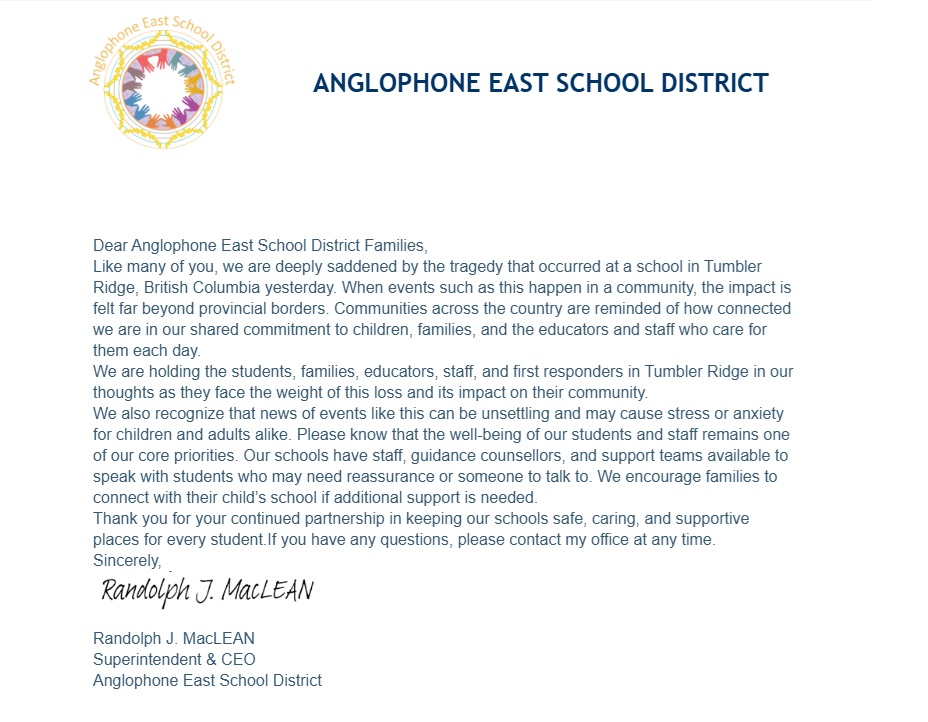
An email went home this week to parents and students with the Anglophone East School District offering guidance to those who need it.
Superintendent Randolph MacLEAN says when events like this happen, they are felt far beyond provincial borders.
He adds that news like this can cause stress or anxiety for children and adults.
Staff, guidance counsellors and support teams are available if reassurance or guidance is needed.
Nine people died in this week’s tragedy, including the shooter. Most of those who were shot were between the ages of 11 and 18 years old, along with a teacher, and the shooter’s mother.
Flags across the country continue to fly at half-staff, and candlelight vigils were held last night in several communities to mourn those lost.
Canada’s Prime Minister Mark Carney is expected to visit Tumbler Ridge in the coming days.
Tourism was a talking point for Premier Susan Holt during last week’s State of the Province Address.
The premier spoke directly about tourism’s economic contribution, stating that through the development of a new tourism strategy, the province is targeting a billion dollars of new visitor investment in the next five years.
“We had our best year in tourism ever last year. There is real money and real opportunity in tourism, and we are going to attract it,” said Holt.
More can be found out about the five-year tourism strategy here.
According to the Tourism Industry Association of New Brunswick (TIANB), tourism already contributes significantly to the province’s economy.
“In recent years, visitor spending in New Brunswick has reached approximately $2.5 billion annually and supports more than 40,000 jobs across the province,” said Ginette Doiron, CEO of TIANB.
Doiron stated that the acknowledgement of tourism’s capabilities to contribute to the province’s economic growth shows that the industry is recognized for more than seasonal activities, and the recognition is a breath of fresh air compared to the TIANB’s concerns about budget cuts that took place in 2025.
However, Doiron says challenges still remain, such as navigating labour shortages, rising costs, and infrastructure pressures, all while competing in an ever-evolving global marketplace.
“Last week’s address reinforced something the industry has long known. Tourism matters to New Brunswick’s economy and its communities. Continuing to work together, with a shared focus on sustainable growth and long-term impact, will ensure that tourism remains a strong contributor to the province’s future,” said the CEO.
Last year was one of growth for the town of Shediac, with more than $111 million worth of building permits.
There was a big boost in the commercial and institutional sector, reaching $66 million, primarily due to the planned construction of a new English-language K to 12 school.
The school will be located near Highway 15 and Ohio Road, leading to the entrance of Parlee Beach Provincial Park.
“This major project will have a significant economic impact on this part of the town,”Director of Economic Development and Tourism Danny Pellerin says.
The building permit for the new school alone, valued at $61,939,387, represents more than half of the total value of building permits issued in 2025.
The residential sector remained steady, with 152 permits valued at $18 million, and multi-family construction reached $27 million.
“Shediac is experiencing sustained growth while ensuring well-planned, responsible, and balanced development for the benefit of the entire population,” said Shediac Mayor Roger Caissie.
He has already stated he will not be seeking re-election this spring in the municipal elections.
“It will now be up to the next members of the municipal council to continue this momentum, while remaining true to the values that make Shediac one of the best places to live, work, and do business,” Caissie stated.
New Brunswick’s Health Minister is responding to concerns over recently announced changes to virtual healthcare.
The eVisitNB contract with the provincial government won’t be renewed, and services will end on March 31.
In a statement, John Dornan reassures users that a new service will be in place by April 1, ensuring there is no interruption.
“The selected vendor has strong Canadian roots, all patient records will be securely stored in Canada, and the company brings more than 28 years of experience serving New Brunswickers in both official languages, with 150 employees here in the province,” Dornan explained.
Reports have said a new provider is one based in Europe, with headquarters in the U.S.
“The Department of Health conducted a comprehensive review, analyzed more than 500,000 appointments, and engaged 19 national and international vendors through a request for information. That work led to a competitive request-for-proposals process, inviting vendors to demonstrate how they would deliver high-quality, integrated and patient-focused care,” Dornan said.
He added in a statement that contract negotiations are underway.
Concerns raised in an annual report from the Office of the Commissioner of Official Languages included that New Brunswick’s two languages are not equal.
Commissioner Shirley MacLean says current demographic trends are concerning and confirm that the vitality of the French language cannot be taken for granted.
“We must utilize the tools at our disposal to preserve and protect our minority official language.”
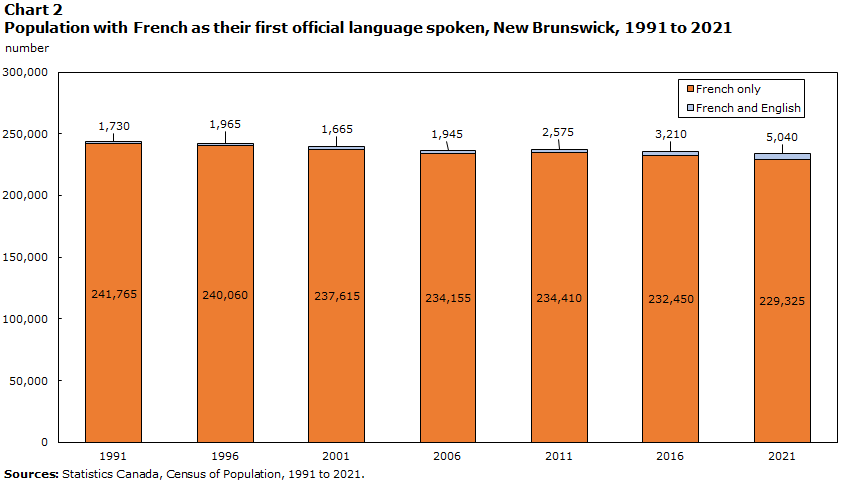
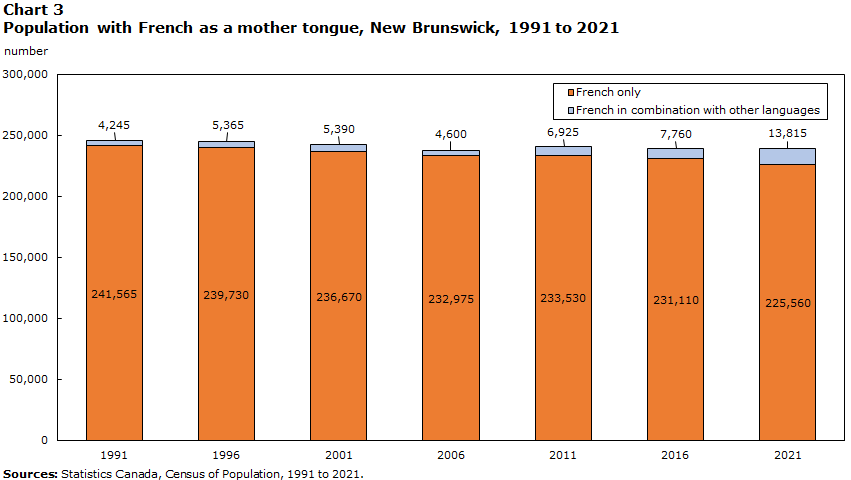
The concern comes from the 2011, 2016, and 2021 population censuses, which show a continued decline in the proportion of francophones in the province. The commissioner says this should raise concern for all New Brunswickers.
(Source: Stats Canada, Census of Population)(Sources: Stats Canada, Census of Population)
As of 2021, the French-speaking population within New Brunswick represents roughly 30 per cent of the province’s total population, according to Statistics Canada and the Census of Population.
MacLean says everyone in the province has a role to play in preserving the French language.
“For the government, this includes strengthening and improving the Official Languages Act, enhancing francophone immigration targets, enhancing educational capacity, increasing immersion programs, and increasing access to francophone daycare spaces,” said the commissioner.
Francophone New Brunswickers should continue to utilize the language at home, in the community, in schools, and in communication with government institutions. Those with second-language competency in French must use it and encourage others to do the same, according to MacLean.
“When (citizens) do not receive services in a language of our choice from an institution that is required provide them, it is important that these issues are raised with my office so that we can address them,” said MacLean.
MacLean added that her office is fortunate to see collaboration with various government institutions that recognize when there is a failure to respect New Brunswickers’ official language rights and strive to correct the situation.
In the commissioner’s previous annual reports, she called on Premier Susan Holt to adopt further recommendations contained in the 2021 Finn-McLaughlin report. MacLean is encouraged by the announcement that the standing committee on Official Languages of the Legislative Assembly will be reviewing the Finn-McLaughlin report and the Official Languages Act in 2026.
MacLean says progress towards true equality is strongly linked to political leadership and vision. She says leaders such as Louis J. Robichaud and Richard Hatfield had that vision.
“As commissioner, I will be making recommendations that concrete steps be taken which will preserve, protect, and enhance the official language minority in our province.”