Correctional Service Canada (CSC) reported that staff at Atlantic Institution confiscated contraband valued at about $70,000 earlier this month.
CSC said the seizure happened on November 15 at the maximum-security federal prison in Renous.
Items included THC, tobacco, cell phones and accessories, along with handmade stabbing weapons.
CSC said police have been notified, and the institution is investigating.
The agency noted it uses tools such as ion scanners and drug-detector dogs to prevent drugs from entering its facilities.
They are also heightening measures to keep institutions safe and secure, and work with police to take action against those who attempt to bring in contraband.
CSC also highlighted its toll-free tip line, 1-866-780-3784, which allows callers to anonymously share information about activities related to security at federal institutions.
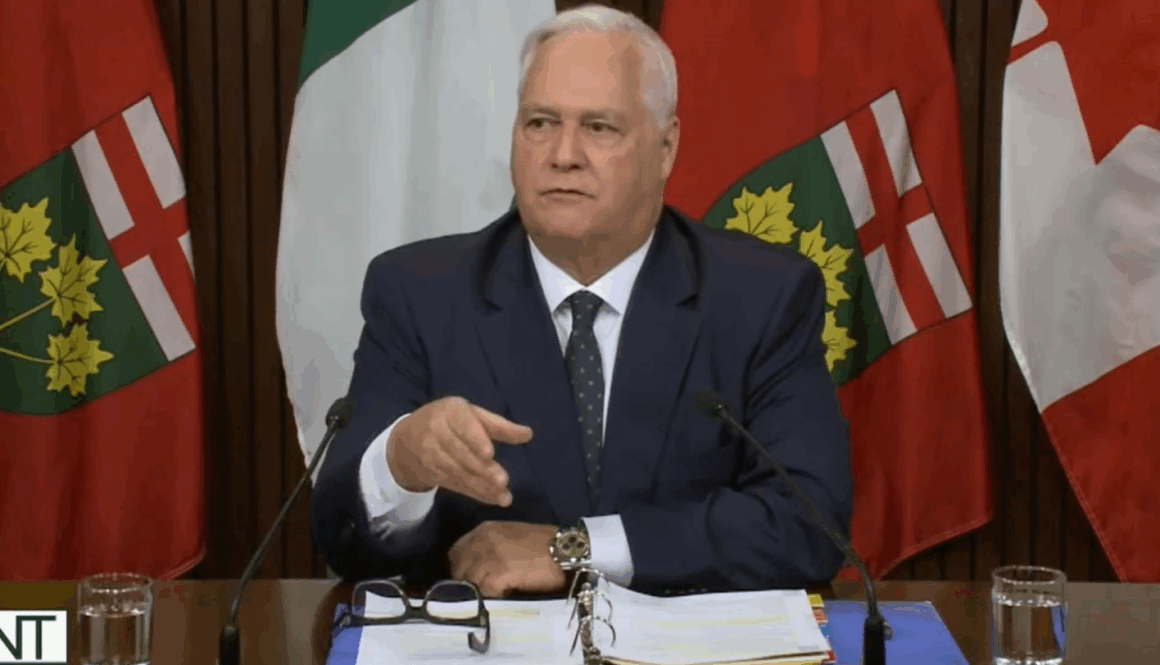
Ontario’s Ombudsman says a lack of supports and services is forcing the institutionalization of some adults with developmental disabilities by default.
Paul Dube investigated complaints of people having to stay in hospitals when housing was not available.
Dube calls it unacceptable.
“The fact that our system continues to rely on hospitals as a default placement is not just inefficient,” says Dube.
“It’s unfair, inappropriate and profoundly harmful to them and their families.”
Dube says hospital staff do not have the training or resources to manage the complex and often challenging needs of alternate level of care patients.
He says the problem is not with the people, but the system itself, calling it fragmented, under-resourced and inadequate.
“Those responsible for finding appropriate housing, supports and services told us the same thing again and again. They simply lack options. Often, if a space is found, there is no funding, or when the funding exists, no agency has room.”
Dube says similar findings were made in 2016, but the recommendations put forward were not fully implemented, making things worse.
Dube makes 24 recommendations in his latest report, and says all were accepted by the provincial government.
They include the Ministry of Children, Community and Social Services plan to develop and fund community infrastructure.to accommodate the needs of individuals with developmental disabilities, including those with more complex needs.
Lakehead University has signed a Memorandum of Understanding with the Kenora Catholic District School Board to offer it’s Achievement Program.
This is the sixth school board in northwestern Ontario to be a part of the program.
Amanda Stephanile is the program manager for Lakehead and says they have 500 students currently enrolled across northwestern Ontario.
“We recognize that not every student is going to come to Lakehead, but we also open the door to provide opportunity for them,” explains Stephanile.
“So, they’ve earned themselves that first year tuition if they meet those requirements each year.”
Stephanile adds the offer of free tuition is open for five years after graduation.
“So, if they wanted to do a program elsewhere or wanted to go to the college and then come to the university, there’s a lot of different opportunities for kids to have different pathways, because not every student’s pathway looks the same.”
Each year, the Kenora Catholic District School Board will enroll 10 students into the Achievement Program.
Stephanile says the plan is to visit Kenora in the spring, to meet the students and talk more about the program.
The City of Dryden has spent almost $350,000 so far in legal fees in 2025.
Chief Administrative Officer Roger Nesbitt presented the city’s legal costs to council.
He adds that council is responsible for the lion’s share of the legal fees.
“We see over $248,000 in legal fees,” Nesbitt pointed out in his report to city council Monday night.
“Now, these are attributed to external council, employment law, workplace investigations, judicial review response, Integrity Commissioner services.”
Nesbitt adds that other departments also had to pay legal fees.
“The administration department has seen a year to date just under $74,000. Again, those areas that contribute to those costs are for environmental, council, contract law, contract defense litigation and real estate transaction services.”
There was also $19,000 for Human Resources, and $17,000 for Building and Planning.
Councillor Bryan Tardiff is upset the city can’t recoup some of the costs of the Integrity Commissioner and instead has to pay the whole expense, even when councillors are exonerated.
The All Nations Health Care Recruitment Committee has seen some successes in the past year.
Jilly Retson is co-chair of the committee and a local doctor and says they have been able to fill a number of positions.
“In 2025, we’ve been able to recruit one full-time and one part-time emergency physician, two full-time pediatricians working at Lake of the Woods District Hospital and the Indigenous community served by Kenora Chiefs Advisory and six family physicians.”
Retson also points out they are not only seeing new physicians come to Kenora, but other specialized doctors as well.
“37 new locums in all areas of practice including psychiatry, emergency medicine, internal medicine, and family medicine. And our recruiters have attended 12 conferences in 2025, generated 350 new contacts and leads for potential recruits.”
Retson suggests the new Rural Generalist Funding model they are now working under it one of the biggest recruitment tools they have.
A New Brunswick man is facing six charges after a crash that killed a 28‑year‑old from Judique, Nova Scotia, near Port Hawkesbury.
The crash occurred at 1 a.m. on November 3 last year when a vehicle travelling southbound on Highway 11 collided with two power poles in Pointe des Robichaud, northeast of New Brunswick.
Three people were ejected from the vehicle. The Nova Scotia man died at the scene, while the two others were taken to the hospital with injuries.
RCMP said the New Brunswick driver from Tilley Road has been charged with:
Impaired operation of a vehicle causing death
Dangerous operation of a vehicle causing death
Impaired operation of a motor vehicle
Dangerous operation of a motor vehicle causing bodily harm
Impaired operation of a motor vehicle over 80 mg causing death
Impaired operation of a vehicle over 80 mg causing bodily harm
Police said the driver is scheduled to appear in court on December 22.
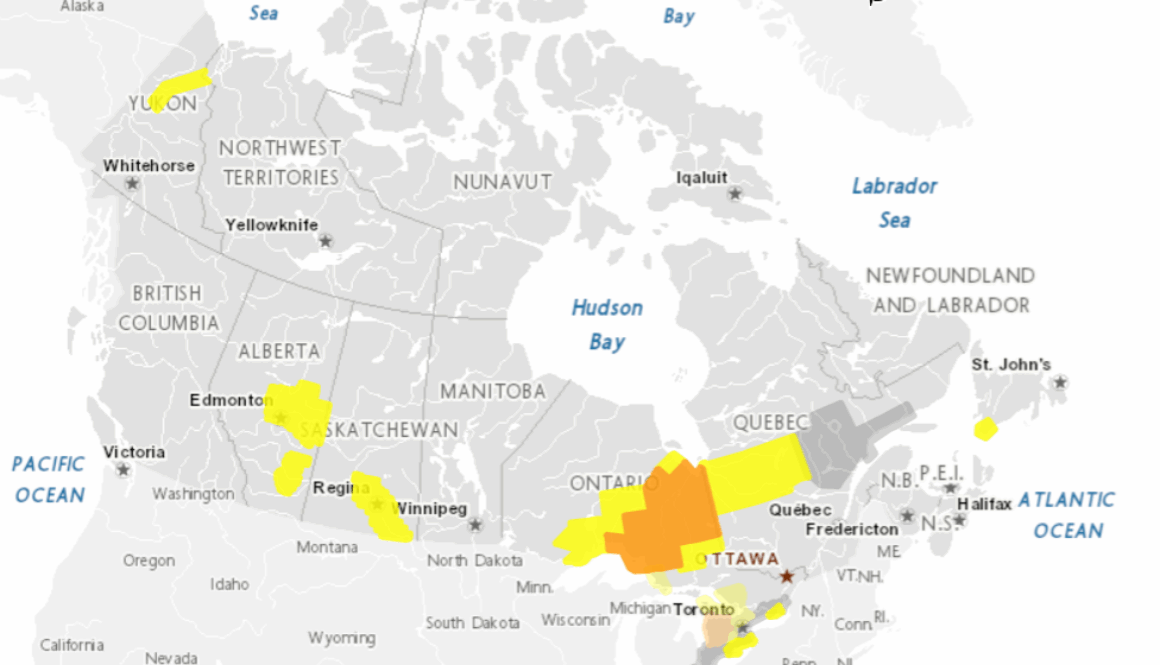
Environment Canada is turning to colours with its weather alerts.
The agency is adopting the use of Yellow, Orange and Red to describe the severity of a weather system.
Weather alerts are issued for a wide range of weather, including thunderstorms, rain or snow, blowing snow, wind, and heat.
Yellow, which Environment Canada says will be most commonly used, will be used when hazardous weather may cause damage, disruption, or health impacts, and the impacts are likely to be moderate, localized or short-lived.
Orange will be issued if the impacts are likely to be major and more widespread, or may last for a few days.
Red alerts will be issued if the system is considered very dangerous and possibly life-threatening, with the impacts considered more extensive and prolonged.
In situations where multiple weather alerts are issued for the same area, they will be prioritized by colour, with the most severe alert displayed first.
“We continue to experience more frequent and extreme weather in Canada, which makes it more important than ever for Canadians to have access to clear, accurate, and easy-to-understand weather alerts,” states Julie Dabrusin, Minister of Environment and Climate Change, in a release.
“By improving how severe weather is reported, we are helping Canadians better understand and prepare for potential impacts, so they can make informed decisions about how and when to protect themselves, their loved ones, and their property.”
Environment Canada says the new colour-coded system will make it easier for the public to notice and understand the severity of extreme weather at a glance.
The move also aligns with the practices of other weather services worldwide and those promoted by the World Meteorological Organization.
Established in Moncton in 2013, Organigram is now the largest cannabis producer in Canada by market share.
A $9.3 million modernization project is underway at the company. The provincial government announced today a non-repayable contribution of up to $2 million from Opportunities NB towards that project.
This means the upgrade of 9,000 lights to LED fixtures in 75 grow rooms, which will increase crop yields by about 10 per cent.
This improvement will also boost flower output, enhance efficiency and reduce costs.
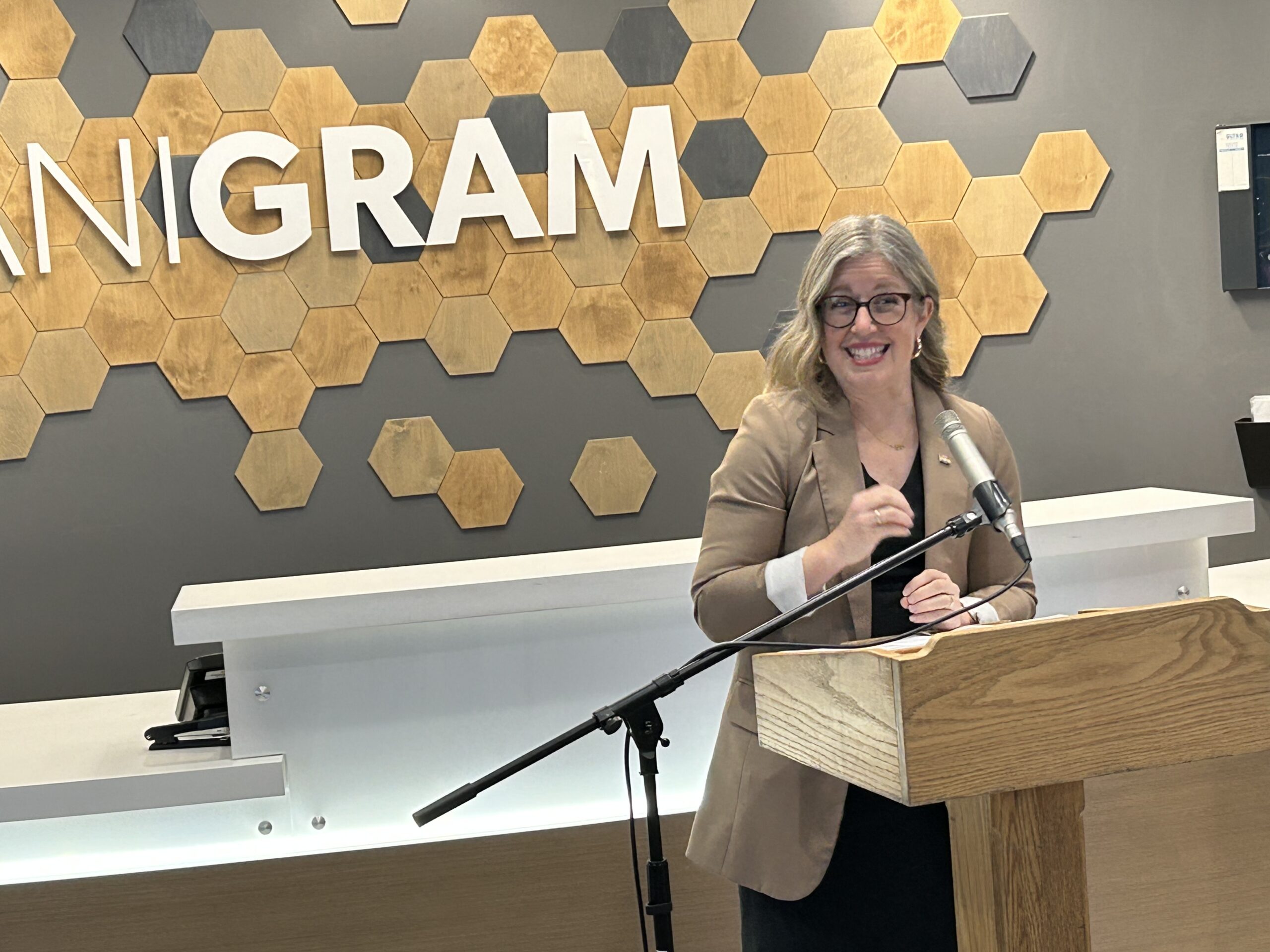
“Cannabis is now the project’s most valuable crop, surpassing potatoes and dairy. A reflection of the province’s deep talent-based based strong agricultural foundation and the momentum that comes when industries are empowered to innovate and grow. New Brunswick has become known as Canada’s real legal cannabis powerhouses,” Senior Vice President of Operations East Matthew Carreau said.
The investment is expected to increase provincial GDP by over $3.3 million and generate an estimated $424,000 in direct and indirect provincial tax revenue by the end of 2026.
Organigram was established in Moncton, New Brunswick, in 2013.
New Brunswick Premier Susan Holt says they’ve seen the opportunity for growth since the beginning, “New Brunswick has been investing in this space since the early days. We were one of the provinces that saw the strength that we had, as people who know agriculture and now know how to grow things safely. We had a sense of what Organigram could do, to go from a small company with hundreds and hundreds of employees, attracting investments into New Brunswick, customers across the country and around the world, getting the benefit of something New Brunswick does really well. It’s something we’ve been into for a long, long time because we see the opportunity for growth and how it is contributing to our economy and around the world.”
Carreau says the lighting upgrades were completed within the last month, but they are now waiting for some of those rooms to harvest to prove the increased yield on those rooms. But they expect the next couple of months they have the harvest from those rooms, and then they’ll have the data to support the increase n 10 per cent.
“The investment will get us over 100 million grams at this facility this year. It will be a record for this facility,” Carreau added.
He says this investment and the increased growth in product will mean they can look at more jobs in the future.
Cannabis was legalized in Canada in 2018, but work to reduce the stigmas on cannabis continues.
“There is still a stigma, but we are trying to get people through the facility and exposure to the facility. The value that we bring to the economy is to show people that we’re a legitimate business that is creating a number of jobs in the province, over 800 in New Brunswick,” Carreau stated.