Rent costs are on the way down across Canada, according to a new report.
The latest National Rent Report from Rentals.ca and Urbanation revealed the average rent nationwide has declined 3.2 per cent in the last 12 months.
The report said the average rent in Canada as of September is $2,123 per month.
At the provincial level, B.C. and Alberta recorded the biggest drop in apartment rent. Both provinces were down 5.5 per cent annually.
Ontario saw a decline of 2.7 per cent, and Nova Scotia recorded a 2.2 per cent drop.
Only Manitoba saw an increase, with rent increasing 2.6 per cent over last year.
Rents also decreased across all property types compared to a year ago.
Purpose-built rentals saw a 2.1 per cent decrease, while condo rents dropped three per cent. Houses and townhomes declined 5.5 per cent.
“Renters in many parts of Canada are experiencing the best levels of affordability in two years,” said Urbanation president Shaun Hildebrand. “This is the result of new rental supply outstripping demand.”
Hildebrand said the decline is unlikely to last long as supply from secondary market sources like condos tightens and demand drivers such as population growth and employment stabilize.
The Minister responsible for Canada Post will meet on Wednesday night with the negotiating committees in the nearly two-week-long postal strike.
Transformation, Public Works and Procurement Minister Joel Lightbound requested the meeting.
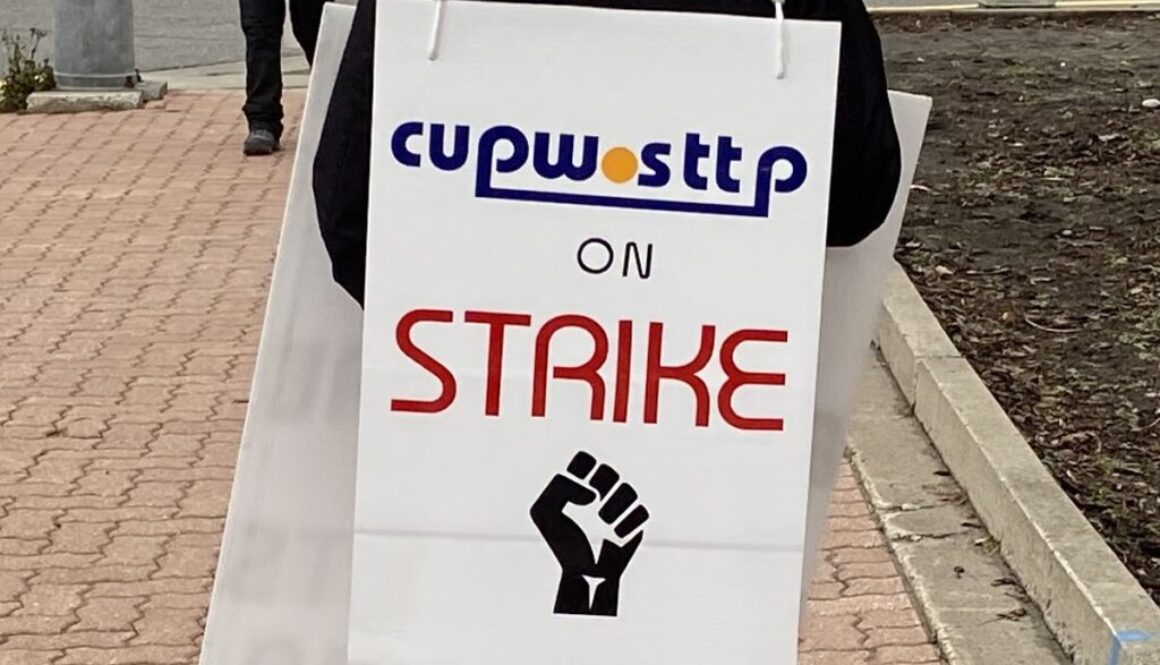
Members of the Canadian Union of Postal Workers hit the picket lines after Lightbound announced restructuring plans for Canada Post that include an end to door-to-door mail delivery and converting the service to community mailboxes.
The union says it welcomes the meeting, but is firm in its opposition to the restructuring plan..
It says it will gut the post office and slash thousands of jobs.
City Council has unanimously voted in favour of a proposal to close the Grandview and Neebing Arenas to ice bookings at set times.
Grandview Arena will be closed to daytime ice bookings on Mondays, and Neebing Arena will be closed to all weekday ice bookings, with special exceptions for specific events like tournaments.
The changes were implemented to make scheduling easier for arena staff, who under the previous model were expected to work back-to-back night shifts.
The change is expected to predominantly impact schools, but the city maintains that it has consulted with impacted schools and expects them to adapt with ease.
The scheduling changes will be implemented from October 12 onwards.
Councillor at-large Rajni Agarwal’s motion to amend was introduced at Tuesday’s City Council meeting.
The motion calls to delete the fourth point of the city’s Ten-Part Human Rights-Based Community Action Plan, which outlines a need to develop a temporary shelter village as a transition space for unhoused individuals.
Agarwal has argued that the construction of new affordable and supportive housing units over the last few years, combined with the federal government’s new Build Canada Homes plan, together negate the need for a temporary shelter village.
Not everyone on City Council agrees with Agarwal’s assessment.
“To me, it’s similar to seeing people in the water cancelling the lifeboats because we have a ship on order five years from now. I think we could do both things,” says councillor at-large Shelby Ch’ng. “I think we could have a temporary solution and also work towards a permanent solution.”
Councillor Shelby Ch’ng, left, at a City Council meeting. (Sam Goldstein/September 16, 2025)
Ch’ng points out that the temporary shelter village serves a different purpose than affordable and supportive housing units. She suggests that if the city hopes to earn federal grant money, it ought to have transition spaces.
“I would be looking at places that have a transition program so that when you do put people into permanent housing, that they’re successful, and not going from sleeping in a sleeping bag in the middle of winter… to now having to operate their own apartment,” she says. “There’s a transition period that is absolutely needed.”
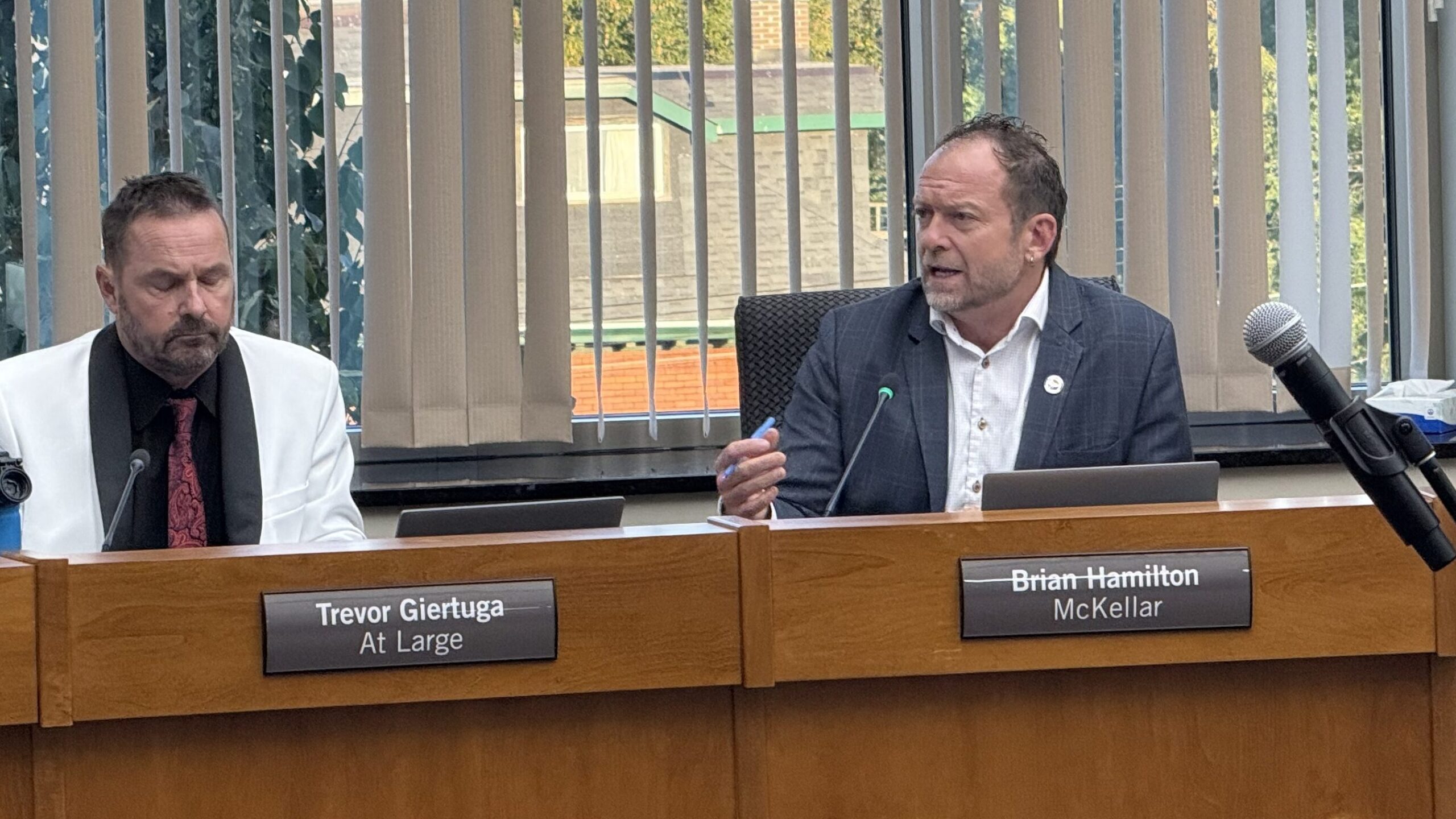
Unlike Councillor Ch’ng, McKellar Ward Councillor Brian Hamilton opposed the Hillyard site that Council ultimately voted for. Yet Hamilton still believes the city ought to proceed with a temporary shelter village at Hillyard, now that the plan is in motion.
Councillor Brian Hamilton, right, at a city council meeting. (Sam Goldstein/September 16, 2025)
“I do see a need in utility for this type of facility in the community in the interim and at least for the midterm to get through this economic and housing crisis that we find ourselves in,” Hamilton says.
Hamilton is also skeptical of Agarwal’s pitch to get federal funding from the Build Canada Homes plan.
“There’s so many unknowns to that. That’s not a guarantee… It’s not even on the table. What is on the table right now is the crisis on our doorstep,” he explains. “It’s going to be years in the making before we actually bring new units online.”
Neebing Ward Councillor Greg Johnsen welcomes further debate on the temporary shelter village.
“It’s the democratic process… It’s good for the community in the sense that some people are aggressively against this, and some people are aggressively for it,” Johnsen says. “So here’s another opportunity for residents to weigh in.”
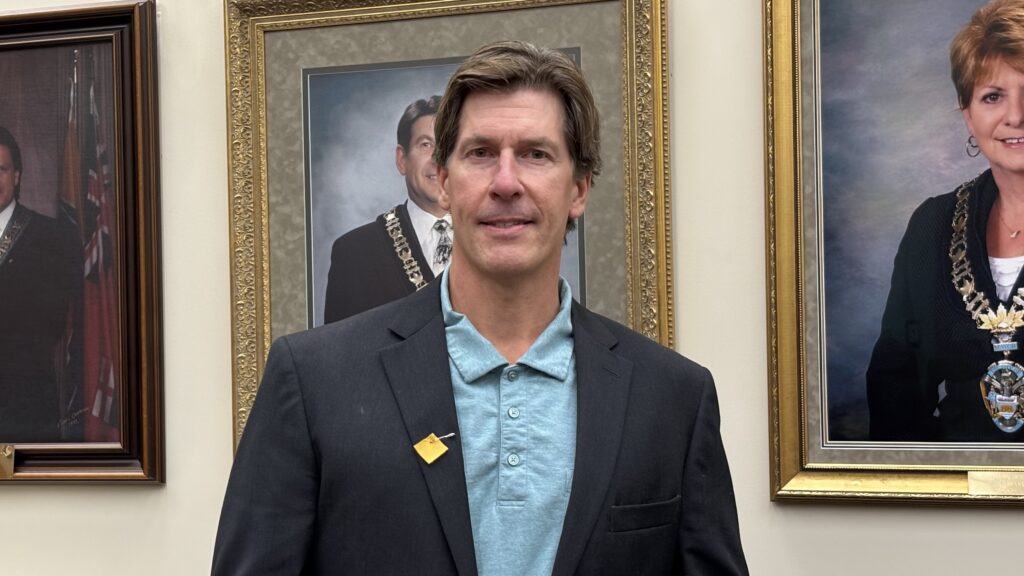
City Councillor Greg Johnsen. (Sam Goldstein/October 7, 2025)
Johnsen opposed the Hillyard site in part because he feels the public didn’t have sufficient time to engage on the issue.
“It was a last-minute resolution that found favour and I voted against it,” he states.
If Agarwal’s motion passes, the big question will be whether the city’s ten-point plan for addressing homeless encampments can succeed without a temporary shelter village.
“I was told that the temporary village is the crux of the ten-point plan. It is the linchpin,” Johnsen says.
“So one of my questions will be… if we remove the temporary village, well, where is the ten-point plan? Does it dismantle altogether, or does it remain afloat… I’ll be very much paying attention to that answer as well,” he adds.
Ch’ng believes there is no ten-point plan without the temporary shelter village. Legally, the city cannot dismantle homeless encampments without having a temporary space where unhoused individuals can be taken.
“If we do not have a temporary solution, we cannot move the tents, bottom line,” she says. “It opens us up to huge legal and liability risk and quite frankly, I don’t want to spend our tax dollars on liability when the cheaper option is to put up a temporary solution until permanent housing is built.”
Agarwal’s motion will come before City Council to be debated and voted on at the next meeting on October 21.
The Dryden Fire Service (DFS) has partnered with the National Fire Protection Association to host a safety-themed open house for Fire Prevention Week.
“It gives fire departments all across North America the opportunity to target a specific fire safety topic, and really promote safe behaviours and other things people can do to increase safety,” says DFS Fire Prevention Officer Bryce Hron.
The open house begins on Wednesday at 5:30 p.m. at Fire Station 1, located at 189 Memorial Avenue, and runs for two hours.
The event offers a chance to see fire trucks up close, participate in family-friendly activities, enjoy free refreshments, enroll in a door prize giveaway, and learn all about fire safety and prevention.
This year’s Fire Prevention Week theme is focused on lithium-ion batteries.
“They’re great, they provide the opportunity for us to stay mobile and connected and use whatever tools or devices we need without being attached by a core. But when these devices are being misused, they can create some hazards,” Hron explains.
Beyond providing tips for using lithium-ion batteries safely, the open house will also serve as a battery drop-off for damaged or otherwise unwanted batteries.
Hron welcomes the opportunity to engage with the public: “The best fire that we can have as a fire service is the fire that never happens.”
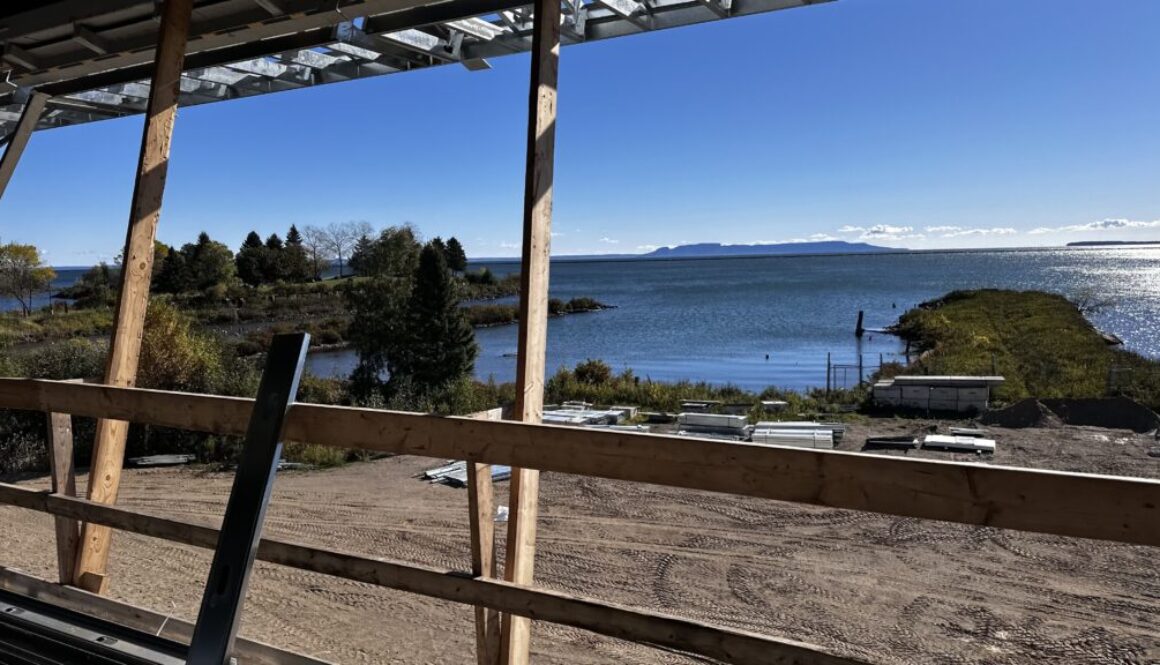
The Thunder Bay Art Gallery is ready for the final fundraising phase for the new Waterfront Art Gallery.
A total of $24 million needs to be raised for the $75,000,000 facility.
“This is more than a building; it’s a gathering place that reflects who we are as a community,” said Executive Director Matthew R. Hills.
“The new gallery will be fully accessible, designed for all ages, and home to exhibitions and programs that celebrate Indigenous, regional, and national artists. It will be a space where everyone feels welcome.”
The cost of the project has increased amid the build duration, new tariffs, and site assessments.
Environmental remediation and cleanup at the site cost over $10 million alone.
The waterfront project was originally estimated to cost roughly $50 million, but increased construction costs have pushed the price tag up.
“Throughout this process, we’ve adapted; the gallery has made compromises,” explained Hills. “Originally, when this building started, it was a 44,000 square foot. We’ve reduced the footprint down to 37,000 square feet.”
“We’ve taken working with our excellent construction team and architects, taking steps to make scope reductions to look at different finishes, different sourcing of materials, something like the siding, making sure that it comes from Canada to avoid cost overruns or to avoid the potential of tariffs.”
“We’ve taken steps throughout this process, and we will continue to do it to adapt the design to make sure that we’re being cost-efficient and rigorous as possible with the funds we have received”.
The building is expected to welcome 40,000 visitors a year, generating roughly $5.2 million in annual revenue for the community.
The new building will meet Category A Standards with the Department of Canadian Heritage.
The gallery is also uniquely designated to be able to hold cultural property of outstanding significance and national importance.
To meet the standards, the gallery needs to work with the Canadian Conservation Institute to ensure that the facility’s climate controls and security standards are in place, which allow the gallery to present and care for cultural treasures of national importance, according to the Thunder Bay Art Gallery.
The facility is being built to meet Rick Hansen Accessibility Standards as well.
Hills adds that the facility will benefit the region as a whole.
“It’s a cultural, educational and economic engine. We love our current space at Confederation College, but it’s off the beaten track. We will be a jewel of the waterfront here. This is a beautiful arena space for people to walk around.”
Another significant change for the gallery is that the new space will allow them to triple the capacity of their collection.
The gallery hopes the facility will open up in the summer of 2027.
A critical meeting at the white house is underway.
It is Prime Minister Mark Carney’s second in-person visit to Washington, D.C., to talk to President Donald Trump.
The two leaders spoke to reporters ahead of their chat on Tuesday, largely focusing on trade and exchanging a few compliments for each other.
Trump has recently announced more tariffs heading to heavy duty trucks, and other levies have already drastically impacted the Canadian economy. A new trade deal would be consequential.
Trump said it was an honour to have Carney visiting, and the Prime Minister reiterated what he told Trump the last time he was at the white house.
“I said at the time, you were are a transformative president, and since then, the transformation in the economy, unprecedented commitments of NATO partners to defence spending, peace from India, Pakistan through to Azerbaijan, Armenia, disabling Iran as a force of terror…”
Trump interjected to joke about Canada merging with the United States, but Carney laughed and said that wasn’t what he was going to say.
Instead, the Prime Minister said that the leaders were meeting on Oct. 7, the two-year anniversary of when Hamas attacked Israel, and that Canada stands behind “the prospect of peace that you’ve made possible,” Carney said.
Carney left most of the speaking to Trump, who mostly answered questions from reporters related to Republican policies. Carney jumped in when trade or U.S.-Canada relations came up.
‘Natural conflict’
Later, Trump said the U.S. and Canada have a natural trade conflict, because the countries compete for business.
“It’s a natural business conflict. Nothing wrong with it. And I think we’ve come a long way over the last few months, actually, in terms of that relationship.
Carney chimed in to describe the relationship, adding that Canada is the second largest trading partner with the United States and the largest foreign investor, and Carney expected that investment to grow from about $500 billion in the last five years to $8 trillion if “we get the agreement that we expect to get.”
But he said, yes, Canada and the U.S. do sometimes compete, and that is why they need a trade agreement.
“We’re going to get the right deal, right deal for America, right deal, obviously, from my perspective, for Canada,” said Carney.
Trump did not promise a new trade deal, but he said Canada would walk away from these meetings happy.
“I think the people of Canada, they will love us again,” said Trump.