Federal budget draws support from northwestern Ontario member of parliament
No complaints on the federal budget from a local member of parliament.
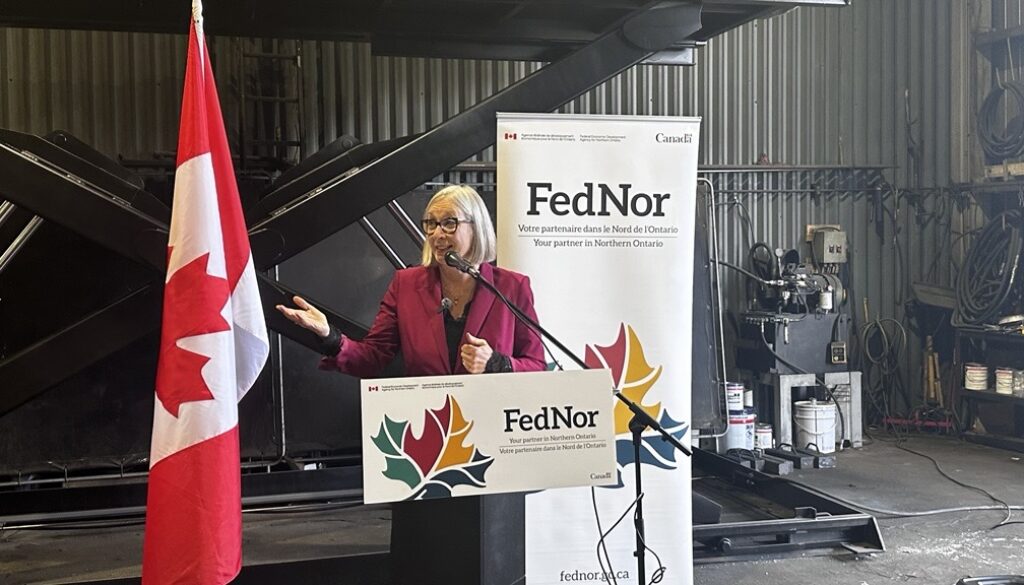
Thunder Bay Superior North MP, Minister of Jobs and Families, and Minister responsible for FedNor, Patty Hajdu, is really excited about the budget.
“Listen, I think these are things that, in particular, smaller communities have been calling for a long time. There’s a huge focus on bringing down costs for Canadians,” explained Hajdu.
“We’re protecting vital social programs that Canadians rely on, like the National School Food Program, which has been made permanent, that so many people talk about in our region and are involved in, we’ve got the $10 a day childcare commitment that’s continuing, we’ve got the Canadian Dental Care Plan that so many, especially seniors, have talked to me about in terms of the way that they can actually get support and it really reduces their costs.”
Outside of programs, the minister was also happy with the extensive investment in infrastructure.
A total of $115 billion has been earmarked for infrastructure over the next five years.
“This is, I think, one of the most exciting things for me as an MP who represents small communities and rural communities who often have a really hard time replacing aging infrastructure, whether it’s water and sewer infrastructure, whether it’s road infrastructure, whether it’s community centres, roofs on libraries, linings of pools like I’ve basically heard it all in 10 years, and all of those things are deeply important, whether they’re visible or whether they’re not,” said Hajdu.
“The functioning of municipalities rests on the ability of its infrastructure to not only provide quality of life, safe drinking water is like an essential for every community across the country, but also to make sure that we can not only attract people to these communities, but keep them.”
Hajdu adds that support for entertainment and recreation infrastructure is also important.
“I mean, people need more than a job. We often talk about good jobs being the attractant. That might be the case, but if someone doesn’t have a place to go and play pickleball or go for a swim or bring their kids for skating lessons,” added Hajdu.
“Those kinds of things can really undermine attracting people to the region, and we see that people leave because there aren’t the kinds of quality of life infrastructure that they’re looking for.”
More ongoing infrastructure projects in the region and country will also create more jobs for Canadians.
“For everybody that’s in the skilled trades, everybody who’s thinking about going into the skilled trades, we need you because to build things, we need the builders,” said Hajdu.
“We need the welders, the electricians, the heavy equipment operators, the carpenters. You know, the stonemason workers like these are the folks that are going to be building up our communities and building Canada strong.”
Meanwhile, the budget highlighted that immigration numbers are set to be greatly reduced.
This comes amid support for the Rural and Northern Immigration Program in northwestern Ontario.
According to the federal government, in 2018, 3.3 per cent of Canada’s population were temporary residents.
By 2024, that number had more than doubled to 7.5 per cent, an unprecedented rate of growth that put pressure on housing supply, the healthcare system, and schools.
Budget 2025 announces that the 2026-2028 Immigration Levels Plan will stabilize permanent resident admission targets at 380,000 per year for three years, down from 395,000 in 2025, while increasing the share of economic migrants from 59 per cent to 64 per cent.
The new plan will also reduce the target for new temporary resident admissions from 673,650 in 2025 to 385,000 in 2026, and 370,000 in 2027 and 2028.
“I think ultimately what the government wants to do is to really bring immigration down to manageable levels,” said Hajdu. “I would say that this immigration plan is a responsible plan to help with communities that, conversely, have had a hard time absorbing newcomers at some places in southern Ontario, in particular around temporary residents.”
“We want to make sure that obviously regions like Northern Ontario have what they need to keep growing, and so in the budget, it specifically mentions the needs of rural communities, and so we’ll be working with rural communities like the ones in my riding to make sure that there are pathways to permanent residency that we can, bring in, you know, a percentage of temporary workers as needed in a rigorous way that ensures Canadians come first for any work that’s available in the community.”