KI/Wapekeka seek permanent protection of 3 million hectares
The Ford government is being asked to sit down with Kitchenuhmaykoosib Inninuwug Nation (KI) and Wapekeka First Nation on the protection of land near their communities.
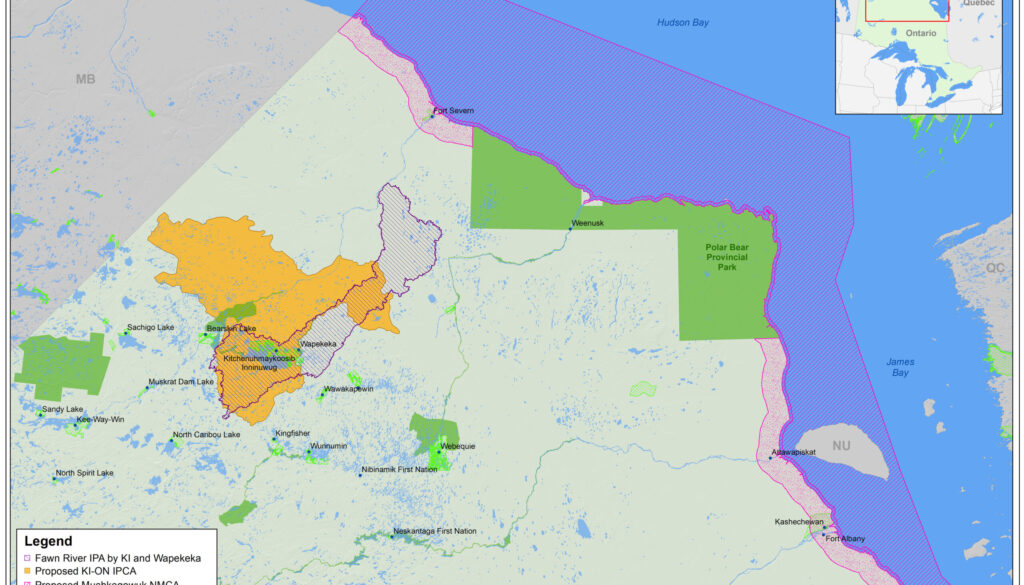
The two remote communities are declaring 3 million hectares to be permanently protected.
Known as Anishininew Aki, it includes the KI land withdrawal area and the Fawn River Indigenous Protected Area that contain large swaths of intact boreal forest, wetlands, lakes and healthy rivers.
“This has been a long-standing issue for the community and community leadership,” says KI Chief Donny Morris
“When we say diplomatic, we’re serious about an honest dialogue with Ontario to move this forward toward permanent protection of the 3 million hectares.”
Seventy-seven percent of the land has already been withdrawn from mining as a result of a previously Liberal government decision.
Morris says further protection goes toward the fight against climate change.
“By safeguarding a watershed that provides clean drinking water for all life, habitat for the fish, water life and animals, food and travel ways for our people, moisture for the air and rich carbon peatlands our people refer to as the breathing lands,” says Morris.
The First Nations notes that Premier Doug Ford is signing several deals related to development.
“It’s time for the government to recognize the protection side of things. They have an obligation to work with First Nations on land protections,” says KI Deputy Chief Cecilia Begg.
Kiiwetinoong MPP Sol Mamakwa says declaring the homelands permanently protected, Kitchenuhmaykoosib Inninuwug and Wapekeka First Nation are asserting their Inherent Rights, Title and sovereignty to safeguard the ways of life, the land, and the well-being of all.
“I call on the Premier and his Government to engage in diplomatic talks with these nations and substantively support their conservation efforts,” says Mamakwa.
The Wildlife Conservation Society Canada says the area represents one of the world’s rare intact areas of boreal forest, peatlands and free-flowing rivers essential for species at risk.