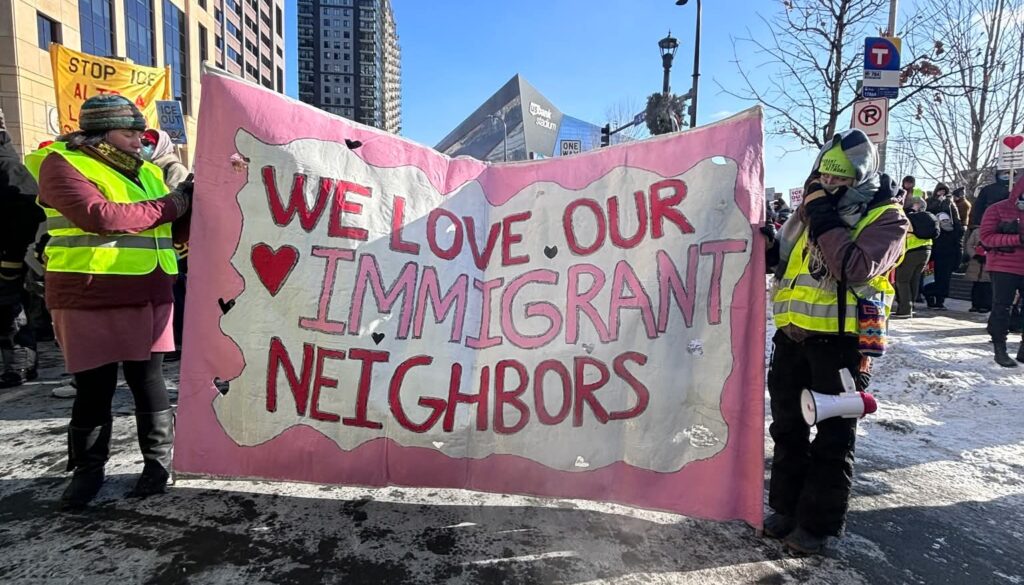
Minnesotans process latest ICE shooting
Minnesotans are coming to grips with another fatal shooting carried out by federal immigration officers, and local voices say they are balancing grief with a strong will to keep defending the constitutional rights of their neighbours and surrounding communities.
Saturday’s fatal shooting of Alex Pretti in Minneapolis came a little more than two weeks after the Renee Good tragedy.
The descriptions by Trump administration officials of both shootings have been widely criticized by the public for falsehoods, with many claiming video contradicts statements defending officers’ actions.
The Minnesota-based Communities Organizing Latino Power and Action, or COPAL, says the deaths are the result of a reckless ICE operation.
Francisco Segovia, executive director of the group, says people in vulnerable neighbourhoods are walking a tightrope right now.
“We’re now in a very scary moment, and as an immigrant myself,” says Segovia.
“I know other immigrants as well who are expressing their concern are also fearful of becoming a target. The balance between being fearful and finding courage, it goes day by day.”
He notes the growing unity in Minnesota, including a large-scale protest last Friday, shows communities are standing firm, no matter the exhaustion being felt.
COPAL called on ICE to leave the state immediately and to release legal observers and peaceful protesters who’ve been detained.
The Department of Homeland Security has routinely accused residents and elected officials in Minnesota of interfering with the expanded immigration enforcement, but opponents counter ICE agents are responsible for the tensions.
Naomi Kritzer, a writer and St. Paul resident, says she feels anger over how Trump administration officials characterized the shootings and the residents who were killed.
She wants meaningful action from elected leaders, asking Democrats to exhaust any powers they have to stop ICE activity and for Republican members of the state’s congressional delegation to not blindly support what’s happening.
“This is not a complicated moral question,” contends Kritzer.
“This is a situation where our state is being occupied for no reason.”
The political implications loom large this week, with the U.S. Senate expected to consider a government funding bill amid pressure to exclude ICE funding.
Segovia points out the public pressure helps, but he is skeptical that the funds will be dropped, pointing to approval in the House.
In the meantime, he calls on people to donate to organizations like his as they assist community members in hiding.
“Rent, food and legal help are the three main categories that we have seen,” says Segovia.