
Fredericton City Council says more info needed about aging UNB pool
Fredericton city councillors have chosen to continue negotiations to keep the University of New Brunswick’s Sir Max Aitken Pool open instead of rejecting their proposal.
But the city council says they weren’t provided sufficient data to support the university’s $12.9 million aid request.
The request came from UNB president Paul Mazerolle several weeks ago, who informed the council that the building’s HVAC systems were about to fail. The one-page letter requested a $6 million investment to keep the HVAC system running. A project included in the request was an increase in the city’s annual contributions to the Sir Max Aitken pool building from $290,000 to $1.29 million for the next 10 years.
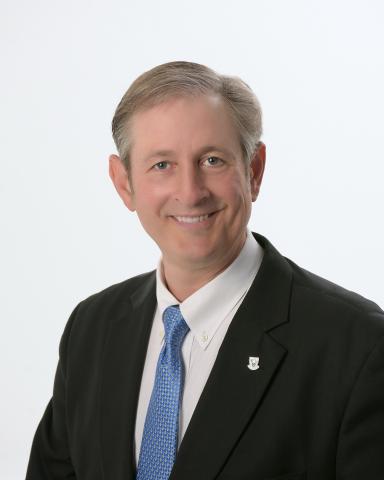
Greg Ericson, Fredericton councillor for Ward 8, says the request did not include any specifics, such as an engineering report.
“It was just a one-page letter request. It also said that UNB was not going to make the city whole if, for other reasons, the building closed for other unforeseen mechanical or technical problems,” said Ericson.
He also pointed out the city’s approach when it comes to needed repairs for its own indoor pool, located on the city’s north side.
“We see regular reports on the structural integrity of the pool and the infrastructure’s maintenance requirements, what is deferred, and costs associated,” said the Ward 8 councillor. “Council and senior staff are in a continuous habit of making sure this information is available when we are spending taxpayer dollars on infrastructure and services. We need to know what kind of value we are getting for our spend.”
According to Ericson, another piece of information that would have been useful to city councillors would be information on user groups of the UNB pool. He referenced pool usage statistics last provided by the University of New Brunswick on their website in 2018, which claim that UNB has a strong desire to keep a pool on the Fredericton campus, even though ‘more than 80 per cent of current pool users are Fredericton community members.’
“UNB continually claims that 86% of the pool user group is not related to the university, but I’m pretty sure they are only counting varsity athletes, not their own staff, faculty, and their families that use the pool. I would argue that they are part of the UNB community too,” said Ericson. “[UNB] differentiating that athletes are only using this much of [the facility] is actually inserting a new policy criteria that the city is not familiar with, and we were kind of surprised by it.”
In a Greater Fredericton Region Aquatics Facility Feasibility Study done by the Regional Services Commission 11 in 2020, UNB is cited as having stated that 40 per cent of the use of the Sir Max Aitken pool is university use and 60 per cent is very broadly defined community use. “It is important to distinguish these user types, as the university defines community use as including adult lap swim, and that is predominantly for university faculty, staff, students, and the UNB Masters swim team, which is a mix of UNB and community members. This definition of community use is inconsistent with the needs of the municipalities and local service districts.”
Ericson said the university has never shared their user data with the council. He added that the council also would have liked to know of the university’s spending habits.
“We want to know how [third parties] have performed as financial stewards of their assets and of their responsibilities. One of the things that council would have loved to know is, has UNB been spending appropriately in a preventative way on the maintenance issues of the pool in order to keep costs down and extend the lifetime, or have those expenditures been cut from budgets because of austerity and other understandable reasons,” said Ericson. “That does threaten the longevity of the pool and its ability to stay open for the interest of its users.”
Ericson says the initial agreement of the city’s $140,000 annual contribution to the university’s pool came in 2018. It resulted from a joint effort to keep the facility open for three more years.
“It has snowballed over the years to now $290,000 a year, but that is in the range of what the city was comfortable with for our understanding of the shared pool,” said Ericson.
The new request for a seven-figure increase to $1.29 million annually, according to Ericson, is a big ask with no insurance.