All three levels of government are investing a combined $1.5 million in water and sanitary sewer infrastructure in Grand-Bouctouche.
The goal is to support more housing development and improve essential municipal services for current residents.
“Reliable infrastructure is at the heart of strong communities,” said Environment and Climate Change Minister Gilles LePage, who is also minister responsible for the Regional Development Corporation.
“By improving municipal infrastructure, we are creating the conditions for new housing development, strengthening essential services and supporting the community’s long-term growth.”
The project involves extending drinking water and sanitary sewer lines along Louis-Bourg and Opale streets, as well as street reconstruction and drainage improvements.
“This investment in essential water and wastewater infrastructure will help unlock up to 30 new housing units in Grand-Bouctouche,” said Mayor Aldéo Saulnier. “By strengthening our core services along Louis-Bourg and Opale streets, we are supporting sustainable growth and creating more housing opportunities for our community.”
The provincial government, through the Regional Development Corporation, is providing $523,048, while the federal government is contributing $784,650. The municipality is providing $231,602.
The provincial government is committing more than $54 million to help New Brunswick companies upgrade operations and maintain jobs.
The support is being delivered through Opportunities NB.
Luke Randall, the minister responsible for the agency, said the goal is to help businesses manage a changing economic landscape.
“When we invest in large companies, we are supporting companies that anchor our economy and create benefits felt across supply chains and in communities throughout the province,” Randall said in a government release.
The funding is aimed at companies with long‑term growth plans in New Brunswick and is meant to provide stability as they navigate current economic conditions.
Where the funding is going
Irving Paper in Saint John will receive up to $15 million per year for three years to help the mill stay competitive and protect more than 183 jobs, according to the provincial government.
Agropur Cooperative in Miramichi is set to receive up to $2.4 million to modernize its dairy facility and expand milk‑processing capacity.
Alliance Seafood in Grand‑Bouctouche will receive up to $115,000 in payroll rebates to support as many as 28 new jobs.
Kelly Cove Salmon, a division of Cooke Aquaculture in the Saint John region, will receive up to $3.8 million in conditionally repayable assistance to modernize salmon‑farming operations.
Marwood’s Edmundston facility will receive up to $250,000 to expand operations and improve productivity.
Organigram in Moncton will receive up to $2 million over two years to increase crop yields by 10 per cent and improve efficiency.
Stantec, which operates in Fredericton and Saint John, will receive up to $800,000 in payroll rebates to create as many as 124 new jobs.
Jennifer Murray, Atlantic regional director of Unifor, said the union supports the province’s decision to provide stability for workers and producers.
“We applaud the government’s decision to stand up for New Brunswickers by keeping producers producing and workers working, while also supporting the long-term transformation of the forestry sector,” Murray said.
Opportunities NB updated its financial assistance policies in April 2025 to respond to shifting economic conditions, trade challenges and tariffs.
The agency is the province’s lead business development organization, supporting local companies and attracting new investment.
Businesses with questions about available supports can contact Opportunities NB’s Business Navigators by email or phoning 1-833-799-7966.
The Town of Rothesay is one step closer to fulfilling a long-standing ambition.
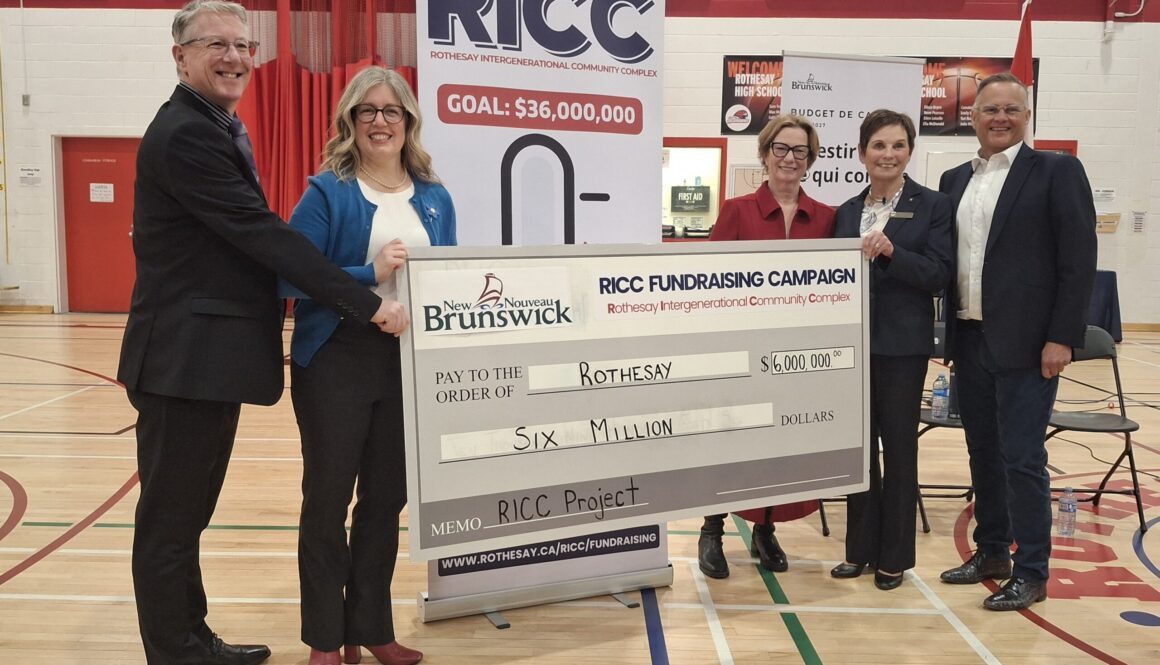
The Rothesay Intergenerational Community Complex (RICC) received a major funding boost Wednesday, a $6-million infusion from the provincial government.
Premier Susan Holt, addressing a crowd gathered at Rothesay High School, said she first heard about the RICC when Rothesay MLA Alyson Townsend came to her and said the community had a priority project the premier needed to hear about it.
“There’s a real need, we have an end-of-life facility, will you come and meet with us,” Holt said, describing the conversations she had with officials about the project.
Holt said when she met with Rothesay Mayor Nancy Grant and town staff, they presented “an exceptionally well-considered project.”
“What our government likes to do is listen to the folks on the ground,” Holt said. “It’s not up to us in Fredericton to tell you what your priorities are or what you’re going to get. We like municipalities to tell us this is our number one thing.”
Mayor Grant said it’s hard to believe the RICC is now so much closer to reality.
“But it feels so good because we’ve worked so hard and so many people have worked for this,” she said. “You know, three, four councils, two mayors, two town managers, all kinds of staff.
“It just feels like the top of the world.”
Bringing people together
Townsend described the RICC as a centrepiece for Rothesay.
“(It) will help bring our community together for decades to come,” she said. “From day one we have been working diligently to make this project a reality, and we couldn’t be more thrilled with this key investment in the town of Rothesay and our region as a whole.”
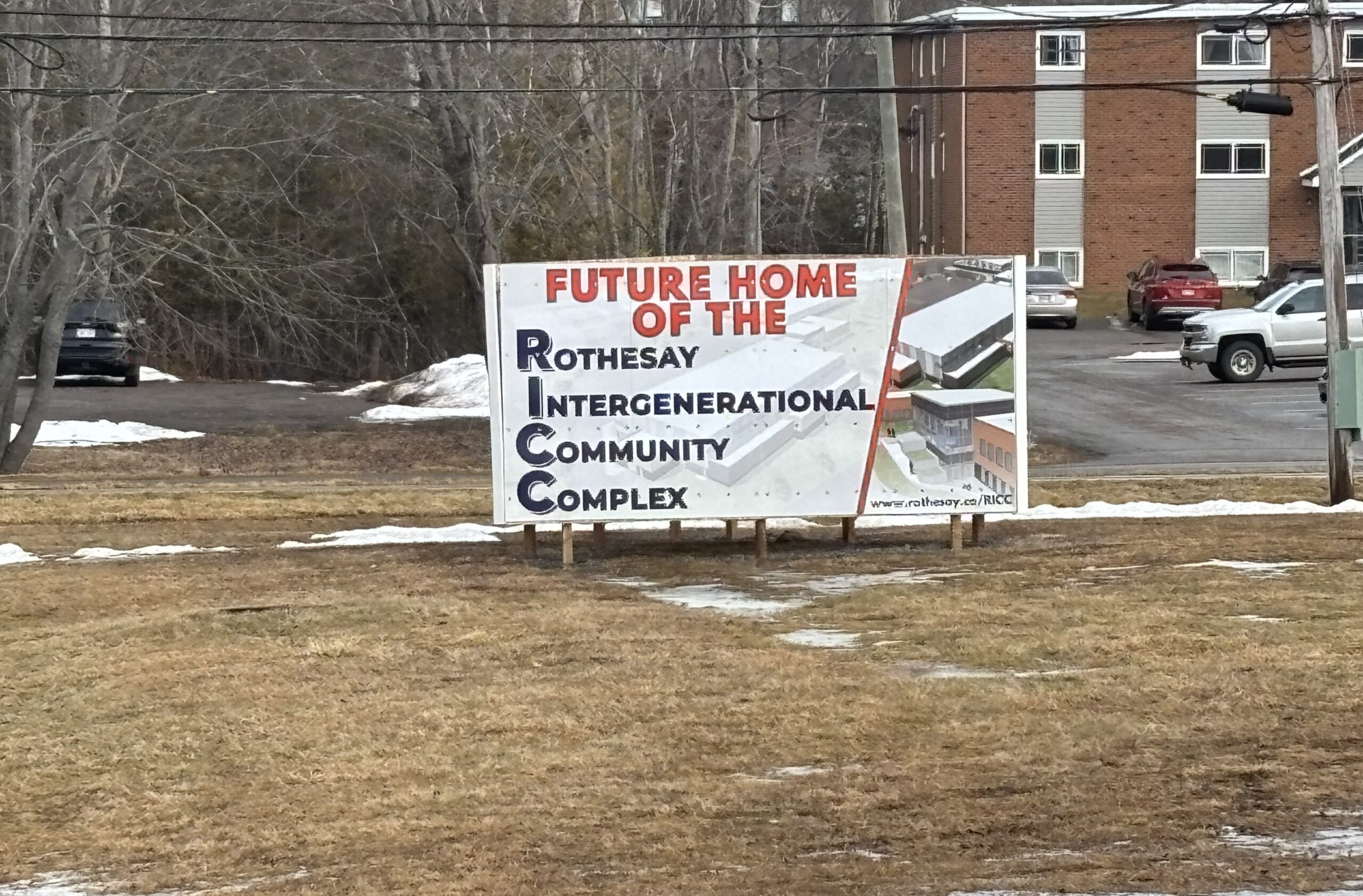
The new construction will be on this site, just off Scott Avenue, next to the existing Rothesay Arena. Image: Bryan Tait/Acadia Broadcasting
The complex will include a replacement for the aging Rothesay Arena, which Grant said was 74 years old, and Holt said she’d been informed might be the coldest arena in New Brunswick.
“You may not leave there with your toes intact if you are there for more than one game,” Holt said with a laugh.
A walking track will be part of the new arena.
The old arena will be repurposed as indoor space for other sports like basketball and pickleball. Grant said activities like dance or gymnastics could also find a home.
“Everybody’s looking for space,” she said.
Grant said the new structure and the renovated structure will be connected with a third structure that will be a public café and gathering space.
“We will truly have a community hub,” she said. “Something that we’ve wanted for years.”
Grant said the idea is to create a “complete community” in Rothesay, a walkable community where residents can get to commercial areas, recreation areas, schools and whatever else they need by simply walking.
Holt said projects like the RICC are what matters to New Brunswickers.
“By investing in community infrastructure like this, we are strengthening communities and supporting a healthier, more active future for everyone,” the premier said.
No additional ice surfaces
The new arena will only have one ice surface, and the old surface will be removed.
“That’s all we’ve been raising the money for,” Grant said. “We’ve been asked about a second surface and right now it’s just too expensive.”
Grant acknowledged the Kennebecasis Valley needs ice surfaces.
“We don’t have enough,” she added.
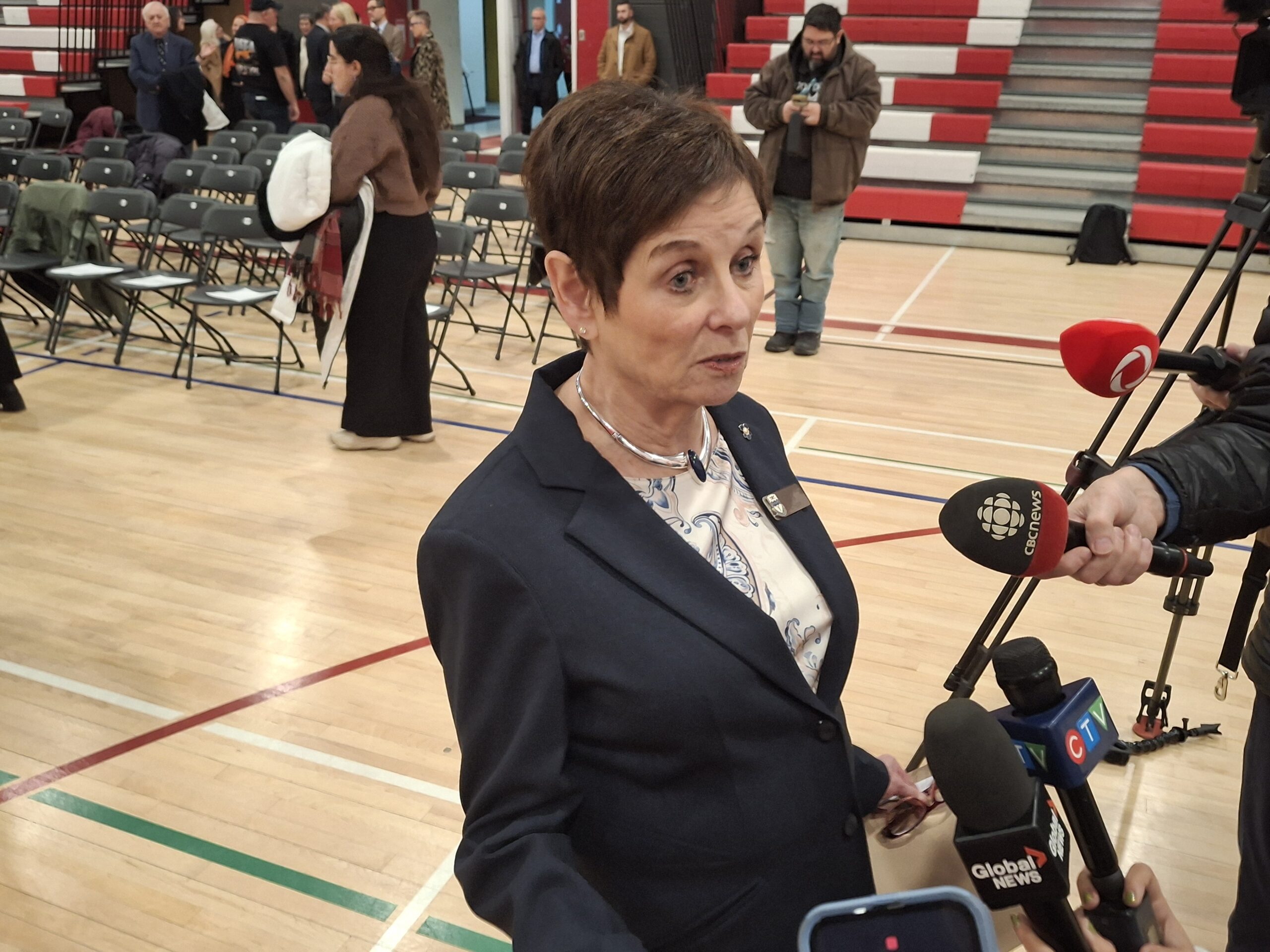
Rothesay Mayor Nancy Grant. Image: Bryan Tait/Acadia Broadcasting
There are currently three ice surfaces in Rothesay and Quispamsis. Along with the Rothesay Arena are the QPlex and the Quispamsis Memorial Arena.
Grant said a potential benefit of the new arena could be major tournaments coming to Rothesay.
“I think it could add a lot and we’ve already had comments from the hockey organizations about the possibility of more tournaments,” she said.
Next steps
Grant said the project is in the final stage of design, with the plans hopefully approved at Rothesay town council’s March meeting.
“And we’re hoping to break ground, at least on site preparation, in late April,” she said. “And we expect … the rink will be operational in the fall of 2028.”
Grant said there is still some funding to be secured, but the project is in a place where she’s confident it will come and the real work can finally begin.