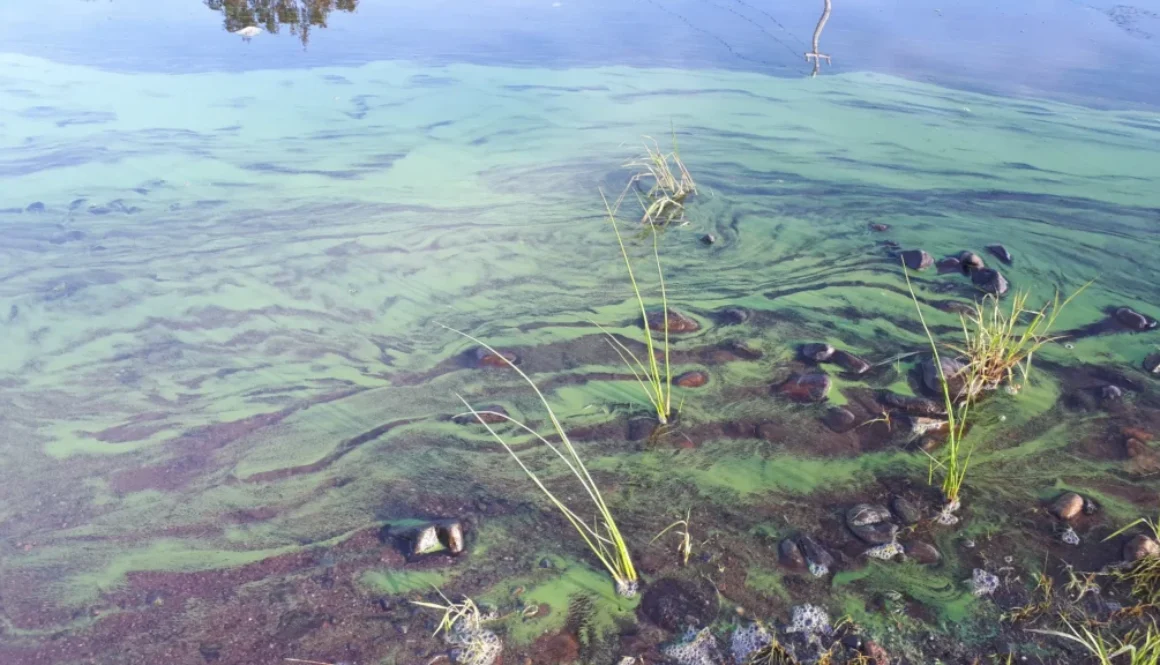
Blue-Green Algae detected at Hazelwood Lake
The Ministry of the Environment, Conservation and Parks says that blue-green algae (BGA) has been found in a water sample from the Hazelwood Lake Conservation Area.
BGA are microscopic organisms that exist naturally in lakes and streams. They are usually found in small numbers, but when warm, shallow water is exposed to a lot of sunlight, they can quickly multiply into blooms that produce toxins.
BGA toxins spread to humans and animals through breathing, skin contact, or consuming contaminated water.
The ministry reminds the public to avoid drinking, using, or swimming in BGA-contaminated water. Pets should also be kept away.
Water contaminated by BGA should be avoided not just while a bloom is present, but for approximately two weeks after it is gone.
If contact is made with a BGA bloom, it is recommended to wash with soap and water and rinse with clean water to remove the algae.
The ministry states that BGA blooms are not common in the area historically, but climate change and rising water temperatures may make algae blooms more frequent in the future.