ByNathalie Sturgeon, Local Journalism Initiative Reporter, The St. Croix Courier
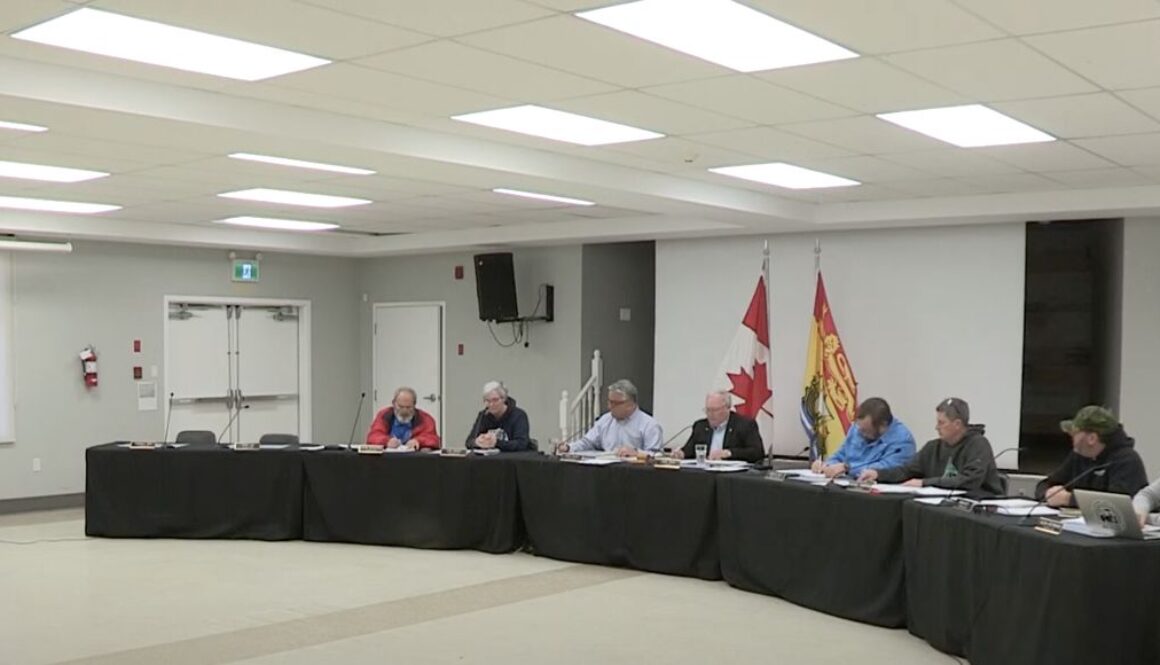
Eastern Charlotte Mayor John Craig will receive a letter of reprimand from the council following two breaches of the code of conduct bylaw.
A complaint was lodged by Coun. Lisa McKay after it was reported by CBC New Brunswick that Craig signed a letter in support of J.D. Irving, Limited (JDI), which was requesting permission to log thousands of hectares of protected areas in exchange for conserving lands near those communities.
“Further, in a council meeting held on Feb. 10, 2026, when I raised this matter in my role as an elected representative seeking clarity and accountability, the mayor responded in a manner that I believe was inappropriate for public forum and inconsistent with the respectful and professional conduct expected within council,” she said during a previous meeting.
She told council Craig made comments like “holier than thou” and that he “was not perfect like you” during a Feb. 10 Committee of the Whole meeting. Craig would later say it was his reaction to being asked to resign twice in the same meeting, something he said the council has no authority to call for.
“Yes, I probably should have never said that,” he said. “I was attacked in a public meeting and was twice asked to resign, and I lost my composure and I apologize.”
He also took a trip to Ottawa in partnership with the City of Campbell River. McKay said the trip was taken without prior knowledge or approval.
Craig said the purpose of the trip was to ensure that a formal ban on open-net pen salmon farming scheduled to be implemented by the federal government in British Columbia at the end of June 2029 would not extend to the East Coast.
As mayor, Craig is the spokesperson for the Municipality of Eastern Charlotte and said he regularly attends events on behalf of council.
McKay requested the full accounting of the trip, including associated costs. Craig told the council the trip was paid for by the City of Campbell River, B.C., which invited him to represent the east coast interest in the aquaculture industry, and everything else was paid for out of his own pocket.
“There was nothing Eastern Charlotte paid for,” he said in response to the letter.
He said a full financial disclosure was filed with Eastern Charlotte’s chief administrative officer, Jason Gaudet, who later confirmed that detail.
“It was not a pleasure trip. As anybody knows, I don’t like flying, [and] it was three days of lobbying MPs (Members of Parliament) along[side] Mayor Kermit Dahl for the City of Campbell River,” he said.
Aquaculture and fisheries are significant industries in Eastern Charlotte, with Cooke — an international seafood company — and Connors Brothers, a fish-packing and processing plant, among other major employers.
Cooke employs roughly 1,500 individuals in New Brunswick and 2,500 throughout Atlantic Canada.
The Courier has reached out to McKay, who was not present at the meeting, and is awaiting a response.
It was the first code of conduct meeting to be discussed in open session since the Local Governance Commission issued an advisory stating that councillors and mayors cannot be classified as employees for the purposes of the closed session exemptions in Section 68(1) of the Local Governance Act.
As mayor, Craig serves as the spokesperson for the Municipality of Eastern Charlotte and said he regularly attends events on behalf of council.
It remains unclear which of the three actions were considered a breach of the bylaw, as council went into closed session to discuss the advice of legal counsel under one of the exemptions set out in Section (68)(1) of the Act.
Council did not discuss the legal advice in detail but voted unanimously to send a letter of reprimand. They also voted to send it within the next 30 days.
Craig told The Courier these actions stemmed from his passion for Eastern Charlotte and defending local industry and jobs.
“In my zest to do that, [and] in hindsight, I should have informed the council from the beginning and apologized to council,” he said in a statement to The Courier. We can put this behind us as a lesson learned.”
Craig said he has always been clear this job requires constant learning.
“If I make a mistake, I own it and move on from it … that’s what leaders do,” he said.
New Brunswick will hold municipal elections on May 11.
And three municipal associations are doing their part to encourage people to run in those elections.
The Union of Municipalities of New Brunswick (UMNB), the Association francophone des municipalités du N.-B. (AFMNB), and the Association of Municipal Administrators of New Brunswick (AMANB) launched an awareness campaign recently.
The campaign is about encouraging interested people to run for council this spring.
“Municipalities across the province have experienced significant changes since January 2023, and our municipal elected officials, with the support of municipal administrations, have met these challenges with energy and determination,” said Serge Arsenault, Chief Administrative Officer of the Town of Grand-Bouctouche and Vice-President of the AMANB.
“They have paved the way for even stronger local governance. We are calling on citizens who want to take part in this important work. Our municipalities need your leadership and your ideas. “Municipal administrators will be your allies in advancing the issues that matter to you and your region.”
Yvon Godin, a councillor for Rivière-du-Nord and president of the AFMNB, said the hope is to have municipal councils reflect the diversity of today’s society.
“The members of our three associations firmly believe that New Brunswick will be more inclusive and better equipped to grow if our local governance demonstrates leadership in openness to all,” he said.
“We are the level of government closest to people’s daily lives. When municipal councils have the privilege of drawing on a wide range of perspectives, they expand the pool of possible solutions for their communities.”
The campaign will be accompanied by information sessions for people interested in running, and a variety of local activities aimed at the explaining the role of elected municipal officials.
By Nathalie Sturgeon, Local Journalism Initiative Reporter, The Courier
This is the second article in a two-part series that examines the province of New Brunswick’s decision not to make training mandatory for municipal officials, instead providing a voluntary option. You can read Part 1 of the series here.
A long-time civil servant with roots in Charlotte County believes training for municipal officials would have prevented issues now being faced by several municipalities.
Brenda Knight was appointed as supervisor of the rural community of Miramichi River Valley by the Department of Local Government (ELG) after the municipality lost quorum due to resignations.
It is one of several municipalities that have come under the supervision of the department since local governance reform began in 2023.
“It has been an extremely interesting and eye-opening experience,” Knight wrote in an email to the department sharing her thoughts.
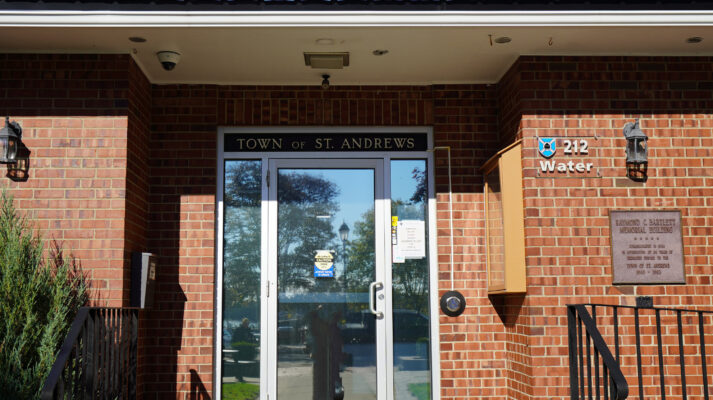
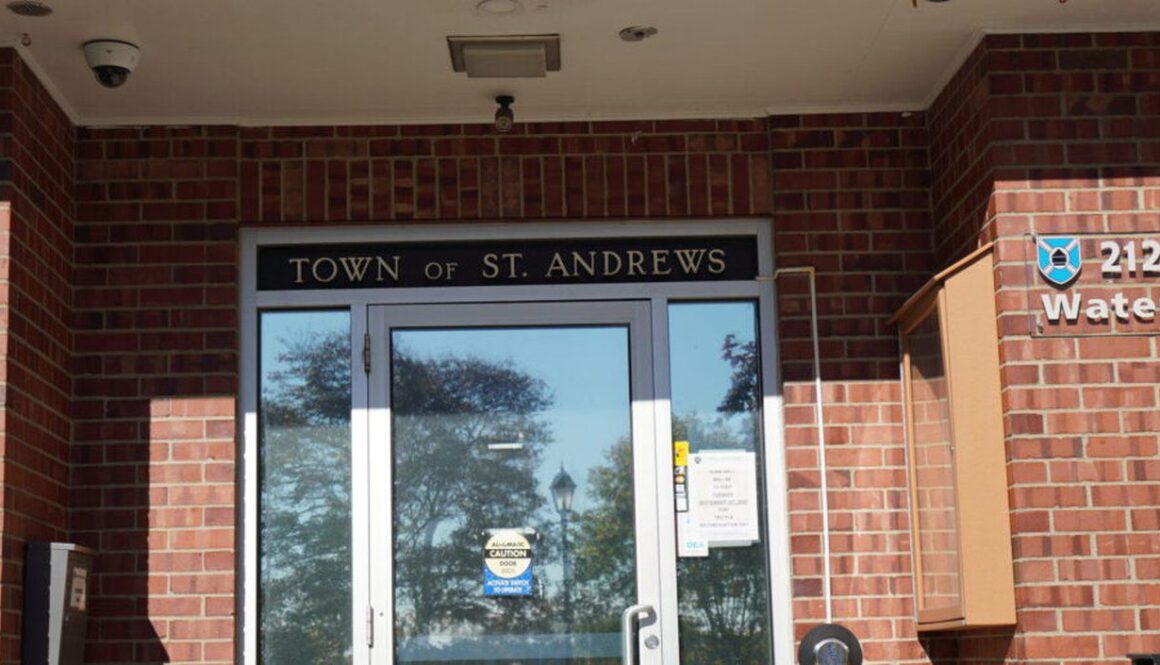
Town hall in Saint Andrews on Water Street. Image: Nathalie Sturgeon/Local Journalism Initiative reporter, The Courier
Knight worked as the town manager for St. Stephen from 2001 to 2005. She also served as the trustee for Regional Service Commission 8 in 2019, replacing the board of directors for a defined time to provide governance and broad oversight to the commission and its activities, according to the l’Université de Moncton.
In her letter to the department, Knight spoke to the challenges of amalgamating fire departments and said “there should have been training and/or a transition period guided by the local service managers” to better support the municipality in operating those services.
She also said rural plans should have been developed prior to annexing the areas into municipalities.
“Draft rural plans are being developed now, but it is too late for some residents who have been left blindsided by developers, with no one and no process to hear their concerns,” Knight wrote.
Additionally, she said the council was “knee-deep in administrative duties.”
“Had there been previous training of these elected officials, none of this would have occurred or be allowed,” Knight said. “As well, some administrators in the smaller local governments have been in their position for years and continue to do things ‘the way they’ve always been done.’”
Knight said training is “the key element” and “I can well imagine there are other municipalities in the province of New Brunswick in the same position” as Miramichi River Valley.
But training is not something that will become mandatory for municipal leaders and staff in New Brunswick after the provincial government rejected a request by the Local Government Commission (LGC).
The Department of Local Government said it will instead focus on addressing the barriers which may have prevented elected officials from engaging with the training offered in partnership with municipal associations.
Municipal District of St. Stephen Mayor Allan MacEachern said legislating mandatory training might be difficult, but would be a good asset. Image: Nathalie Sturgeon/Local Journalism Initiative reporter, The Courier
However, many local governments and others across the province are backing the commission’s call for mandatory training, including City of Fredericton Chief Administrative Officer Steven Hart.
“The commission rightly highlights a widespread lack of understanding of both foundational principles of local governance and the specific regulations, such as codes of conduct,” he said. “Small communities, in particular, face challenges in navigating the full scope of legislation and responsibilities.”
Ray Riddell, chair of the Fundy Rural District Advisory Council, also expressed his support for mandatory training. He said councils and regional service commissions are often operating outside their legislated mandate due to a “lack of ability to interpret legislation.”
Local reaction to decision
Eastern Charlotte Mayor John Craig said he believes mandatory training would be an asset for local governments in New Brunswick.
“Especially now with amalgamation, you have a fair amount of people that will get elected [who] have never served on any municipal government,” he said, speaking with The Courier.
Craig said he believes training should be mandatory, with retraining mid-mandate.
“At the end of the day, it’s good for them too that people are getting trained because it helps them do their job properly,” he said. “We’re all going to make mistakes, but it helps.”
Craig has been a municipal leader for 19 years, serving three different communities, and said he is still learning.
“If you think you know everything about this business, it’s time to get out,” he said.
Municipal District of St. Stephen (MDSS) Mayor Allan MacEachern said he felt it would be difficult to mandate training, adding he is concerned about the patchwork that might emerge.
“Because then you’re counting on every municipality to provide the same training and have that expertise ready and available,” MacEachern said.
He said he knows the province is concerned about the level of turnover within municipalities and it seemed the department was listening, but has since backed away from the support for mandatory training.
“I think it would be better accepted if it came from the province because you’re depending on each municipality to do it [and] trust that’s the right direction to be led and to be taught,” he said.
Saint Andrews Mayor Kate Akagi said she received training when she was first elected and found it helpful.
“The training was great. We went to Fredericton, we spent the two days there learning all about how municipalities work and the operation,” she said. “I think it is imperative that they train new people [who] are trying to do this job as to what they have to do.”
Akagi said the time commitment was the most surprising thing about joining local government, adding it isn’t just one or two meetings a month.
“I think they need the province to step in and do the training,” she said. “I think that is imperative.”
Local Government Minister Aaron Kennedy said he welcomes the idea of councils doing their own orientation package, but training will be available from the province. In his time as chief administrative officer for the Town of Quispamsis, he said orientation was important in identifying the varying time commitments, salary expectations, among other aspects of the job.
He said he does understand the frustration municipalities feel, especially newly created ones and newly elected leaders.
“I think when you get the newly elected folks in the spring knowing that this is the way it is and maybe we’ve gotten beyond the frustration … with the changes that we weren’t totally thrilled with, then they’ll start to realize that this is the way it is,” he said. “We’re not going to get rid of the old structure that was put in place three years ago.”
Kennedy said that is why there should be more collaboration between municipalities and the department.
“If we have questions, you know, talk to the department,” he said. “If we have training that’s afforded to us, we should all make sure that we take part in that, and then that’s going to help us provide good governance to the people who rely on us and the people who elected us.”
Municipal elections are scheduled to be held May 11.
By Nathalie Sturgeon, Local Journalism Initiative Reporter, The Courier
This is the first article in a two-part series that examines the province of New Brunswick’s decision not to make training mandatory for municipal officials, instead providing a voluntary option.
A recommendation by the Local Governance Commission (LGC) to make training mandatory for municipal leaders and staff will not be implemented by the Department of Local Government (ELG).
In September, the LGC said mandatory training would address the ongoing challenges many local governments have faced since municipal reform in 2023.
Commission Chair Gisele Goguen said in a release at the time that failure to complete the training should result in appropriate sanctions.
Local Government Minister Aaron Kennedy told Goguen in a letter that the department will work with the municipal associations to provide a “comprehensive orientation program” for elected officials and administrative staff following the May election.
However, the department rejected making it mandatory.
“The department has decided to focus [its] efforts in the coming months to address the barriers which may have prevented elected officials from engaging with the training offered in partnership with the municipal associations,” the letter reads.
In the months following the recommendation, the commission also released an advisory warning that code of conduct and conflict of interest meetings could not be held in closed session, and were wrongly being dealt with under Section 68(1)(j) of the Local Governance Act (LGA) as “labour and employment matters.”
The LGC cited two decisions that demonstrated elected municipal leaders could not be considered employees of the local government.
Several exemptions listed under Section 68(1) of the LGA in which council may enter closed session during a council meeting include legal advice and personal information as defined in the Right to Information and Protection of Privacy Act.
Both Eastern Charlotte and Saint Andrews raised concerns about the advisory, saying the complaint process could be used inappropriately. The council in Saint Andrews asked ELG to create a standardized process for councils in New Brunswick to follow, but the department said it would be up to each municipality to consult legal counsel on legislative interpretation.
In St. Stephen, the council removed all references to closed sessions in accordance with the advisory, apart from the exemptions under Section 68(1), particularly for legal advice.
“It’s only been three years — three years and a bit — since we started these communities. It takes time and it takes effort to build community, and training is a fundamental block of that. We need to ensure that all communities have access to the information they need, and the support, and the resources.” – Dan Murphy, Union of Municipalities of New Brunswick
Goguen said in a statement to The Courier that it was disappointed the department decided not to move forward with mandatory training.
“The commission continues to maintain that mandatory training in the key areas we have identified would be the best and most efficient way for the department to ensure that local government leaders have consistent access to the tools, information and foundational knowledge necessary to help them serve their communities,” she said.
Goguen said the commission will continue to advocate for mandatory training, calling it a “critical component of strengthening local governance across our province.”
Meanwhile, the executive director of the Union of Municipalities of New Brunswick (UMNB) said he was surprised by the department’s decision.
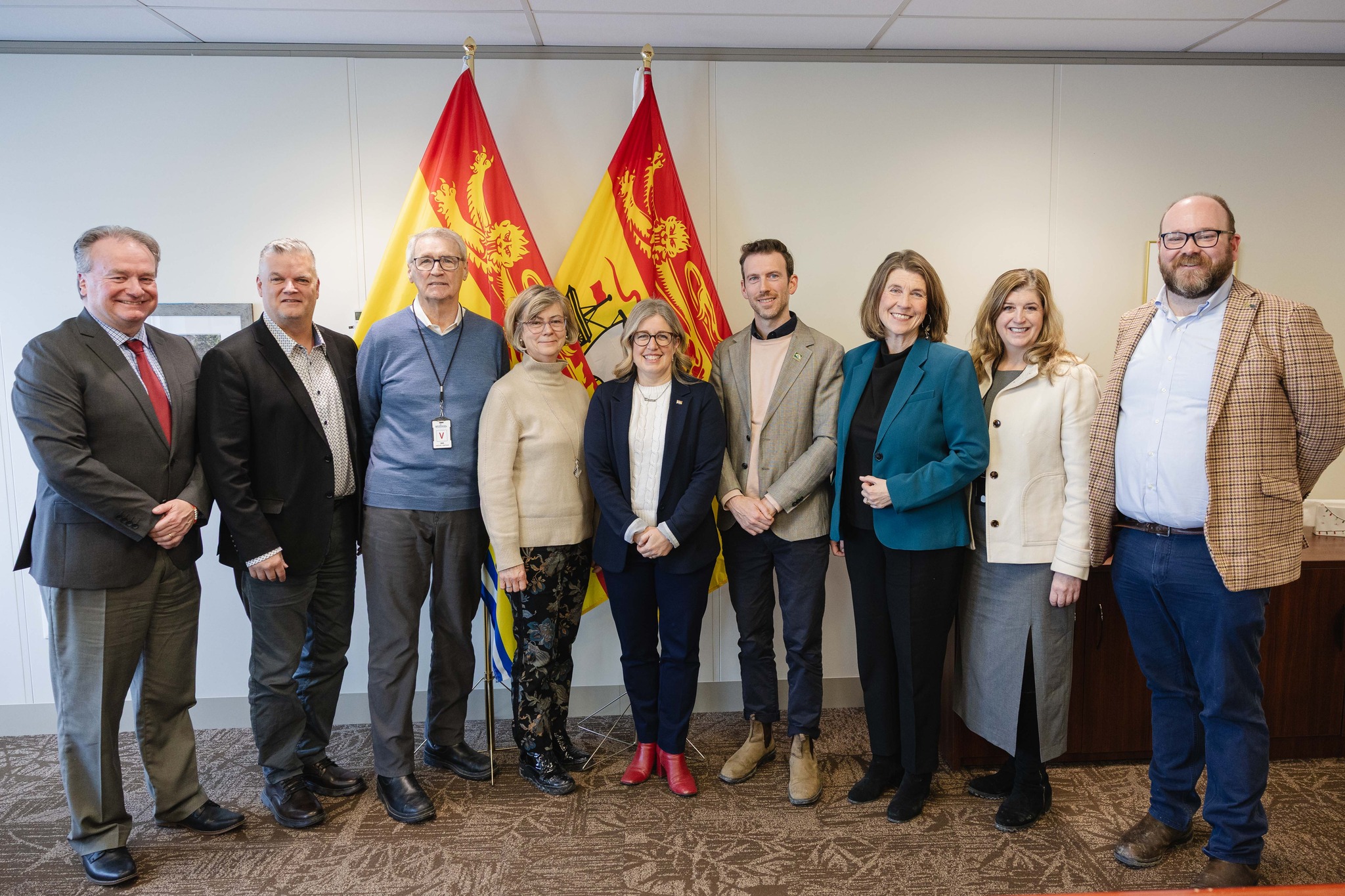
Local Government Minister Aaron Kennedy meeting with the Union of Municipalities of New Brunswick.
“Our association, the other municipal associations [and] our members came through loud and clear that they thought this was important. So it was surprising for us at the end of the day,” Dan Murphy said.
He said there is room for standardized training through the department.
“Having some type of requirement and creating [a] culture around ongoing training is important, and I think the department understands that. It’s something that we’re working on in collaboration with them, but I think the decision not to move forward with the mandatory training part means that there’s going to be a patchwork element to it, and so we need to figure out how to address that,” he said.
Murphy said he hopes that patchwork doesn’t put municipalities in the same situation they faced with code of conduct and conflict of interest.
“I think we were all working hard so that that doesn’t happen, but local governance reform is ongoing,” he said. “It’s only been three years — three years and a bit — since we started these communities. It takes time and it takes effort to build community, and training is a fundamental block of that. We need to ensure that all communities have access to the information they need, and the support, and the resources.”
Murphy said work with the department is ongoing, including some of the pre-election work mentioned by Kennedy and voluntary training offered through the two associations.
Jurisdictional scan, decision
The department did a jurisdictional scan, which identified six of nine provinces as requiring mandatory training for elected officials.
On Nov. 3, documents show the research identified Alberta, Manitoba, Quebec, Nova Scotia, Prince Edward Island, and Newfoundland and Labrador, with Nova Scotia and Prince Edward Island identifying code of conduct training as mandatory.
“The most common enforcement mechanism for non-compliance is the imposition of sanctions, including suspension of duties,” the advice-to-minister report on Nov. 3 said. “As part of the jurisdictional scan, in some instances no sanctions were identified for mandatory training requirements.”
It also said that in 2023, post-amalgamation, ELG hosted a local governance orientation that included seven virtual sessions for elected and non-elected officials and one in-person session over a three-week period. Average participation was 281 — more than two-thirds of the 401 officials elected in 2022.
Emails show the department decided in November it would not proceed with mandatory training, despite not notifying the commission until December.
On Nov. 14, department official Grace Lee Cutler wrote to Assistant Deputy Minister Jennifer Wilkins that mandatory training was “not proceeding.”
However, emails show department staff weren’t preparing draft responses to the commission’s recommendations until a month later. On Dec. 19, a letter from Kennedy was sent to Goguen saying the “department would not move forward with an amendment to the Act at this time.”
“We’re going to work together.” – Local Government Minister Aaron Kennedy
Several municipalities in New Brunswick have come under the supervision of ELG. Both Miramichi River Valley and Sunbury-York South were placed under supervision due to resignations and loss of quorum. Strait Shores and Lakeland Ridges are under supervision due to internal turmoil, code of conduct violations and dysfunction.
The local government minister said there is too much hang-up on the word mandatory.
“There [have] been [a] myriad of training opportunities over the last three years since local governance reform was put in place,” Aaron Kennedy said in an interview with The Courier. “There will be a robust post election training that will be available to the newly elected officials and folks who were previously elected, who get reelected, and we are going to do the best that we can to encourage those people to take part in the training.”
Kennedy said the plan is to identify the barriers for people who do or don’t participate and try to elevate them. He said the issue becomes whether mandatory training fits within the democratic process.
“If councillors … decide that, for whatever reason, they’re not taking part in mandatory training and then the minister of local government comes in and says, ‘well, that’s lovely, but that’s your decision not to take part in the mandatory training and now these are the repercussions,’ whether it’s a suspension or vacating the seat as extreme as that. I mean these people have been elected. That’s the democratic process,” he said.
The department will make participation part of the public record, he explained, adding constituents can view that for themselves, question the councillor or mayor, and hold those individuals to account during the next election.
“We’re going to work together,” he said. “The department is there daily to field calls from mayors and councillors and CAOs. If there’s any way that we can assist, sometimes on mundane day-to-day things, we’re able to do that.”
Kennedy said cost was not part of the decision not to move forward.
“I think when we look right now, we have three out of 77 local governments in New Brunswick that are under a supervisor. So that means 74 that aren’t,” he said.
He added the one thing the municipalities placed under supervision have in common is that they were all newly created.
“One could argue that they were victims of forced amalgamation from the previous government. They weren’t happy, I think it’s fair to say, becoming a municipality in areas that were formerly in local service districts, so there was that sort of frustration, is probably the best word to use going into that process.”
The City of Thunder Bay is hosting an Election Information Night for those curious about municipal politics.
Potential leaders and interested community members are invited to the free, in-person event at 6:00 pm on February 25. It will be held at the 55 Plus Centre on River St.
“Municipal elections shape the decisions that affect our community every day, and they work best when people feel informed and included,” said Krista Power, City Clerk and Returning Officer for the 2026 Municipal Election. “Getting involved shouldn’t feel intimidating, and we are trying to make the election process, and the idea of running for office as accessible as possible.”
The evening will begin with a short, high-level presentation followed by an open opportunity to speak with city staff.
“Whether you’ve ever wondered what it takes to run for office, are interested in working on election day, or just want to better understand how voting works, this session is about increasing your understanding of how cities and their council’s function,” said Crystal DePeuter, Election Coordinator.
The city expects this to be the only in-person information session ahead of October’s municipal election.
The Association of Municipalities of Ontario (AMO) is hosting a free online workshop for young adults looking to get into local politics.
Steam 2 of the AMO’s Strong Leaders, Stronger Communities is targeted towards potential candidates who want to build confidence before launching their first campaign. The AMO says the workshop will help potential candidates learn clarity of purpose, resilience in conflict, and networking skills.
“As Ontario heads toward the 2026 municipal elections, elected officials and aspiring candidates are being tested like never before,” the AMO wrote on their website. “From navigating divisive politics and social media toxicity to maintaining personal wellbeing under constant public scrutiny, the demands of leadership can feel overwhelming. Stronger Leaders, Stronger Communities is designed to equip you with the tools, resilience, and confidence to meet these challenges head-on, and to rediscover the purpose that brought you to public service in the first place.”
There are four streams planned from March to May. The first is scheduled for March 10 at 6:30 pm via Zoom. Each stream has four sessions (you can register for the full stream or individual sessions):
Session 1: Finding Your Why – Leading with Purpose and Authenticity
Session 2: Praise Your Rivals – Managing Conflict and Building Effective Relationships
Session 3: What Matters Most – Prioritizing Mental Health and Wellbeing
Session 4: Building Your Movement – Turning Values into Action
By Nathalie Sturgeon, Local Journalism Initiative Reporter, The Courier
The Municipal District of St. Stephen (MDSS) has decided not to change the public comment period from its regular meetings.
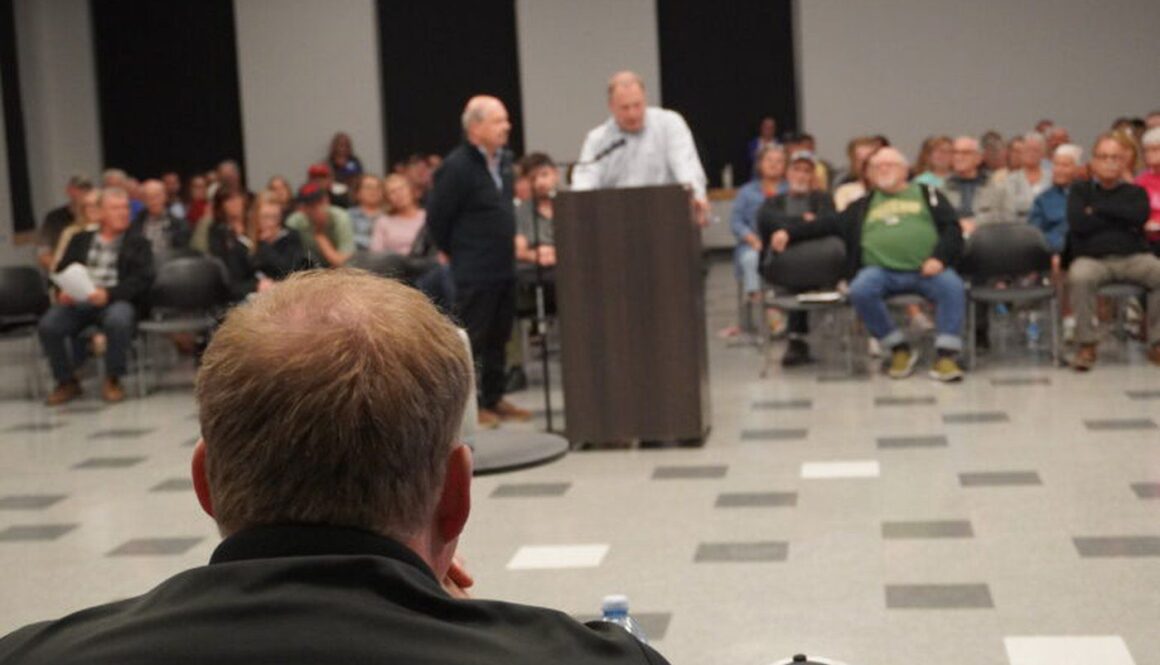
A public comment period is held toward the beginning of the meeting, allowing individuals to speak and ask questions, though the council cannot respond or enter into debate.
Chief Administrative Officer Jeff Renaud offered change to the council through three options but said staff was not making a recommendation because the decision must be made by the councillors.
Some of the options included pre-registration prior to the meeting, eliminating it all together, and not broadcasting or recording it.
“We wanted to make sure that this came to this council, you have three options there of varying styles,” Renaud told the council. “Administration is looking for direction or if there is a preferred style there … or if you just want to keep things how they are, just feedback for us so we know where to direct our energies.”
Many councillors expressed a desire for change. The municipality has been open about facing harassment in recent months and issued a statement in August 2025.
Not the right time
Coun. Joyce Wright said she prefers a one-on-one discussion outside of a council meeting.
“Every time I’ve offered to meet with someone and have a coffee when there [are] concerns, I never get taken up on that,” she said, during the meeting. “We need to foster [a community that] reaches out to their councillors just like they do their MLA, just like they do with their MP.”
She said although she felt something needed to change, the timing was not right.
“I’m going to throw a bombshell here, I think we were late to the game in doing it,” Wright said. “If we were going to do this as this council, I would want to see us do it in a time frame that allows … for the public to see the benefits of it, to see the results of it.”
Wright pointed to the fact that councils across the province are nearing the end of their terms, with an election scheduled May 11.
“While I agree changes need to be made, I’m not sure now is the time to make them,” she said.
Coun. David Hyslop said he agreed with Wright, noting this council would be unlikely to see the benefits and could create a challenge for the incoming council, depending on how it wants the meetings to operate.
Hyslop and Coun. Marg Harding both sat on the council that brought a public comment period to regular council meetings.
“It was before all the cameras, and everything, and it was a pretty open conversation,” he said. “I like to see [the] comment period before decisions are made.”
He believed the public comment period should move to Committee of the Whole— a meeting where council discusses reports, policies with staff in a less formal manner—which would allow him more insight into how the community feels before casting his vote on an issue.
“It used to be … everybody turned around and said ‘do you have any questions’ after every committee presented and that is how it went, it was pretty easy-going, but then when you’ve got cameras on you, we don’t talk as openly as what we used to … because you’ve got cameras because you’ve got people watching us and taking it out context,” he said.
Hyslop said people have published parts of videos out of context, which has led to harassment of him and his family.
“I’ve got 300 messages on my phone that are disgusting—that attack me and attack my wife for something that was never said at a council meeting,” he said. “So something has got to change.”
Hyslop said he doesn’t believe it is the right time to make the change so close to an election.
CHCO-TV, which is owner of The Courier, provides an operator for the camera system at the Garcelon Civic Centre. Those meetings are broadcast on television and posted to YouTube.
Mayor Allan MacEachern said in the past, the public comment period was about something specific—an issue an individual was passionate about—but said that it has become individuals who persistently come to the podium.
“A lot of these questions deserve a lot of dialogue and you can’t do that in the two minutes either,” he said. “My goal was to, hopefully, pave the way for the new council.”
Coun. Wade Greenlaw said he agreed with Hyslop that the public comment period should be moved to Committee of the Whole, where much of the debate and discussion around policy decisions takes place.
“I feel that any feedback from the community is valuable in any format,” he said during the meeting, adding he believed the podium provides people with a stronger impact than an email or a one-on-one conversation.
Greenlaw said he felt the public comment period needed to be kept, but thinks it should be more meaningful, in the form of town halls—an informal meeting where a dialogue can be held between council and the public on a particular issue.
Coun. Marg Harding has been around the horseshoe for a little more than two decades. She said people come to her all the time in regards to issues within the municipality. She said if you keep pushing people to come speak to you on an individual basis, they will come in time.
MacEachern said he understands the frustration by the public who are looking for a dialogue and a response to their questions.
“It just ends there, and it’s dead air, and we go back into our meeting,” he said.
Renaud explained to the council, a newly hired communications officer would be part of how it moves forward with public engagement, including public comment period.
Coun. Brian Cornish said he agrees this council shouldn’t be the one to decide. He said it shouldn’t be about controlling it, but managing it effectively when it does get out of hand.
The council ultimately decided not to move forward with any changes. Renaud said the dialogue will be carried forward to the new council.
‘The public won’t stand for it’
Geoff Martin, an assistant professor at Mount Allison University, said the administration should look to see if what they are proposing is legally allowed, like preventing people from filming a public meeting.
“I’m not a lawyer, but I think the answer is probably no,” he said, speaking to The Courier.
He said it is often easier for municipalities to operate in closed because people don’t really know what is going on.
“You can kind of say: oh, well, [the public] can come and vote in three or four years based on the results we get and so on. But you know, we don’t really want to hear from you, or we [only] want you to communicate with us only in the ways that suit us,” he said.
He said some of the strife comes from the amalgamation of communities not previously included in municipalities—who feel like they have been taken over by a level of government they didn’t necessarily want—who may be unfamiliar with that type of governance.
“I think in that environment, I think there has to be greater sensitivity,” he said. “To be careful with how things are done, and being more than willing to show that things are being done in [an] efficient way and that the municipality is open to hearing from the people, and is open to providing explanations for what they’re doing.”
Martin said when questions become repetitive on a single issue then it is up to the chair to handle it appropriately.
Public life, he explained, is just that—public.
“If you want to go into public life, you need to choose your words carefully. You need to plan on how you’re going to communicate,” he said.
Martin said he recognizes that municipal officials are facing more scrutiny than before, but there should be proper resources to deal with the small population of people who go over the line.
“It doesn’t necessarily justify, sort of, shutting down the communications or things like that,” he said. “It certainly is a challenge for people in public life.”
St. Thomas University Public Policy professor Jamie Gillies said this is a moment in time where people wished to be heard, but also one that has brought safety concerns to the front doors of municipal leaders.
“So you can see the pressure on council to try to limit public comment or get people to register in advance so they know what is going to be on the agenda,” he said, speaking to The Courier.
Gillies said this also coincides with a desire for councils to be more transparent, accountable and accessible to the public.
He said an issue that is being pushed by the public can often become heated and animated, taking resources away from other topics the council needs to deal with.
“But trying to limit public debate is a very difficult thing to do, because the public won’t stand for it,” Gillies said, adding there are likely things council can do procedurally to make the discussion more fruitful and bring decorum back to the kind of discussions seen at the local level.
By Nathalie Sturgeon, Local Journalism Initiative Reporter, The Courier
The Town of St. Andrews is moving to amend its procedural bylaw to make staff-led meetings open to the public and to keep minutes of the local governments discussions.
Staff-led meetings were only recently placed on the town’s meeting calendar, as of August 2025. These meetings are led by Chief Administrative Office Chris Spear who discusses various policies, issues in preparation for decision making.
However, Bylaw 23-06 currently states under section 8.2 states “staff meetings of council are staff-led and will not be televised or broadcast to the public and are not open to the public to attend in person.”
The Local Governance Act outlines the reasons a council ‘may’ enter closed session under Section 68(1).
Coun. Lee Heenan read out to the council the background on the changes to the bylaw.
“In August 2025, council started to review the staff-led meeting following concerns raised by a resident regarding the closed nature of the meetings,” he said during the meeting on Jan. 19. “Staff had researched requirements in the Local Governance Act and the models of municipalities regarding a similar meeting style.
“It is not the most honest form of government.” — Geoff Martin, Mount Allison University professor.
“An amendment has been prepared by staff to provide more detail for the meeting’s purpose, format, and procedure.”
It provides clarity on the purpose of the meeting, including the informal style, that it is chaired by someone other than the mayor, and that those meetings be open to the public.
The amendment is not yet in place because the change requires three readings by the local government before it is enacted.
Spear confirmed to The Courier the bylaw was amended to open those meetings to the public.
“Council also suspended the rule for staff-led meetings to be closed part way through 2025 to allow the public access,” he said in the email statement. “It needs to be noted that no decisions were made.”
Spear added the meetings allowed staff to update the council on ongoing initiatives and get direction on future meetings.
“Sometimes guests would be invited to provide an update/input on an initiative,” he said.
Between 2024 and 2025, 17 staff-led meetings were held in closed session, according to Spear.
‘Don’t tell me, show me’
Geoff Martin, an assistant professor who studies New Brunswick politics at Mount Allison University in Sackville, said any discussion that involves policy or use of tax dollars, like building a facility or improving sidewalks, should be done in public.
He said a voter should know where each individual councillor stands on an issue, even if they don’t agree, to inform how they choose to be represented.
“You don’t know that if you’re only relying on the superficiality of a council meeting where not much is said, because everyone’s voting for motions and budgets and things that everything’s been worked out in advance,” he said, speaking to The Courier.
Martin said he believes councils do this to protect themselves.
“Let’s stay unanimous as a group, and we’re all protected, because no one can figure out if there’s something they don’t like,” he said. “Well, we can say, that’s someone else’s fault, but we can’t really say who and we’ll all take credit for what the voters do like, even if some of us never supported it.
“It is not the most honest form of government.”
Martin said there is accountability attached to saying things in public.
“I think if you try to avoid accountability by saying as little in public as possible, that itself, I think, erodes trust because … when it comes to government, including municipal government, they (the public) have a show me attitude. Don’t tell me, show me,” he said.
It comes a month after the Local Governance Commission released an advisory to all municipalities in the province saying code of conduct and conflict of interest could not be discussed in closed session, outside of the advice of a solicitor or lawyer, which is contained under Section 68(1) of the Act.
The Commission also asked the councils to review the code of conduct bylaw to bring it in line with the Act.
What happens elsewhere
In St. Stephen, a similar meeting known as Committee of the Whole—where staff give reports, discuss various initiatives, receive presentations, and review policy and is similar to the St. Andrews staff-led meeting—but is and has been open to the public, recorded, and broadcast.
St. Stephen council has held code of conduct and conflict of interest complaints in closed session, which is not permitted under the Act. The council brought the code of conduct bylaw before council on Jan. 14 through Committee of the Whole to bring it into compliance with the commission’s advisory.
“The Commission in its wisdom has made a clarification statement banning the decision making or much of the dialogue around any code of conduct complaint from being held in closed, which is common practice across Canada to be perfectly honest with you,” said St. Stephen Chief Administrative Officer Jeff Renaud.
“As a result of their decision, we had to go through our bylaw and remove any references to closed session with the exception of solicitor advice [or] the results of an investigators report, which is generally done by a solicitor.”
Coun. Wade Greenlaw asked how the commission would suggest councillors become familiar with the various Acts it is required to follow.
The Commission recommended mandatory training within six months of an election of elected officials and staff on the legislations and the responsibilities of holding municipal office.
Renaud said this would also be part of an orientation package being prepared ahead of the incoming council—a project he took on with the late Coun. Earl Eastman.
“I understand the pressures but then we’re a democracy and it becomes very difficult to try and limit the public’s input.”
“We are spending time [within our] internal orientation program on some of those key items,” he said, adding there is an individual responsibility that each councillors holds to keep themselves informed of the proper rules and regulations assigned to local governments.
No decisions were made during the Committee of the Whole, but is expected to be brought before council for three readings over the next several weeks.
The Courier reviewed the procedural bylaw for Eastern Charlotte and found no reference to closed meetings outside of those allowed by the Act.
Eastern Charlotte Chief Administrative Officer Jason Gaudet said it does hold Committee of the Whole Meetings, similar to St. Stephen, but published minutes do reflect some of those meetings, in part, were held in closed session but cites the reason.
Jamie Gillies, a professor of public policy at St. Thomas University, said councils across the province have fallen apart because of internal dynamics.
“Sometimes it is just a bit of a learning curve,” he said, adding he believes there is likely some pressure when there are meetings with stakeholders or experts to hold those in closed.
“I think part of it is the stress and concerns of elected council members and the basic decorum of the public,” he said. “This has become an era where people will come before council with anything that bothers them, and it takes a lot of time to address those issues and council has to get through a lot of things in these meetings.
“I understand the pressures but then we’re a democracy and it becomes very difficult to try and limit the public’s input.”
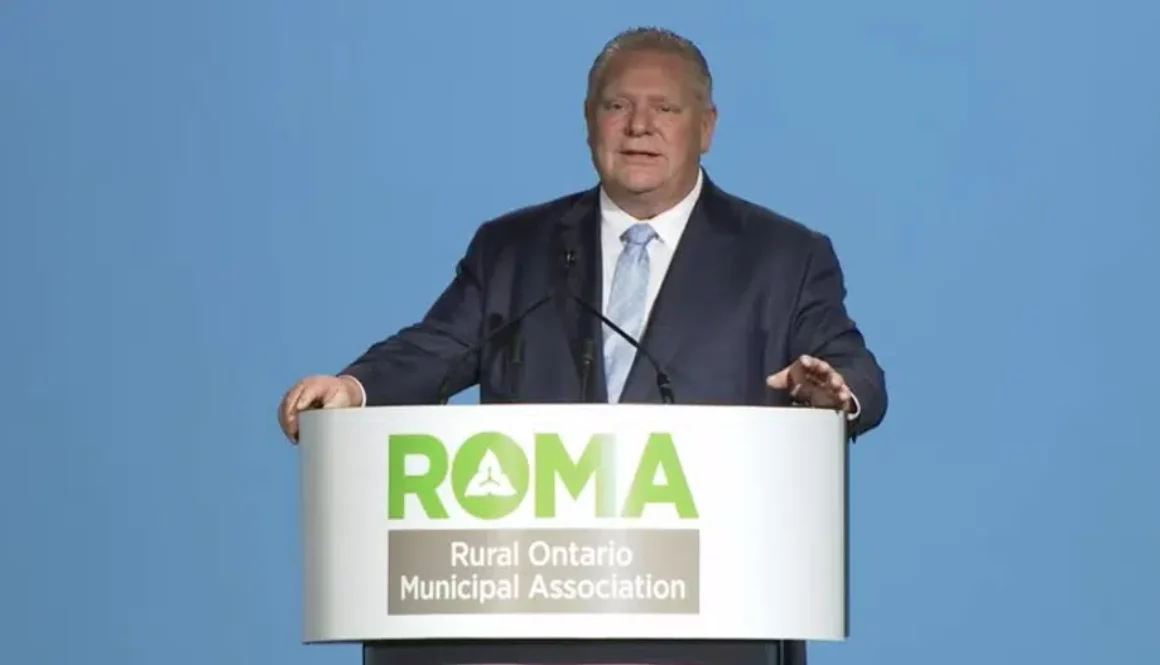
Thunder Bay delegates are in Toronto today for the annual Rural Ontario Municipalities Association (ROMA) conference.
The conference is an opportunity for provincial cabinet ministers to focus on rural challenges and priorities. Premier Doug Ford will speak and meet with municipal leaders.
Consolidation of provincial conservation authorities will be a topic of discussion for Thunder Bay reps in attendance, including Mayor Ken Boschoff.
The Lakehead Region Conservation Authority (LRCA) opposed consolidation when plans were announced in November.
“We strongly believe that the LRCA is unique in both its location and the region that it serves and therefore should not be amalgamated with conservation authorities with no watershed or municipal connection,” said LRCA Chair Donna Blunt.
Thunder Bay City Manager John Collin says city delegates have at least nine meetings planned to discuss infrastructure needs and environmental concerns.
By Nathalie Sturgeon, Local Journalism Initiative Reporter, The Courier
Two St. Andrews-based organizations are seeking the support of the municipal council through its grant program.
The Charlotte County Archives (CCA) and Sunbury Shores both made presentations to the council in early December. Anna Krentz, the CCA’s full-time archivist, said the archives want to begin digitizing the exhibits they hold, including records relating to the operation of the town.
“As you know, we are located in the jail in St. Andrews, a place which can be an obstacle for those with mobility issues,” she told the council. “Our hours are limited and our staff time is tight.”
She explained that physical records must be handled carefully, and when they are, preservation can become compromised.
“Easy access is a major benefit to community residents who are especially affected by the past choices of the archival records document,” Krentz said. “For these reasons, digitization and online access are priorities to government archives around the country.”
She said the archives are getting the digitization program up and running. It has the up-to-date technology and tools needed to undertake that work.
“We are a non-profit with no regular funding from any level of government relying almost entirely on year-by-year grants and donations from individuals,” she said.
Krentz said the archives are seeking $4,025 from the town, mainly to support the labour required to bring the archival documents online.
“We would love to make digitization and online access to the Town of St. Andrews records a priority but that is only possible with your help,” she said.
Coun. Annette Harland asked Krentz whether supporting the archives through financial assistance was available in other parts of Charlotte County.
“Whether you have considered looking at records for Eastern Charlotte or St. Stephen,” Harland said.
Krentz explained that they would like to expand the archives, but it must not take on more than it can handle at the moment.
Sunbury Shores executive director Sarah Brinkhurst also presented to the council – outlining that it is not just an art gallery, but also educational space for artisans and the public.
“We’re more than just an organization that asks for money and donations, we are actually a vibrant part of the economic community,” she said.
Brinkhurst said that since the gallery opened in 1964 at its current location on Water Street, the building has evolved over time to meet the changing needs of its users.
It has built up programming for seniors, high-school student, and the youth centre.
It receives about $17,000 from the provincial government, meaning it must make up roughly $60,000 per year to keep the doors open.
“We’re busy doing that,” she said.
Brinkhurst said that because of the rapid expansion of programming, space has become a bit of an issue.
“We’re very limited in our space, we have our building and that is it, and we had a number of times where we have had clashes with a number of things, like double booked, or we’ve had to say no to something because we’ve already got something going on,” she said.
Brinkhurst said the back patio of the building presents a good opportunity for additional space and that they have found a Canadian company that could build a retractable roof with appropriate drainage.
Another organization has provided $25,000, leaving the gallery about $9,000 short of what is needed to purchase and install the roof. She said Sunbury Shores is asking for $5,000 from the town.
“We’re hoping the town will look favourably (on the request),” she said.
The council is not expected to make a decision on the grant requests until the new year.