The Festival Arena in Shediac is temporarily closed.
There was a fire on Saturday night in two of the building’s dressing rooms.
In a news release, the Town says an initial investigation found the fire was likely caused by the heating system, which ignited hockey equipment stored in one of the dressing rooms.
A full assessment of the damage, along with cleaning operations, will be done in the coming days.
“Fortunately, no one was injured, and I want to thank our emergency teams for their quick actions,” said Roger Caissie, Mayor of Shediac. “We understand the importance of the arena to our community, and we are doing everything we can to ensure a safe reopening as soon as possible.”
An update from the Town will be released once the arena is ready to reopen to the public. They expect it to be closed for at least a couple of days.
Future meetings are expected as the seniors centre in Moncton takes shape.
On February 17, Moncton City Council voted in favour of approving $1.7 million and a piece of land at 80 Limerick Street, along with several conditions.
Those include that the Senior Citizens Committee is fully responsible for the construction and will be responsible for the management of their building.
The Committee is also required to develop a comprehensive business plan demonstrating long-term financial sustainability, including consideration of provincial and federal funding programs, increased memberships and rentals, and/or community fundraising.
“We want to have the physical activities, yoga, and then obviously there’s the games, bridge, the card games, 45s, all those things as well. But we are looking at trying to make it a centre where seniors go to get information,” Committee Chairman Dennis Cochrane explained.
“Both the hospital corporations have approached us and said they’d be interested in having some nurses come in and do presentations and so on. We also think there’s a need for a lawyer to come in and talk about power of attorney or wills. Health-related information sessions and activities, balance workshops, the next round of COVID shots could be given there by one of the pharmacists and so on.”
The proposed centre will be around 6000 square feet, on a 22,000 square foot lot, and it is modelled after the Hospice Moncton building.
“When you go into the hospice building, there’s an office and kitchen off to the left, but there’s a large lounge and a fairly large dining area. We’re interested in reproducing that so that people can go in and sit down and have a cup of coffee, a muffin, a cookie, or whatever, or take part in an activity. And we think that’s a huge function that the centre will perform,” Cochrane explained.
He adds that there are still a lot of details to be worked out, but added that the fact that the City Council has expressed its support for the seniors is very positive.
Cochrane added that if they act quickly and everything goes right, he hopes to have a centre open by Christmas. “If we look at getting the things that the city wants in place in the next month, then we look at some of the drafting and architectural work that needs to be done. If we could get a tender out sometime in May, I think that would be a really good sign. It’s not a complex structure.”
The seniors centre located at 473 St. George Street closed in November 2022, when the former Kiwanis Lions Club was converted to a homeless shelter.
Another idea was proposed in April last year, to have a seniors centre located at 1010 St. George Boulevard after Rising Tide purchased the building and planned renovations included seniors housing on the upper floors.
That idea fell through a month later, and fears that Project 1010 for a seniors centre would delay construction of new housing.
The Senior Citizens Committee has been working to find a solution since then.
“Our core committee is about six people who have been very devoted to this, and a lot of support from seniors throughout the city. So I do want to compliment everyone for sticking with it,” Cochrane expressed.
In Nova Scotia, regular self-serve ranges from $1.38 to $1.43 per litre while diesel is selling for between $1.83 and $1.87 per litre.
On Prince Edward Island, the maximum prices are $1.47 a litre for regular self-serve, $1.93 per litre for diesel, and $1.36 per litre for home heating oil.
The provincial government released its Comprehensive Minerals Strategy on March 2, 2026, in Toronto. Premier Susan Holt and Natural Resources Minister John Herron reiterated the prioritization of economic growth, development, and new jobs.
The province’s new strategy speaks to attracting outside investment and becoming competitive globally, but does not explain how it will protect the people and their communities that are affected by mining projects.
Conservation Council executive director Beverly Gingras says jobs and investment are not the only thing New Brunswickers are looking for.
“They want to be safe in those jobs, right? They want to make sure their environment is safe, they want to make sure their health is safe, they want to make sure the wellbeing of the communities is safe, and they want to make sure that that job is going to be long-lasting,” said Gingras.
Gingras says New Brunswickers are the most important investor that the government needs to reach to convince that mining in the province is a good idea.
“I don’t think that the strategy they have put together does a good job of that.”
The executive director says that although it makes sense to focus on attracting those in the mining industry with this new strategy, it also is a good idea to speak to people who are going to be impacted by these projects.
“Organizations that work with protecting people’s health, other indigenous groups such as the Grand Council, speaking to people that work and live locally about what is important to them in terms of industrial development, and what they would be looking for in a strategy that’s going to reassure them that their investment, time, money, environment, and health is going to be taken seriously when developing mining in the province,” she said.
Gingras points out that mining is not new to New Brunswick, that citizens can see the legacy that mining has left behind.
“There’s lots of evidence in this province where mining investors have come in, mined for a little while and then prices go down and the businesses leave. The local people are left behind to pick up the pieces, all the environmental damages, damages to their health, damages to their local economies,” said Gingras. “I am not reassured that cycle is going to be broken, and I don’t think most New Brunswickers who’ve lived through these cycles are reassured either.”
She referenced the Caribou Mine and Mount Pleasant Mine as a few examples of projects that have left a scar.
“With a lot of these mines, the ones that have tailings pawns, that means the public is paying for tailings management, making sure that there’s no toxic effluent going into our lands and streams. The public has to pay for that when the companies leave, so that’s coming right out of public purse,” said Gingras.
Gingras says she recognizes the importance of the province’s need for jobs and money coming into the province, but argues that the health of the public and their environment is equally important.
“The government has signaled that they want to review regulations, they want to make sure projects are done speedily in terms of environmental assessments. They are in a deficit, so are they going to be cutting money to environmental groups, to their own departments, the ones that are supposed to be monitoring and making sure that our health and safety are protected?” Gingras said. “If we see the government start to take shortcuts in terms of regulations and process and then also reduce budgets, then that is a signal to me that they are not concerned about how these large industrial activities are having an impact on New Brunswickers now and in the future.”
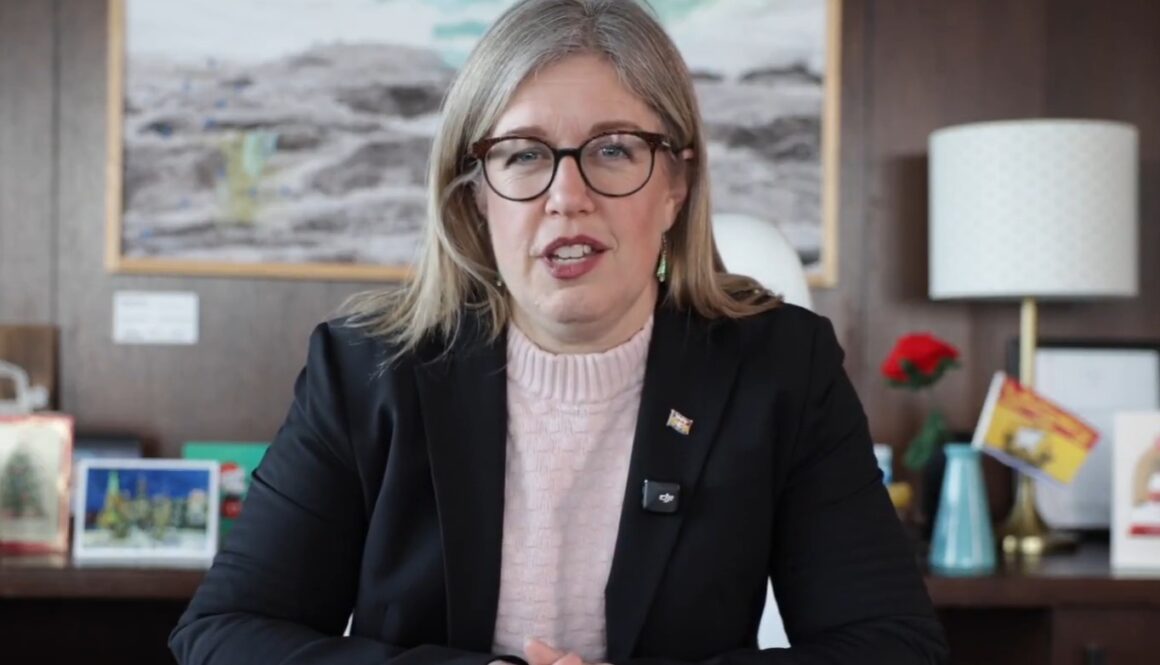
Premier Susan Holt in her recent State of the Province Address hinted her government would be looking at some ‘difficult but necessary’ budget decisions, as the province is currently in a deficit.
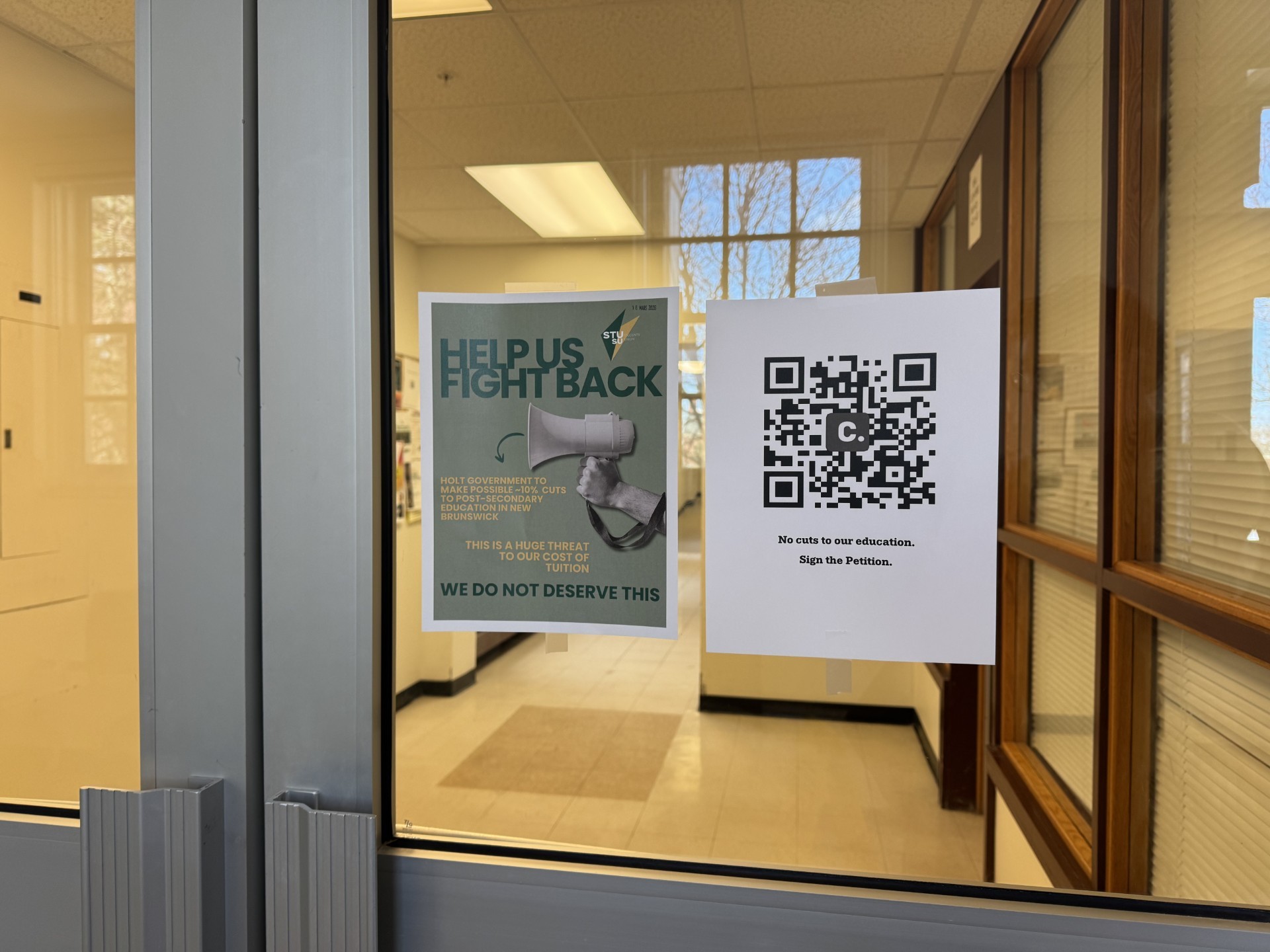
Following the circulation of a leaked government document containing ideas that target a post-secondary budget reduction of $35 to $50 million, New Brunswick universities and their communities have been faced with the possibility of cuts to post-secondary funding.
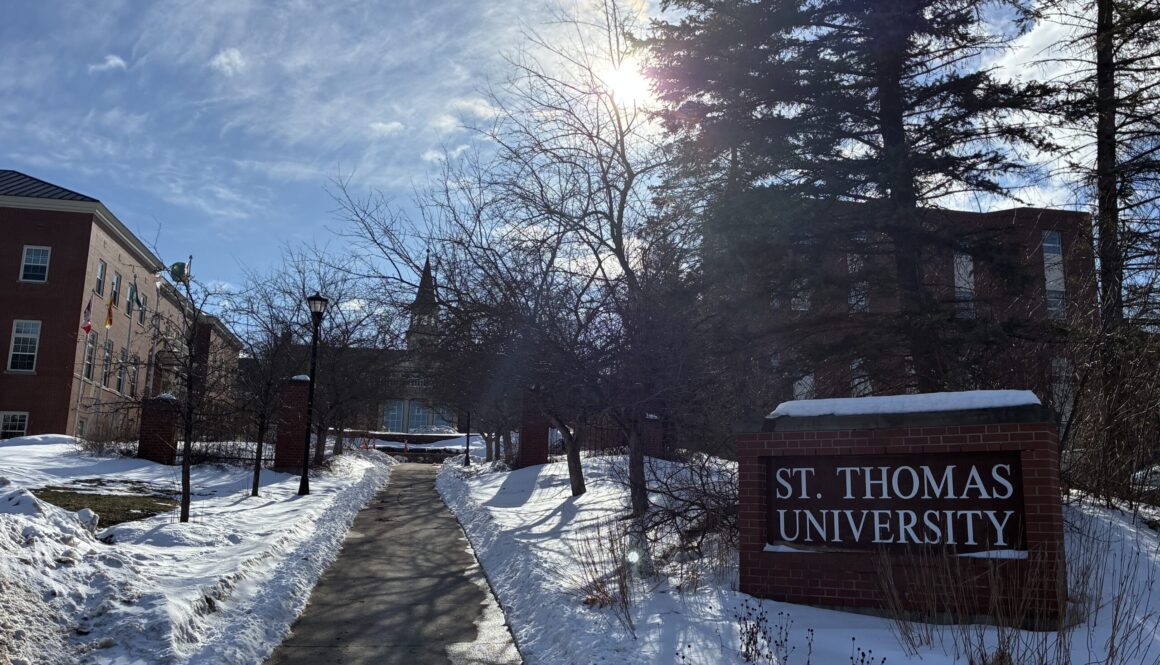
President and Vice-Chancellor of St. Thomas University Dr. Nauman Farooqi addressed STU faculty, students, and alumni in an email sent on the evening of Feb. 25.
The email explained that Premier Holt called Farooqi regarding ideas from the Department of Post-Secondary Education, Training, and Labour on the future of the province’s post-secondary sector.
Premier Holt assured Dr. Farooqi that the provincial government has no plans to close or merge St. Thomas University – despite suggestions of such in the leaked document – but Farooqi says the impending fiscal challenges for post-secondary institutions remain.
“Developments over (the last) two weeks have been concerning and led to great uncertainty. I trust that you find the Premier’s message to our community reassuring,” Farooqi wrote.
Professor Shaun Narine (Submitted: Shaun Narine)
Shaun Narine has been a political science professor at St. Thomas University for 24 years. He says the potential cuts were brought to the whole post-secondary sector very suddenly.
“One thing that the province keeps emphasizing is that ‘no decisions have been made’ and they are putting out these ideas, they want to see how universities react, they want to see what kind of feedback they get, what kind of counterproposals they get,” said Narine. “On the other hand, the [provincial] budget is coming in on March 17, and this whole thing was dropped on universities – the whole post-secondary sector – at the most a couple of weeks ago, which suggests that maybe a lot of decisions have been made.”
Narine says cutting 10 to 15 percent out of the budgets for the post-secondary sector would be shortsighted and devastating to universities like St. Thomas.
“It would destroy us in all likelihood or make it very difficult to run a credible university with credible programs.”
Creating this kind of uncertainty for the entire post-secondary sector would make it difficult for students to commit to higher education in New Brunswick, according to Narine.
Narine first arrived to New Brunswick in 2002. At the time, he noticed the province’s issue with outmigration due to people leaving for better job opportunities in other parts of Canada. Over the years he has been in New Brunswick, Narine has begun to notice a reversal in outmigration thanks to opportunities the province offers, one of which is the post-secondary sector.
Posters found on campus put out by St. Thomas University’s Student Union (Submitted: Wilfred Fraser)
“As it is, the entire post-secondary sector across Canada was being heavily hit by the federal government’s decision to make it much more difficult for international students to come in. Now, in New Brunswick, to be hit by this possibility of having the sector gutted by the Holt government, would be extremely harmful.”
“If you are going to hack out the post-secondary sector, you are actually doubling down on a situation where your population is not nearly as educated as it needs to be to be competitive in an international environment,” said Professor Narine. “People power, the knowledge base of your society, is what makes your economy function. You don’t build for the future by gutting your post-secondary institutions.”
The issue of a lack transparency is also a concern for many, including Narine, who thinks it displays a lack of confidence in the government’s plan.
“You are left with the suspicion that the reason the government is doing this with what appears to be extreme speed is because they want to do something that is going to be very unpopular as quickly as possible – a kind of fait accompli (accomplished fact) – and push it through before opposition can organize,” said Narine.
He says none of the recent occurrences between post-secondary institutions and the provincial government inspire faith and trust in what might be occurring.
“There are not a lot of examples of other industries in New Brunswick that have a pipeline to new people. This is something that I think the provincial government is at risk of fundamentally undermining,” concluded Narine.
According to the Canadian Medical Association, a Canadian’s access to primary care depends on where they live.
OurCare survey results show that New Brunswick, Nova Scotia, Prince Edward Island, the Northwest Territories, Nunavut, and Quebec struggle the most to access primary care, ranging from 63 to 73 percent of respondents having a regular family doctor, nurse practitioner, or primary care clinic.
Ontario leads the country for access per capita despite its 1.5-million adults without access to primary care.
New Brunswick lags behind the rest of the country for access to evening and weekend appointments, with the OurCare survey showing 11 percent.
Those without primary care might have to pay privately for services, like in the province of Quebec, where nearly 20 percent of surveyed residents reported doing so. New Brunswick, however, dropped below 3 percent of those paying privately for services.
Satisfaction with primary care systems in New Brunswick averaged with the rest of the country with exception to the three Territories, at 27.8 percent.
Dr. Margot Burnell, president of the Canadian Medical Association (CMA), says that not only do millions of Canadians not have a primary care clinician, but many of those who do are unsatisfied with the access they have. “We need to do better for everyone, no matter where they live.”
The OurCare survey was conducted by Dr. Tara Kiran, a family physician-researcher at St. Michael’s Hospital, a site of Unity Health Toronto, in partnership with CMA. It gathered responses from 16,876 adults across Canada.
New Brunswick’s Premier will join Prime Minister Mark Carney on a trade mission to India.
The mission to the Indo-Pacific region will include stops in Mumbai and New Delhi.
Susan Holt will join the entourage in their efforts to strengthen trade, attract investment and form more partnerships in areas including technology, manufacturing, forestry and education.
India is one of the world’s fastest-growing major economies and an increasingly important partner for New Brunswick. In 2024, New Brunswick exported about $190 million in goods and services to India.
“India represents a significant opportunity for New Brunswick businesses, institutions and workers,” said Holt. “As we look at diversifying our markets in the face of President Trump’s illegal tariffs, we’re perfectly positioned to build on the relationships New Brunswick has in India. Working alongside the prime minister and our federal partners, we can diversify our markets, strengthen long-term relationships and create new opportunities for growth here at home.”
The team will be in India from February 26 to March 1.
The Royal Canadian Mounted Police in New Brunswick announced a follow-up to their response to a single-vehicle car crash on Route 104 in Zealand.
On Feb. 23, 2026, at approximately 3:45 p.m., members of the Nackawic and Keswick RCMP detachments, as well as Keswick Ridge Fire Department and Ambulance New Brunswick, responded to the scene.
A 25-year-old man from Central York Hainesville and a 23-year-old man from Nackawic-Milville died at the scene as the result of their injuries from the single-vehicle crash.
The crash is believed to have occurred when the vehicle attempted to pass a black Jeep. While passing the Jeep, the vehicle swerved to avoid an oncoming all-terrain vehicle, lost control, left the roadway and crashed.
The investigation is still ongoing.
Police would like to talk to the driver of the ATV and the black Jeep. Anyone with information that could help further the investigation is asked to contact the Keswick RCMP at 506-357-4300.
Information can also be provided anonymously through Crime Stoppers at 1;800-222-TIPS (8477), by downloading the secure P3 Mobile App, or by Secure Wep Tips at www.crimenb.ca.
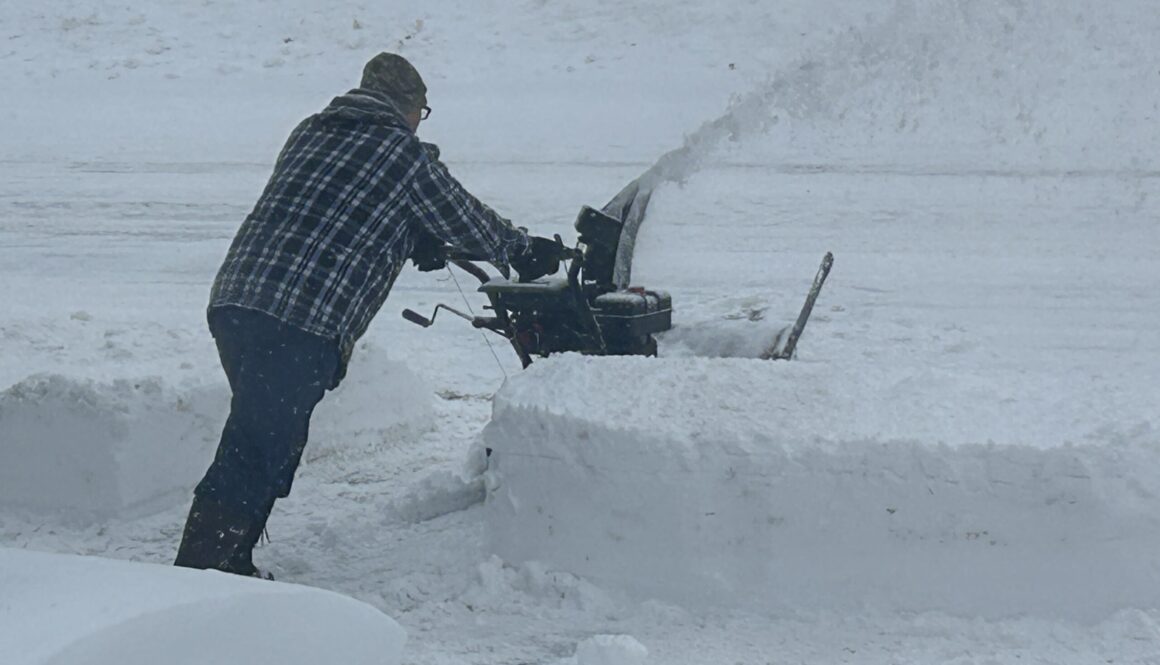
The biggest snowstorm so far this season came in on Monday afternoon with a bang.
It rolled in quickly in the afternoon, and conditions diminished rapidly in a very short amount of time, “I was like a wall of snow, and with the added wind, it made it seem probably that much more almost blizzard-like,” Environment Canada Meteorologist Jill Maepea said.
Heavy snow and high winds forced the closure of highways and left some motorists stranded.
As for how much snow fell, Maepea told us almost all of their observers reported it was really hard to measure because of the wind.
In Moncton and Saint. John, I can give the estimates. They both had around 25 centimetres. Those were the largest amounts in the province. I’m sure there are localized amounts, but these are the numbers we have right now. If I go up to Miramichi, they had around 20 centimetres, and in St. Stephen, they had around 15 centimetres. Anywhere away from that, the amounts diminished quite a bit. There were only about five in the Fredericton area,” Maepea explained.
Wind gusts of around 91 km/h were registered at the Greater Moncton Romeo Leblanc International Airport, and gusts of around 85 km/h at the Saint John Airport.
Cleanup after this Nor’easter is expected to take several days. Maepea added that it also hit parts of the New England states as well. New York and Boston saw significant impacts from the same system.
Maepea explained there aren’t any other big systems on the radar, but she also emphasized that it’s only the end of February, “We can still see snowstorms in March. I don’t have anything in my short-term forecast, but I don’t want to rule out the fact that there remains part of the season left to have more storms.”
There is another system expected on Wednesday night, but it’s only expected to bring around five centimetres of snow to the southern part of the province.