FedNor announces new clean energy program for Indigenous communities
The Federal Economic Development Agency for Northern Ontario (FedNor) is delivering a new green initiative to northern Ontario’s Indigenous communities.
Funded by the Strategic Partnerships Initiative, the Northern Ontario Indigenous Clean Energy Initiative (NOICE) will help Indigenous-led clean energy developments come to fruition.
The program will assist communities with planning, skill development, and assistance in securing investments for green energy projects.
NOICE is framed as a reconciliation effort that will help Indigenous communities in the north determine their own pathways towards greater economic resilience and self-sufficiency.
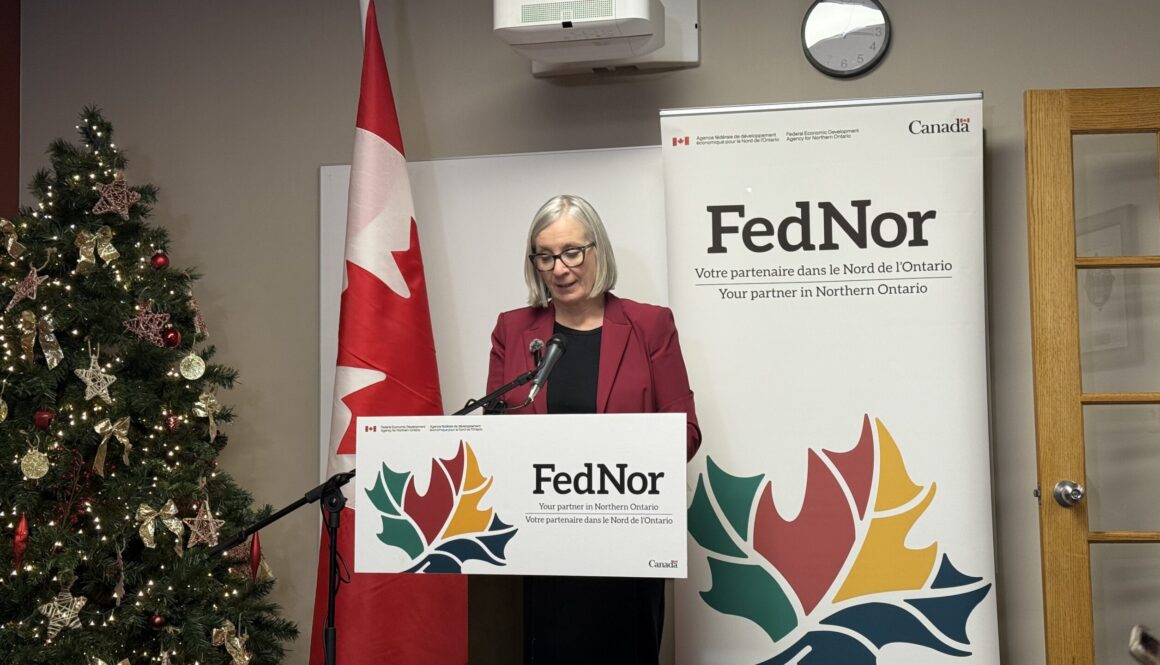
The new program was announced by Minister for FedNor Patty Hajdu, who described its purpose as a way to “empower increased capacity for Indigenous communities to pursue economic and business opportunities in clean energy development.”
The minister says clean energy is one of Canada’s strongest selling points in international markets.
First Nations and Metis communities, Indigenous-owned businesses and organizations can apply to the program.
The clean energy announcement comes two weeks after the former Environment and Climate Change minister Steven Guilbeault resigned from Prime Minister Mark Carney’s cabinet in response to the federal government’s memorandum of understanding (MOU) agreement with the province of Alberta, which opens up the possibility of a new pipeline.
In an interview last week, Guilbeault expressed skepticism that Canada could still reach its 2030 emissions targets.
When asked about former minister Guilbeault’s resignation, Minister Hajdu argued that Canada needed to be pragmatic in its approach to climate change.
“It’s important to have targets that we can reach, rather than targets where we have provinces, in some cases, not agreeing at all to do that work,” she said.
Hajdu pointed out that the MOU includes commitments from Alberta to reduce emissions and comply with a higher industrial carbon tax.
“Although I appreciate that there may not be unanimity of opinion in this space, I do feel that it is important to work in the art of the possible,” she continued.