RNAO releases guidelines to address anti-black racism in nursing
A new report that aims to tackle the issue of racism toward black nurses in Ontario.
The Registered Nurses’ Association of Ontario has released a best practices guideline for healthcare organizations, groups and educators to follow.
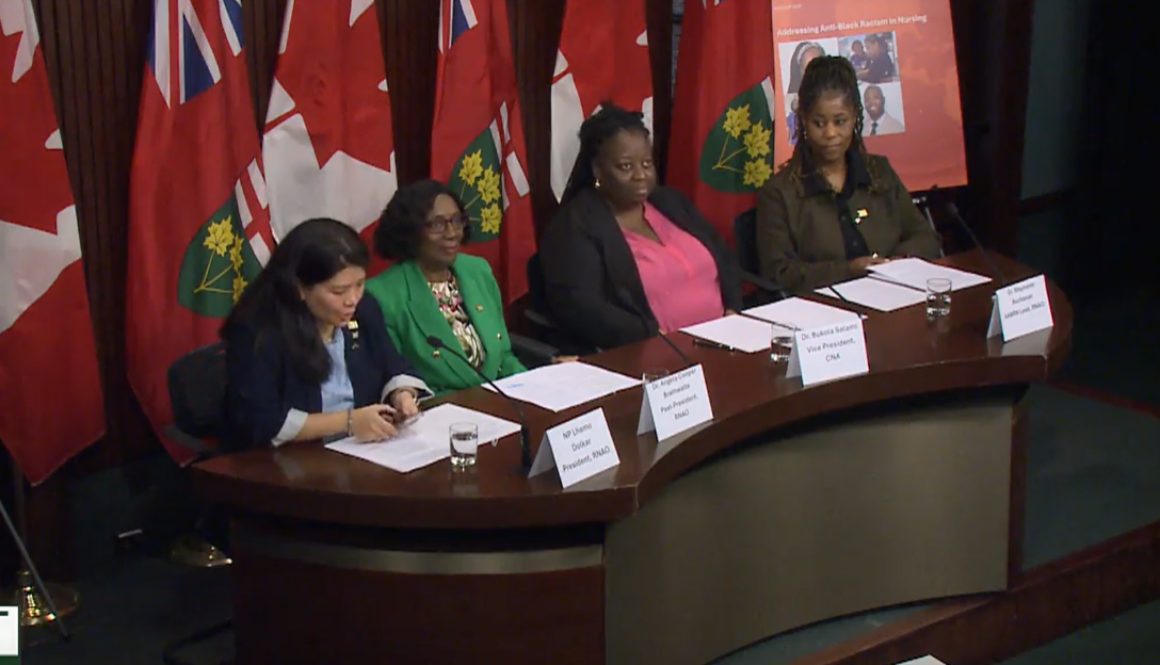
Dr. Angela Cooper-Braithwaite hopes it will allow black nurses and nursing students to be treated fairly and with respect.
“In the same way guidelines address falls prevention, wound care or person and family-centred care, this guideline addresses a critical determinant of health and professional safety, anti-black racism,” says Cooper-Braithwaite.
“The goal is not only to acknowledge harm, but to establish accountable, systematic and measurable expectations for nursing organizations.”
RNAO president Lhamo Dolkar says anti-black racism remains deeply embedded within the healthcare system, which is affecting nurses’ education, workplace experiences and career advancement.
“This guideline is a response to decades of testimony, research, and advocacy,” says Dolkar.
“It provides concrete, evidence-based recommendations to confront anti-black racism in nursing and to build safe environments where black nurses and black nursing students can learn, work, lead and innovate without racial harm.”
The guideline offers three recommendations and five good practice statements.
This includes ongoing education for students, faculty and staff to address anti-Black racism, the creation of zero-tolerance policies and more diversity within committees that discuss anti-racism, diversity, equity and inclusion.
“It covers what nurses and healthcare professionals need to learn and the high-level actions required to foster accountability and organizational change,” says Dr. Bukola Salami, who co-chaired a panel of nurses and experts in crafting the guidelines.
The RNAO also hopes the guidelines will help with the recruitment of more black people into the profession.
Only 2.3% of all nurses in Ontario identify as black.