
Icelandic addiction prevention model comes to Thunder Bay
A new strategy designed to reduce substance abuse among young people is officially underway in Thunder Bay.
Planet Youth is based on an Icelandic model that helped cut youth addiction from some of Europe’s highest rates to the lowest. Their strategy focuses on changing the wider social factors upstream of addiction that prevent youth from living healthy lives.
Thunder Bay leaders gathered at City Hall on Friday for a signing ceremony affirming their Declaration of Support.
“By signing on to advance Planet Youth, Thunder Bay is reaffirming our commitment to prevention and partnership,” said Thunder Bay Mayor Ken Boshcoff. “Youth wellbeing is a collective responsibility, and this initiative brings together schools, families, service providers, and community leaders to take coordinated, data-informed action. Working together, we can create the conditions for young people in Thunder Bay to thrive.”
The program will be run by non-profit United Way of Thunder Bay.
“This signing ceremony marks a public launch of the movement and a chance for key foundational partners to affirm their support, but perhaps more importantly, it affirms that youth wellbeing is a collective responsibility,” said United Way of Thunder Bay CEO Albert Brulé. “Thunder Bay is joining several other Canadian communities working to adapt this model in their local context.”
In 2024, Thunder Bay had the highest per-capita rate of opioid deaths in the province. Brulé says visits to the ER related to substance abuse are 10 times higher in Thunder Bay than the provincial average.
“I’m just really tired of seeing all these youth with so much potential being dragged into cycles [of addiction],” said 12th grader Cheya Belmore, a member of Youth Council at Evergreen United Neighbourhood. “It can be hard to ask for help, but I did it and I’m grateful I did. Seeking support is a strength, not a weakness.”
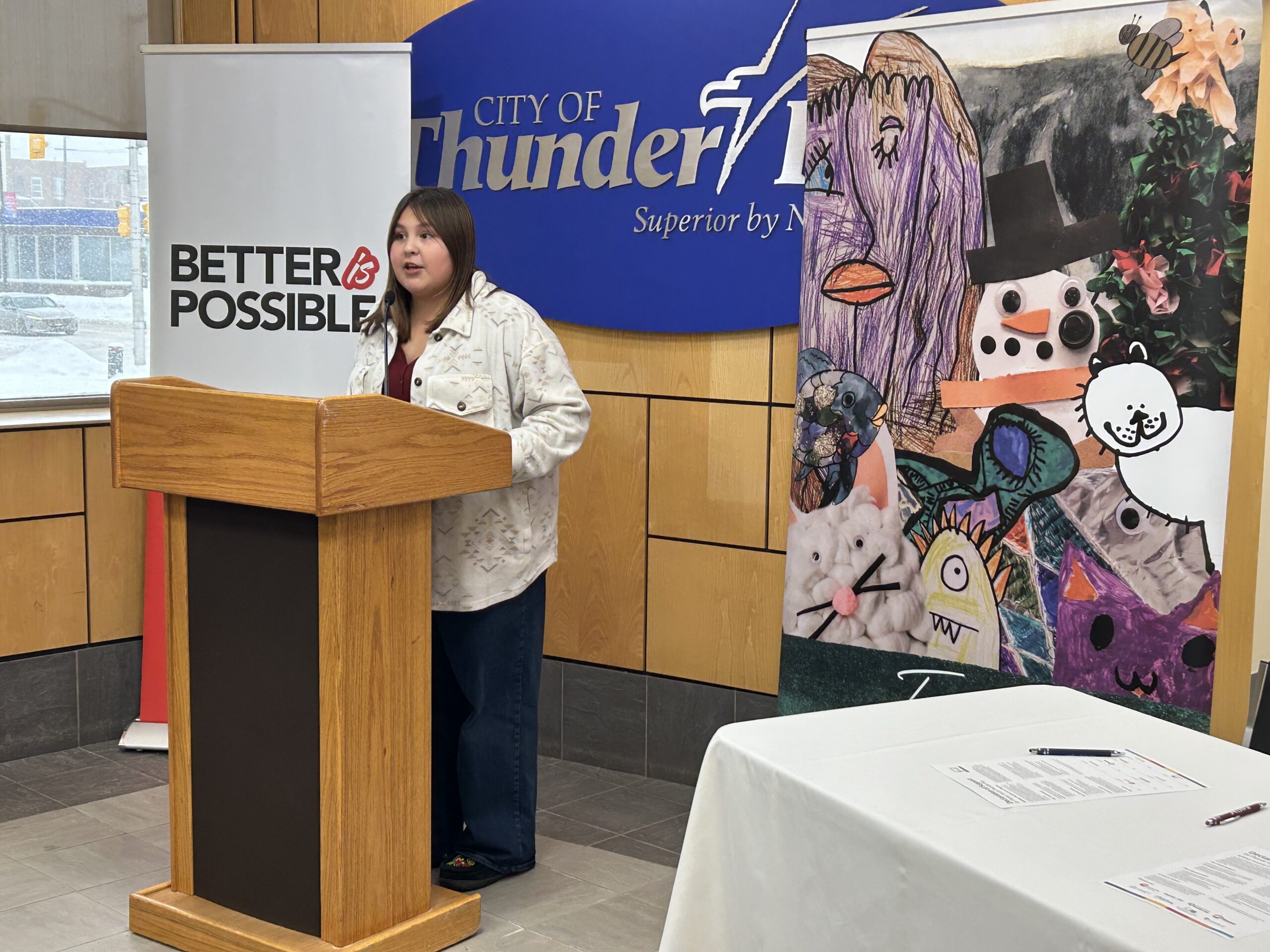
The Declaration of Support lists three commitments:
- Exploration & Collaboration – Engaging in open discussions and working together across sectors to identify evidence-informed prevention strategies that are relevant and effective for Thunder Bay.
- Awareness & Education – Sharing knowledge and resources to help promote an understanding of prevention approaches, including those of the Planet Youth model, within our networks.
- Cultural & Community Responsiveness – Ensuring that diverse perspectives, especially Indigenous voices, are at the center of discussions about how prevention strategies are shaped and implemented in our community.
Signatories of the Declaration include:
- United Way of Thunder Bay
- City of Thunder Bay
- Thunder Bay and District Health Unit
- Lakehead University
- Mattawa Education and Care Centre
- Lakehead Public School Board
- Thunder Bay Catholic District School Board
- CSDC des Aurores boréales
Brulé says they are currently in the data collection phase, and tailoring the Icelandic model to Thunder Bay requires an analysis of local risk factors and community supports.
“The model starts by building a coalition, and that’s what you see here [at the signing ceremony],” he said. “The next step involves data, so we’ll be working with schools and community groups to do surveys of young people to learn what are their habits, what are their concerns, what are the ways that we can come together to help them avoid falling into the traps of substance abuse.”
Dr. Langis Roy, Lakehead University’s Vice President of Research and Innovation, says their team will collect and analyze data to optimize youth intervention specific to Thunder Bay’s unique social, cultural and environmental landscape. Lakehead is the #2-ranked undergraduate research university in Canada.
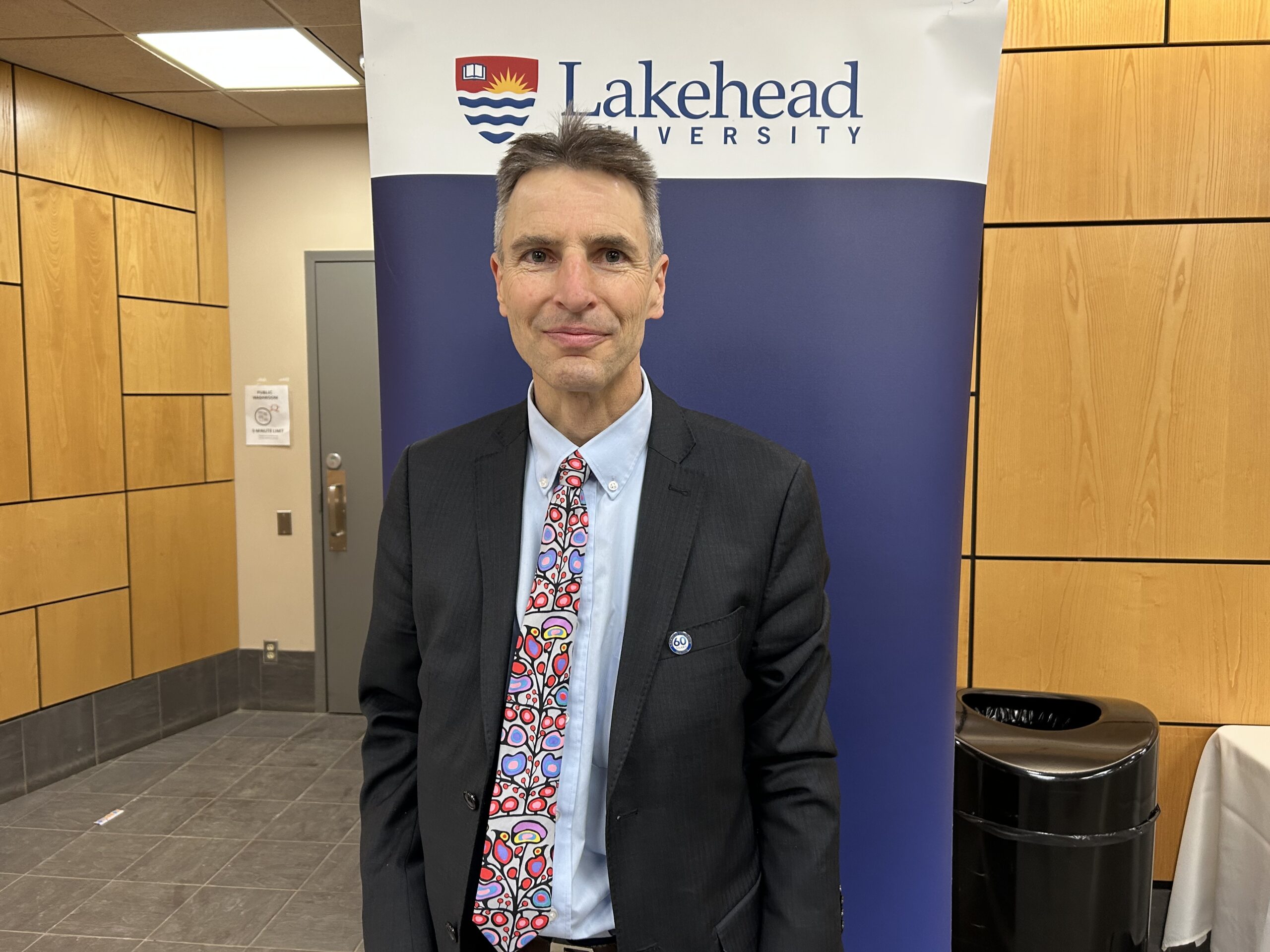
“We’re sizing up the issue,” Roy said. “We’re examining the effectiveness of existing programs and where they’re impactful and where they’re lacking. Then we’re filling those gaps in research and in deploying actual adequate interventions.”
Lakehead’s research will be ran through their Centre for Education Research on Positive Youth Development (CERPYD), headed by Dr. Jamie DiCasmirro.
“There’s an approach developed by CERPYD called Cognitive Behavioural Approaches to Treatments and Interventions,” Roy said. “That is a crossover between cognitive and mental awareness with actionable behavioural changes.”
“By being a part of this larger consortium Planet Youth, we’re going to be able to get more involved with the various communities and have a richer set of parameters from which we can build better interventions. We can target them to specific groups and specific issues that are affecting youth development.”
For more information on Planet Youth Thunder Bay, visit uwaytbay.ca/planetyouth.