The project was set to cost $50-80 million to construct.
As a “peaking” plant, the facility would have only operated when the electrical grid was experiencing high usage.
Thunder Bay’s City Council was set to vote on the proposed plant at their final meeting of the year on December 2.
In a note to council, Versorium stated that they have been modifying their plant proposal to “fit within a smaller footprint,” which may impact the plant’s ability to sell its waste heat to Canada Malting.
The sale of waste heat for use in Canada Malting’s production process was initially advertised as a way to offset about one-sixth of the plant’s greenhouse gas emissions.
Emissions were a major concern at a Growth Standing Committee meeting in late October, where climate advocates criticized the plant as a violation of the city’s commitment to achieving a net-zero carbon footprint.
Versorium Energy Ltd. states that it still intends to produce a proposal for a peaker plant next year.
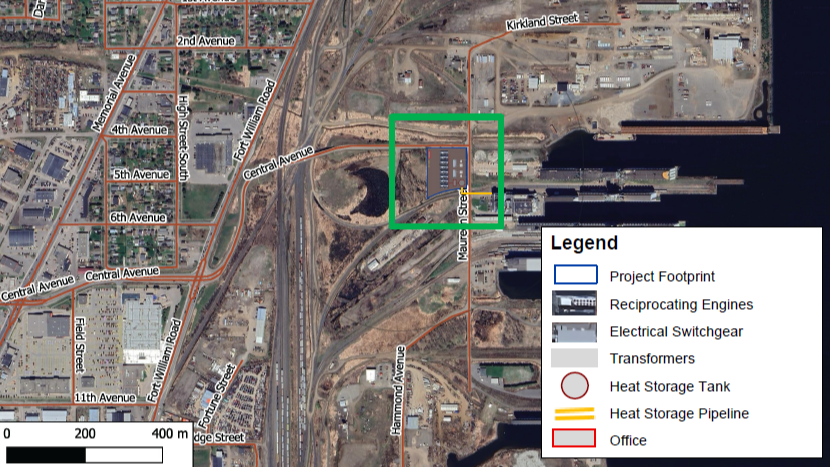
Versorium Energy Ltd. is an Alberta-based company proposing the construction of a new natural gas facility at the intersection of Maureen Street and Central Avenue.
The proposal comes in collaboration with Interflex Ltd., which will be responsible for engineering, procurement, and construction of the proposed facility, and Canada Malting, which will be buying the waste heat generated by Versorium for use in their malting process.
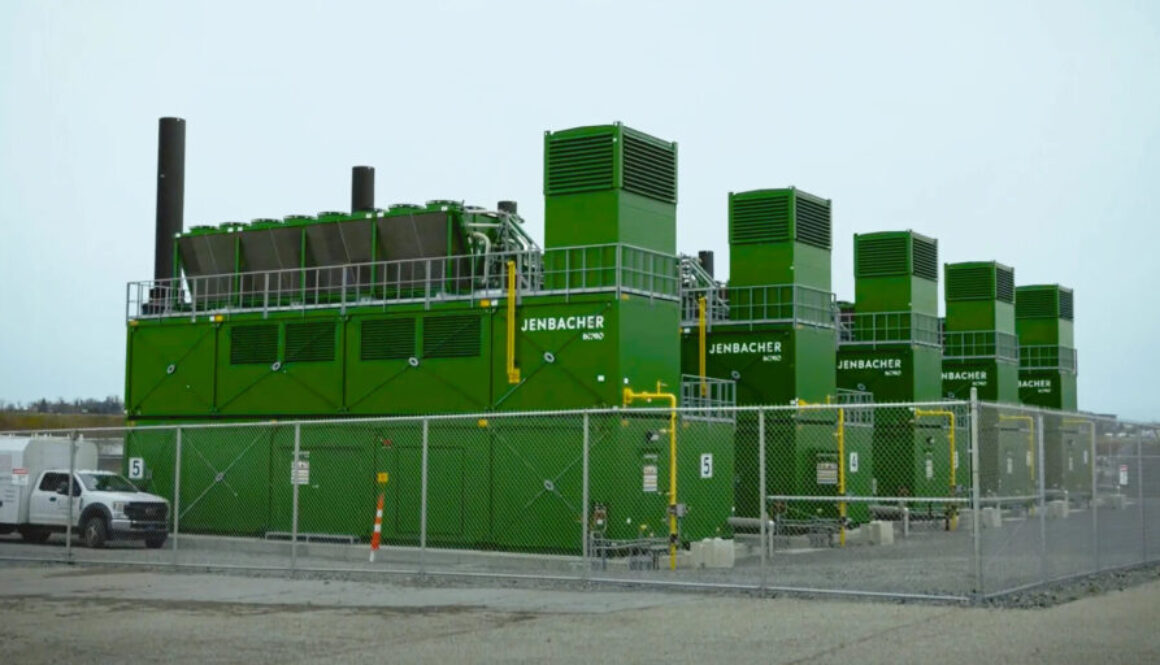
The project is estimated to cost between $50 and $80 million to construct and will generate 31 megawatts of electricity for the local grid using eight natural gas engines.
Jeff Trynchy, Manager of Stakeholder and Community Engagement and Public Relations for Versorium, says the city can benefit from the project. “It helps boost economic activity to local businesses. Obviously we’re enhancing the grid reliability and developing energy locally. We’re also big supporters of the community in our long-term operation.”
Trynchy explained that the operation could run for at least 20 years, with the possibility of extending the project with new engines down the line. “It’s just a great project for the community in general,” he added.
If the project goes forward, Trynchy expects 15-20 jobs to be generated during the construction process, which would take approximately one year. During the operation of the facility, the city can expect two or three jobs at the site.
A plan of the facility and its possible location. (Versorium Energy Ltd.)
Chris Codd is the vice president of asset development and regulatory at Versorium. He says different types of pollution will be emitted from the facility: “one is noise, and there are strict requirements within Ontario to ensure we’re not making too much noise for nearby residents. The current design we expect to comply completely with those requirements.”
Another source of pollution is greenhouse gases. Codd says that even with greenhouse gas emissions, the facility will still be a net-positive. “Not only are we offsetting emissions associated with Canada Malting’s operation and how much fuel they would need to use in their boilers, but we’d also be offsetting emissions elsewhere in the province to bring other generation into the northwest as demand grows here.”
The final form of pollution would be Nitrous Oxides, but Codd says the actual amount will be low thanks to selective catalytic reducers installed on the engines. “That will mean the Nitrous Oxide output is very, very low for the facility and will comply with all requirements in Ontario for this type of facility,” Codd assures.
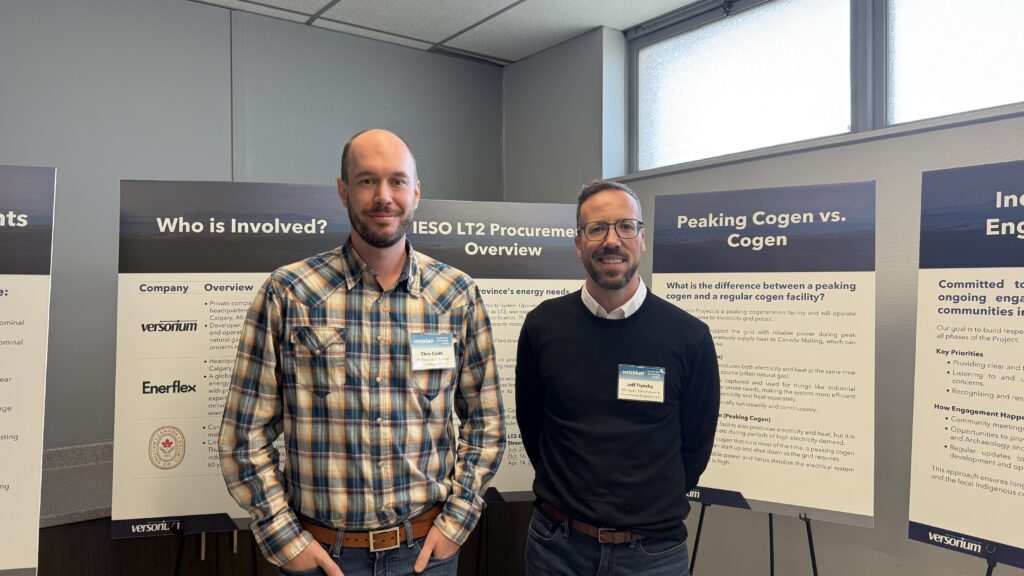
Chris Codd, Vice President of Asset Development and Regulatory, and Jeff Trynchy, right, Manager, Stakeholder and Community Engagement and Public Relations, at an open house on Wednesday for Versorium Energy Ltd.’s project at the Slovak Legion, September 24, 2025.
The timeline for Versorium to develop an energy facility spans years. On Tuesday, they presented themselves to Thunder Bay City Council’s Growth Standing Committee. The business will require a municipal support resolution to proceed.
Versorium Energy Ltd. must also bid for the contract with the Ontario government. Should the company receive municipal support and be awarded its contract, construction is expected to begin in late 2027 and be completed by late 2028 or early 2029.