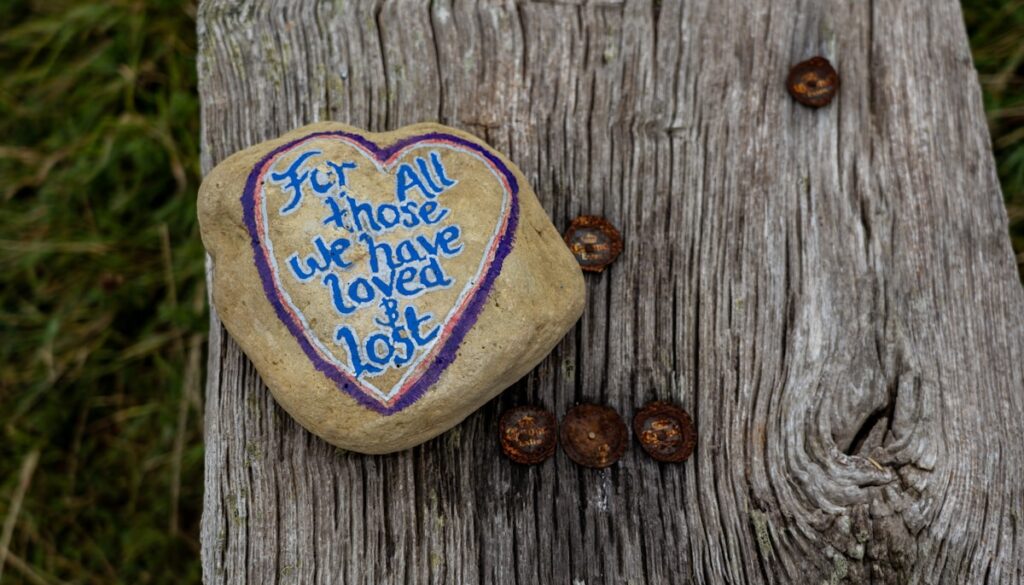
The steady walk of grief
When the first snow settles across the ground and the water begins to freeze, our bodies instinctively shift. We steady our movements and adjust to a different way of being. We slow down on the highway and measure each step, knowing that a thin layer of ice can undo us without warning. It might be a minor slip in a parking lot that makes us wince the next morning, or a life-altering accident that leaves a lasting mark. Winter reminds us that we cannot escape the hard lessons in life.
Grief is its own kind of ice.
We know of its potential to disrupt and derail. It can stop us in our tracks or send us into a spiral we did not see coming. When grief arrives, our hearts freeze in place while our minds struggle to keep moving. Some of us thaw in isolation. Some thaw in the warmth of community. We are all different in how we melt our way back into life.
There is no healing in the sense of returning to who we once were. Instead, we learn to mend the fragile relationship between heart and mind. The only way to survive deep loss is to forgive ourselves. We must forgive the sluggish thinking, the lack of interest in life, the emotions that arrive without warning, and the guilt that swings between quiet simmer and rolling boil.
Many find comfort in the familiar stages of grief. Naming what we feel can bring relief. Others anchor themselves in faith or spiritual connection, trusting that a higher power holds them even when the circumstances are impossible to understand. And some struggle through their grief like a person lost in the snowstorm, slipping into harmful ways of coping, just trying to find their way through the cold.
I have been many of these people at once.
For me, grief brought a kind of isolation I did not know how to break. Being in public felt overwhelming. Being in community felt too vulnerable. So, I stayed alone until I eventually made the decision to come home to Kenora in 2019 where I could grieve with my family and the people who raised me. I am grateful that returning home was an option. Many do not have that choice, and many carry their grief far from the places that shaped them.
There are Anishinaabe teachings and ceremonies entrusted to knowledge keepers that help communities move through grief. These teachings are not mine to share in detail. What I can share is that they bring me comfort. They remind us that grief is not meant to be rushed or hidden. It is meant to be acknowledged and carried with care.
One teaching that my family follows is to quiet ourselves when there is a death. We steady ourselves. We slow down. We sit with it. It is not about being stoic or shutting off emotion. It is about honouring the person who has passed by creating stillness around their memory. In that quiet, we recognize the importance of the life they lived and the impact they leave behind.
As I prepared to write about grief this month, I observed many communities experiencing loss. I watched how people gathered, how they fed one another, how they shared stories and remembered the best parts of those they lost. There was sadness, of course, but also love. There was gentleness. There was care. Communities came together to honour their loved ones in the ways they knew best.
What I have learned through my own grief, and from witnessing the grief of others, is that we are not meant to navigate loss with perfection. We stumble. We withdraw. We reach out at the wrong times or not at all. We forget things. We cry in conference rooms and grocery store aisles. We become tired in a way that feels heavy in the bones. And still, we keep going.
Hope comes softly, not as a sudden burst of sunshine, but as small glimmers that remind us we are still alive. A laugh we did not expect. A memory that warms instead of wounds. A friend who texts at the perfect moment. A teaching that settles in our heart. A ceremony that brings peace. A sunset that catches us off guard.
Hope does not erase grief, but it gives us a place to rest.
Forgiveness is part of that hope. Gentleness is part of that hope. Community is part of that hope. Honouring our loved ones is part of that hope.
In winter, we learn to walk carefully on icy ground. We take our time. We stay aware. We adjust. Over time, we become skilled at recognizing where the danger lies and where the footing is steady.
Grief asks the same of us.
It teaches us to move through life with more awareness and more tenderness toward ourselves and others. It teaches us that our hearts can break and still continue. And it teaches us that even in the coldest seasons of our lives, we are never truly alone. Our loved ones walk with us, and our communities stand around us, steadying us as we find our way.