Thunder Bay paper mill halting newsprint production
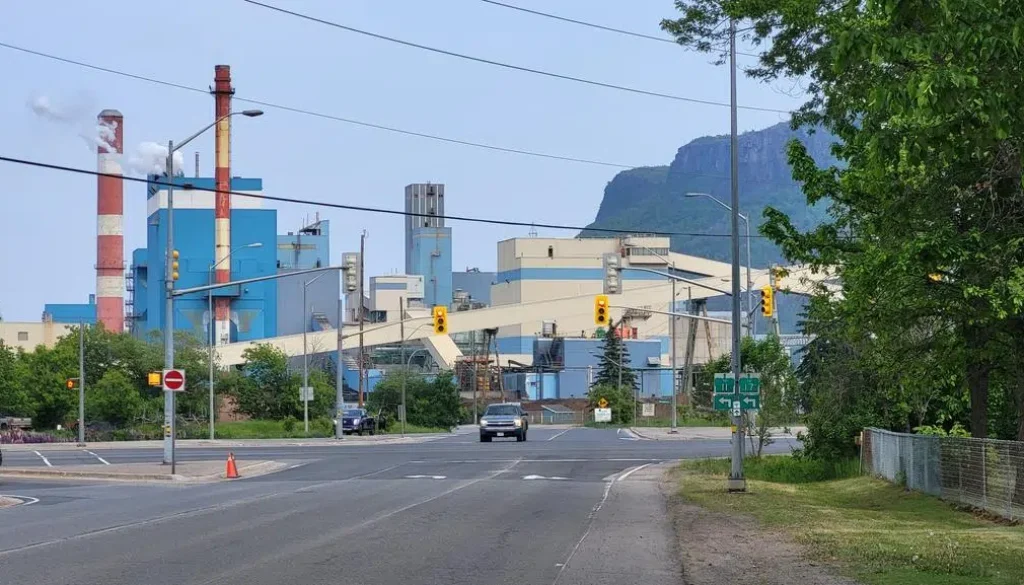
By late February, Thunder Bay Pulp and Paper expects to stop making newsprint.
The mill has created newsprint for newspapers across North America for a century, but can no longer justify making its historic product in a declining market.
CEO Norm Bush says newsprint demand has dropped by 40 percent in the last three years alone, and he expects demand to further drop by another double-digit percentage over the course of 2026.
“Very long-term systemic decline in newprint demand brought us to the point where we could see no sustainable future for us, and no ability to generate a return on that business going forward,” Bush explains.
Out of about 485 employees at the mill, 150 are employed to manufacture newsprint.
Most of the newsprint division’s jobs are now at risk.
Bush says the mill will do what it can to help those with jobs at risk.
“Our immediate priority is to provide support and job transition services to allow those employees who are impacted by this decision to position themselves for career opportunities elsewhere,” he remarks. “Obviously, it’s a difficult day for everyone in the mill, including those folks who aren’t directly impacted.”
The paper mill workers are represented by Unifor Local 39, which in a statement said it would “work with the company to explore retraining opportunities for members, and to end the use of contract workers by assigning that work to bargaining-unit members who may otherwise lose their jobs.”
While the end of newsprint production is a blow to the company and its workers, and a sign of a shift in the times, Bush assures the city that “Thunder Bay Pulp and Paper isn’t going anywhere.”
The mill will continue to produce Softwood Kraft Pulp as its primary product.
As a secondary product, the mill burns residual forest products, such as bark, to produce electricity via steam turbines, which generates between 40 and 60 megawatts of renewable electricity every day for the grid.
Bush says the mill will work with the provincial and federal governments, and with investors, to develop the company’s pulp and power-generating ventures.