My truth
As conversations about unmarked graves continue, with some demanding proof and others choosing to deny or minimize what happened, I feel called to share my truth as an Anishinaabekwe in Treaty #3. I want to acknowledge that what follows speaks about residential schools, loss, and intergenerational trauma, which may be difficult for some to read.
My truth is in the sound of the drum and the voices of the singers at powwows. It is in watching the grace and beauty of the dancers as they move across the arbour. It is in the smell of our sacred medicines as they rise in smoke during a smudge. It is in listening to the wisdom of knowledge keepers as they share their stories, teachings, and memories.
My truth, as I know it, was once put in jeopardy because of systemic atrocities that took place here in my own homeland. Ceremonies were outlawed. Anishinaabemowin, our language, was prohibited. Practices were disrupted, all in the name of “removing the Indian in the child.”
My truth is also the death of loved ones in unmarked graves. It is family connections broken and scattered. It is the loss of language that should have been passed down with ease, with normalcy, but instead was silenced or shared with apprehension. My truth is intergenerational trauma spilling into streets, jail cells, and cemeteries. Trauma that we did not ask for but inherited.
And yet, my truth is also survival.
Like so many others, I continue to navigate the impact of these realities while working hard to build a beautiful life for my family. I have been able to do this because of the strength of my mom, whose own parents were forced into Indian Residential Schools. I think of my dad too, whose grandmother endured the injustice of the Indian Act, which stripped First Nations women of their status if they married non-status men. These policies were designed to erase us, yet here I am. Each morning, I send my son to school knowing that no one is beating the “Indian” out of him. That is both a relief and a reminder of how far we still have to go.
I am grateful that survivors and community leaders worked tirelessly to pass on teachings, protect our lands, and share the beauty of what it means to be Anishinaabe. Without them, I might never have witnessed the vibrant energy of the 6th Annual Healing Your Spirit Powwow hosted by Kenora Chiefs Advisory at Wauzhushk Onigum. I might not have joined the Agency One Lands Celebration at Point Park, honouring the return of land, the protection of sacred spaces, and the renewal of cultural and economic opportunities for our people. I might not have stood at Kay-Nah-Chi-Wah-Nung, listening to Art Hunter speak about the Manitou Mounds, sacred sites that remind us we have always been here, and we are still here.
These events are not simply cultural showcases. They are living proof of survival. They are acts of reclamation, joy, and defiance. They are reconciliation in motion, whether or not governments are ready to recognize them as such.
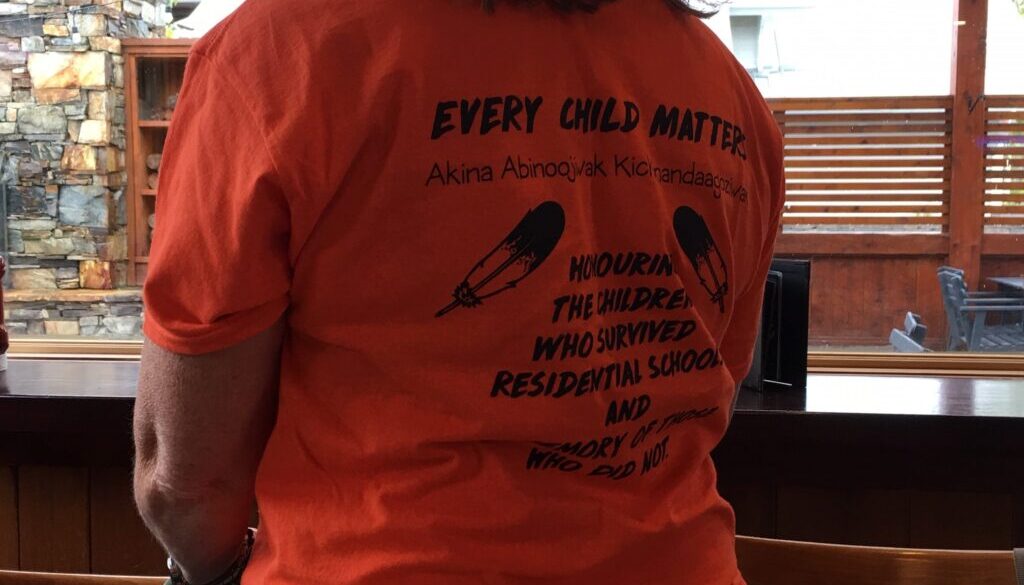
Yet, non-Indigenous detractors often make headlines. They claim that reconciliation has lost its way. They point to orange shirts, ceremonies, or acknowledgments as though these are gimmicks, as though our grief, survival, and resurgence are merely marketing campaigns.
From where I stand, nothing could be further from the truth.
Yes, I see how some institutions reduce reconciliation to an annual gesture or a photo opportunity. I understand how corporate Orange Shirt Day slogans can ring hollow without deeper commitments. But that should not be a reason to dismiss reconciliation itself. It should be a reason to push harder, to dig deeper, to hold institutions accountable.
Reconciliation is not a brand, and it should never be reduced to commercialization. It is not seasonal. It is not a checkbox. It is a process that belongs to all of us, Indigenous and non-Indigenous alike. It requires honesty about the past, accountability in the present, and shared responsibility for the future.
For me, reconciliation is found in community moments: in the songs sung late into the evening at powwows, in children running freely at a celebration on lands once taken from us, in Elders who continue to share truths even when it costs them to speak.
Reconciliation is also in the everyday: when non-Indigenous neighbours show up to listen and learn, when schools make space for our languages, when governments finally begin to honour treaties not only in word but in action. These are not glamorous gestures. They are the quiet, steady steps toward mino-bimaadiziwin, the good life, that our ancestors envisioned.
So when I hear that reconciliation has lost its way, I think of those young dancers stepping proudly into the powwow arena. I think of families gathering at Agency One Lands to celebrate renewal. I think of my son going to school without fear And I think of Phyllis Webstad, whose story about her orange shirt as a little girl reminds us all why truth and reconciliation matter. And I know reconciliation has not lost its way. It is alive in every step we take to carry our truth forward.
For those who feel tired of hearing about reconciliation, I ask you to consider what tiredness really means. For Indigenous people, tiredness has never been an option. We did not choose the trauma, but we choose every day to keep walking, teaching, and healing. The least others can do is walk beside us with respect, humility, and commitment. That may mean being uncomfortable with the truth.
My truth is not something that can be denied by an editorial, a headline, or a talking point. My truth lives in community, in culture, in the strength of our people. And my truth is also an invitation: to see reconciliation not as a burden, but as an opportunity to build relationships rooted in honesty, justice, and care.
Because when we gather, in song, in story, in ceremony, reconciliation is not lost. It is found.
Miigwech.