Thunder Bay declares humanitarian crisis over homelessness
Thunder Bay City Council has voted to declare homelessness in the city a “humanitarian crisis.”
The city describes a humanitarian crisis as a situation where “human life, health, safety, or dignity is at sustained and unacceptable risk, and where existing systems cannot meet basic needs such as safe and adequate shelter.”
During January’s polar vortex, the Nishnawbe Aski Nation (NAN) and Anemki Wajiw (Fort William First Nation, or FWFN) called on the city to declare a state of emergency over the homelessness crisis, but the mayor refrained from doing so.
At the time, the mayor and city administration had argued that a state of emergency would not give the city access to any tools or solutions they were not already using to address the issue.
Though they rejected the First Nations’ calls, the city did meet with NAN and FWFN representatives to find an amenable path forward, after which a declaration of a humanitarian crisis was suggested.
At a city council meeting on Tuesday, Growth Commissioner Keri Marshall explained the reasons for declaring the crisis: “Despite significant provincial and federal investments in homelessness prevention and response, the reality is that the existing systems are not keeping pace with the scale and complexity of need locally.”
Marshall also drew attention to the massively disproportionate rate of Indigenous homelessness in the city — while just 13 per cent of Thunder Bay’s population is Indigenous, in 2024 over three-quarters of the homeless population identified as Indigenous.
City administrators explained that declaring a humanitarian crisis would allow different local groups to partner with the city more easily.
City Manager John Collin compared the declaration to the city’s declaration of a climate emergency five years ago: “I’m not suggesting for a moment that the challenges of those experiencing homelessness equate in some way to climate change… However, in terms of process, the declaration on climate change has driven certain strategies that have been developed by the city.”
Most councillors were supportive of the proposal.
Councillor Kristen Oliver expressed hope that by declaring a crisis, the city might have an easier time addressing the root causes of homelessness, and “go one step further to reduce the systems that we have in place where we’re seeing colonization is still having an impact in 2026, and the systemic barriers that people are experiencing that are contributing to homelessness.”
“This is so much more than just a symbol,” said Councillor Andrew Foulds, as he supported Oliver’s points. “I really think that this signals to Anemki Waju and the Nishnawbe Aski Nation that we’re serious, and we recognize the seriousness of this.”
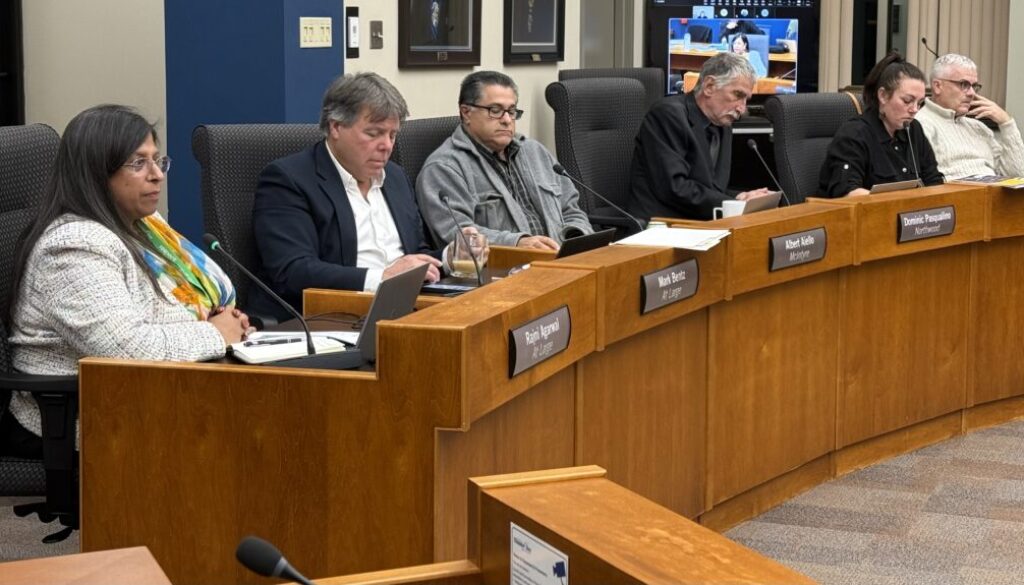
The only councillor to express serious doubts was Councillor Albert Aiello, who pointed out that the city was already spending millions of dollars on homelessness initiatives, and worried the city might find itself on the hook for yet more spending.
“Now we’ve kind of opened the door, ‘well, if it’s going to cost more money, well then we’re going to do it because we’ve declared this crisis.”
City Council overwhelmingly voted in favour of declaring a humanitarian crisis, with only Councillor Albert Aiello voting in opposition.