Anishinabek Chief Joe Miskokomon appointed to Order of Canada
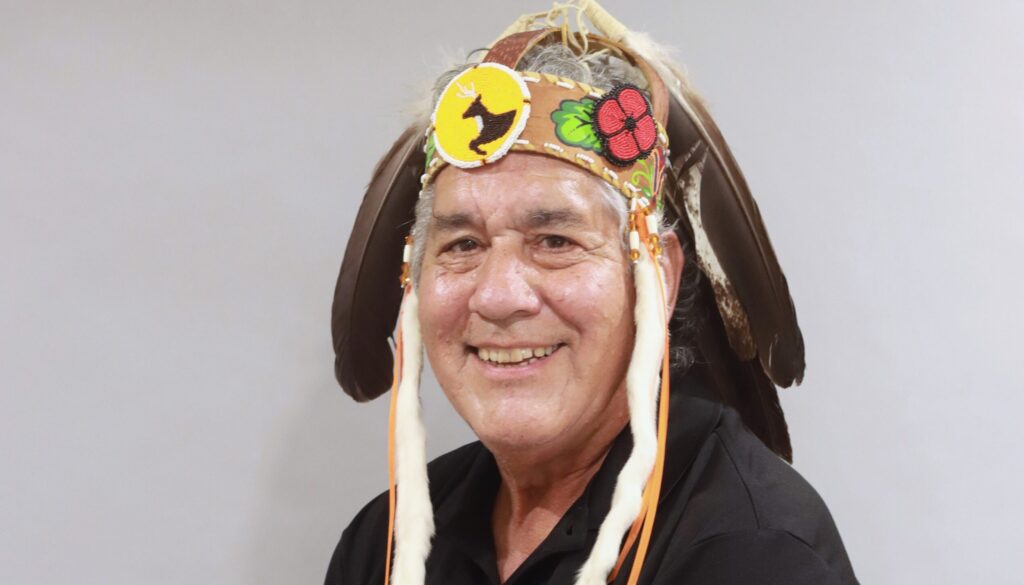
Four-time Grand Council Chief of the Anishnabek Nation Joe Miskokomon is the newest member of the Order of Canada.
Miskokomon also served as Chief of Chippewas of the Thames First Nation, and is currently the Southwest Regional Chief of the Anishinabek Nation.
“I started this journey in life 50 years ago, never with the expectation of being awarded anything,” Miskokomon said. “I come from a family of Chiefs and I maintain that hereditary role for our family and our community. I look at this as an honour that’s been bestowed to me, but also a recognition of the outstanding Canadians I’ve had the chance to work with over my career.”
The Anishinabek Nation Grand Office says Miskokomon has consistently championed the priorities and rights of the Anishinabek people.
“We extend our heartfelt congratulations to him on this well-deserved recognition and honour of this prestigious recognition of a leader whose lifelong dedication has profoundly impacted our communities and the broader Anishinabek Nation,” said Anishinabek Grand Council Chief Linda Debassige. “Today, we honour Chief Joe Miskokomon not only for his remarkable achievements and leadership, but also for his enduring dedication to justice and the affirmation of our inherent and treaty rights. His work continues to inspire us all to stand firm in the pursuit of sovereignty, respect, and reconciliation.”
As school teacher in the 1970s, Miskokomon quickly recognized that textbook history diverged from First Nations lived history. It inspired him to embark on a career of leadership and advocacy that took him around the world.
Early in his tenure as Chief, he led lobbying efforts challenging Ottawa’s position on pre-1867 treaties. He maintained the government was still bound by the treaties, contrary to the view of Prime Minister Pierre Trudeau.
Miskokomon’s advocacy led him to London, England, in the early 1980s. Canada was locked in heated debates to repatriate (take back) their constitution from England. He was in Parliament lobbying to ensure that promises made to Indigenous and First Nations peoples wouldn’t go by the wayside when a new constitution was drafted. Thanks in part to Miskokomon’s advocacy, Indigenous rights and treaty obligations were added as a provision in the official Canadian Charter of Rights and Freedoms.
“Treaties are not quaint historical documents, as they were one portrayed by a Prime Minister,” Miskokomon said. “They are significant developments in relationships within this country. Canadians of all ages need to be taught that these things can’t be taken for granted, that they are rights-based and they directly affect a portion of the population who cannot be denied.”
Miskokomon said he spent most of the 1980s “living, breathing and negotiating constitutional discussions.” Much of his time as Chief was spent facilitating agreements between Indigenous peoples and Canadian municipalities.
“A lot of municipalities are absorbed with their own development, but they don’t realize that these municipalities live on treaty land that has been owned by First Nations. (Advocacy) is a matter of physically going to the municipalities, creating a relationship, and setting boundaries. It’s not us against each other. It’s ‘how do we grow together?'” he said.
His work is far from finished. Miskokomon says he is currently settling a major land claim in Anishinabek territory. He is also developing a “complete redevelopment” of Chippewa First Nation governance, moving towards an entirely Indigenous jurisdiction and away from dependence on the federal government.
“First Nations have a different set of strengths than municipalities,” he said. “Municipalities are a creation of the province. First Nations are constitutionally-based people that have constitutionally guaranteed rights within that base. How can we build a foundation so that First Nations and municipalities grow in cooperation with each other? There is no simple answer to a very complex set of issues that have truthfully been ignored for far too long. (These issues) have been allowed to fester and it has created an atmosphere of competition and an atmosphere of distrust.”
“I think we’re in a different era today with government, or at least I hope we are, where we can understand that First Nations peoples have a place in this country. I think we’ve made a lot of progress over the last 50 years, but we still have a long way to go and a lot of work to be done.”