By Mike Stimpson, Local Journalism Initiative Reporter
Source: SNnewswatch.com
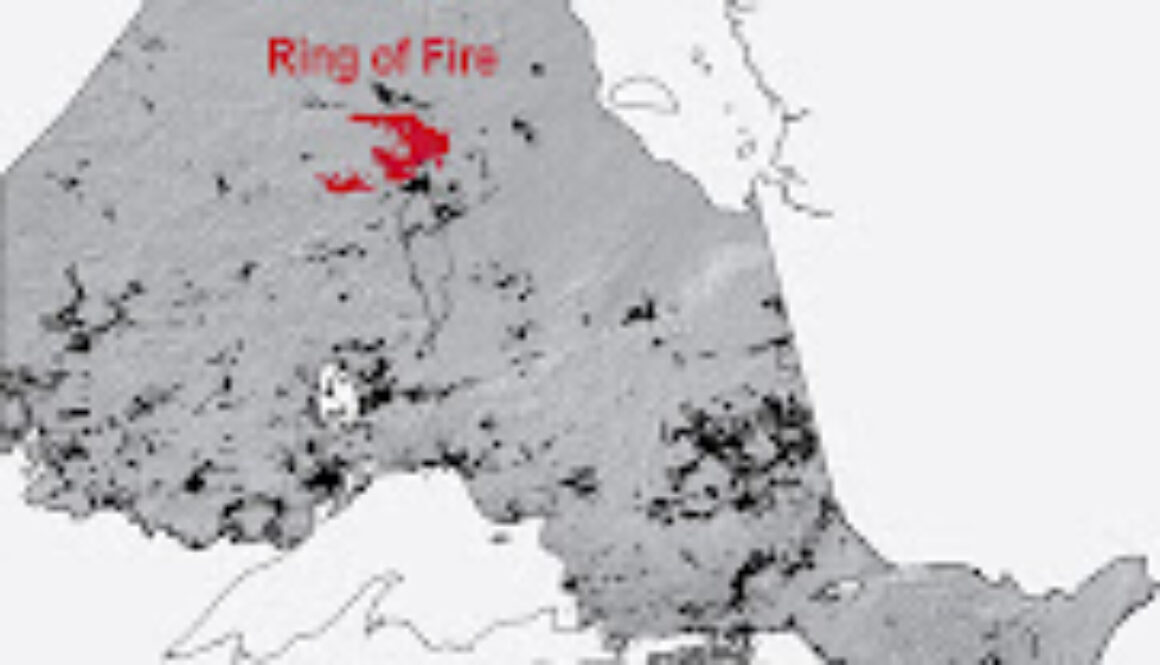
The Impact Assessment Agency of Canada (IAAC) has decided not to conduct an assessment of the Eagle’s Nest mine project in the Ring of Fire, and at least one First Nation chief in the region is unhappy with the decision.
A thorough impact assessment must be done because Eagle’s Nest “is not an overnight project, it’s pretty much a lifetime project,” Neskantaga Chief Gary Quisess said Wednesday.
Quisess said an impact assessment for the proposed mega-mine “should be done properly — you know, it should not be rushed.”
“The Ring of Fire is a very historical area,” he added. “That’s our culture, our ancestors, where we survived from.”
Quisess said he was too busy dealing with a recent death in his remote community to comment further.
IAAC president Terrence Hubbard, in his explanation of the agency’s decision, said they considered “whether a means other than an impact assessment exists that would permit a jurisdiction to address the adverse effects within federal jurisdiction and the direct or incidental adverse effects.”
He concluded that there are other means, including mechanisms under Ontario’s Mining Act, other provincial statutes, and federal laws and regulations.
He also noted that the mine’s proponent, Australia-based mining giant Wyloo, “has been actively consulting with numerous Indigenous groups, working to address potential impacts of the project.”
The Eagle’s Nest property, located some 540 kilometres northeast of Thunder Bay, is rich in nickel, platinum group metals and copper.
Wyloo estimates its proposed mine could operate for at least 12 years and produce 15,000 tonnes of nickel annually.
The timeline on Wyloo’s Eagle’s Nest webpage has construction beginning in 2027 for production to start in 2030.
The Ontario government has signed partnership agreements with Webequie First Nation and Marten Falls First Nation to move Ring of Fire development forward.
Those deals include roads to link the remote Treaty 9 communities to Ontario highways.
Marten Falls submitted a comprehensive environmental assessment for its proposed all-season access road on Feb. 20.
The environmental assessment for the all-season Webequie Supply Road has also been submitted.
Webequie and Marten Falls are both aiming to begin construction of their roads this year.
Public consultations are underway for the Northern Road Link, a proposed all-season road that would run between the Marten Falls and Webequie roads.
The Marten Falls, Webequie and Northern Road Link roads are the core of what Premier Doug Ford’s government has called a “corridor to prosperity” — land access to the Ring of Fire, where Wyloo and other companies hope to establish mines.
Neskantaga has expressed opposition to Ring of Fire development moving ahead without its participation and consent, and even vowed to block the corridor.
By Nathalie Sturgeon, Local Journalism Initiative Reporter, The Courier
This is the first article in a two-part series that examines the province of New Brunswick’s decision not to make training mandatory for municipal officials, instead providing a voluntary option.
A recommendation by the Local Governance Commission (LGC) to make training mandatory for municipal leaders and staff will not be implemented by the Department of Local Government (ELG).
In September, the LGC said mandatory training would address the ongoing challenges many local governments have faced since municipal reform in 2023.
Commission Chair Gisele Goguen said in a release at the time that failure to complete the training should result in appropriate sanctions.
Local Government Minister Aaron Kennedy told Goguen in a letter that the department will work with the municipal associations to provide a “comprehensive orientation program” for elected officials and administrative staff following the May election.
However, the department rejected making it mandatory.
“The department has decided to focus [its] efforts in the coming months to address the barriers which may have prevented elected officials from engaging with the training offered in partnership with the municipal associations,” the letter reads.
In the months following the recommendation, the commission also released an advisory warning that code of conduct and conflict of interest meetings could not be held in closed session, and were wrongly being dealt with under Section 68(1)(j) of the Local Governance Act (LGA) as “labour and employment matters.”
The LGC cited two decisions that demonstrated elected municipal leaders could not be considered employees of the local government.
Several exemptions listed under Section 68(1) of the LGA in which council may enter closed session during a council meeting include legal advice and personal information as defined in the Right to Information and Protection of Privacy Act.
Both Eastern Charlotte and Saint Andrews raised concerns about the advisory, saying the complaint process could be used inappropriately. The council in Saint Andrews asked ELG to create a standardized process for councils in New Brunswick to follow, but the department said it would be up to each municipality to consult legal counsel on legislative interpretation.
In St. Stephen, the council removed all references to closed sessions in accordance with the advisory, apart from the exemptions under Section 68(1), particularly for legal advice.
“It’s only been three years — three years and a bit — since we started these communities. It takes time and it takes effort to build community, and training is a fundamental block of that. We need to ensure that all communities have access to the information they need, and the support, and the resources.” – Dan Murphy, Union of Municipalities of New Brunswick
Goguen said in a statement to The Courier that it was disappointed the department decided not to move forward with mandatory training.
“The commission continues to maintain that mandatory training in the key areas we have identified would be the best and most efficient way for the department to ensure that local government leaders have consistent access to the tools, information and foundational knowledge necessary to help them serve their communities,” she said.
Goguen said the commission will continue to advocate for mandatory training, calling it a “critical component of strengthening local governance across our province.”
Meanwhile, the executive director of the Union of Municipalities of New Brunswick (UMNB) said he was surprised by the department’s decision.
Local Government Minister Aaron Kennedy meeting with the Union of Municipalities of New Brunswick.
“Our association, the other municipal associations [and] our members came through loud and clear that they thought this was important. So it was surprising for us at the end of the day,” Dan Murphy said.
He said there is room for standardized training through the department.
“Having some type of requirement and creating [a] culture around ongoing training is important, and I think the department understands that. It’s something that we’re working on in collaboration with them, but I think the decision not to move forward with the mandatory training part means that there’s going to be a patchwork element to it, and so we need to figure out how to address that,” he said.
Murphy said he hopes that patchwork doesn’t put municipalities in the same situation they faced with code of conduct and conflict of interest.
“I think we were all working hard so that that doesn’t happen, but local governance reform is ongoing,” he said. “It’s only been three years — three years and a bit — since we started these communities. It takes time and it takes effort to build community, and training is a fundamental block of that. We need to ensure that all communities have access to the information they need, and the support, and the resources.”
Murphy said work with the department is ongoing, including some of the pre-election work mentioned by Kennedy and voluntary training offered through the two associations.
Jurisdictional scan, decision
The department did a jurisdictional scan, which identified six of nine provinces as requiring mandatory training for elected officials.
On Nov. 3, documents show the research identified Alberta, Manitoba, Quebec, Nova Scotia, Prince Edward Island, and Newfoundland and Labrador, with Nova Scotia and Prince Edward Island identifying code of conduct training as mandatory.
“The most common enforcement mechanism for non-compliance is the imposition of sanctions, including suspension of duties,” the advice-to-minister report on Nov. 3 said. “As part of the jurisdictional scan, in some instances no sanctions were identified for mandatory training requirements.”
It also said that in 2023, post-amalgamation, ELG hosted a local governance orientation that included seven virtual sessions for elected and non-elected officials and one in-person session over a three-week period. Average participation was 281 — more than two-thirds of the 401 officials elected in 2022.
Emails show the department decided in November it would not proceed with mandatory training, despite not notifying the commission until December.
On Nov. 14, department official Grace Lee Cutler wrote to Assistant Deputy Minister Jennifer Wilkins that mandatory training was “not proceeding.”
However, emails show department staff weren’t preparing draft responses to the commission’s recommendations until a month later. On Dec. 19, a letter from Kennedy was sent to Goguen saying the “department would not move forward with an amendment to the Act at this time.”
“We’re going to work together.” – Local Government Minister Aaron Kennedy
Several municipalities in New Brunswick have come under the supervision of ELG. Both Miramichi River Valley and Sunbury-York South were placed under supervision due to resignations and loss of quorum. Strait Shores and Lakeland Ridges are under supervision due to internal turmoil, code of conduct violations and dysfunction.
The local government minister said there is too much hang-up on the word mandatory.
“There [have] been [a] myriad of training opportunities over the last three years since local governance reform was put in place,” Aaron Kennedy said in an interview with The Courier. “There will be a robust post election training that will be available to the newly elected officials and folks who were previously elected, who get reelected, and we are going to do the best that we can to encourage those people to take part in the training.”
Kennedy said the plan is to identify the barriers for people who do or don’t participate and try to elevate them. He said the issue becomes whether mandatory training fits within the democratic process.
“If councillors … decide that, for whatever reason, they’re not taking part in mandatory training and then the minister of local government comes in and says, ‘well, that’s lovely, but that’s your decision not to take part in the mandatory training and now these are the repercussions,’ whether it’s a suspension or vacating the seat as extreme as that. I mean these people have been elected. That’s the democratic process,” he said.
The department will make participation part of the public record, he explained, adding constituents can view that for themselves, question the councillor or mayor, and hold those individuals to account during the next election.
“We’re going to work together,” he said. “The department is there daily to field calls from mayors and councillors and CAOs. If there’s any way that we can assist, sometimes on mundane day-to-day things, we’re able to do that.”
Kennedy said cost was not part of the decision not to move forward.
“I think when we look right now, we have three out of 77 local governments in New Brunswick that are under a supervisor. So that means 74 that aren’t,” he said.
He added the one thing the municipalities placed under supervision have in common is that they were all newly created.
“One could argue that they were victims of forced amalgamation from the previous government. They weren’t happy, I think it’s fair to say, becoming a municipality in areas that were formerly in local service districts, so there was that sort of frustration, is probably the best word to use going into that process.”
By Sandi Krasowski, Local Journalism Initiative Reporter
Source: The Chronicle-Journal
The Canada Steamship Lines Baie Comeau, a self-unloading lake freighter, is wintering comfortably at Keefer Terminal and is the only vessel wintering in the Thunder Bay port this year.
Port of Thunder Bay chief executive officer Chris Heikkinen said there are typically two or more wintering vessels in the port.
“This season, an earlier freeze-up than usual in the lower Great Lakes hindered two anticipated vessels from making the trip up to Thunder Bay before the locks closed,” he said, adding that the Soo Locks, which are operated by the United States Army Corps of Engineers, remained open until their usual closure date of Jan. 15.
“Schedules are always fluid at the end of the shipping season, and wintering locations for vessels can be changed for a variety of reasons, including sailing conditions.”
Each winter, Midcontinent Terminal, Ontario Shipyards (formerly Heddle) and Keefer terminals have taken on wintering ships that arrive at the end of the navigation season.
Heikkinen said every wintering ship provides an economic boost to the local economy. The vessels require inspection services and typically undergo some form of maintenance and repairs during their winter stays. The actual benefit provided is unique to the needs of each wintering vessel.
The Soo Locks, which are currently undergoing their own winter maintenance work, are slated to open for the 2026 navigation season on March 25.
Our guest on this week’s episode of the Insights Podcast is Nathan Ough, President and CEO of Texas-based VoltaGrid. Born and raised in Saint John, Ough is now looking to put a large-scale data centre in the port city, bringing several hundred high-paying jobs and millions of dollars in tax revenue to the city and provincial government. A partnership with Beacon AI Centres, the $2+ billion project involves an innovative ‘behind the meter’ approach to meeting the large electricity needs of the data centre. Ough claims the project will have no negative impacts on the province’s electricity grid or the city’s water supply. Data centres are among the fastest-growing industries across North America, as they are necessary to provide the computing power and storage for the emerging artificial intelligence boom. Will Saint John be at the front end of this industry in Canada? Download and listen to our conversation with Nathan Ough to find out.
By Carl Clutchey, Local Journalism Initiative Reporter
Source: The Chronicle-Journal
Citizens groups opposed to a proposed underground storage site for spent nuclear-fuel rods near Ignace say they’re heartened by the level of push-back against the project.
A federal agency reviewing the Nuclear Waste Management Organization’s proposal received more than 600 comments when the project’s initial project description was put out for feedback over a 30-day period that ended on Feb. 4.
“The public stepped up and did their job and did it very well,” Northwatch co-ordinator Brennain Lloyd commented in a news release this week.
Most of the comments to the Impact Assessment Agency of Canada were negative, but a few were supportive, including a letter from Ontario Power Generation, which operates nuclear power plants in the province.
A spokesman for the Nuclear Waste Management Organization (NWMO) said “the number of submissions and comments shows that the (review) process is working as intended.”
“We look forward to receiving and responding to the summary of issues when we receive it later this month.”
Lloyd said the assessment agency has “a mountain of work to do” ensuring its summary of issues “actually reflects what they have heard.”
Nishnawbe Aski Nation and Treaty 3 were among the Indigenous groups expressing concerns about the underground storage site project.
A long-standing sticking point has been how the nuclear fuel rods — which remain radioactive after use — will be transported to the proposed storage site, formally called a deep geological repository (DGR).
Used fuel rods are currently stored at nuclear power plants; environmental groups say that practice should continue.
Opponents of the deep geological repository project were dismayed when the transportation issue wasn’t included in the NWMO’s initial project description, but the impact assessment agency later said transportation could still be part of the review process at some point.
The Nuclear Waste Management Organization has said fuel rods could be railed or trucked in specialized containers designed to withstand hard impacts and fiery crashes.
Some Indigenous and municipal leaders in the Thunder Bay district have also expressed concerns over how the rods may be transported, given the high number of serious road crashes in the region involving heavy trucks.
By Sandi Krasowski, Local Journalism Initiative Reporter
Source: The Chronicle-Journal
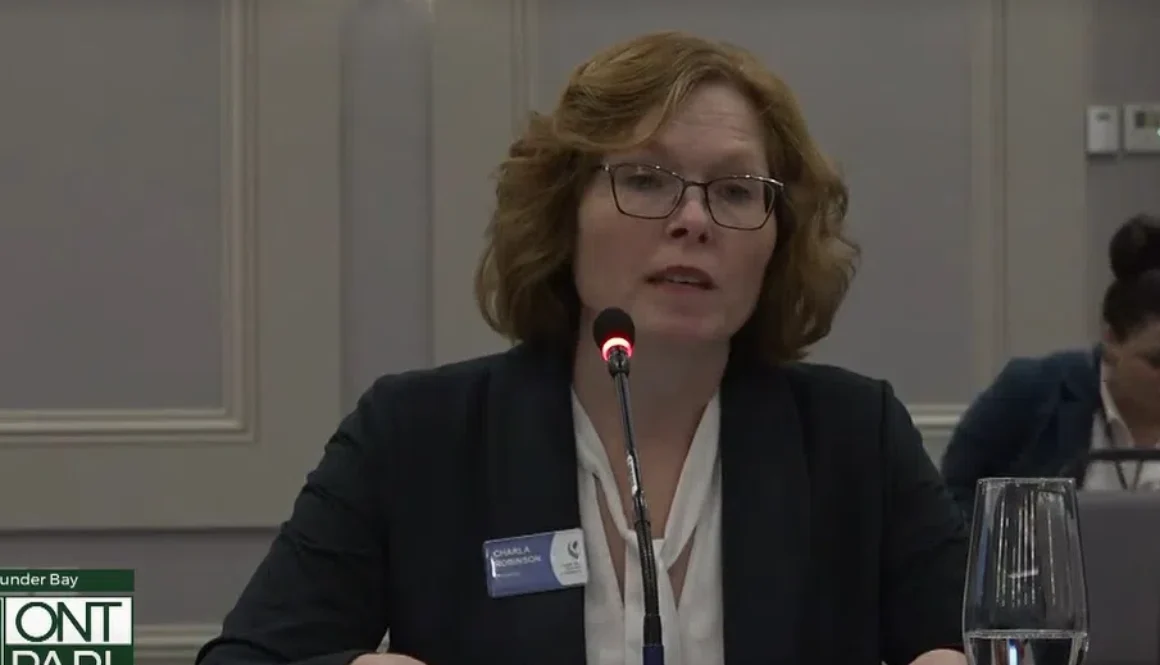
Thunder Bay Chamber of Commerce president Charla Robinson says there are several steps the Ontario government can take in its 2026 budget to help the city achieve its growth potential.
The chamber forwarded its priorities to the government last month during the province’s pre-consultation process for a budget document that is expected to be released before the end of March. With 800 member companies under its wing, the Thunder Bay Chamber of Commerce represents nearly 20,000 employees in the community.
“It’s about our workforce and supporting our post-secondary institutions to make sure we have appropriate training programs for it,” said Robinson.
Immigration has been an ongoing matter for which the chamber has advocated. The immigration programs must meet the needs of Northern Ontario, and Robinson said some specifics are set aside from the provincial program that are required in the North.
“We included that we need to make sure we have the workers that we need and that they’re trained for the jobs that we have,” she said.
Another priority is about economic opportunity, and Robinson pointed out the need for support for the forest sector as they transition out of products that are in declining demand, such as newsprint, and pivot to new types of wood products such as biomass.
“We are asking for the government to keep those in mind to support the advanced wood construction and biomass action plans to ensure that they have the support they need to go through this transition in the middle of all of these trade threats,” she said.
The other opportunity is around mining. The Ontario Chamber of Commerce recently released a report called Mining 2030, and How to Unearth Ontario’s Potential.
“They identified several steps that they think the province should take to make it better for us to capitalize on the mining opportunities that we have,” she said.
“We identified a few around an exploration tax credit, and the Northern Energy Advantage program, which is an energy pricing program for large industry.”
Robinson added that they want to make sure they have the infrastructure strategy in place to ensure the housing, health care and highways support the growth that the mining sector can bring.
“Our final pieces were really about local community issues and the need for healthy, sustainable communities to ensure that we can grow our economy,” she said.
“We’re encouraging the government to keep working with municipalities to address things like substance use, homelessness and some of those social issues that are really impacting our community and our ability to grow.”
The chamber is also voicing its opposition to the proposal to merge the Lakehead Region Conservation Authority with a conservation authority in southern Ontario.
“We are urging the government to keep that a standalone. We put it in the budget document because it was originally rolled out as part of the financial update last fall by the minister of finance,” Robinson said, adding they hope that this will be reversed as part of the upcoming budget, based on the fact that it was aligned with other budgetary measures.
He told the board Tuesday the decision to leave was for personal reasons. Figliomeni confirmed another opportunity came up that he just could not say no to.
By: Sandi Krasowski, Local Journalism Initiative Reporter Source: The Chronicle-Journal
Thunder Bay Chamber of Commerce president Charla Robinson says there are several steps the Ontario government can take in its 2026 budget to help the city achieve its growth potential.
The chamber forwarded its priorities to the government last month during the province’s pre-consultation process for a budget document that is expected to be released before the end of March. With 800 member companies under its wing, the Thunder Bay Chamber of Commerce represents nearly 20,000 employees in the community.
“It’s about our workforce and supporting our post-secondary institutions to make sure we have appropriate training programs for it,” said Robinson.
Immigration has been an ongoing matter for which the chamber has advocated. The immigration programs must meet the needs of Northern Ontario, and Robinson said some specifics are set aside from the provincial program that are required in the North.
“We included that we need to make sure we have the workers that we need and that they’re trained for the jobs that we have,” she said.
Another priority is about economic opportunity, and Robinson pointed out the need for support for the forest sector as they transition out of products that are in declining demand, such as newsprint, and pivot to new types of wood products such as biomass.
“We are asking for the government to keep those in mind to support the advanced wood construction and biomass action plans to ensure that they have the support they need to go through this transition in the middle of all of these trade threats,” she said.
The other opportunity is around mining. The Ontario Chamber of Commerce recently released a report called Mining 2030, and How to Unearth Ontario’s Potential.
“They identified several steps that they think the province should take to make it better for us to capitalize on the mining opportunities that we have,” she said.
“We identified a few around an exploration tax credit, and the Northern Energy Advantage program, which is an energy pricing program for large industry.”
Robinson added that they want to make sure they have the infrastructure strategy in place to ensure the housing, health care and highways support the growth that the mining sector can bring.
“Our final pieces were really about local community issues and the need for healthy, sustainable communities to ensure that we can grow our economy,” she said.
“We’re encouraging the government to keep working with municipalities to address things like substance use, homelessness and some of those social issues that are really impacting our community and our ability to grow.”
The chamber is also voicing its opposition to the proposal to merge the Lakehead Region Conservation Authority with a conservation authority in southern Ontario.
“We are urging the government to keep that a standalone. We put it in the budget document because it was originally rolled out as part of the financial update last fall by the minister of finance,” Robinson said, adding they hope that this will be reversed as part of the upcoming budget, based on the fact that it was aligned with other budgetary measures.
Former New Brunswick Premier and UNI Financial CEO Camille Thériault joins the Insights Podcast to discuss leadership, grassroots politics, and economic growth. From the 1987 Liberal sweep to transforming UNI Financial, Thériault shares lessons on succeeding in public life and the importance of investing in tourism and community development.
ByNathalie Sturgeon, Local Journalism Initiative Reporter, The Courier
Education Minister Claire Johnson says the Department of Education and Early Childhood Development (EECD) is still reviewing where rightsholders are located and what land is available for a Francophone school in Charlotte County.
In December 2024, the Liberal government announced plans for two schools for southwest New Brunswick, including one in Charlotte County and Kings County.
It set aside $14 million for the provincewide ventilation program. The funding also allocated $2 million for a universal washroom program and $163.1 million for ongoing construction projects, equipment, improvements, repairs, and the dust collector program to ensure schools remain safe for students and staff.
Francophone Sud took legal action against the government over a lack of investment in the education sector in southwestern New Brunswick.
“The investments [are] needed to expand and renovate our existing schools and build new ones,” said a news release translated from French back in September 2024.
“After years of delays in crucial investments in school infrastructure, which are necessary to meet the rapid population growth of our district, our demands are met with a lack of action from the current government.”
Johnson said Statistics Canada added a question about rights holders in 2021.
“So that means for the first time, they were able to identify who had rights to a French education,” she said speaking with The Courier. “That was an area [Charlotte County] that was targeted.”
According to Statistics Canada, which is expected to collect data in May 2026, 2,390 identified as French without specifying a connection, in 2021.
Another 195 identified as French Canadian and 30 as Quebecois, while 570 identified as Acadian.
The statistics also included several other cultural identities that speak French. Additionally, children eligible for education in the minority official language is 255, which is about 17 per cent of Census respondents from 2003 or later.
The number of children eligible for instruction in the minority official language in Charlotte County is 200, but only 55 of eligible children who have been instructed in the minority official language at the primary or secondary level, between 2003 and 2015.
An examination of 2,372 surveyed individuals, in 2013, who were exclusively English was reviewed by Marc-Andre Bouchard and Sylvia Kasparian at the University of New Brunswick in 2019.
“We’re studying to find out where specifically in that area the interests are, where the rights holders are, and where land is available, and all of those different things will guide our decision making,” she said. “No decision has been made yet.”
In June 2025, Eastern Charlotte council wrote to Johnson and EECD to ask whether the school could be placed in St. George.
“Eastern Charlotte is geographically central in Charlotte County and the community of St. George is situated along (Route) 1,” the letter reads. “In addition, St. George municipal water and wastewater services could service a new school.”
The council’s letter also identified Pennfield as an ideal location but noted it is not serviced by the municipality.
The council asked the minister to meet with members to discuss the proposed location. The municipality confirmed there has been communication between it and the province on the proposed school.
“If a location is yet to be determined, we offer Eastern Charlotte as the most beneficial location to support a Francophone school in this region,” the letter went on to say.
The Municipal District of St. Stephen (MDSS) told The Courier that it requested a call with those involved in the Francophone school project which is expected to take place later this week.
The Town of Saint Andrews has not been in touch with EECD regarding the school and its council has not requested any communication.