Randy Thoms is a veteran news broadcaster with over 40 years' experience. He is based in Fort Frances and covers stories across northwestern Ontario. Contact Randy at thoms.randy@radioabl.ca.
The public will get a chance to comment on a proposed subordinate service district for the International Falls Ambulance Service.
It would allow for Koochiching County to set a funding mechanism in the form of a tax levy and/or service charge, with the money directed to the ambulance service.
The service has been debt-ridden for several years, in part due to insurance reimbursements not providing the full cost of the services, or unpaid charges that have been deemed uncollectable.
The city, which operates the service, has long been concerned about its financial status and reached out to the County Board to consider the ability to collect revenue from areas where the service is provided.
Koochiching County will hold a hearing on February 24th at the Koochiching County Courthouse beginning at 5:30 p;.m., allowing the public to offer input.
Ontario’s three curling organizations are proposing to become one.
Curling Ontario, the Northern Ontario Curling Association (NOCA) and the Ontario Curling Council (OCC) would become Curling Ontario.
Laura Forget, Executive Director of the Northern Ontario Curling Association, says the goal is to improve on the administration side of the sport and strengthen support to local clubs.
“By coming together, the three organizations will be reducing duplication behind the scenes and be able to put more energy and resources into supporting clubs and curlers, especially in smaller and northern communities,” says Forget.
“It’s really about what we’d be able to offer behind the scenes. So more professional support, shared resources, stronger governance, improved programming, youth development, and higher quality service is what we’re really looking to offer our clubs.”
The three organizations are currently operating with minimal staff.
Forget is the only paid person with NOCA.
She says no one will lose their job, and the combined staff of the new body will still be smaller than similar organizations in other provinces.
“This would allow us to use people more efficiently, reduce the duplication and redirect that increased capacity back to the clubs,” says Forget.
Northern Ontario has long had separate representation in national competitions despite not being a province.
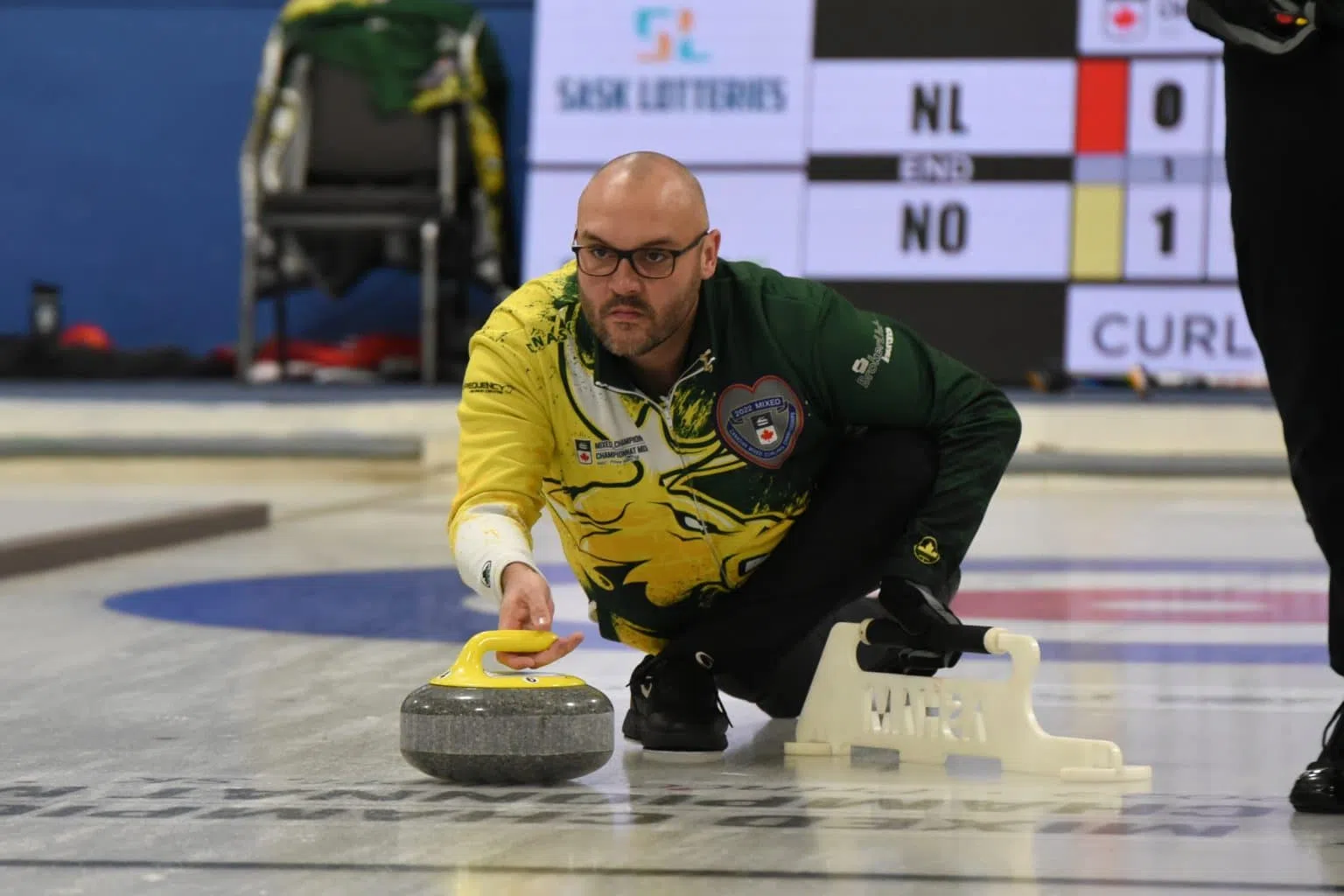
Trevor Bonot in action at the 2022 Canadian Mixed Curling Championship. (Photo, Curling Canada/Melanie Johnson)
Men’s teams were first permitted to represent the region at the Brier in 1927.
Women’s teams from Northern Ontario did not earn a direct berth to the Tournament of Hearts until 2015.
Forget says that will not be taken away by the planned merger.
“We will continue to have our own team and representation at all national championships,” says Forget.
“Team Northern Ontario and the Moose are not going anywhere. That’s been made very clear in the proposal, and we have that in writing from Curling Canada.”
“We’ve got quite the brand. I’m sure if anyone has watched any of the national championships on TV, the moose call is very prominent, and it’s not going anywhere.”
NOCA and Curling Ontario are holding special town hall meetings to discuss the proposal and gather input from their member clubs.
Both will hold special meetings on March 8th for their club delegates to vote on the proposal.
The Ontario Curling Council’s by-laws do not require its members to approve the merger, but plans for a special meeting to approve the revision of its by-laws.
The plan has the support of Curling Canada, the national body.
“We know that with limited resources in the sport system, change is coming, including integration and alignment at many levels,” states Nolan Thiessen, Chief Executive Officer of Curling Canada, in a release.
“This discussion is exactly that type of forward thinking and proactive response. The talk of this merger shows that the Northern Ontario Curling Association, Curling Ontario and the Ontario Curling Council are prioritizing long-term vision, adaptability, and sustainable growth to provide better service to curlers and the sport of curling in Ontario.”
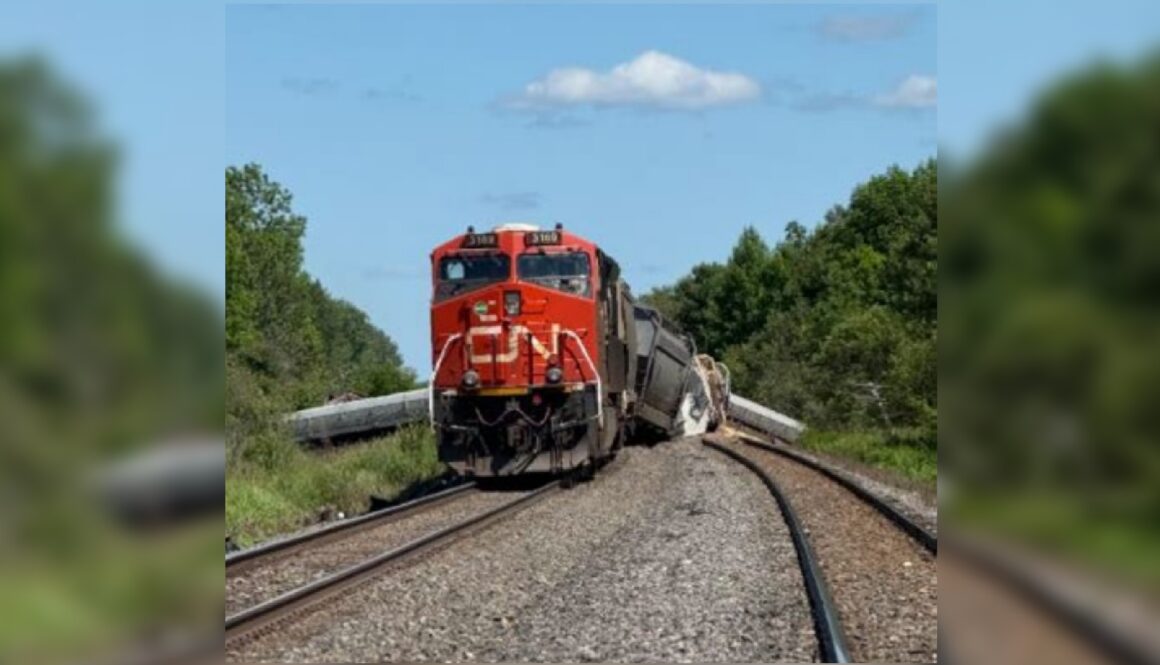
The Transportation Safety Board (TSB) is pointing to increased stress on the rails from heavy train traffic as a contributing cause to a derailment west of Fort Frances.
Thirteen cars carrying canola seed from a 134-car CN freight train left the track near Devlin on June 28th.
In its review, the Safety Board states that it identified signs of rail creep, described as a sign of stress in the rails that can lead to them becoming out of alignment and buckling.
“Unless the underlying compressive stress is addressed, rail creep grows increasingly more pronounced over time,” the report states.
“Rail creep is more detrimental when it is unidirectional, which occurs when there is a significant imbalance in the traffic tonnage in one direction as opposed to the other, as in the case of the Fort Frances Subdivision.
The TSB believes the track had been under stress for some time.
It also noted a similar incident related to track buckling three weeks earlier elsewhere that resulted in the derailment of eleven rail cars.
The report states that CN was in the process of making repairs earlier that month, but stopped short of the accident area to focus on repairs elsewhere.
“This left the section of track from Mile 100.42 to the crossing at Mile 101.46 (the next fixed location), including the point of derailment at Mile 101.1, particularly vulnerable to track buckling; however, the area in the vicinity of the derailment was not protected by a slow order,” the report states.
An inspection of the tracks using a hi-rail vehicle took place two days before the accident, but no defects were noted.
While acknowledging that track inspections were performed regularly by CN, and the frequency met or exceeded the minimum requirements, the TSB wrote Transport Canada to suggest that a review of CN maintenance and inspection practices along the Fort Frances Subdivision take place.
Transport Canada has responded by saying it would conduct a track inspection this year.
As Congress debates the tactics of Immigration and Customs Enforcement, data is emerging on how Minnesotans are expressing their frustrations, including a recent day of action that garnered national attention.
A new poll from May Day Strong – a coalition of labour unions – reveals that nearly a quarter of those surveyed said they or a loved one took part in a statewide strike on January 23rd.
On that day, residents were urged to refrain from work, school and shopping.
An estimated 50,000 people also marched through downtown Minneapolis in sub-zero temperatures.
There have also been tributes to Renee Good and Alex Pretti after they were fatally shot by federal agents.
Bruce Blase of Blaine took part in a bike ride for Pretti, and noticed a lot of people cheering from the sidelines.
“And along the route, there were lots of residents along the route that were urging us on. They were behind our movement,” says Blase.
Participants say the demonstrations in Minnesota and around the country illustrate that many Americans feel the Trump administration is going too far with its deportation strategy.
After voting to end a partial government shutdown, Congress faces a short negotiating window to secure reforms to the Department of Homeland Security.
A stopgap measure extends funding for DHS until February 13th.
Democrats want to end practices such as “roving patrols” while Republicans renew calls to target sanctuary cities.
Residents speaking up about ICE’s presence in Minnesota have consistently noted that people documenting arrests are not violent protesters, but instead neighbours caring for neighbours.
They say the marches and rallies are an extension of the resistance.
Blase walks around in a safety vest with the words “peaceful observer” stretched across the back.
He says he feels that ancestors who served in the military and defended the United States and its allies would have done the same.
“My dad and all of his fellow combat veterans of World War II are spinning in their graves right now if they knew what was going on in this nation,” says Blase.
The May Day Strong survey was conducted over a three-day period immediately after the January 23rd day of action, with responses from nearly 2,000 likely voters in Minnesota.
Nearly half of the respondents felt the event was an effective way for people to exercise their rights and show opposition.
A Minnesota man had died in a snowmobile collision south of International Falls.
It happened on Tuesday at around 12:30 p.m. on the Arrowhead Snowmobile Trail near Orr.
The St. Louis County Sheriff’s Office says two machines side-swiped each other as they approached each other on a curve.
This caused one of the snowmobiles to roll several times, ejecting the 57-year-old operator.
Multiple first responders and emergency personnel responded to the scene, including the Minnesota Department of Natural Resources, Bois Forte Police Department, Virginia Fire Department Sprint Medic, Life Link III air ambulance, Orr Ambulance, Orr Fire Department and Kabetogama First Responders.
Despite extensive lifesaving measures, the man, who has been identified as being from the south metro area, was pronounced dead at the scene.
The name of the victim has not yet been released pending notification of family members.
The driver of the other snowmobile was not injured.
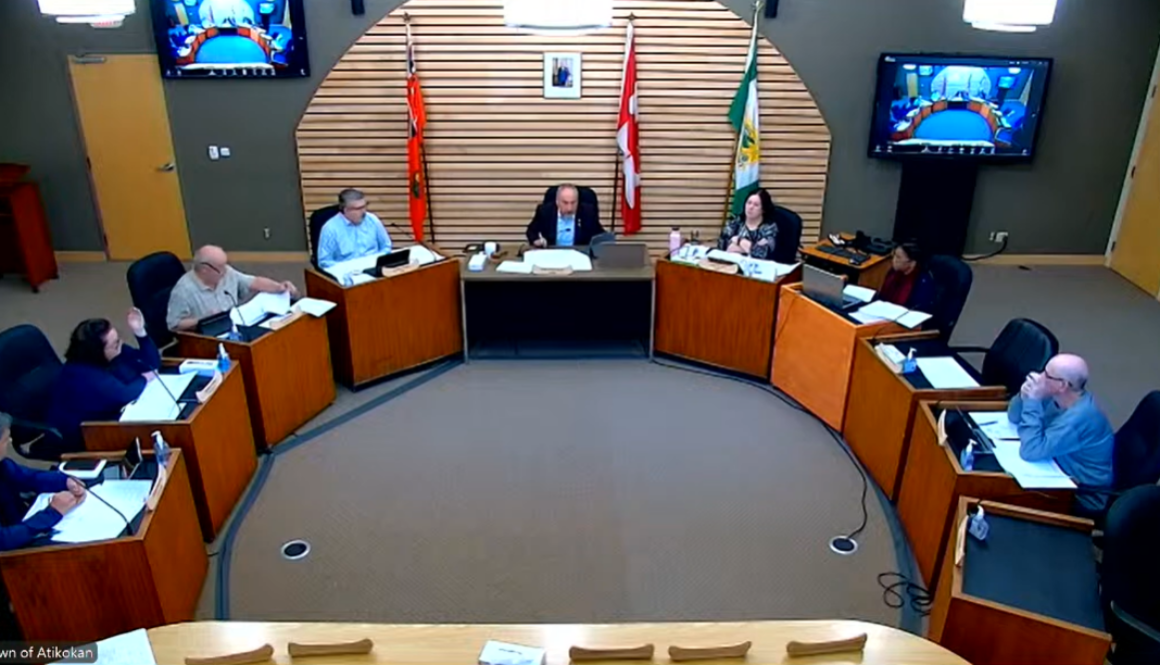
The town of Atikokan intends to spend more than $29 million this year.
The proposed budget reflects Mayor Rob Ferguson’s directive last fall for a budget that included a tax increase of no more than 2%.
He says the use of new legislation achieved the goals he wanted.
“Using my strong Mayor’s powers was, one, to have the budget out earlier, which we’ve been talking about for years,” says Ferguson.
“By getting the budget out earlier, that gives the department heads a clear vision of what they’re going to do and how they’re going to spend their money.”
Ferguson says it also allows the town to get projects moving more quickly and seek out contractors sooner in hopes of getting a better price.
Capital spending is listed at $15.9 million.
The biggest expense will be replacing the bridge on McKenzie Avenue, estimated at $5.5 million, with grants covering about 40% of the construction costs.
The town expects to have more money to work from, with revenue projections to top $20 million.
This includes more than $5.7 million coming from the provincial government and $855 thousand from the federal government.
User fees will account for another $3.7 million.
“This ended up way better than I anticipated,” says Treasurer Brandy Coulson.
“I thought it would be more money from reserves, but because of all the extra revenue we’ve had this year and last, we’re going to be taking less, way less from reserves than I expected.”
The town budgets for more than $5.7 million in funding from the provincial government and another $855,000 from the federal government.
User fees will account for another $3.7 million.
Atikokan will pay about $42,000 more to the District of Rainy River Services Board, $6,500 more to the Northwestern Health Unit and $81,000 more on its policing contract with the Ontario Provincial Police.
Formal approval of the budget is expected to come within the next month.
The federal government is being pushed to help the forest industry in northwestern Ontario.
Workers at mills in Ear Falls, Ignace and Thunder Bay have been impacted by recent closure announcements.
The sawmill in Ear Falls has been idle since October, while the Ignace mill will halt production in March.
The closures impact a combined workforce of about 330 workers.
Last week, it was announced that the newsprint line at Thunder Bay Pulp and Paper will be shut down.
Kenora-Kiiwetinoong MP Eric Melillo recently raised the issue in the House of Commons.
“Every day, more closures are announced,” states Melillo.
“These are good-paying jobs for hard-working Canadians that are now gone. The government’s rhetoric of supporting workers is not matching the reality of the workers who are losing their jobs.”
The Liberal government insists that it is helping the forest industry.
“The government stands with forestry workers,” said Corey Hogan, Parliamentary Secretary to the Minister of Energy and Natural Resources.
“We have announced $2.5 billion in supports. We have a task force active right now looking at additional supports.”
Last fall, Prime Minister Mark Carney announced a $1.25 billion aid package to support the softwood lumber sector.
It included $700 million in loan guarantees to help companies confront immediate pressures facing the softwood lumber sector, and another $500 million to diversify products and markets.
Another $50 million has been earmarked for workers to reskill and find employment elsewhere.
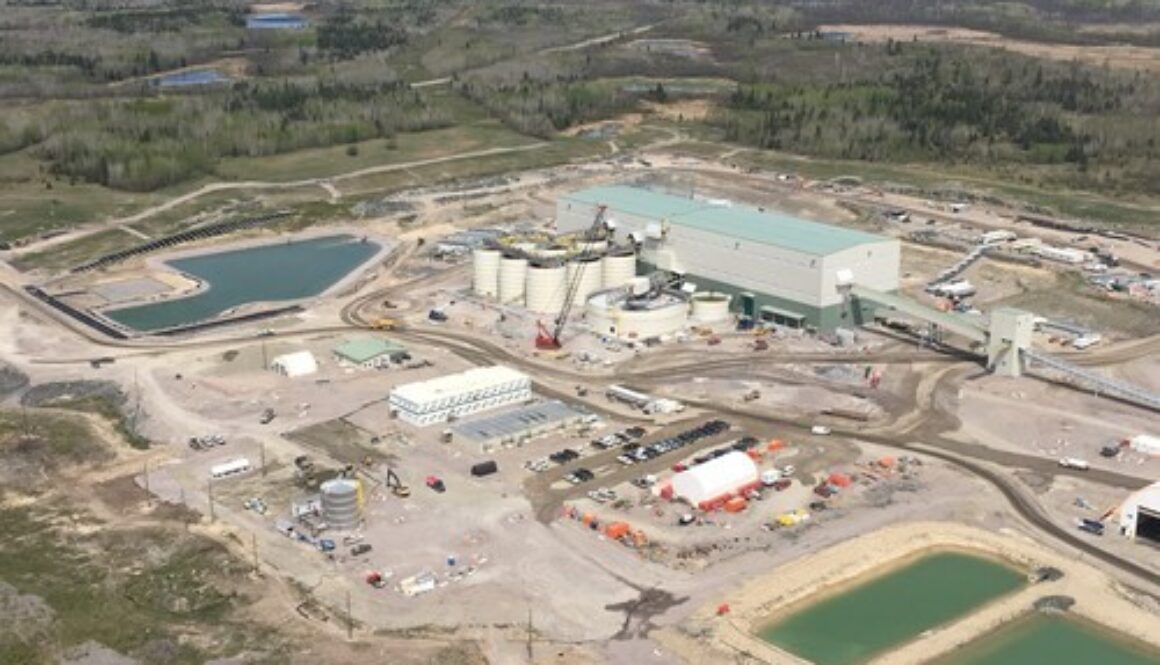
The Supreme Court of British Columbia has signed off on a deal that will see New Gold acquired by U.S.-based Coeur Mining.
It is one of several steps that were necessary for the two mining companies to conclude a $7 billion agreement that was first announced last November.
The court ruling came just days after New Gold shareholders at a special meeting voted more than 99% in favour of the deal.
The company’s Board of Directors had recommended acceptance.
In a statement issued in December, Chair Richard O’Brien said it would create a unique, one-of-a-kind North American precious metals mining company.
“The Transaction will crystallize the value created for our New Gold shareholders over the past few years and unlock the next level of potential, with exploration upside from both New Afton and Rainy River,” stated O’Brien in a release.
“At the same time, the combined company will diversify our asset base by adding five high-quality precious metals operations with significant upside, a strengthened balance sheet, and is expected to generate significant free cash flow and higher levels of shareholder returns.”
Shareholders with Coeur Mining voted at a separate meeting 97% in support of New Gold shareholders receiving company stock, one of the deal’s components.
The two mining companies expect to conclude the transaction by this June.
It is still subject to other necessary approvals under the Investment Canada Act and other conditions being met.
No charges will be laid following a review by the Special Investigations Unit of an incident that occurred last October in Pinewood.
Provincial Police were pursuing a truck reported stolen in the west end of the Rainy River District.
OPP first spotted the vehicle on Highway 621.
A spike belt was later deployed, causing the truck to drive over it.
The vehicle continued for a short distance before entering a ditch as it attempted to make a turn from Highway 11 onto Donald Street in Pinewood.
The driver of the truck was not hurt and was arrested.
A passenger, a 19-year-old woman, was also placed under arrest, but suffered a fractured knee.
In its review, the SIU says it found no evidence that the officers involved had committed any criminal wrongdoing that led to the women’s injuries.
Its report states that police travelled at reasonable speeds in their attempts to stop the vehicle, with neither vehicle going any faster than 70 kilometres an hour.
The SIU also noted that police rendered care to the vehicle’s two occupants after the collision and stayed with the injured woman until paramedics arrived on scene.
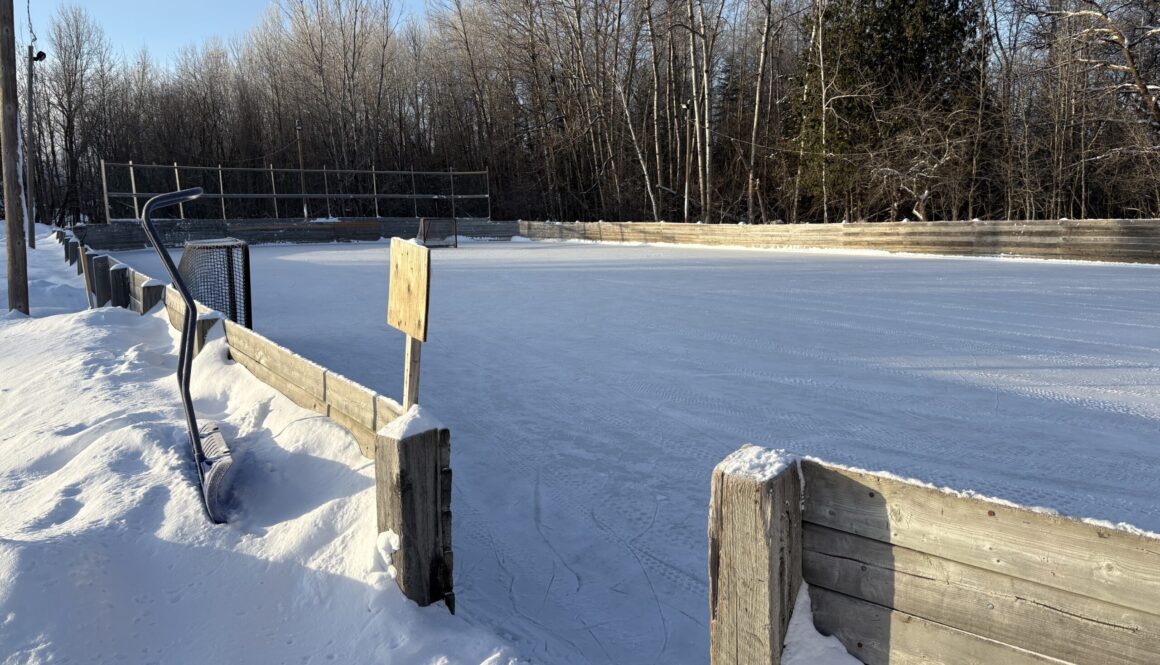
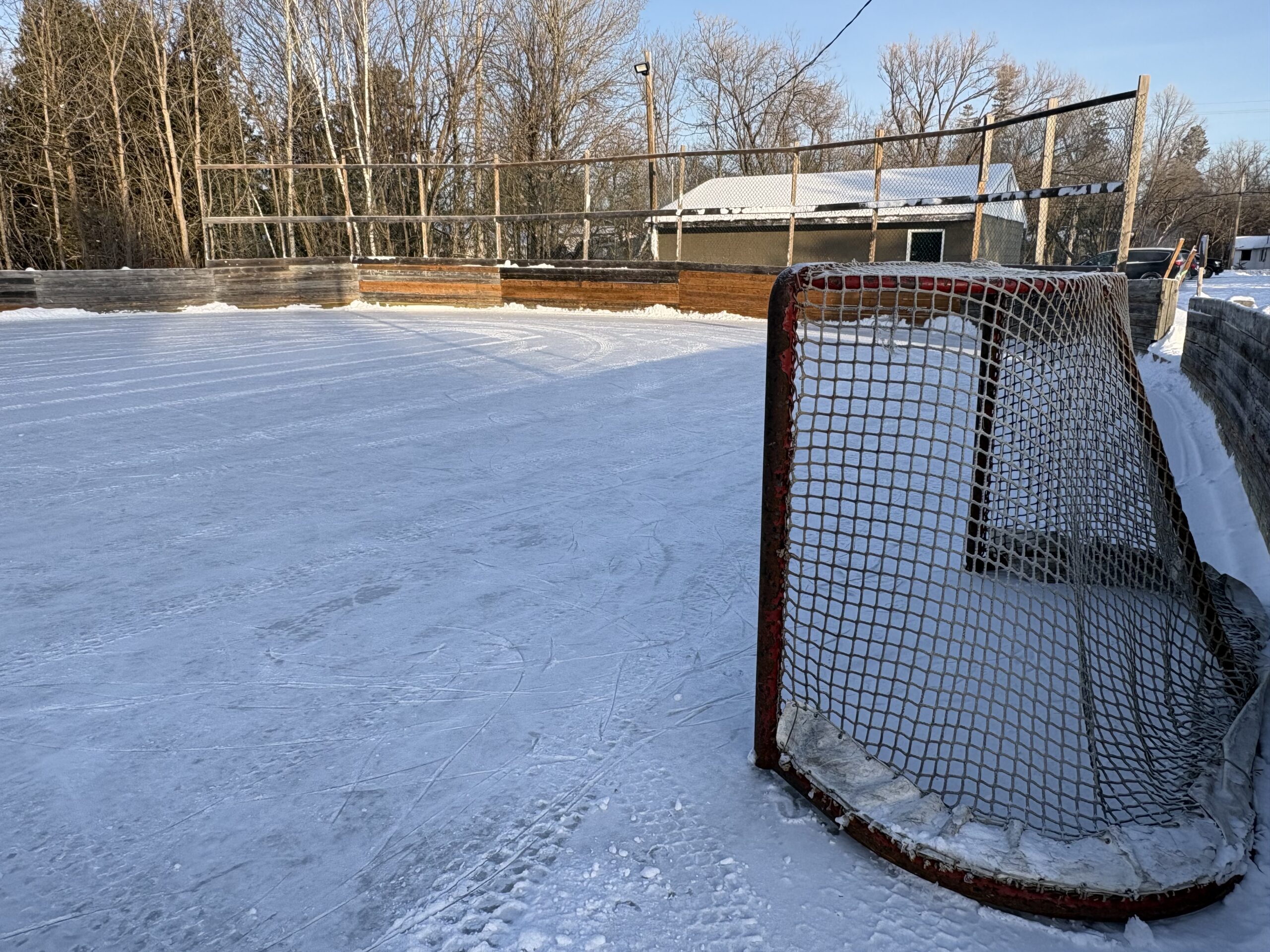
Just one outdoor rink in Fort Frances will have a roof over it.
Town council agreed to place it over the McIrvine rink, but not the East End outdoor rink.
The cost to do both rinks came in higher than expected.
The lowest bid for the steel structure was over $1 million for both rinks.
Operations and Facilities Manager Travis Rob says the McIrvine rink is more in need of an upgrade.
“McIrvine rink is by far in far worse shape than East End is, and is in dire need of a rebuild,” says Rob.
“We definitely could look down the road once we have grant approval at doing a second rink of some capacity, whether that is a concrete slab and boards or the full concrete slab, boards and roof.”
The town received a grant of $500,000 from the Northern Ontario Heritage Fund for the McIrvine rink.
An application for funding for the other is still being reviewed.
McIrvine Rink, February 3, 2026. Image: Randy Thoms/Acadia Broadcasting
The work proposed includes the demolition of the existing rink, building new concrete slabs before erecting the steel roof structure.
The rink would come complete with lighting and new dasher boards.
Similar structures have been completed in the past year in Alberton, Chapple and Sioux Narrows.
The total cost of the improvements is pegged at almost $1 million, while the town had budgeted $700,000 with the grant.
Councillor Mike Behan says it is frustrating to see costs come in higher than expected.
“It’s so frustrating that we want to move forward on these things at the time, but then you find out how much it’s really going to cost,” says Behan.
Administration has cost-estimated improvements to the East End rink at over $1.9 million.