Randy Thoms is a veteran news broadcaster with over 40 years' experience. He is based in Fort Frances and covers stories across northwestern Ontario. Contact Randy at thoms.randy@radioabl.ca.
Ontario Liberals want American alcohol that was taken off LCBO shelves earlier this year to be sold off.
Liberal House leader John Fraser suggests the proceeds could be donated to food banks.
“There are more people than ever who are going to visit food banks in Ontario this year. It’s going to be really tough. It would help a lot of people,” says Fraser.
More than $80 million worth of alcohol is sitting in a warehouse after it was removed in March in response to new U.S. tariffs that were applied to Canadian products.
Two million worth is set to expire within six months.
Other provinces also removed American alcohol products from their store shelves and have resold them for charity purposes.
“There are four provinces that are putting that surplus United States liquor to good use,” says Stephanie Bowman, Liberal Deputy House Leader.
“They’re selling it, and they’re donating the profits to support people in need, and the need in Ontario has never been greater.”
Parliamentary Assistant to the Finance Minister David Smith dismisses the idea, suggesting the sale is a support for American companies.
“To put American alcohol back on the shelves would mean we’re saying to all of those Ontario employees, you’re not valued. We want the Americans more than we want people in Ontario to work, and we disagree with that philosophy from the Liberal Party,” says Smith.
Smith notes that since the ban on American alcohol, Ontario has seen massive increases in the sale of Canadian products, including Ontario wine, which has enjoyed a 79% increase in sales.
The Liberals insist their proposal has nothing to do with American companies benefiting, but liquidating inventory to help families eat over the holidays.
The group that represents student trustees is accusing the Education Minister of making decisions without talking to students.
The Ontario Student Trustees Association (OSTA) is among those voicing concern with the potential elimination of school board trustees.
President Carter Peois says student voices need to be heard.
“Student representation is essential in every school board, and we want to ensure that student representation always remains because students will always be here, regardless of what changes, and students always will need that representation in educational governance,” says Peois.
Peois says the Association reached out to Paul Calandra when the legislation giving the Education Minister strong powers was first introduced.
He says the Minister responded three weeks later, saying he was too busy to meet with them.
“That’s concerning. OSTA is the official student stakeholder of the Ministry of Education,” says Peois.
“If the minister doesn’t have time to talk to OSTA, then I wonder which students he’s talking to when he makes legislation veiled in terms of student success.”
Peois notes that students share what they’re experiencing with student trustees, who are in a position to bring those voices back to the school board level.
He says only student trustees can provide first-hand insight into the daily experience of being a student.
The Canadian Mental Health Association is receiving funding from New Gold to assist with renovations at its Fort Frances branch.
Over $40,000 is to be used on a new concrete accessibility ramp at its Portage Avenue location.
The CMHA is undergoing renovations to the 100-year-old home to make the first floor more accessible.
The site serves as a location for a peer support drop-in program for those with mental health and addictions challenges.
“The Peer Support Drop-In program is the heart of our organization,” states Charlene Strain, Chief Executive Officer of the Fort Frances branch, in a release.
“It’s the foundation of who we are here to support and who we most learn from.”
The program has been operating for over forty years, providing support to individuals and family members, 16 and older, and is led by a team of staff with lived experiences.
The renovations are expected to be complete by the spring of 2027.
A lack of state funding is being cited as a reason for a proposed tax levy in Koochiching County.
The County is considering a 6% increase.
County Administrator Adam Coe says much of the increase is attributed to supporting the public health and human service department and its ability to deliver State-mandated programs.
Administrator Adam Coe says 98% of services are required to be provided locally.
“The state share of helping pay for those is not keeping up with the cost of providing those mandated services, so additional local funds were needed to help maintain that,” says Coe.
He adds that the department has been running deficits of over $300,000 for the past two years, exhausting its reserve account to cover the shortfall.
An additional $34,366 from the levy increase is proposed to go to a general revenue fund that is used to offset wage and health insurance rate increases.
The total spending is targeted at $39,333,971.
Coe says it is a 1.91% reduction over last year, when jail construction costs are not factored.
“We reduced and eliminated many capital projects to offset the increases in other areas to result in that 1.91% decrease,” says Coe.
It includes a decision not to fill two positions within the public health and human services.
Total revenues are budgeted to be at $39,556,559, a slight decrease from 2025.
“We had some specific projects, like the remonumentation grant and other grants that we’re not receiving.”
County Commissioners are expected to formally approve the budget at their meeting next Tuesday.
The International Rainy-Lake of the Woods Watershed Board’s water levels committee is looking to make a pilot project permanent.
It is reaching out to the public for comment on the use of Temporary Orders to help manage water levels on Rainy Lake.
The measure was tried over the last three years.
The Water Levels Committee uses the orders to test the use and functionality of combining the 2018 Standard Rule Curve and High Flood Risk Rule Curve (HFRRC) into one large band.
It also explored the impact of changing when a decision is made regarding the High Flood Risk Rule Curve.
The study concluded that the Temporary Orders provided more flexibility in spring operations and offered no significant additional risk to lake users or the environment.
The Committee makes five recommendations for the International Joint Commission to consider.
1) Issuing a new Supplementary Order, amending the 2018 Supplementary Order.
2) In keeping with the 2023 to 2025 Temporary Orders regarding regulation of Rainy Lake, the new Order replace the March 10th high flood risk determination and announcement, with March 10th being the date by which the WLC will announce its initial spring regulation plan each year.
3) The revised Order maintain the same standard rule curve for Rainy Lake as was established through extensive study during the last rule curve study ending in 2013. The WLC will oversee the regulation of Rainy Lake to stay within the standard rule curve, with target setting and water level references issued relative to the standard rule curve (i.e. “percent of band” of the standard rule curve).
4) The HFRRC, as defined in the 2018 Supplementary Order, be maintained, but referred to as the Spring Buffer Zone”
5) The revised Order changes allow the WLC to use the “Spring Buffer Zone” at any time during the spring, as conditions warrant and as operationally feasible, with IJC approval. When targeting or reporting water levels in the Spring Buffer Zone, reference will be used relative to the bottom of the standard rule curve (e.g., target X cm/in below the rule curve by March 31, etc.).
The IJC will accept comments on the recommendations until January 8, 2026.
The provincial government has spent $1.7 billion more than anticipated during the first six months of the 2025-26 fiscal year.
The Financial Accountability Office says overall spending is 5.8% higher when comparing it to the same period in 2024-25.
Financial Accountability Officer Jeffrey Nowak says it reflects their budget expectations.
“I think the 5.8 % increase is in line with what we expected when we forecast total spending for the year in our economic and budget outlook,” says Nowak.
“And you can see in the fall economic statement, the government’s outlook as well, added more money to the spending plan, which kind of brings it in line with what we’re seeing.”
Much of the spending increase is attributed to healthcare, where spending was $1.6 billion more.
The FAO says it includes $1 billion more than planned in Ontario Health Insurance, which administers payments to physicians and practitioners.
An additional $938 million funded the operations of hospitals, home care, community services and other services.
“That’s kind of what we expected in our outlook,” says Novak.
“Certainly, there are some pressures there for the government. If you look at payments to physicians, how spending has gone through the first half of the year and also in health services, which includes hospitals, home care, and community care.”
Spending on Long-Term Care Homes was $155 million lower than it was last year.
Children, community, and Social services at $284 million, and post-secondary education at $160 million, also saw increased amounts.
The government also added an extra $99 million to the Ministry of Emergency Preparedness and Response and $90 million to the Ministry of Natural Resources this past year.
Both ministries were active during the province’s wildland fire season.
The FAO says the province has also transferred more than $500 from the Contingency Fund to fund a variety of programs.
The search continues for a Thunder Bay man suspected of heading a Mexican drug cartel.
The FBI alleges Ryan James Wedding of controlling one of the most prolific and violent drug-trafficking organizations in the world, comparing him to the likes of infamous drug lords “El Chapo” Guzman and Pablo Escobar.
The Bureau has released a new photo of Wedding.
It shows the 44-year-old lying down, revealing a large tattoo of what appears to be a lion on his left side.
The FBI believes it was taken this summer in Mexico, where Wedding is suspected to be living.
Wedding is wanted on suspicion of running a transnational drug trafficking operation that ships hundreds of kilograms of cocaine from Colombia into the United States and Canada.
He is also wanted in connection with several murders, including the killing of a federal witness in January.
The Bureau last month increased a reward offered for information leading to his arrest from $10,000,000 to $15,000,000.
Several other people connected to the same cartel were also arrested in November, including an Ontario resident suspected of being Wedding’s lawyer.
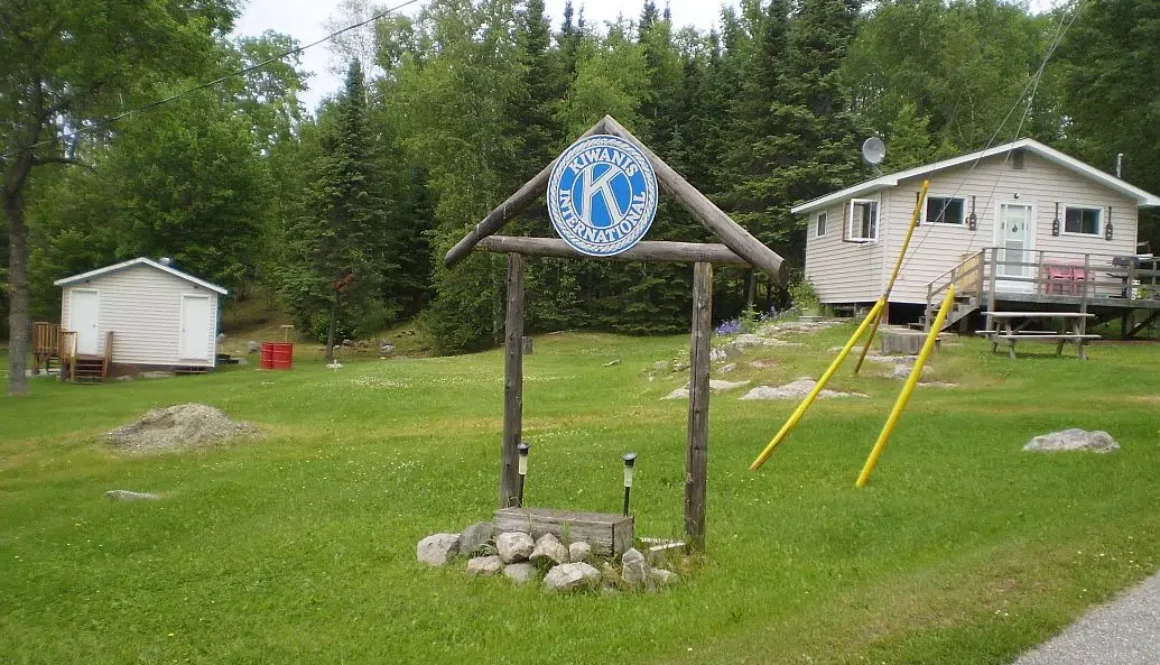
The for-sale sign will be going up at Sunny Cove Camp.
In a 4-3 decision, Fort Frances council has opted to sell the camp, instead of spending money to fix up the almost 70-year-old camp.
The decision backs a recent recommendation from the Kiwanis Club, which turned over the youth camp to the town in 2009.
The camp has not operated since 2019.
Councillors on both sides admit that it was a difficult decision, given the camp’s history in the region.
Councillor Steve Maki says his concern is spending money on a facility that the town may not be able to keep going in the future.
“Youth camps are becoming a thing of the past. The kids have a whole different look on life as a general rule,” says Maki.
“I don’t believe that status quo operation is going to be even close to break even. It would cost the town substantial money on a yearly basis to a point where we’re not going to continue with it.”
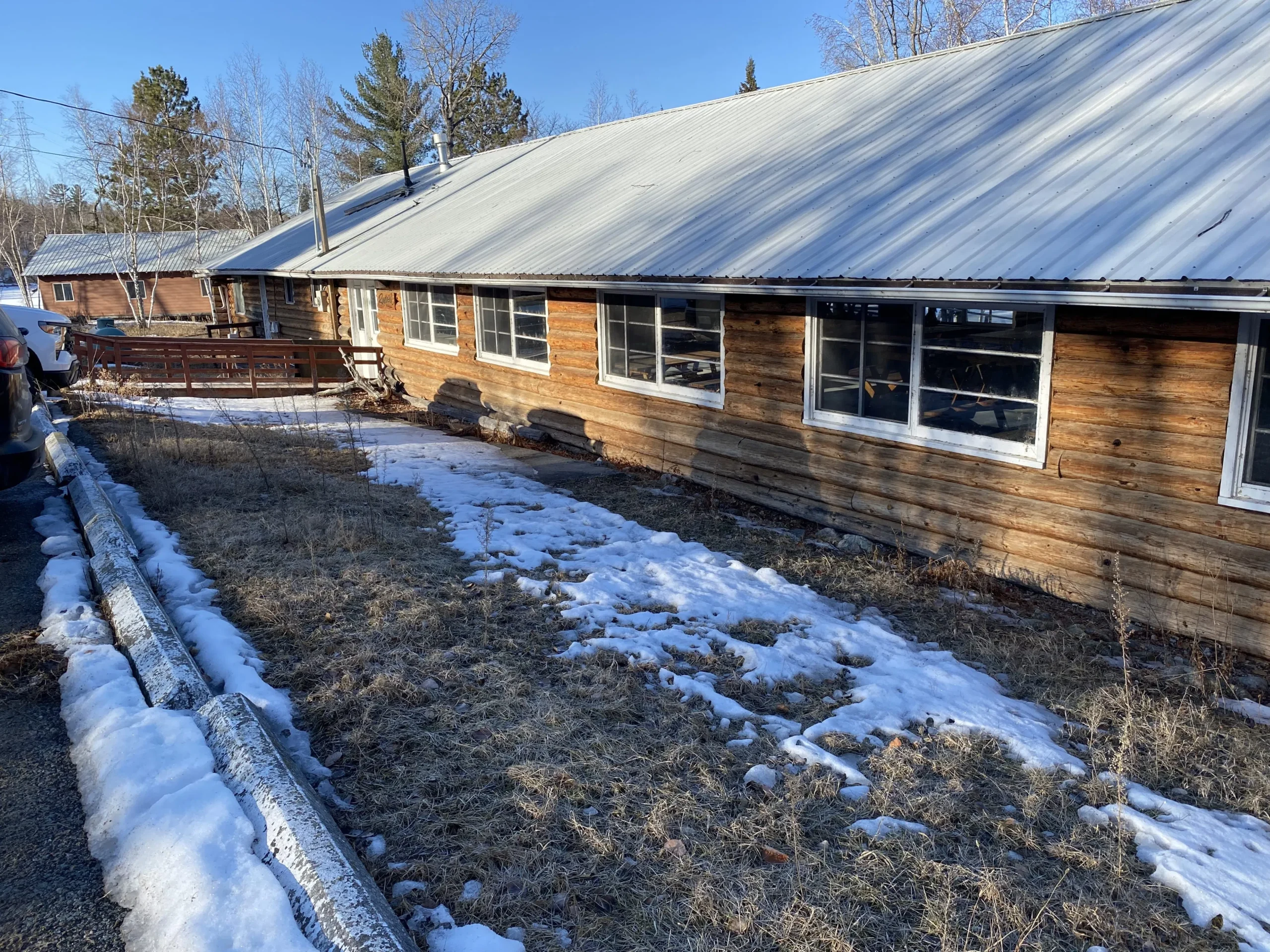
The future of Sunny Cove arose three years ago with the discussion over the condition of Russell Hall, the camp’s main building.
Russell Hall at Sunny Cove Camp, March 12, 2024. Image: Randy Thoms/Acadia Broadcasting
The building was identified as having extensive wood rot and an infestation of carpenter ants.
Administration recommended in 2023 that the property be put up for sale, but town council decided instead for an engineering study and to seek out funding to fix up the building.
A grant of almost $500,000 was received from the Northern Ontario Heritage Fund, while the town kicked in $210,000.
However, only one bid for the work was received, which was well over the expected budget.
Councillor Mike Behan says the town’s cost of keeping the camp has always been worrisome.
“I was always very concerned about the money we’re spending on a camp that’s 10 miles outside of town that maybe not everybody in town can access and utilize,” says Behan.
“With all the capital expenses we’re facing going forward, I am in favour of option two (selling the camp). I know it’s going to disappoint people, but I think it’s best.”
In its report, Administration offered council the option of moving ahead with the planned improvements.
It did note that the camp would likely continue to have an operating deficit of close to $14,000 a year.
Mayor Andrew Hallikas felt it was worth at least to give it a try.
“We should try to rehabilitate it,” says Hallikas.
“There’s no guarantee that we can. Notice we’re looking to proceed with a contract for remediation. We’ve looked at this in the past and haven’t had a lot of success.”
“There’s no guarantee that we’ll get that. But my personal preference is that we should try rehabilitating it, and if in the off chance that we don’t rehabilitate it, then I feel that (the Kiwanis Club) owns it and they should be able to sell it if they wish,” says Hallikas.
Administration’s report also suggested the potential of adding new programming, such as an inflatable waterbark, disc golf, and watercraft rentals, but provided no further analysis on potential revenue.
“The reason why we didn’t include business plans for each of these additional options is that we really don’t know what the frequency of user rates would look like for each of these options,” says John Burrows, Chief Building Official.
Councillor Wendy Brunetta still see the potential.
“I’m very excited to see the things in option one (rehabilitating the camp). I think there’s a lot of possibility,” says Brunetta.
“We have operated, meagerly, I believe, over the last number of years, and I’m really glad to see that some thoughts have been put into how we can expand the services that we can provide at Sunny Cove.”
Administration notes that between 2017 and 2019, Sunny Cove hosted 25 private bookings, including 16 weddings, and 23 organizations that offered kids’ summer camps.
GoLocal cardholders are reminded that the use of those cards at participating businesses will end on December 31st.
The Rainy River Future Development Corporation announced earlier this year that the program would come to an end after 15 years.
The program was created to encourage shopping in local businesses.
“For 15 years, GoLocal has helped support our business community, encouraged local spending, and strengthened the Fort Frances economy,” a release states.
“We sincerely thank everyone who participated – cardholders, retailers, employers, sponsors, and partners – for making this initiative a success.”
The issuance of points was stopped earlier this year.
While businesses will stop accepting the cards after December 31st, the cards will remain valid until the end of next year.
“Cardholders are encouraged to check the list of retailers currently accepting GoLocal cards and plan to redeem their remaining balances before December 31st,” the release adds.
“Shopping locally over the holiday season is a great way to support Fort Frances businesses while putting your gift card dollars to use.”
Officials plan to reveal next month how cardholders will be able to redeem any points that may still be on their cards.
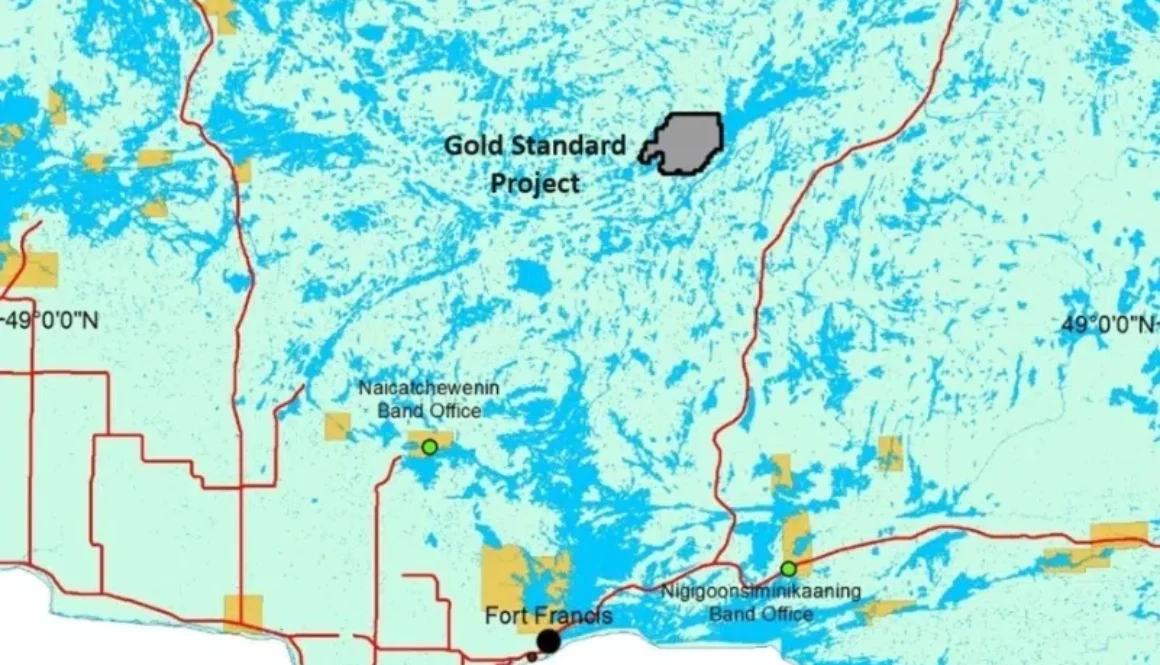
More exploration is planned for a gold-rich area north of Fort Frances.
Storm Exploration says it is looking to advance its Gold Standard project in the new year.
The area, which includes more than 6,000 hectares of mineral claims, has been the subject of ongoing mining activity dating back to the 1900s.
The former Rainy Lake Mining and Power Co. and Gold Standard Mining Co. sank mining shafts during that time.
Several companies have conducted exploration activities since.
Along with gold, signs of copper and zinc have been identified.
In a release, Storm Exploration says planned ground exploration will include geophysical surveys, prospecting, and geological mapping.
A drill operation is considered for the middle part of next year.
The area has not been drilled since 1971 when only four shallow holes were done by the International Nickel Co. (INCO).
The company established exploration agreements with the Naicatchewenin and Nigigoonsiminikaaning First Nations, whose traditional territories include the project area.