Carney’s “Masters of Our Destiny” budget projects $62B deficit, adds $151B in new spending
The federal government is betting big on investments at home amid economic uncertainty and ongoing trade tensions with the United States.
Prime Minister Mark Carney’s tabled Canada’s 2026-27 budget Thursday afternoon. The budget, titled Masters of Our Destiny, plans to strengthen Canada’s economy and reduce dependence on its largest trading partner south of the border.
“We have what the world wants and what it takes to chart our own course. That is how we can become masters of our destiny,” the budget states.
The budget forecasts deficits of roughly $62 billion in both of the next two years, about 1.8% of Canada’s gross domestic product. By 2030-31, the government expects the deficit to fall to about $53 billion, reducing the deficit-to-GDP ratio to 1.3%.
The plan includes $151.5 billion in new spending over five years.
Productivity Mega Deduction
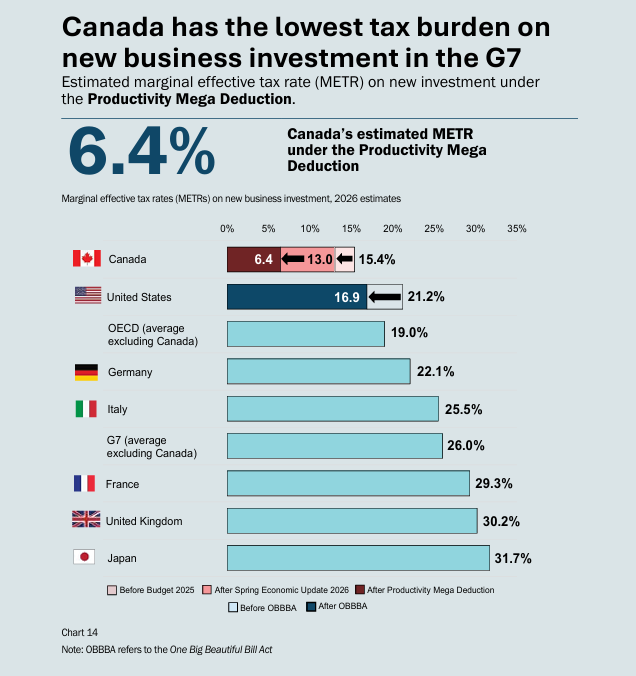
The budget introduces a permanent “Productivity Mega Deduction”, allowing businesses to deduct the full cost of most new investments, including equipment, technology, machinery, research and development, and infrastructure.
Canada estimates the measure will cut the tax burden on new investments from 13% to 6.4%, making Canada more competitive than the United States and other G7 countries, while boosting economic output by an estimated $22 billion annually and supporting up to 80,000 jobs over the next decade.
Creating a path to end homelessness
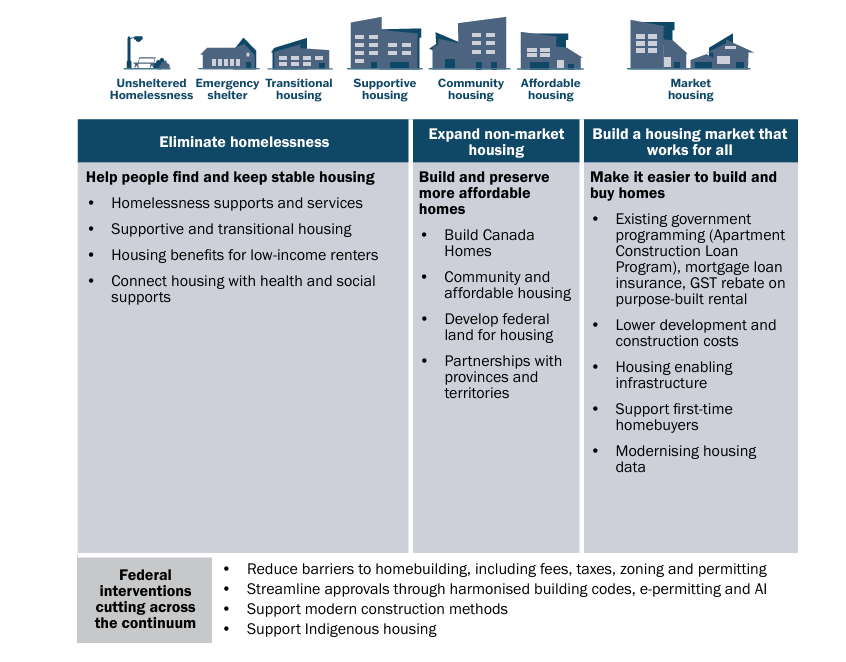
Through programs such as the Apartment Construction Loan Program, the Housing Accelerator Fund and Build Canada Homes, Ottawa says it is supporting new rental and affordable housing while helping municipalities reduce barriers to construction.
The government also says ending homelessness will require both more housing and greater access to supports such as health care, counselling, mental health services and addiction treatment.
Affordability measures
The Canada Child Benefit will rise to a maximum annual payment of $15,040, while the Groceries and Essentials Benefit will provide up to $2,570 to eligible households. A temporary suspension of the federal fuel excise tax is expected to save drivers about $5.75 on a 50-litre fill-up. The Build Canada Workers Benefit will provide up to $3,143.

Defence budget
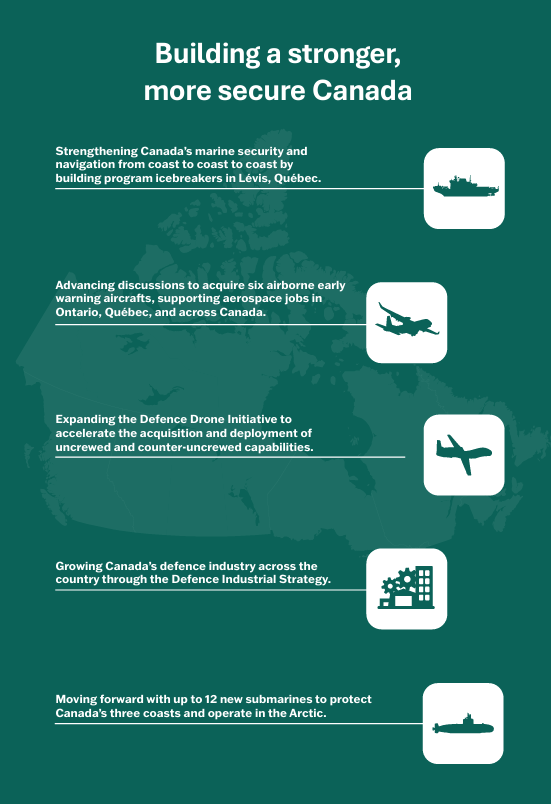
The spending plan directs 2% of Canada’s GDP towards defence projects. The government says these investments will “strengthen Canada’s military and Coast Guard while creating skilled jobs, supporting Canadian suppliers, and building more of what we need here at home.”
Indigenous housing
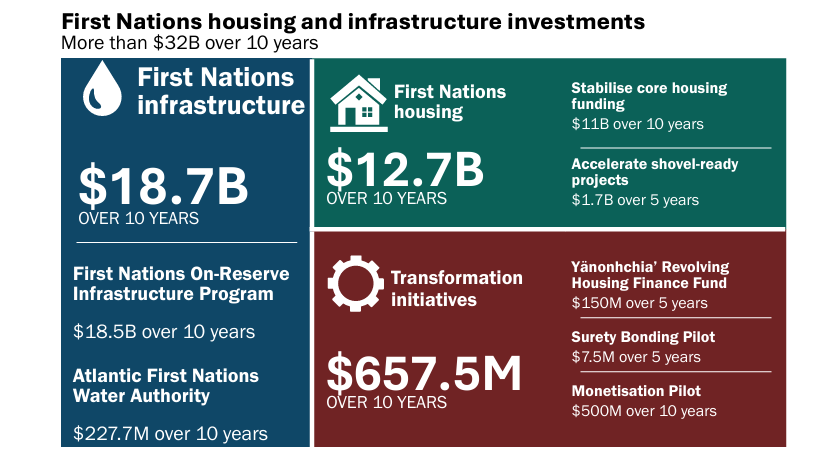
Budget 2026 includes a historic $32-billion investment over 10 years for First Nations housing and infrastructure, aimed at accelerating housing projects, improving essential services and supporting Indigenous self-determination.
The government says the funding will help communities build homes and critical infrastructure more quickly while creating long-term economic opportunities.
Budget 2026 in Brief
Overall federal spending is projected to reach $602 billion this fiscal year and climb to $686 billion annually by the end of the government’s five-year planning period.
Over the coming weeks, MPs will debate the federal budget and the legislation needed to turn its measures into reality.
Some parts of the plan could still be changed before receiving final approval. However, with a majority government, the Liberals are expected to have enough support to pass their budget agenda.