It’s going to take a little longer to open up the Portage Bay Bridge to traffic.
Initially it was hoped it would be open by Christmas.
But Director of Engineering and Infrastructure Greg Breen says it looks like the early part of 2026 is more realistic.
“In the Portage Bay Bridge’s current state, with some steel members, having some severe corrosion, they (engineers) weren’t able to approve a scaffolding plan to get started in October, like we thought.”
Now the engineers will have to draft a new scaffolding plan.
Breen adds it will cost a bit more to do the rehabilitation work on the bridge.
“We had a $600,000 approval to complete the interim repairs on the Portage Bay Bridge. When did finally get the pricing back on that, it came in at just over a million (dollars). So, the steelwork itself was more expensive than we anticipated.”
He says the company that’s doing work on the Keewatin Channel Bridge is also work on the Portage Bay Bridge project.
Breen suggest the budget for the Keewatin Channel Bridge is pretty robust at over $9 million dollars, so he’s confident any overages on the Portage Bay Bridge should be able to come out of the contingency fees on that Keewatin Channel Bridge project.
The city government developed the plan in acknowledgement that Thunder Bay’s economic growth rate is too low, and crucially, far below the rate of inflation.
City councillors were presented with a plan outlining methods for achieving a higher growth rate, with an emphasis on key objectives the city should aim to meet.
The plan suggests that the city should be growing its population by one per cent annually and its property tax base by three per cent annually, and should aim to reach these targets within ten years.
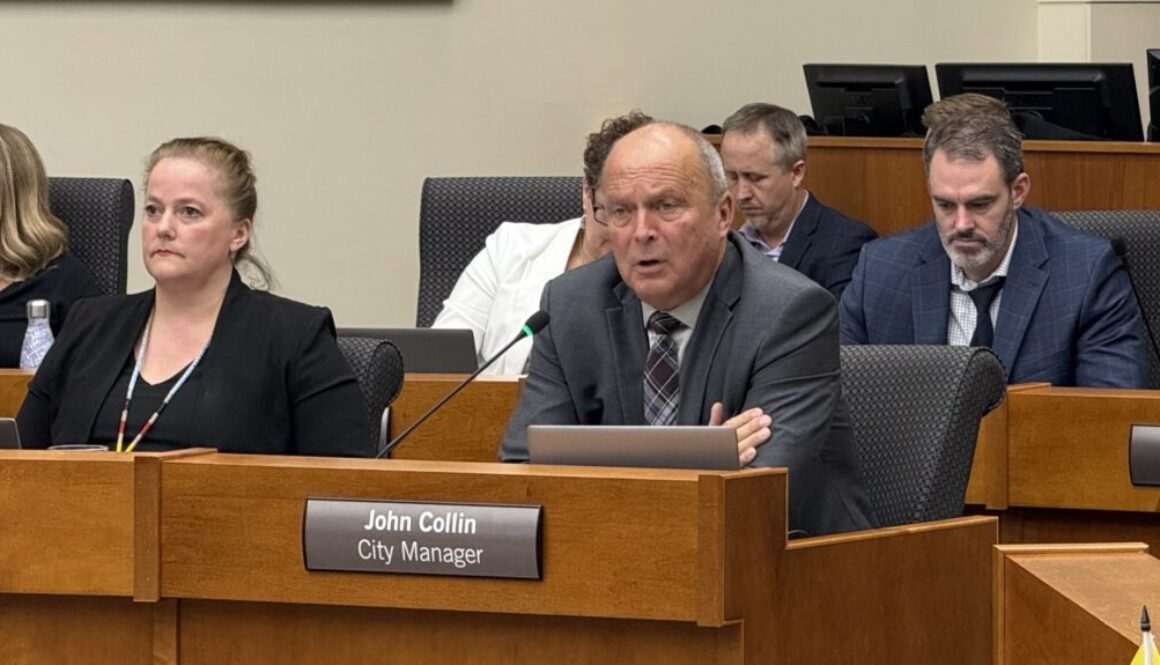
At the meeting, City Manager John Collin explained to councillors that approximately 85% of the city’s property tax comes from residential use, leaving just 15% from industrial and commercial properties.
Collin stressed that increasing the city’s property tax base by three per cent yearly will require increasing the ratio of industrial and commercial property zoned in the city. He argued that developing more housing will help the city grow, but not nearly enough to meet its growth targets.
“Basically, the number of housing units we would have to build per year is categorically unachievable. We have to shift the balance,” Collin said. “We don’t need to shift it by much. One or two percentage points makes a huge difference.”
As long as the city continues to grow its tax base at a rate below inflation, it will have to either raise taxes or cut services to keep up with costs.
The “how” of the growth plan focuses on methods for enticing industrial and commercial property development in the city.
The plan’s objective is divided into three pillars:
Readiness, representing how quickly new developments can be organized, with an emphasis on “shovel-ready” lands.
Attraction, representing the city’s appeal for residents and tourists, and focusing on safer and cleaner public spaces.
Talent, which covers the city’s ability to bring and retain talented workers.
The plan includes recommendations for lands that could be used for developing industrial and commercial complexes, and an endorsement of the city’s current plans for redeveloping the waterfront and Pool 6 lands.
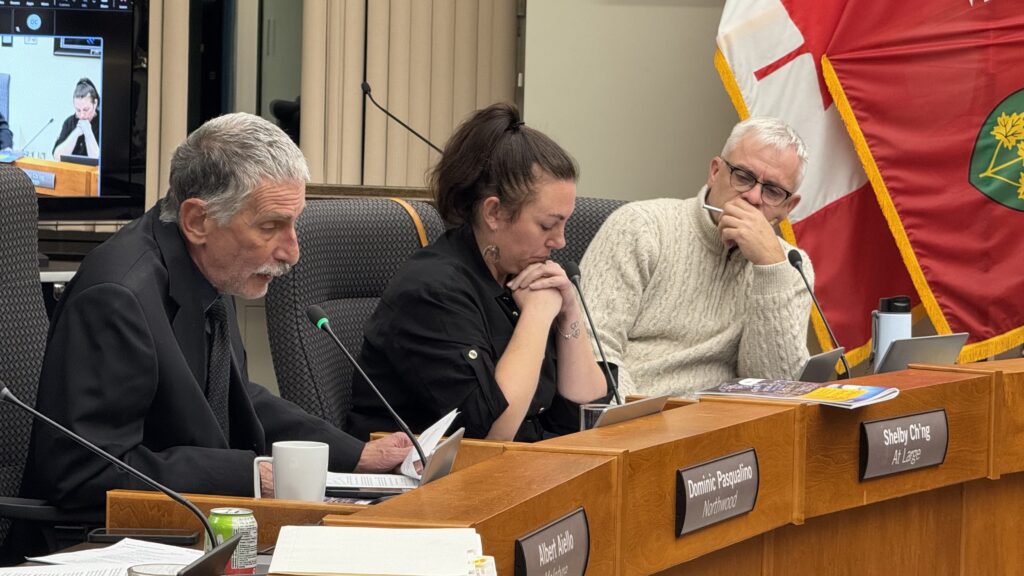
Councillor Dominic Pasqualino of Northwood Ward made clear that the city should be mindful of its reputation in its effort to attract new businesses and new people.
“I know if I was to move to Canada, I don’t think I would choose a city that has a high crime rate, or where people aren’t very friendly, or where there isn’t much opportunity,” the councillor said after the meeting.
Northwood Ward Councillor Dominic Pasqualino, left, speaks during a City Council Meeting. (Sam Goldstein/October 21, 2025)
A city-wide beautification and cleanup effort will also form a piece of the city’s attempt to attract more money and talent.
A draft of the Smart Growth Action Plan is now publicly available.
A town hall discussing the growth plan will be held at the Italian Cultural Centre on November 3 at 6 p.m.
City Council will vote on whether to implement the plan at a meeting on December 2.
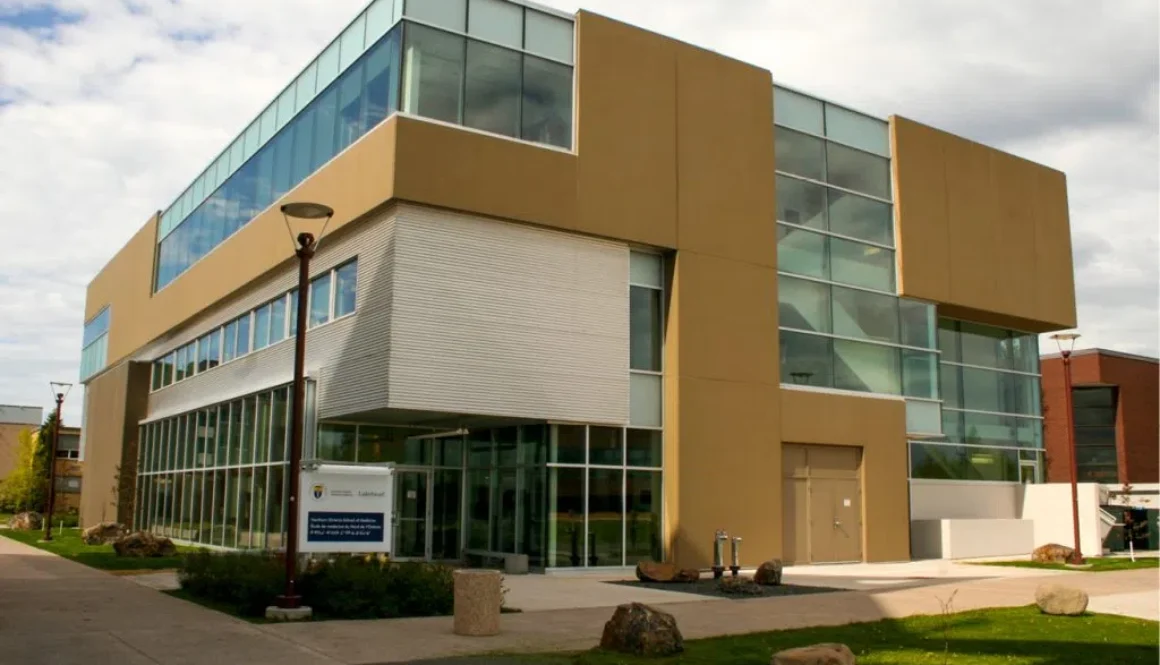
The RBC Foundation is supporting the future of healthcare in the region by donating some money to NOSM University.
The university is receiving a total of $250,000.
Over the next three years, the donation will support a NOSM program designed to train and retain physicians in rural, remote, Indigenous and Francophone communities.
This includes initiatives led by Associate Dean of Physician Workforce Strategy, Dr. Sarah Newbery, whose work targets the region’s ongoing physician shortages through focused recruitment, hands-on community-based training, and strategic retention programs.
“This generous donation from RBC Foundation allows us to further develop the Rural Generalist Pathway,” says Dr. Newbery.
“It directly supports resident trainees in northern Ontario’s rural communities as they acquire the skills needed to become part of a sustainable and thriving physician workforce. We know that community-engaged education is key to retaining physicians where they are most needed, and this funding brings that vision closer to reality.”
NOSM University students train in more than 90 communities, including rural, Indigenous and Francophone communities throughout the region.
According to the university, almost 90 per cent of learners who complete both their MD and residency training at NOSM University stay to practise in northern Ontario.
“Communities across Canada continue to face challenges in health care, including staff shortages and limited access to physicians,” said the Vice-President of RBC Commercial Financial Services, Matt Simeoni.
“NOSM University is helping address these challenges here in northern Ontario, and this donation will support their important work to train and retain doctors across the region.”
About 70,000 Canadians were given treatment under the new Canadian Dental Care Plan (CDCP) in error, according to Health Canada.
In a statement, the federal organization said, it amounts to about one per cent of active members who were either found to be ineligible or improperly assessed on how much they needed to pay.
“An error was recently discovered with respect to how income was calculated for some applicants, at the time their eligibility for CDCP was being determined. A system fix has already been implemented to correct this error,” said Health Canada.
As of October 3, about 28,000 of these members received dental care.
By October 17, the federal government begun notifying those impacted of changes affecting their current CDCP coverage, effective October 24.
Those impacted will not need to repay the difference.
The CDCP aims to makes to make life more affordable for eligible Canadians by saving them an average of $800 per year on health care services.
Earlier this month, Ottawa announced that 5 million had signed up by October 2.
Federal Health Minister Marjorie Michel said the plan was not just about providing financial support but improving lives.
“People suffering with chronic dental pain are now getting treated,” said Michel.
The government expanded applications for the CDCP in May 2025 to eligible Canadians aged from 18 to 64.
The Ontario legislature was surrounded by posters reminding government officials about the dire situation in Grassy Narrows First Nation.
As Legislature returned to session this week, grassroots supporters of Grassy Narrows and its call for justice regarding environmental pollution installed posters around Queen’s Park in Toronto.
Those posters featured images of children pleading with the Ford government for compensation.
“Every time the government sits in that building, we are reminded that Doug Ford is still ignoring our people’s demands for justice,” said Grassy Narrows community member Chrissy Isaacs in a release. “These posters are here so they can’t look away anymore.”
Last year, it was reported that mercury in Grassy Narrows’ river system continued to impact the community due to an ongoing discharge of effluent from the Dryden Mill.
According to the Grassy Narrows First Nation, industrial mercury pollution that ran from the mill contaminated the English-Wabigoon River during the 1960s, devastating Grassy Narrows’ health, economy and “made fish toxic, cutting off a key food source and livelihood.”
The community says although the health impacts have been long-term, proper clean-up and supports by the province have been delayed for decades.
Supporters continue to call for a stop to the mill’s effluent as well as compensation for the harm done to the community members living in Grassy Narrows First Nation.
According to a new study, more than a third of young nurses in Ontario are leaving the workforce.
Revealed in a new publication by independent think-tank MEI, 38 nurses below the age of 35 departed the workforce for every 100 new nurses that started their careers in 2023.
“This growing exodus is worsening the shortage of health care workers and putting even more pressure on our already strained system,” said Renaud Brossard, vice president of communications at the MEI in a release.
The MEI report noted that Ontario’s situation has “worsened by 68 per cent” since 2014.
“Ontario’s numbers show that simply training more nurses won’t solve the problem,” said Mr. Brossard. “Without better working conditions and flexibility, it’s like filling a leaky bucket.”
According to the Canadian Federation of Nurses Unions’ 2025 survey, more than one-third of nurses reported working involuntary overtime in the past six months with 60 per cent saying they have experienced some form of violence or abuse in the past year.
Nationally, nursing job vacancies have tripled in just five years across the country, jumping from 13,178 in 2018 to 41,716 in 2023.
The City of Kenora is being recognized for its Holiday Trail marketing campaign.
It has received an award from the not-for-profit Developers Association of Canada.
The city launched the Holiday Trail in collaboration with Wake Marketing, Harbourtown BIZ, and the Chamber of Commerce, to get people to shop at local stores during the festive season, according to a news release.
Customers could buy a Holiday Trail brochure of vouchers for $30 at participating shops. Then customers can redeem the vouchers for a gift item worth between $10 and $20.
When a voucher was redeemed, the retailer would get $5 reimbursed to them.
“This is a great opportunity to showcase a special item and attract new customers to the store,” the non-profit wrote in the release.
The group says nearly 650 vouchers were redeemed for the 2024 campaign.
“The success of this initiative comes from our business community, who are prepared to support a program like this, and from our local residents who support shopping local,” wrote Stace Gander, Director of Economic Development and Tourism for Kenora, in the news release.
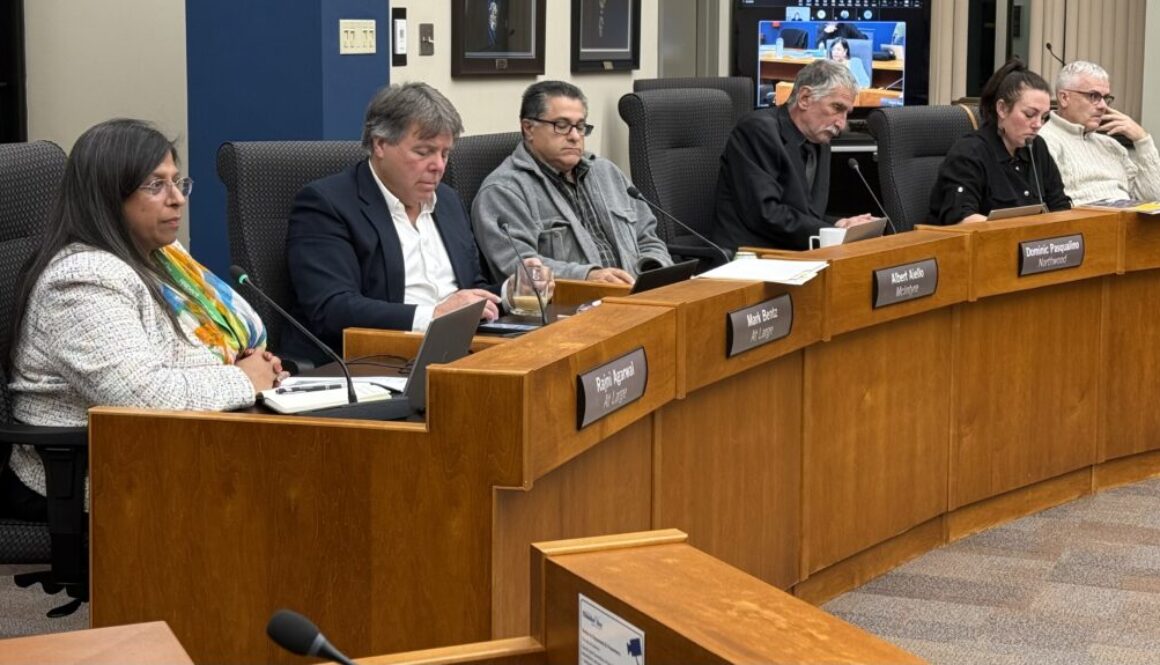
Councillor At Large Rajni Agarwal introduced the motion, suggesting the city should build more permanent housing rather than a temporary shelter village.
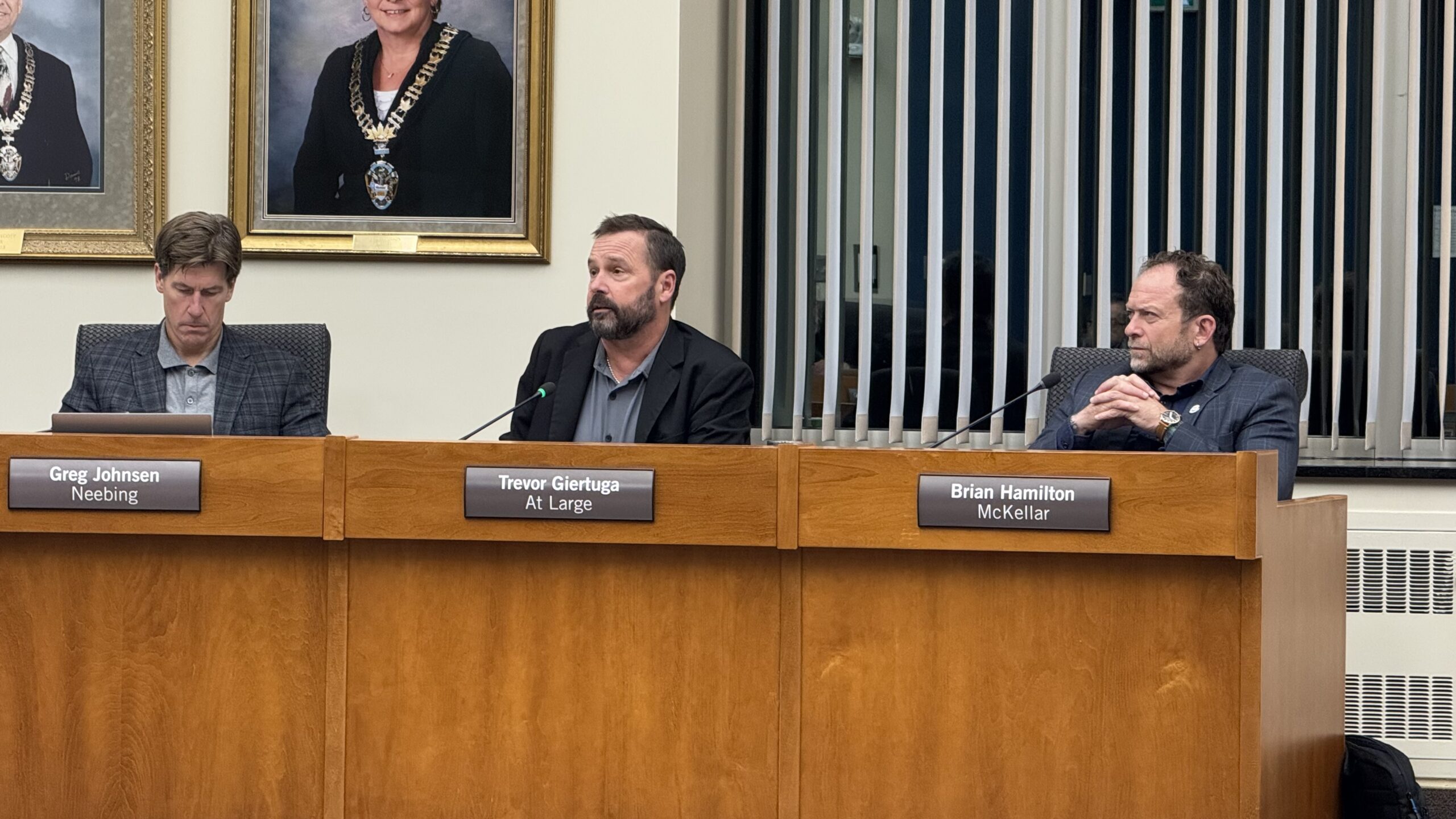
Councillor At Large Trevor Giertuga seconded Agarwal’s motion. In the end, Giertuga was the only councillor to vote with Agarwal.
Councillor At Large Trevor Giertuga speaking at the City Council meeting. (Sam Goldstein/October 21, 2025)
“We cannot be changing paths at the eleventh hour,” said Councillor At Large Mark Bentz.
City Manager John Collin revealed at the meeting that Thunder Bay has already signed two contracts with third parties for the construction and operation of the temporary shelter village.
“We’ve made commitments – legal commitments – and we have to stand by those,” Bentz responded.
Responding to a question from Neebing Ward Councillor Greg Johnsen, the city manager also confirmed that the ten-part plan for addressing encampments would dissolve without the temporary shelter village.
Councillor Andrew Foulds of Current River Ward pointed out that the city will have no legal ability to clear out encampments without the temporary shelter village.
In the end, even councillors who were highly critical of the ten-part plan, such as Councillors Albert Aiello of McIntyre Ward and Michael Zussino of Red River Ward, ultimately voted to keep the temporary shelter village.
Agarwal’s motion required a two-thirds majority of nine votes to succeed.
The final tally was 11-2 in opposition to Agarwal’s motion.
Councillors Rajni Agarwal and Trevor Giertuga voted YES to deleting the temporary shelter village from the ten-part plan.
Mayor Ken Boshcoff and Councillors Michael Zussino, Dominic Pasqualino, Kristen Oliver, Greg Johnsen, Brian Hamilton, Andrew Foulds, Kasey Etreni, Shelby Ch’ng, Mark Bentz, and Albert Aiello voted NO to deleting the temporary shelter village from the plan.
“It’s a difficult issue that we’re dealing with,” said Dominic Pasqualino after the meeting. “But I believe that we’re too far along to back out of it now.”