Province moving to guard farmland
By Carl Clutchey, Local Journalism Initiative Reporter
Source: The Chronicle-Journal
Once harshly criticized for setting the stage for allowing development on some of the province’s prime farmland, the Ford government has turned to portraying itself as a protector of Ontario’s agricultural areas.
The Conservatives announced on Tuesday proposed legislation that would reduce the amount of foreign ownership of the province’s farmland, including Northern Ontario’s clay belt.
“Ontario farmland is an important, limited resource and it should be owned by Ontario farmers,” Agriculture Minister Trevor Jones said in a news release.
The legislation, if passed, “would align Ontario with the approach taken by other jurisdictions in Canada, including Alberta and Quebec, and protect local ownership of provincial agriculture by creating significant restrictions on the foreign acquisition of Ontario farmland, “the news release said.
The move to protect farmland appears in contrast to 2023, when the Conservative government came under fire for contemplating development in greenbelt areas in the Greater Toronto Area.
According to federal census data, Ontario lost just over 116,000 acres of farmland per year between 2016 and 2021, which works out to be nearly 320 acres per day.
“I’ve seen those numbers before,” said Oliver Paipoonge-based farmer Bernie Kamphof in an earlier interview.
“Ontario is a large place geographically, but yes, 300 acres per day is still an astonishing amount,” said Kamphof, who is also an Oliver Paipoonge councillor.
The Ontario Federation of Agriculture has noted that only five per cent of Ontario’s land mass is suitable for farming.
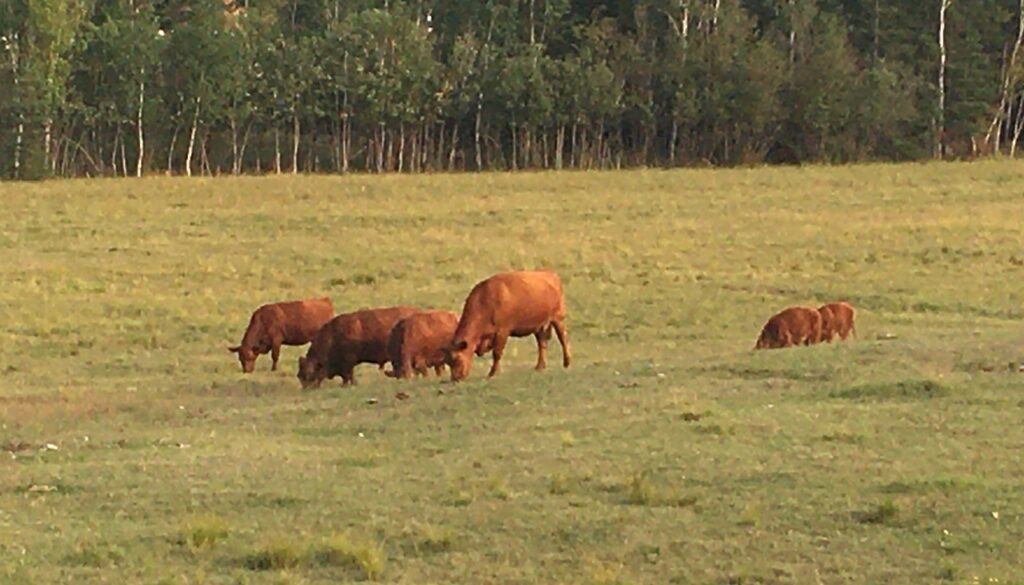
On Tuesday, the province said it would set the stage for expansion of farming in Northern Ontario’s clay belt, which extends roughly between the Ontario-Quebec border to an area just past Hearst in Northwestern Ontario.
The belt “contains extensive areas of potentially fertile soils that are well-suited to agriculture, including forage, field crops, and livestock production, with appropriate drainage and management,” Tuesday’s news release said.
Much of the clay belt is on Crown land, which is not surprising given that more than 90 per cent of Northern Ontario’s land mass is owned by the Crown.
Proposed changes unveiled on Tuesday “would make it easier for Ontario farmers to lease or access arable land on the clay belt, unlock new opportunities for the province’s agriculture sector, create jobs, protect provincial food security and grow Ontario food production,” the news release said.