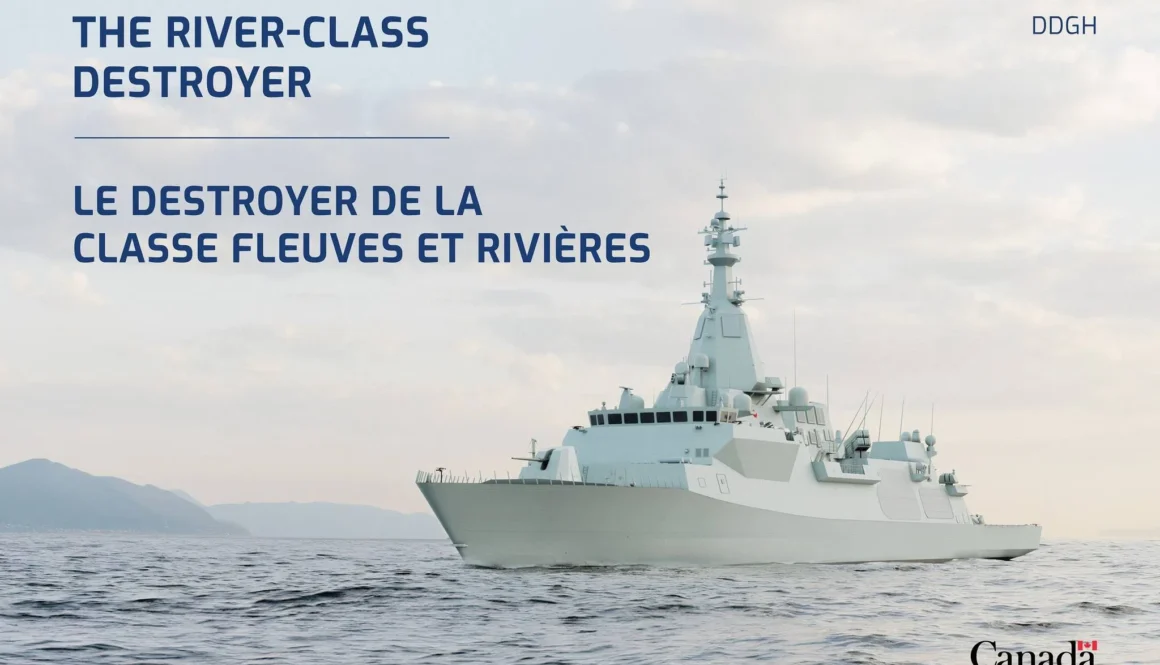
Irving Shipbuilding holds historic coin ceremony for first River-Class Destroyer
Irving Shipbuilding marked the keel laying for the first River-Class Destroyer (RCD), the future HMCS Fraser, while highlighting major milestones from the past year — including delivering the final Arctic and Offshore Patrol Ship to the Royal Canadian Navy and launching the first Coast Guard variant.
Halifax Shipyard workers and government officials gathered Friday for the ceremony, a centuries-old tradition dating back to the ancient Romans, according to the company.
As part of the event, a coin was laid in the ship’s hull to bring luck to its future crew. The coin was welded in place by Red Seal welder Brandon VanHeighton and fitted by Red Seal metal fabricator Jaeson Fredericks. Vice-Admiral Topshee officially declared the hull “well and truly laid.”
President Dirk Lesko says the milestone “highlights the evolution of a sovereign capability which has been developed in Halifax to deliver the objectives of Canada’s National Shipbuilding Strategy.”
Lesko adds, “Our 3,000 shipbuilders are proud to be building ships that will serve Canada for decades to come. We’re producing the next generation fleet for the Royal Canadian Navy, while delivering on every one of our commitments to sustain the legacy ships.”
Under the National Shipbuilding Strategy, Irving says it has delivered six Arctic and Offshore Patrol Ships, is building two more for the Canadian Coast Guard, and is working toward up to 15 River-Class Destroyers. The company also continues repair work on Halifax-class frigates.
Minister of Government Transformation, Public Works, and Procurement Joël Lightbound calls the program “Canada’s most ambitious naval build in decades.”
“It’s a perfect example of how the National Shipbuilding Strategy is boosting our defence capabilities while strengthening Canada’s industrial base and growing our economy,” he says.
The strategy supports about 10,600 full-time jobs annually across Canada — including 4,500 in Nova Scotia — and has generated nearly $11.3 billion in labour income. Between 2013 and 2027, it’s expected to contribute more than $6.3 billion in government revenues and nearly $17 billion to Canada’s GDP.
Lightbound adds, “This program alone contributes hundreds of millions annually to our GDP and supports thousands of jobs, in Nova Scotia and across the country. It demonstrates Canada’s ability to deliver complex defence projects at home, using Canadian talent while generating long-term economic benefits for all.”