The Anishnabek Nation Grand Council is calling on the province to immediately pause implementation of changes to the Permit to Take Water program.
Under these new changes, companies can renew water-taking permits without submitting new applications or environmental reviews. These changes apply to water takings from lakes, rivers, and groundwater sources used for industrial and commercial activities.
The council demands that Ontario restores mandatory consultations for all permit transfers. It warns that the province is moving in a direction that undermines First Nations’ rights and environmental protections.
“These unilateral decisions directly affect our lands, waters, and future generations,” said Grand Council Chief Debassige. “Water is sacred. It is not a commodity to be transferred between corporations without scrutiny, consent, or accountability.”
In July 2025, the Ontario Minister of the Environment, Conservation and Parks Todd McCarthy wrote to First Nation leadership affirming water as an essential human right and committing to working with Indigenous leaders toward sustainable water solutions.
“While that commitment was welcomed, recent regulatory actions contradict those assurances,” Debassige said. “Claiming that ‘safe drinking water is a fundamental human right for all’ and that Ontario ‘will continue to work with First Nations and the federal government on long-term, sustainable solutions to achieve this important goal’, while simultaneously unilaterally weakening the very rules that protect water at its source, does not help achieve this goal.”
The Ministry of the Environment, Conservation and Parks released a statement in September 2025 saying some people may have misunderstood the intent and scope of the regulatory amendment. The Ministry wrote that the regulation only allows a streamlined process for specific water-taking permits that had already been occurring, and that the proposed taking of water must be from the same location and for the same amount or less as was approved under the previously issued permit.
The ministry said they will continue to review permit applications to confirm that they meet ministry requirements, including public and Indigenous consultation requirements, where applicable, and will consider any related compliance concerns.
This week is Ontario Snowmobile Safety Week, and the OPP is reminding snowmobilers to practice safe riding.
There were seven snowmobile deaths in the province this winter, and 15 last year.
“Snowmobiling is meant to be enjoyable outdoor fun and should never result in the loss of life or injuries,” said OPP Deputy Commissioner Karen Meyer. “OPP-investigated snowmobile fatalities reveal the same unnecessary risks being taken year after year. Preventable behaviours like excessive speeding or alcohol and drug impairment put your safety – and your return to your loves ones – at risk. Please make every ride a safe one for you and your family.”
Recent heavy snowfall makes for ideal riding conditions, but police warn not to let enthusiasm cloud riders’ judgement. It has released a list of snowmobile safety tips in partnership with the Ontario Federation of Snowmobile Clubs (OFSC):
• Abstain from alcohol and drugs • Always stay on the trail • Only ride trails showing as Available (Green) or Limited Availability (Yellow) on the ITG • Know your sled and its capabilities, keep it well-maintained • Stay alert to the trail ahead and aware of your surroundings • Stop on the trail at locations with clear sight-lines in both directions • Check the ITG and weather conditions before your ride • Before leaving home, notify someone where you will be riding and when you expect to return • Always carry an emergency kit, snacks, extra fuel, a tow rope and a communication device.
• Always ride with a companion(s) • Ride in single file on the trails • Ride your side of the trail • Leave plenty of space between you and the sled ahead • Take responsibility for the rider behind you • Be especially vigilant coming into corners or cresting hills • Pass groomers and other riders cautiously • Always stop at crossing roads and take extra caution riding trails on active logging roads • Slow down at night or when visibility is poor, when non-motorized users are on the trail, or when passing through towns or residential areas
“The safest ride is one you properly plan and prepare for, and where you stick to all the do’s and don’ts of snowmobiling that are meant to keep you and fellow riders safe on the trails,” said OFSC CEO Ryan Eickmeier. “Making smart choices throughout the season, while taking advantage of a vast snowmobile trail network made possible through our outstanding community of volunteers and landowners is your ticket to a safe, enjoyable snowmobile season.”
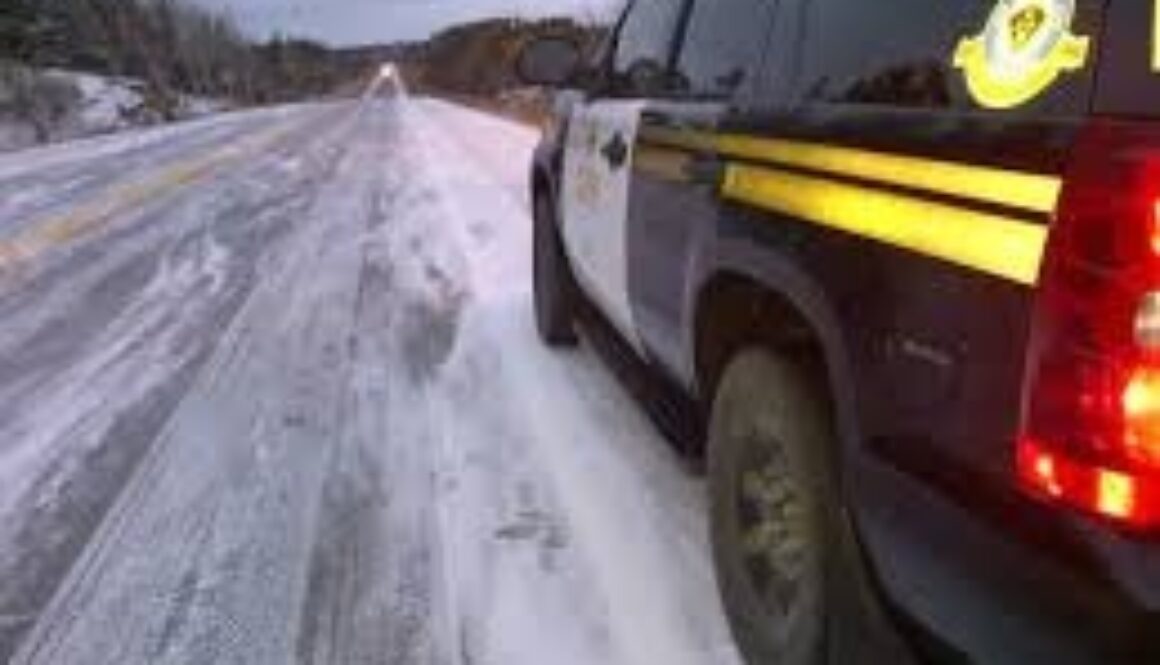
A 23-year-old woman from Poplar Hill and a 28-year-old woman from Eabametoong First Nation have been pronounced dead following a collision on Highway 17 near Thunder Bay.
Members of the Thunder Bay detachment of the Ontario Provincial Police (OPP) say the crash occurred on Thursday evening at around 9 p.m. and involved a pickup truck and an SUV.
Two other people were taken to the hospital with minor injuries.
The highway was closed between Sistonen Corners and Highway 130 for several hours overnight while emergency crews and investigators worked at the scene.
All lanes are now open to traffic, and motorists can resume normal travel.
There’s no word yet of exactly what caused the crash.
The OPP are asking anyone who may have witnessed the event or who may have relevant dashcam footage to reach out at 1-888-310-1122.
Anonymous tips can be submitted via Crime Stoppers at 1-800-222-8477 or online.
1,572 Thunder Bay area kids are wearing brand new coats this winter thanks to donations from The Knights of Columbus.
It was a record-breaking year province-wide, with over 20,736 coats delivered.
The project was in collaboration with non-profits Precious Bundles and the Mikinakoos Children’s Fund.
“The children and their families are extremely grateful,” said Craig Murphy, Grand Knight of the Bishop Norman Gallagher Council in Thunder Bay. “They get a hold of a brand new winter coat, and they say ‘This is my coat,’ it almost empowers them. It tells them that we care and that they matter.”
Through the Mikinakoos Children’s Fund, coats were delivered to six northwestern Indigenous communities as well.
“Three years ago we were put in touch with the Mikinakoos Children’s Fund, and in conversations with them we quickly realized the need to provide winter coats to children living on northern reserves,” Murphy said. “Each year, we’ve partnered with them again.”
“Many children in remote First Nations communities, they don’t have access or even sometimes the ability to purchase a new winter coat for themselves,” said Mikinakoos Executive Director Stephanie Paxton in an earlier interview. “So a lot of times children do suffer from the freezing weather. And that’s just unacceptable, in my mind.”
Tickets are now available for a 50/50 raffle in support of the Knights’ Coats for Kids fund and their other charitable works.
The Black Pirate Pub is hosting its 33rd Cover Show from Thursday to Saturday this week.
There are 15 acts, with each band covering one artist or group and performing an entire set in their style.
Event Planner Jimmy Wiggins says these Cover Shows are some of the most fun he’s had in 20 years of promoting.
“You just see a whole room of people singing and dancing along to these musicians on stage, and the vibe in the room is…it’s unreal,” Wiggins said. “It’s hard to describe. It’s just really fun.”
Tributes will range in genre from pop to metal to rock and roll. Lady Gaga, Leonard Cohen, Rage Against the Machine, Evanescence, and Rush are among the bands and artists that will be covered. Click here for the full schedule and list of performers.
“It’s nonstop music,” Wiggins said. “As far as I’m concerned, the heart of the music scene is at Black Pirate right now.”
CBC broadcaster and cultural commentator Elamin Abdelmahmoud will headline a lecture for Black History Month at Lakehead on February 12.
The theme of the event is Black identity in Canada and what it means for young people in an ever-radicalized world. Abdelmahmoud, who moved to Canada from Sudan at age 12, will reflect on his experience as a newcomer in Canada and his work in media.
There will also be a fireside chat between Abdelmahmoud and Lakehead Chancellor Dr. Rita Shelton Deverell, an award-winning broadcaster and journalist.
Deverell is among the first Black women in Canada to be a television host and network executive, and the first woman to lead a journalism program at a Canadian university. She is a co-founder of Vision TV.
Abdelmahmoud and Deverell will examine how culture, media and storytelling shape identity and influence how young people see themselves. The discussion will also address representation and the role of Black voices in Canadian public life.
The event is co-presented with and sponsored by the Lakehead University Student Union. It will be held at the Outpost pub on the Lakehead campus from 3 to 5 pm.
The family-friendly walk is in support of Grace Ministries, a non-profit that offers shelter, meals and spiritual guidance for people experiencing homelessness in Thunder Bay.
As of Wednesday, CNOY is nearly halfway towards their fundraising goal of $100,000. Top fundraisers can earn prizes like hoodies and toques.
Participants in the walk can choose between a two kilometre and five kilometre route. If you are interested in volunteering at the event, register here.
The event is scheduled for February 28. The walk will begin at the Summit Church.
Throughout February, proceeds from every special Blue Persian sold at The Persian Man will also go towards Grace Ministries.
After nearly two weeks of deliberations, city councillors convened on Tuesday to ratify the proposed 2026 municipal operating budget.
This year’s proposed $412 million tax-supported operating budget calls for hiring new city employees, funding new programs to support the city’s growth plan, and transit improvements aimed at making the bus service more reliable.
City staff successfully managed to cap city service budget increases at 2.6 per cent this year, but plan to raise property taxes by 4 per cent before growth.
Services that the administration cannot directly control, including the Thunder Bay District Health Unit (TBDHU), the Thunder Bay Police Service (TBPS), and the District of Thunder Bay Social Services Administration Board (TBDSSAB), are raising their budgets above the 2.6 per cent target, which the city is using as a justification for raising the tax rate above their goal.
In a meeting on January 26, at the second of four meetings discussing the budget, councillors Rajni Agarwal and Mark Bentz questioned the hiring of 57 new Full-time equivalent (FTE) employees.
Many of the new hires will be employed in two upcoming security and safety-based pilot programs: the Mobile Safety and Security Response Pilot, focused on safer transit rides, and the Downtown Community Safety Ambassador Program, focused on working with businesses in the city’s north and south side downtown cores.
Councillor Bentz wondered aloud what so many new safety personnel could mean for the city: “We continue to hire security guards. Every place has a security guard. We’ve got police being hired… ambassadors, people monitoring. Are we heading towards a police state?”
City Manager John Collin rejected the label, placing blame on the opioid crisis as a challenge municipalities didn’t have to worry about just a few decades ago.
City Manager John Collin speaks during a City Council meeting. (Sam Goldstein/January 28, 2026)
“We are seeing policing costs across the board increase substantially in all municipalities, and we do see most municipalities exploring other options to enhance safety and security, because, quite frankly, in some cases, you don’t need a fully qualified police officer at a fairly expensive wage rate,” he explained.
Among the larger city expenses to come under scrutiny were Workplace Safety Insurance Board (WSIB) costs, paid out for city service members who are injured on the job.
City staff determined that the most expensive cost is for Post-Traumatic Stress Disorder (PTSD), which affects many paramedics and firefighters.
Prevention is one of the focal points of the administration for reducing WSIB costs, with Collin pointing to “slips, trips, and falls” as the primary focus of a revamped safety program.
Collin says the city is “going in the right direction with this,” as WSIB costs are expected to come down 15 per cent compared to last year.
Shane Muir, Chief of Superior North EMS, came before council to offer context on WSIB costs for city paramedics.
He explained that the EMS service has developed wellness services for paramedics in partnership with NWO Psychology Services, which he framed as “one of the most robust wellness programs in the province… It’s been spotlighted by our provincial services as a model to follow, something that we’re very proud of.”
Muir believes the paramedic service’s WSIB costs will go down in the future, arguing that much of the WSIB costs come from historical insurance claims, from before the new wellness programming was developed.
Election costs also came under the microscope during deliberations.
The city uses a reserve fund for its municipal elections, and plans to up its yearly contribution to the reserve by $100,000 per year.
The 2026 election was expected to cost $600,000 when the fund was established, but the expectation is now that it will cost $750,000.
City Clerk Krista Power attributed most of the rising costs to online voting, which has become increasingly relevant as an accessibility tool for those who have difficulty voting.
“There’s additional security measures. There’s additional requirements for accessibility. And staff wages increase every four years as well, and we need staff to run our elections,” she added.
At the meeting on January 28, the third of four, councillors questioned the Thunder Bay Public Library’s (TBPL) increased budget.
Mayor Ken Boshcoff wondered whether the rise of digital services, such as e-books, might lead to decreased costs, but TBPL CEO Richard Togman dashed those hopes.
“There’s no cost savings there,” Togman explained. “In fact, it’s a budgetary issue that we have to manage. It’s significantly more expensive to provide e-resources.”
Togman also mentioned that the library has seen growing demand for its services.
“There’s still really very strong and growing demand for people in this community to physically come into the branches, and we definitely need the staff to be able to accommodate that demand,” he added.
TPBL intends to double its security contingent, from two to four security guards.
The library has had to deal with rising security and safety challenges since the COVID-19 Pandemic, including violent incidents and even one assault on a staff member.
Councillor Brian Hamilton questioned whether hiring new security staff was quantifiably a benefit.
Since the library’s first two security guards were hired, Togman says there has been a 50 per cent decrease in incidents, and an even larger decrease in violent incidents.
Beyond just decreasing incidence rates, he also says both library staff and members of the public report feeling safer and more comfortable in the downtown library branches.
The TBDHU, TBPS, and TBDSSAB, being services whose budgets the city cannot directly control, earned greater interest from City Councillors at budget proceedings.
The TBPS proposed a 9.1 per cent budget increase, which earned the most skepticism from some city councillors.
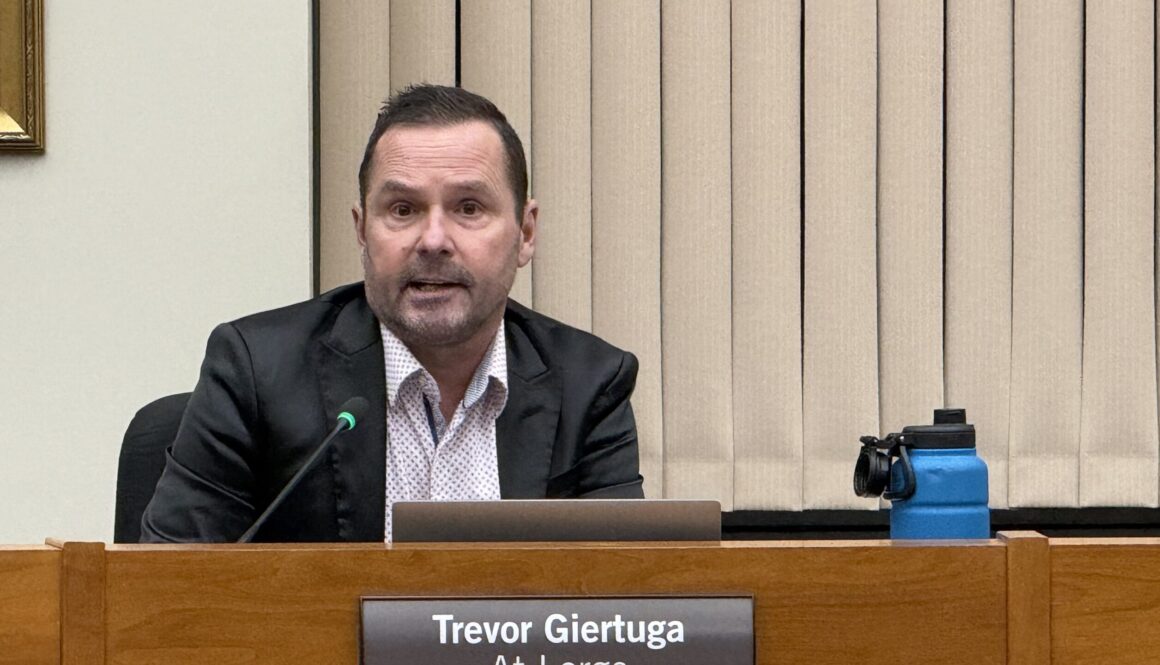
Councillor Trevor Giertuga proposed a motion to send the budget back for police to take a second look, but Council was split down the middle, and his motion ultimately failed in a 6-6 tie.
On Tuesday, City Council re-litigated their motion to send the budget back.
While Councillor Trevor Giertuga continued to frame the vote as a way to send the budget back, Councillor Mark Bentz, who also supported the vote, defined it more as a way to send a message to the province that continued police budget increases are unsustainable.
“It’s not taking this to an arbitration or anything. It’s a symbolic pushback saying we really have to start doing things differently,” Bentz explained. “What we will see if things don’t start changing, and this is across the province, is that police services are gonna start eating into municipal services.”
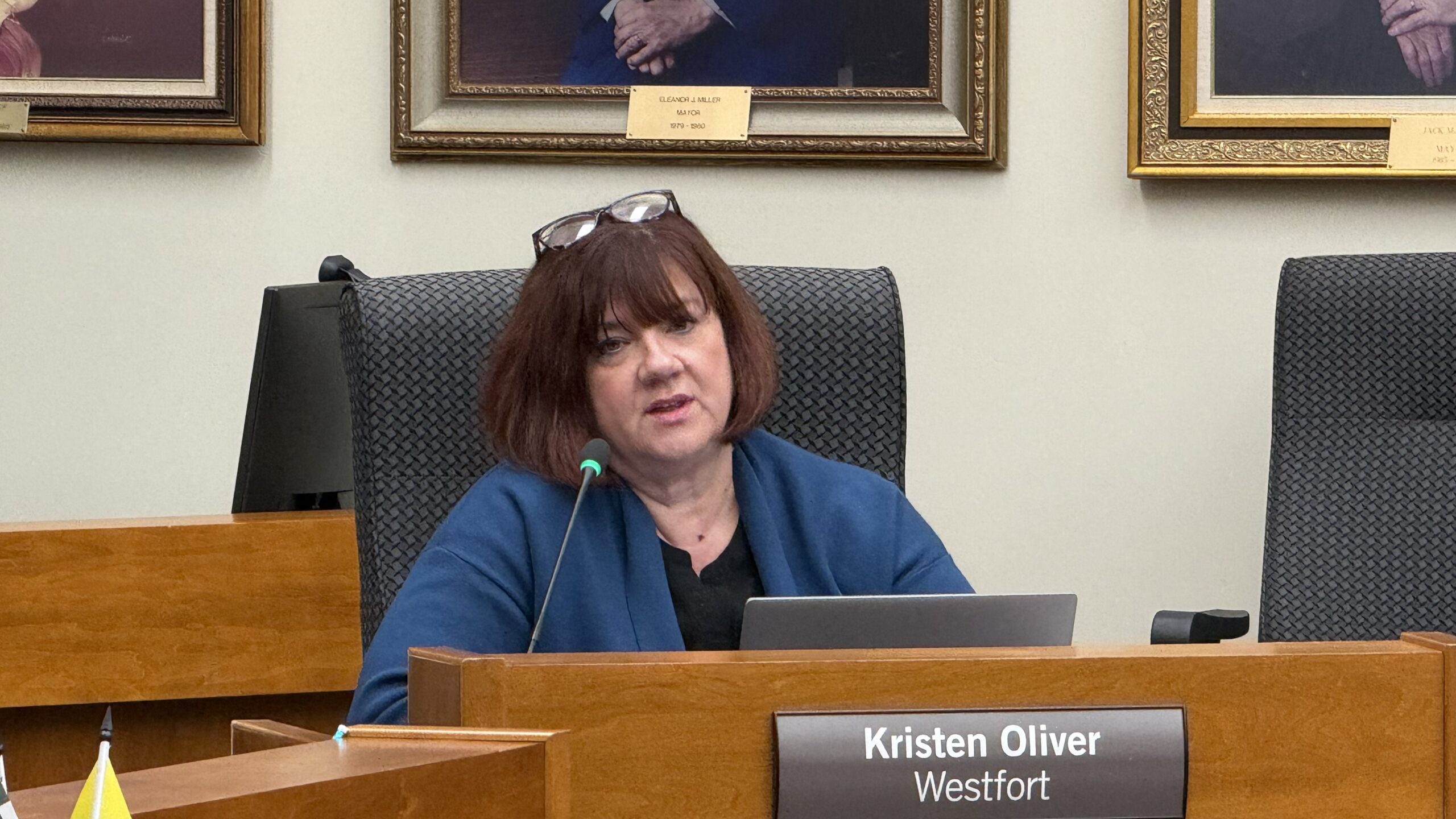
Councillor Kristen Oliver was absent during the first motion to send back the budget, but opposed the re-vote on Tuesday.
Councillor Kristen Oliver speaks during a City Council meeting. (Sam Goldstein/February 3, 2026)
Though Oliver was a former TBPS board member, she held some criticisms in agreement with many councillors in opposition to the police budget.
“It is not palatable. It is not sustainable. We cannot continue this way for years to come,” she said.
But Oliver still believed the budget needed to be passed: “But I think at this point, the police services need support. The community wants to see policing.”
The re-vote on the motion to send the police budget back for reconsideration failed, with 7 councillors voting NO and 6 councillors voting YES.
Councillors Dominic Pasqualino, Kristen Oliver, Brian Hamilton, Andrew Foulds, Kasey Etreni, Shelby Ch’ng, and Albert Aiello voted NO to the motion.
Councillors Michael Zussino, Greg Johnsen, Trevor Giertuga, Mark Bentz, Rajni Agarwal, and Mayor Ken Boshcoff voted YES to the motion.
With the police budget accepted, City Council then voted to ratify the operating budget, voting in favour with a 12-1 vote.
Councillor Trevor Giertuga was the sole dissenting vote.
The federal government is being pushed to help the forest industry in northwestern Ontario.
Workers at mills in Ear Falls, Ignace and Thunder Bay have been impacted by recent closure announcements.
The sawmill in Ear Falls has been idle since October, while the Ignace mill will halt production in March.
The closures impact a combined workforce of about 330 workers.
Last week, it was announced that the newsprint line at Thunder Bay Pulp and Paper will be shut down.
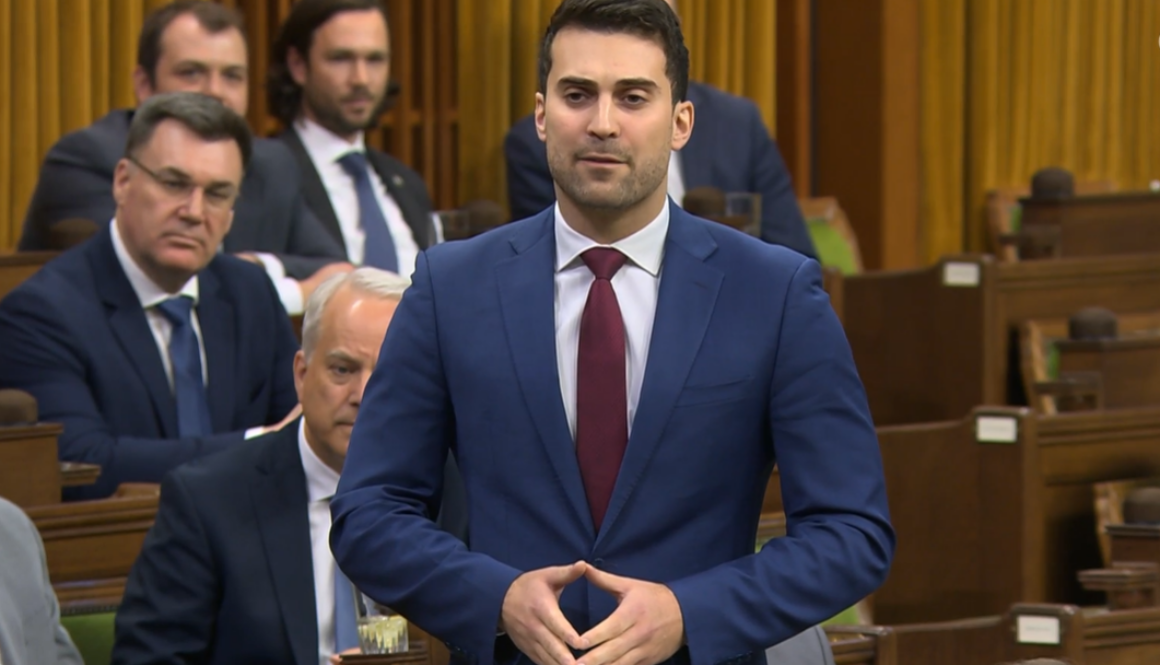
Kenora-Kiiwetinoong MP Eric Melillo recently raised the issue in the House of Commons.
“Every day, more closures are announced,” states Melillo.
“These are good-paying jobs for hard-working Canadians that are now gone. The government’s rhetoric of supporting workers is not matching the reality of the workers who are losing their jobs.”
The Liberal government insists that it is helping the forest industry.
“The government stands with forestry workers,” said Corey Hogan, Parliamentary Secretary to the Minister of Energy and Natural Resources.
“We have announced $2.5 billion in supports. We have a task force active right now looking at additional supports.”
Last fall, Prime Minister Mark Carney announced a $1.25 billion aid package to support the softwood lumber sector.
It included $700 million in loan guarantees to help companies confront immediate pressures facing the softwood lumber sector, and another $500 million to diversify products and markets.
Another $50 million has been earmarked for workers to reskill and find employment elsewhere.