Thunder Bay Fire Rescue responded to a garage fire on Shipley Street Tuesday night.
Firefighters arrived to find smoke and flames coming from the garage around 8:50 pm. No one was inside at the time, and crews quickly brought the fire under control.
Additional units supported the response with water supply and overhaul.
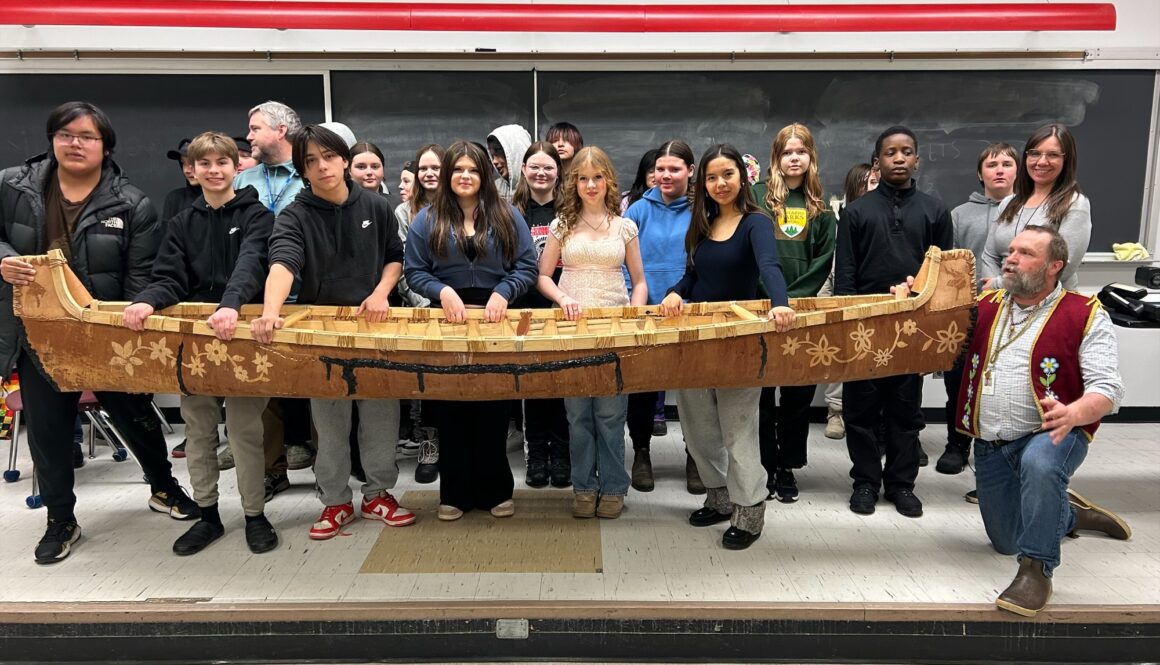
After 250 hours of work, eight graders at Algonquin Public School are donating their handcrafted canoe to Hammarskjold High School.
The students worked on the project throughout the last year. Their canoe is 100% fastened with traditional bindings, using no nails or screws.
Hammarskjold will display the canoe in their front foyer with a plaque commemorating the work done by the eighth grade class in both English and Ojibwe. The two schools met at Hammarskjold on Tuesday to celebrate the donation.
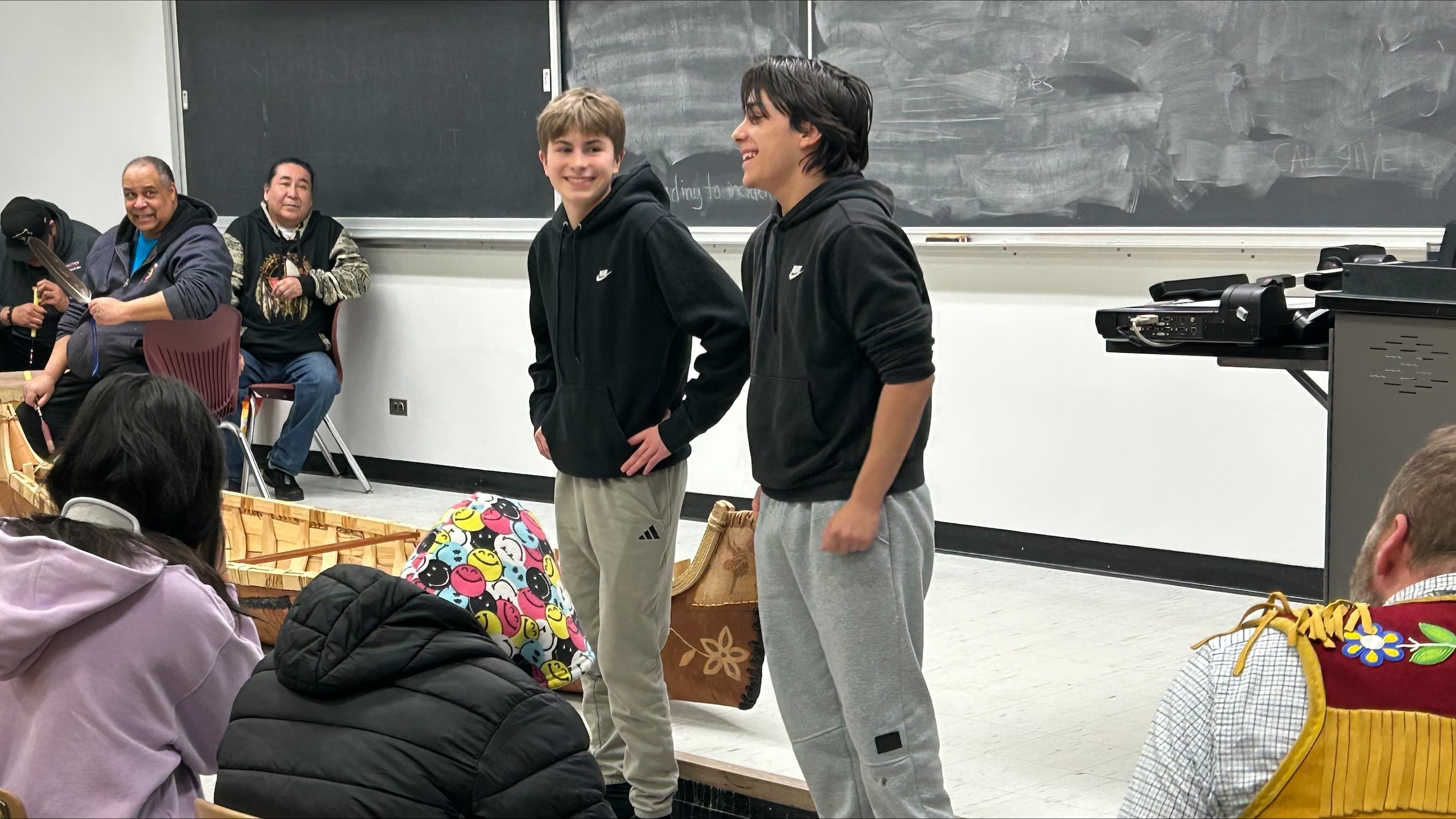
“I’m from a native background, and it was an experience to be able to learn what my family used to do back in their old days,” said student Zachary Boulanger. “Instead of just walking, we had canoes (…) it represents native culture.”
While it likely won’t ever hit the water, the canoe is watertight and fully functional.
Eighth grade students Zachary Boulanger and Lucas Rogozinski speak at Tuesday’s gifting ceremony (Jacob Henriksen-Willis, February 24 2026)
“The roots we picked were strong enough to bend the wood when it was warped and wet,” Boulanger said. “You can bend the wood with the sinew and it keeps the shape.”
This is a yearly tradition for eighth graders at Algonquin. Previous canoes were donated to the Canadian Canoe Museum, Lakehead University and Manitou Mounds.
“It was an important thing to do as a class,” said student Lucas Rogozinski. “So many people worked together on this.”
Algonquin Principal Darren Lentz says the project teaches how to harvest and build ethically with teachings from First Nations communities.
“(The students) are learning from our community here, and saying miigwech and thank you for that knowledge,” Lentz said. “As they move forward, they’re capable of doing anything they want. And this canoe is a testament to that.”
A new strategy designed to reduce substance abuse among young people is officially underway in Thunder Bay.
Planet Youth is based on an Icelandic model that helped cut youth addiction from some of Europe’s highest rates to the lowest. Their strategy focuses on changing the wider social factors upstream of addiction that prevent youth from living healthy lives.
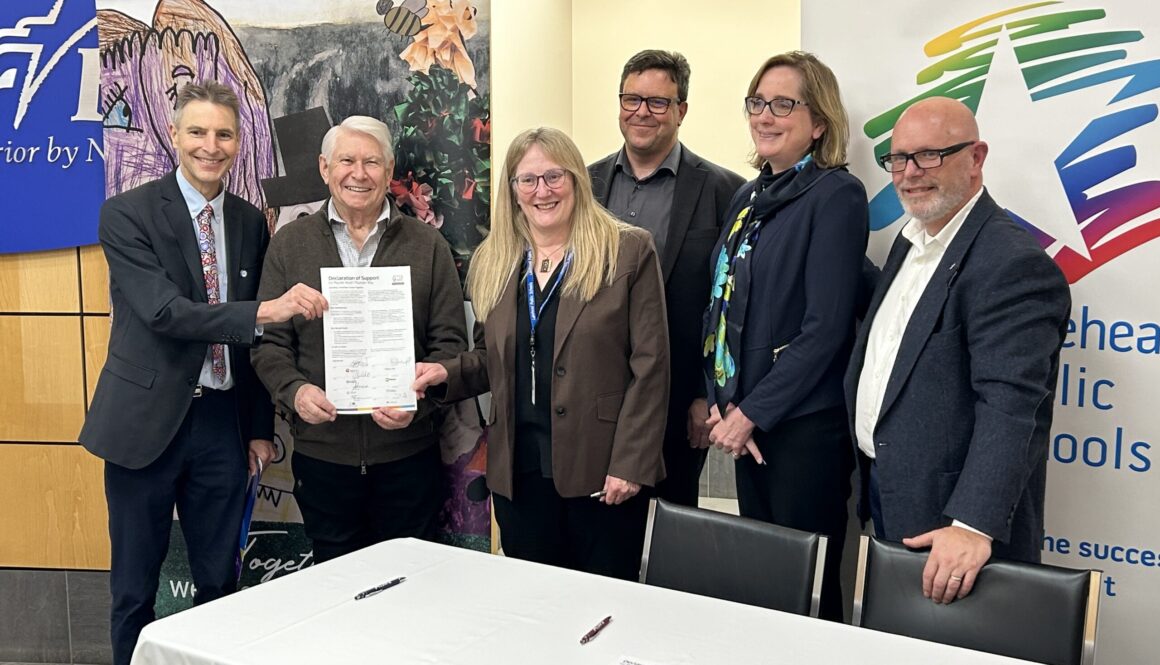
Thunder Bay leaders gathered at City Hall on Friday for a signing ceremony affirming their Declaration of Support.
“By signing on to advance Planet Youth, Thunder Bay is reaffirming our commitment to prevention and partnership,” said Thunder Bay Mayor Ken Boshcoff. “Youth wellbeing is a collective responsibility, and this initiative brings together schools, families, service providers, and community leaders to take coordinated, data-informed action. Working together, we can create the conditions for young people in Thunder Bay to thrive.”
The program will be run by non-profit United Way of Thunder Bay.
“This signing ceremony marks a public launch of the movement and a chance for key foundational partners to affirm their support, but perhaps more importantly, it affirms that youth wellbeing is a collective responsibility,” said United Way of Thunder Bay CEO Albert Brulé. “Thunder Bay is joining several other Canadian communities working to adapt this model in their local context.”
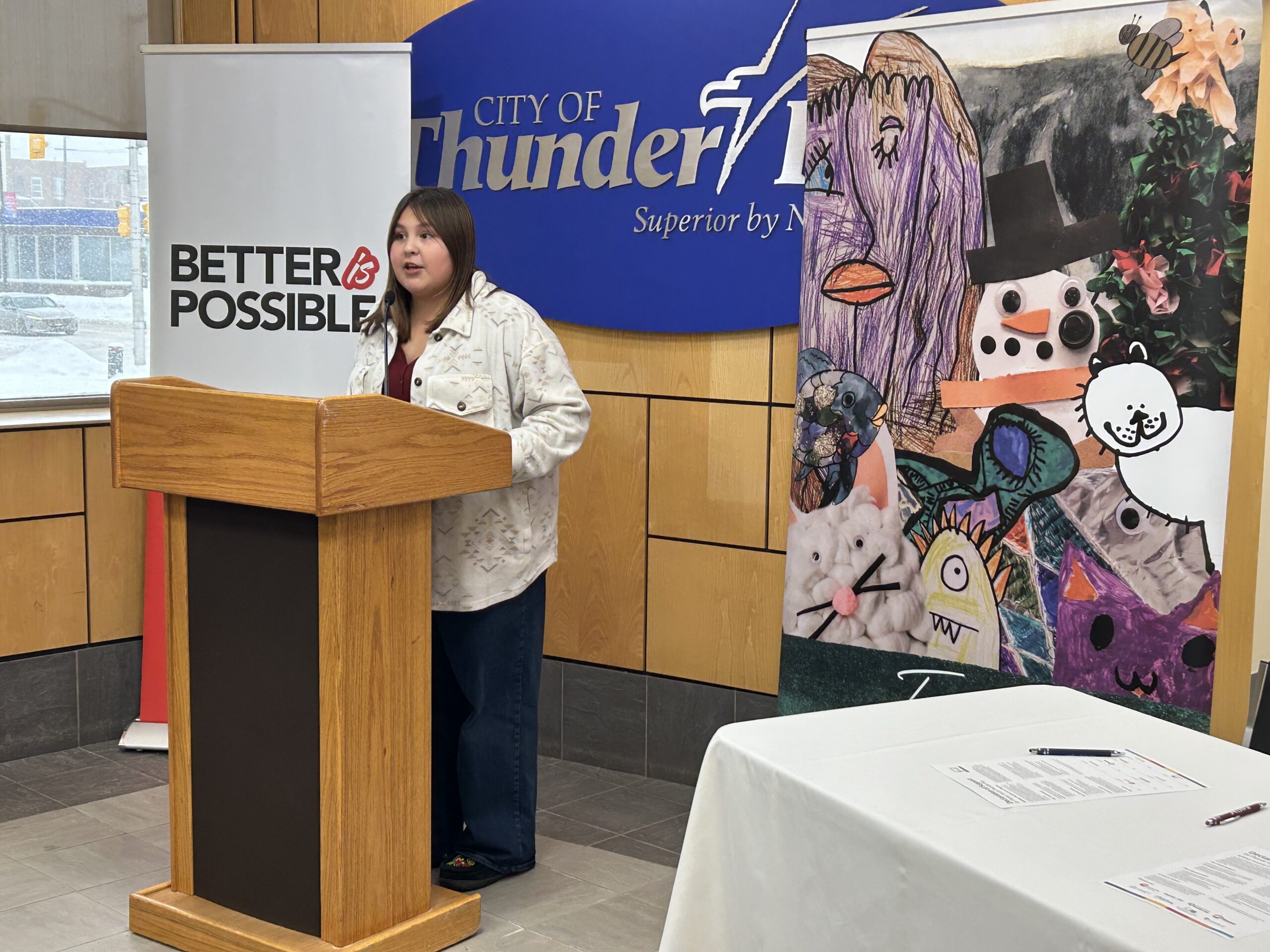
“I’m just really tired of seeing all these youth with so much potential being dragged into cycles [of addiction],” said 12th grader Cheya Belmore, a member of Youth Council at Evergreen United Neighbourhood. “It can be hard to ask for help, but I did it and I’m grateful I did. Seeking support is a strength, not a weakness.”
The Declaration of Support lists three commitments:
Exploration & Collaboration – Engaging in open discussions and working together across sectors to identify evidence-informed prevention strategies that are relevant and effective for Thunder Bay.
Awareness & Education – Sharing knowledge and resources to help promote an understanding of prevention approaches, including those of the Planet Youth model, within our networks.
Cultural & Community Responsiveness – Ensuring that diverse perspectives, especially Indigenous voices, are at the center of discussions about how prevention strategies are shaped and implemented in our community.
Signatories of the Declaration include:
United Way of Thunder Bay
City of Thunder Bay
Thunder Bay and District Health Unit
Lakehead University
Mattawa Education and Care Centre
Lakehead Public School Board
Thunder Bay Catholic District School Board
CSDC des Aurores boréales
Brulé says they are currently in the data collection phase, and tailoring the Icelandic model to Thunder Bay requires an analysis of local risk factors and community supports.
“The model starts by building a coalition, and that’s what you see here [at the signing ceremony],” he said. “The next step involves data, so we’ll be working with schools and community groups to do surveys of young people to learn what are their habits, what are their concerns, what are the ways that we can come together to help them avoid falling into the traps of substance abuse.”
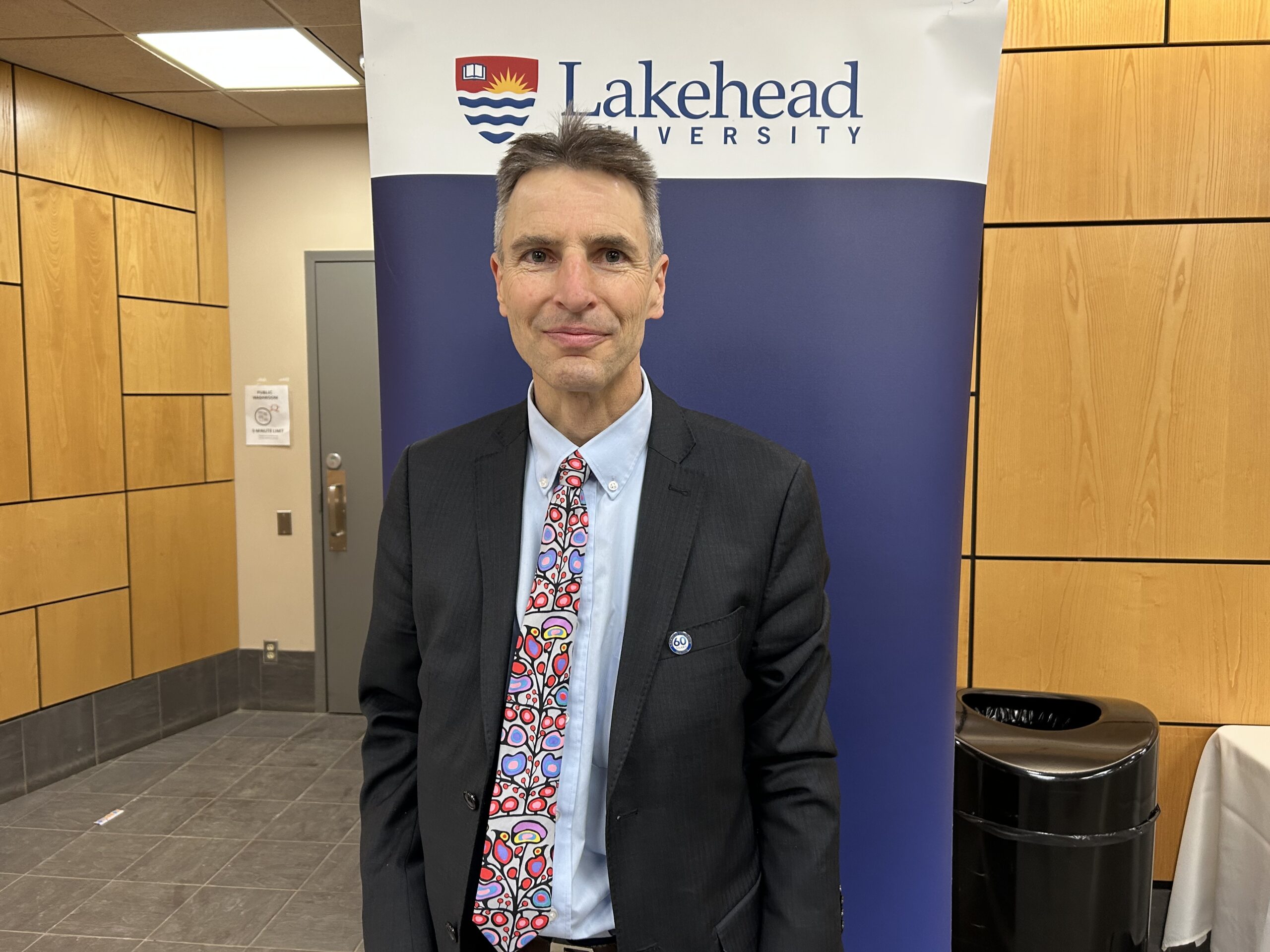
Dr. Langis Roy, Lakehead University’s Vice President of Research and Innovation, says their team will collect and analyze data to optimize youth intervention specific to Thunder Bay’s unique social, cultural and environmental landscape. Lakehead is the #2-ranked undergraduate research university in Canada.
Lakehead Vice President of Research and Innovation Dr. Langis Roy (Jacob Henriksen-Willis/February 20 2026)
“We’re sizing up the issue,” Roy said. “We’re examining the effectiveness of existing programs and where they’re impactful and where they’re lacking. Then we’re filling those gaps in research and in deploying actual adequate interventions.”
Lakehead’s research will be ran through their Centre for Education Research on Positive Youth Development (CERPYD), headed by Dr. Jamie DiCasmirro.
“There’s an approach developed by CERPYD called Cognitive Behavioural Approaches to Treatments and Interventions,” Roy said. “That is a crossover between cognitive and mental awareness with actionable behavioural changes.”
“By being a part of this larger consortium Planet Youth, we’re going to be able to get more involved with the various communities and have a richer set of parameters from which we can build better interventions. We can target them to specific groups and specific issues that are affecting youth development.”
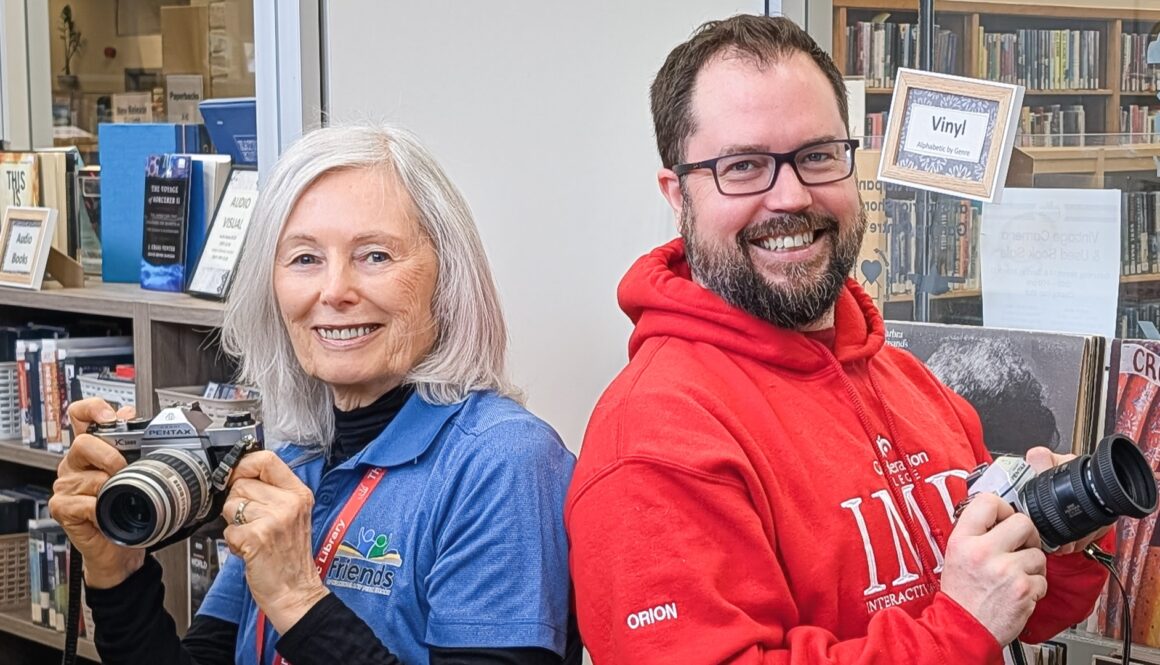
Calling all shutterbugs: The Friends of the Thunder Bay Public Library will be hosting a special vintage camera sale the weekend of March 14 at the County Fair Mall.
The equipment is donated by the Interactive Media Development program at Confederation College. The college says that while these items are no longer in use, they remain in good working condition and reflect years of hands-on learning by students in the program.
“We’ve been clearing out older camera equipment and knew there would be people out there who were still interested in using it,” said Orion Atkinson, IMD Program Coordinator at Confederation College. “Though it no longer fits our curriculum needs in the Interactive Media program, we’re happy to be donating this vintage equipment to a local charity and supporting the Thunder Bay Public Library.”
“Many of our students learned photography and videography on these analogue cameras and it’s great to think that they’ll get a new life with new owners.”
Here’s what will be on the block:
Vintage SLR and DSLR cameras
Video cameras and accessories
Photography and video equipment
Gently used books of all genres
All proceeds from the sale will go towards Thunder Bay Public Library programs and services.
“We’re incredibly grateful to the IMD Program for thinking of us,” said Fran Duke, President of the Friends of the Thunder Bay Public Library. “Raising funds to support the library is at the heart of what we do. This donation allows us to help this equipment find new homes while generating funds that directly benefit the library and the community.”
The camera sale will run alongside the popular $2 Tote Sale, where customers can fill a tote bag with gently used books for only $2.
The aviation industry in Thunder Bay is getting a piece of the pie from Mark Carney’s huge defence spending increase.
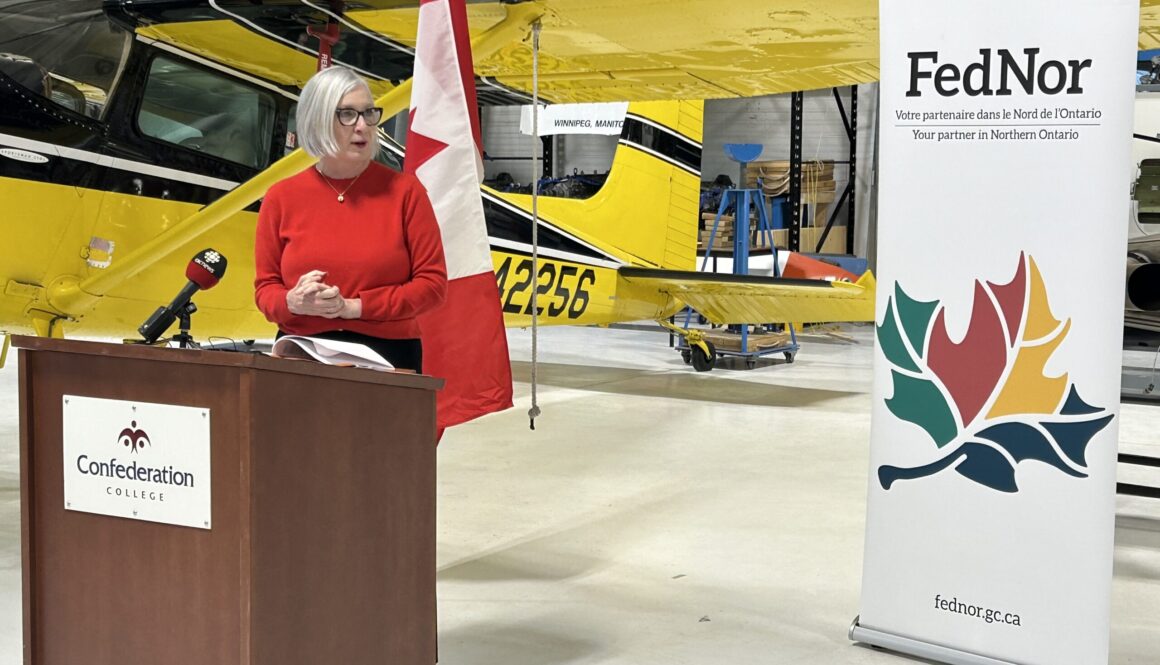
The Federal Economic Development Agency for Northern Ontario (FedNor) is investing over $1.5 million into Thunder Bay’s Levaero Aviation Group. These funds will go towards Levaero’s Hangar 97 project, a new 500-square foot building to accommodate aircraft equipment and staff for refurbishment processes.
FedNor Minister and Thunder Bay MP Patty Hajdu says keeping Canadian aviation manufacturing in-country is very important in the current political climate.
“Canada was built by Canadians, and our defence industry is no different,” Hajdu said. “By supporting domestic efforts to grow our armed forces through the Buy Canada plan for supplying the military, we are investing in Canada and in Northern Ontario. This will create real opportunities for businesses and workers, here at home. When we empower Canadian industries to thrive, we contribute to a safer future for all generations.”
Thunder Bay-Rainy River MP Marcus Powlowski emphasized the need for defence spending, referencing Russia’s invasion of Ukraine and U.S. President Donald Trump’s aggression towards Canada.
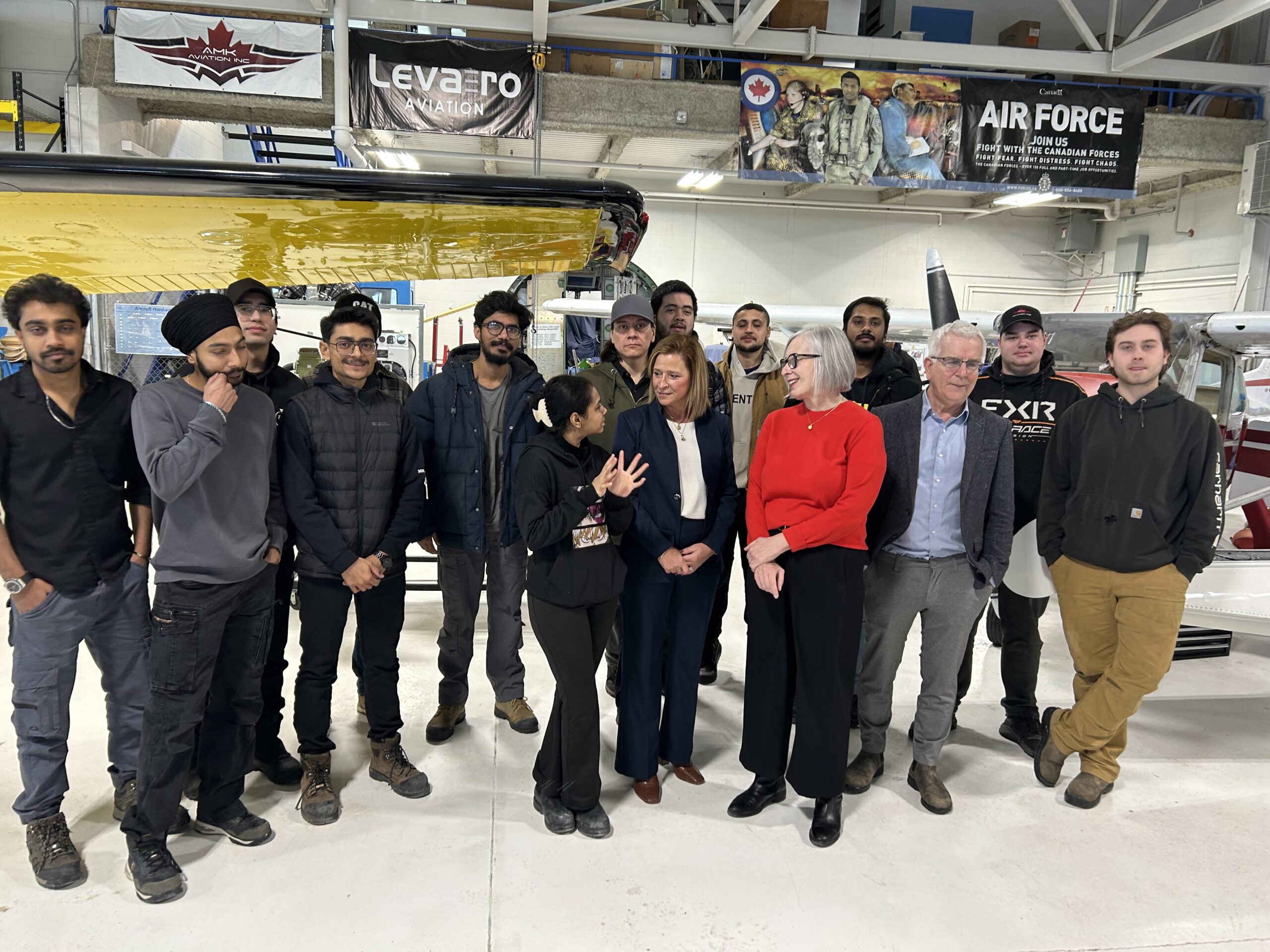
Confederation College aviation students pose with Confederation College President Michelle Salo, MP Patty Hajdu and MP Marcus Powlowski at Friday’s announcement (Jacob Henriksen-Willis/February 20 2026)
“It would be nice to live in a world where we don’t have to spend any money at all on defence,” Powlowski said. “The money could go to healthcare, to education, to better roads. But as Prime Minister Carney said, we need to take the world as it is. Currently, threats abound from all sides.”
“Either you’re at the table or you’re on the menu, and we don’t want to be on the menu for countries that look at dividing up the world and creating their own spheres.”
Patty Hajdu says the defence strategy has a goal of creating 125,000 jobs through domestic production.
“The intent is to be able to produce as much as possible for our own military needs and our own sovereignty needs,” Hadju said. “The best-case scenario is that we’re confident Canada can defend itself, that we can act as an ally, that we’ve met our NATO commitments, and that we have a skilled workforce with confident Canadians knowing they have a place.”
Levaero Aviation is just two doors down from Confederation College’s aviation centre, and they have a strong partnership with the program. The college also provides training to reserves and aircraft maintenance technicians for the Royal Canadian Air Force.
“(We) supply those maintenance grads, as well as those who will be flying the planes. Not only for the Air Force, but across Northwestern Ontario and Canada,” said Michelle Salo, President of Confederation College.
Salo says the investment will benefit more than just the defence sector.
“When you think of how northwestern Ontario is evolving with critical minerals, you really need planes to get in and out of some of these places to bring people and equipment in. And you need mechanics to help support that too. So this will be critical for the economic development of northwestern Ontario, as well as the defence strategy,” Salo said.
After colliding with eight cars, multiple fences, trees, shrubs and a fire hydrant, an 18-year old is facing a littany of charges.
His pickup truck was seen travelling at high speeds down a sidewalk on Empire Street Monday night. He came to a stop after colliding with a snowbank and a sign.
He is charged with the following:
Operation while impaired – alcohol and drugs
Dangerous operation
Flight from peace officer
Drive motor vehicle – perform stunt
Disobey stop sign – fail to stop (three counts)
Fail to surrender insurance card
Driver fail to surrender licence
Fail to surrender permit for motor vehicle
Person under 19 years – possess cannabis
Fail to notify change of address
Drive vehicle or boat with cannabis readily available
Class G1 license holder – unaccompanied by qualified driver
He has been released from custody with a future court date.
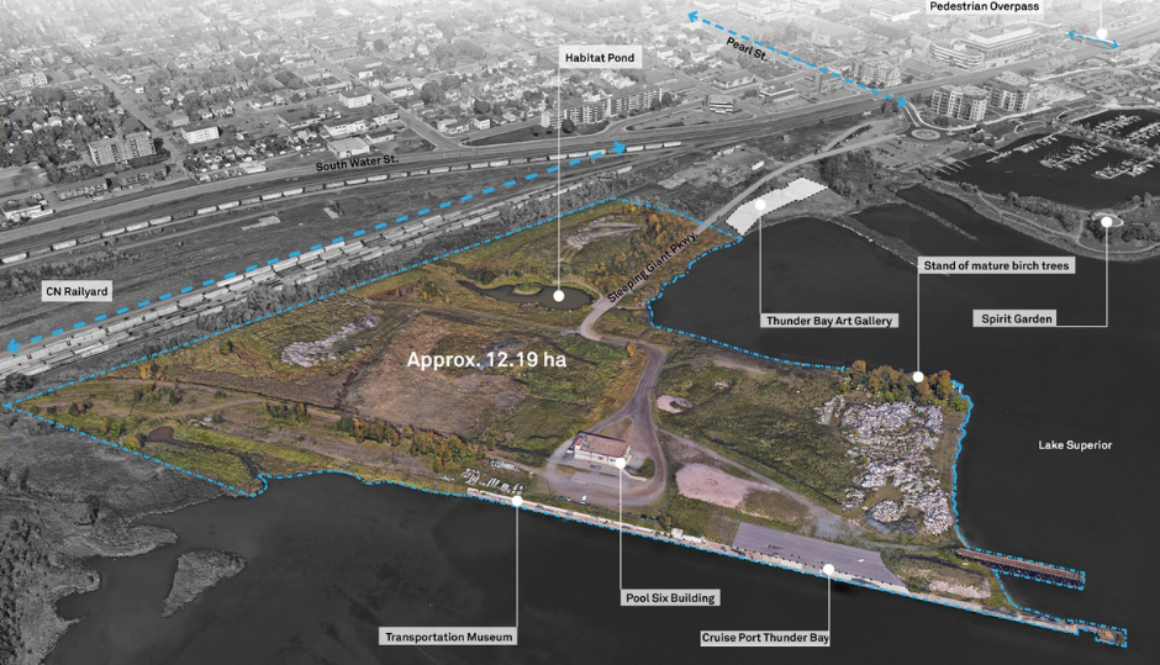
Got ideas for Thunder Bay’s new waterfront development?
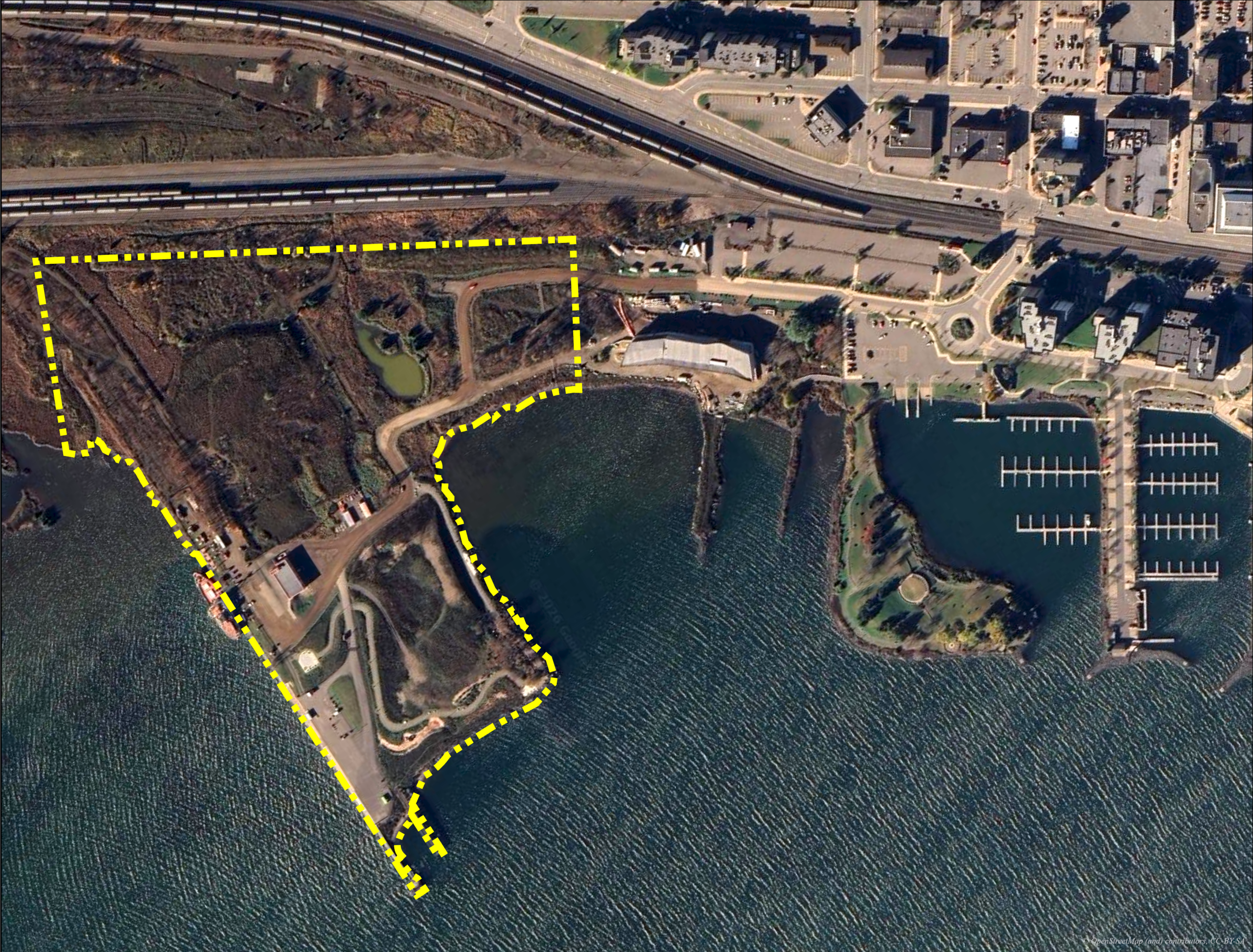
The city has released a survey for the public to decide new features for the Pool 6 property, a 12.2 hectare plot of land directly south of Prince Arthur’s Landing and the future Thunder Bay Art Gallery.
The 12.2-hectare Pool 6 plot of land (City of Thunder Bay)
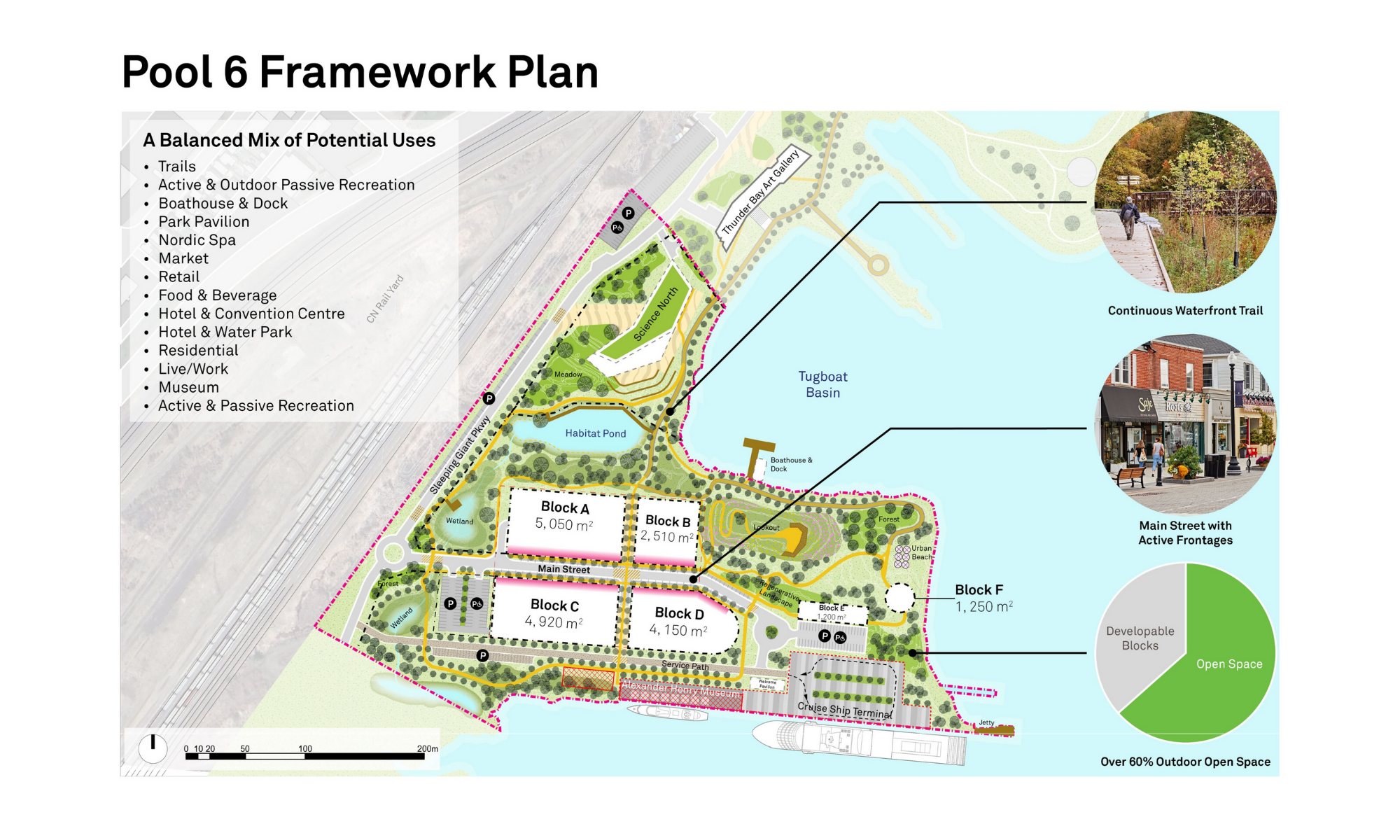
This is the second phase of development for the waterfront property. Phase one was informed by a public survey in 2024. That feedback, combined with a Community Economic Development Commission summary report, recommended a mixed-use approach that balances residential and commercial development with public uses and environmental stewardship.
All four development scenarios feature these key amenities:
Multi-use trails
The proposed Science North Centre
An urban beach and public pavilion
Boathouse & dock
Habitat pond and wetland areas
Parking facilities and an extension of the Sleeping Giant Parkway
Commercial storefront space
A 6-8 storey residential development
Existing cruise ship terminal and Thunder Bay Transportation Museum
Formerly the site of the Saskatchewan Pool 6 grain elevator, the property is now home to the City’s cruise ship terminal and the Transportation Museum of Thunder Bay.
The city says this is an exciting opportunity to build on the success of Prince Arthur’s Landing and make Thunder Bay’s waterfront a compelling destination for residents and visitors alike, and a catalyst for the local economy.
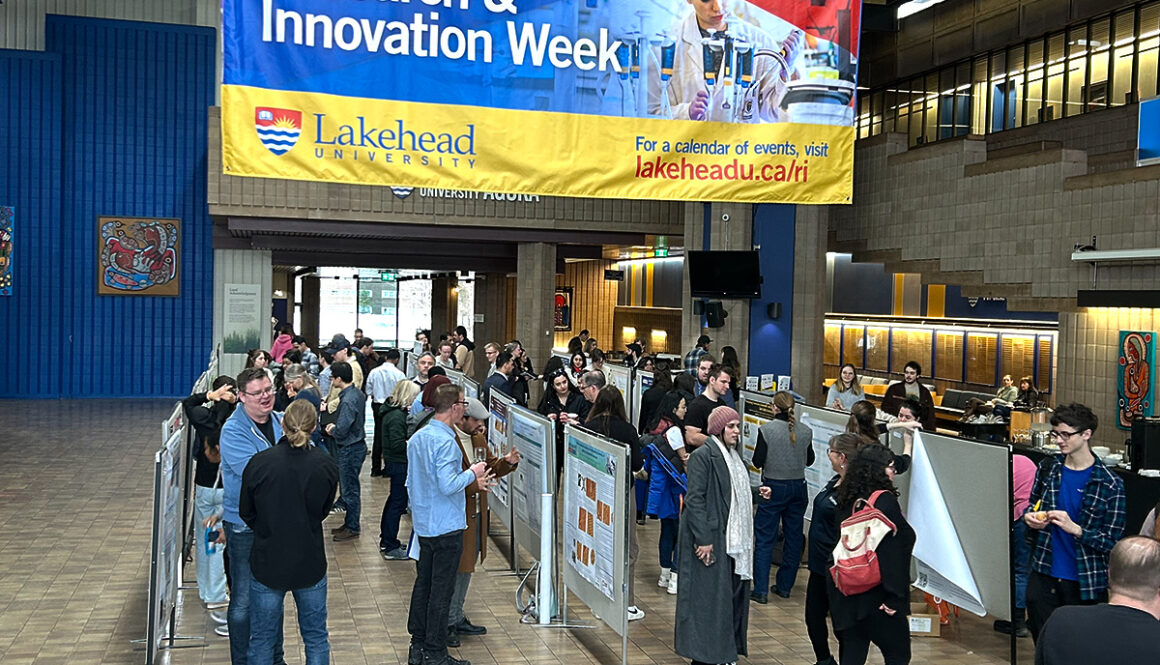
Students and community members alike are invited to explore the future of study during Lakehead University’s annual Research and Innovation Week.
The university is planning a week of keynote speakers, activities and guided tours for all ages. This year’s theme is “Shaping the EvoLUtion” of Lakehead University, showcasing change-making projects that will strengthen community engagement, advance sustainable solutions, foster equity and reconciliation, and drive economic and social innovation.
“We want people to see and experience how Lakehead University is making an impact in their community,” said Dr. Langis Roy, Vice-President Research and Innovation. “Every project, experiment, and study completed by our students and faculty leads to a real-world impact–locally or globally.”
The university says the week of programming has three main goals: facilitate research collaborations, showcase research excellence and raise public awareness about research and its benefits to society.
Here are some dates and events to remember:
Saturday, Feb. 21: Science Carnival @ Intercity Shopping Centre. First event of the week. Explore science, technology, engineering, health, and social sciences through hands-on activities, interactive booths, and live entertainment.
Monday, Feb. 23: “Printing the Future” Keynote speech @ Lakehead. Dr. Atif Shamim, tech entrepreneur and Professor of Electrical and Computer Engineering at King Abdullah University in Saudi Arabia, shares a keynote talk on how eco-friendly advances in printable electronics are changing the way we design and use technology in everyday life. Click here to register.
Thursday, Feb. 26: Open discussion on Indigenous mental health and addiction research @ CASES Atrium. Canada Research Chair in Indigenous Mental Health and Addiction Dr. Chris Mushquash will lead a discussion on how Indigenous community-based research in mental health and addiction can support improvements to systems and services. Click here to attend virtually.
Friday, Feb. 27: Guided tour of Centennial Botanical Conservatory. Final event of the week. CityStudio will provide the tour in collaboration with the City of Thunder Bay. Staff, faculty, and students share stories of collaboration that helped to shape the vibrant civic space.
There are multiple events planned for each day. To view the full schedule, click here.
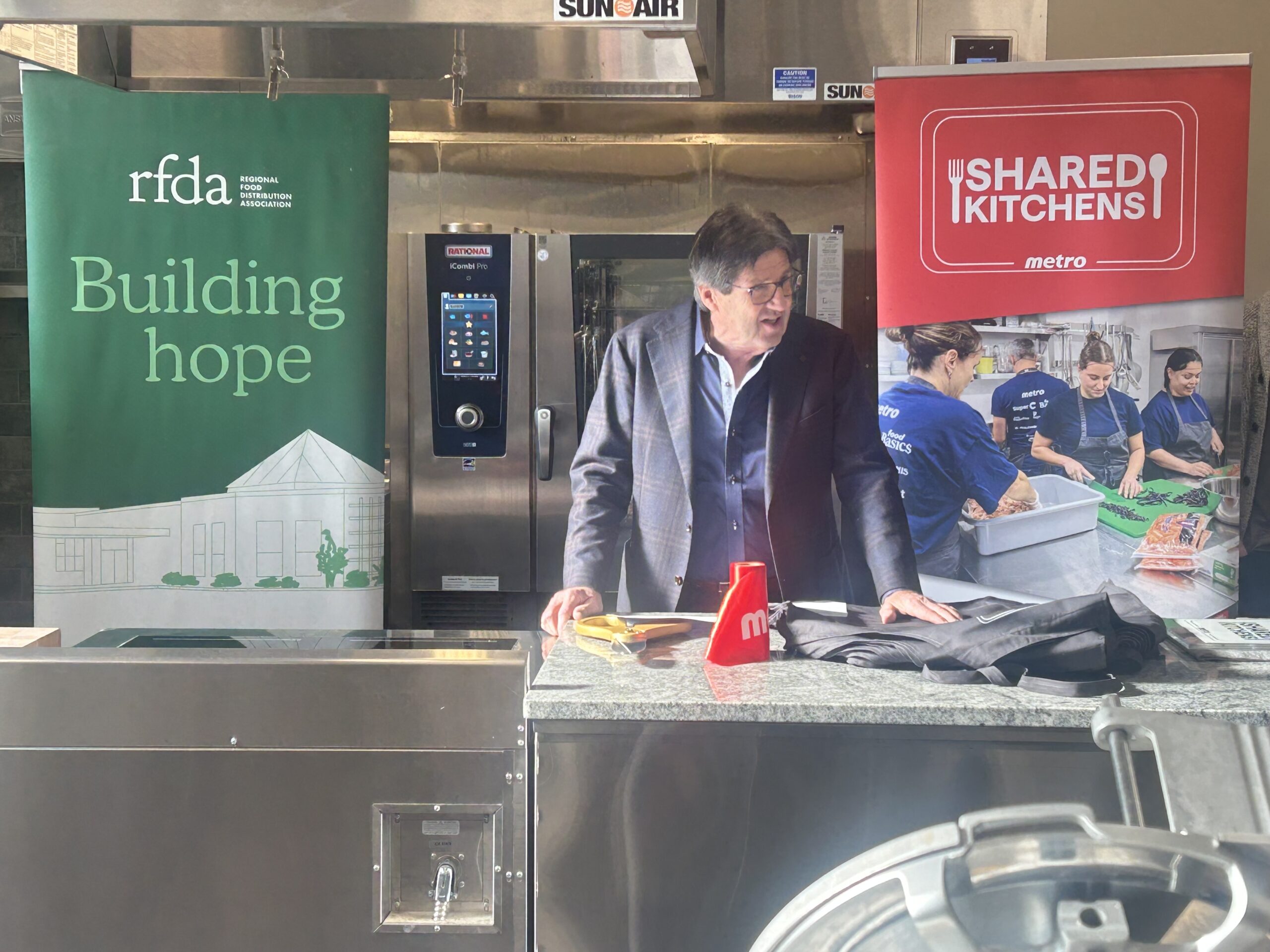
After achieving it’s $6.9 million fundraising goal, the Thunder Bay Regional Food Distribution Association is officially opening a 5,200 square foot facility expansion.
Funding went towards a community training kitchen, a multi-purpose gathering hall, and spaces designed to strengthen community-led solutions to food insecurity and poverty.
RFDA Campaign Chair Bruno Niederer said they met their goal in a single year instead of the expected two.
“We feed more people, we are able to have a community kitchen, the people don’t have to be out in a cold warehouse to fill all those hampers,” Niederer said. “These are important steps.”
RDFA Campaign Chair Bruno Niederer speaks at Tuesday’s ceremony (Jacob Henriksen-Willis, February 18 2026)
The public contributed $1.5 million towards the renovations.
“I am moved and blown away by how quickly the community stepped up to reach this goal,” said April Mercier, office manager at the RFDA. “When we were given the opportunity to explain what this building would do and how it would expand our capacity, as soon as we got that message in front of people, we found that they were very willing to support.”
Metro and Feed Ontario collaborated to provide the final $300,000 donation and complete the Metro Shared Training Kitchen. The kitchen provides food banks across Thunder Bay with professional facilities for educational cooking classes, community meals, and food rescue initiatives.
“We wanted to have a concrete place for communities to have access to food and a shared kitchen space,” said Stephanie Bonk, Communications Manager at Metro. “It’s so impressive to see what the RFDA has here. I think it’s going to be a great spot for Thunder Bay.”
The community kitchen will host an essential skills cooking class, providing patrons an opportunity to learn about nutrition and food preparation and get the most out of the food being accessed.
The RFDA says the kitchen is already up and running.
“We’re using our new commercial kitchen to get food out to our community five days a week,” Mercier said. “We’re preparing soup, we’re preparing sandwiches, we’re providing prepared meals that can go out to feeding programs in our community.”