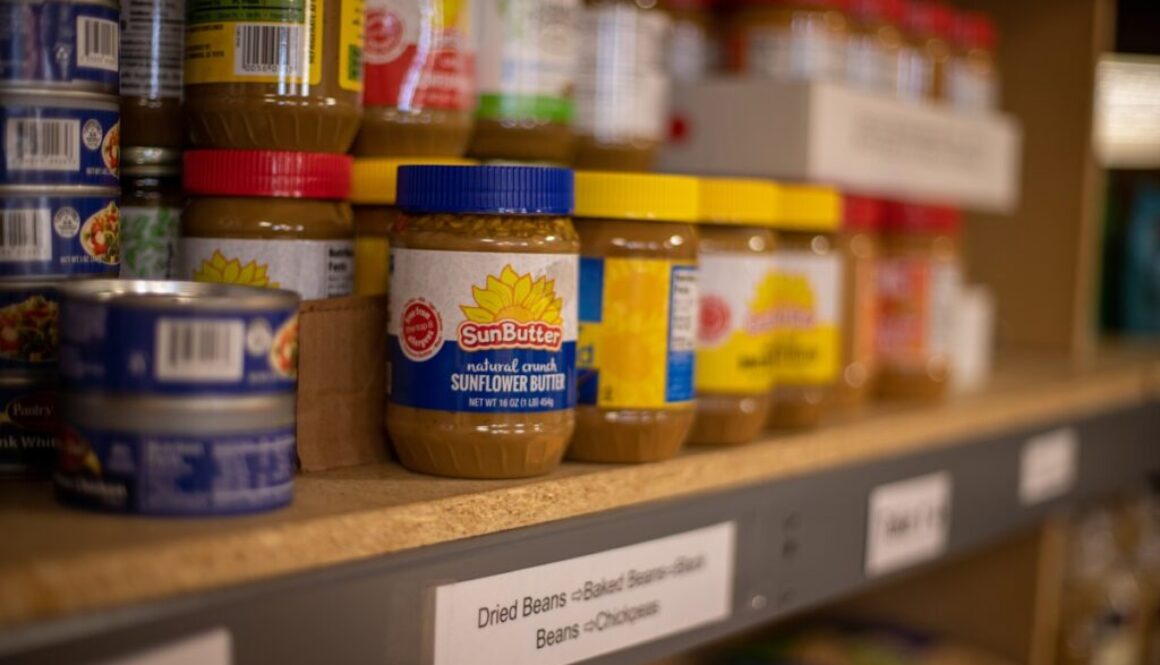
It has been a busy year for the Salvation Army and its food bank in Fort Frances.
Demand has is close to surpassing last year’s numbers.
As of August, over 7,200 pounds of food have been distributed to 807 individuals and 463 households.
In all of 2025, the Salvation Army helped nearly 1,400 people in 708 households.
Community Ministries Director Stuart Walter notes that, taking away what they do during the Christmas period, they are still 88% of what we served in all of last year.
“And it’s not just the stereotypical people you’d think would need the food bank,” notes Walter.
“We have over 40% of the people that we see work. Over 50% are of working age, so between 18 and 64. And the biggest group of that, 24%, are 31 to 44, most people think of as the prime of their career.”
Walter says many people are simply finding it increasingly difficult to make ends meet with the costs, especially food, continually increasing.
“And it’s just, it’s such a slippery slope that everyone’s on right now, and it’s really hard,” he adds.
So far, the food bank has been coping with the increased demand.
A recent shipment of food was received from the Regional Food Distribution Association in Thunder Bay, of which several agencies are members.
Additional support has come from Food Banks Canada.
Walter says donations from the community are also helping to keep the doors open.
“Without that, especially the community donors part, we would not be able to survive,” says Walter.
He says the food bank is not in a position where it would have to shutter, as the Salvation Army did with its food bank in Cornwall this spring.
He says there are operational changes they could consider, as was done in Kenora, where demand was exceedingly high in August.
He says they are not there yet because of the community support seen from the district.
Ten years ago, seeds were planted for the first time in the garden centre at the Peter McKee Community Food Centre.
Executive Director Christine Taylor says they now have a plentiful crop nine months of the year. “When the Peter McKee Centre was transformed into a food bank, the garden was the old tennis courts at the time. So they put a wire fence around it and started to put the boxes in then. We’re now up to 118 garden boxes. When it started, I think it was around maybe 88 or so. So we’ve grown. And we also have two greenhouses.”
Garden party planned from 4 pm to 6 pm on Tuesday, open to the public
“Just to showcase the work that we’ve done in the garden, showing some of the plants and some of the food that we’re growing for the food bank. And to acknowledge our garden sponsors too. We’re pretty proud of it,” Taylor said.
A lot of tomatoes were planted this year, along with zucchini, cucumbers and carrots.
“We’re going to try to create a specialized tomato sauce for our clients from those tomatoes that we’re growing. And we’re going to do that in our community kitchen,” Taylor explained.
The centre also has 15 boxes that they rent out to seniors in the community who enjoy gardening and want to grow their own food.
The garden also has flowers, but Taylor says they are special varieties, including marigolds, which are known to help keep pests away.
Around 10,000 pounds is expected to be grown in the garden this year. Some will go directly to the food bank for clients, while the rest will be turned into other products in the community kitchen.
The Peter McKee Community Food Centre is located at 475 St. George Street.
Canadians are still facing some of the highest grocery prices in the G7, despite Canada being one of the world’s largest agri-food exporters, according to Prime Minister Mark Carney.
In response, the federal government has launched the country’s first-ever National Food Security Strategy.
The plan focuses on four key priorities:
Increasing competition among grocery chains Including a $1 billion investment in food hubs to support independent grocers, along with nearly $130 million to crack down on anti-competitive practices.
Boosting domestic food production Through more than $1.2 billion in funding to expand processing capacity, upgrade equipment, and grow Canada’s agri-food sector.
Expanding year-round growing With a $750 million investment in greenhouses and other indoor growing systems.
Cutting red tape for farmers By streamlining regulations and making it easier for products to be sold across provinces.
Carney says, “Too much of what we grow is processed elsewhere, and too many Canadians still rely on imported food at higher prices. Canadian farmers deserve more options to sell their produce, and Canadians deserve more options for where to buy their food.”
Backed by more than $3 billion over 10 years, the strategy aims to strengthen domestic production and build a more affordable, more self-sufficient food system.
Minister of Agriculture and Agri-Food Heath MacDonald says, “Through this made-in-Canada approach, we will process more of what our farmers grow here at home, creating jobs, driving economic growth, and strengthening Canada’s food self-sufficiency.”
It also builds on federal efforts already in place, including tax relief, food programs, and support for food banks, greenhouse expansion, fisheries, and accessible food in northern communities.
While newly released public data shows increased food bank use in New Brunswick, some charities are skeptical it will lead to more provincial funding.
In partnership with Feed NB, the Human Development Council has launched a dashboard showing near-real-time food bank and community kitchen use across the province. The dashboard launched three weeks ago.
It uses data from Link2Feed, software used by food banks and community kitchens to collect client information.
The dashboard shows near-real-time data starting in September 2022, including household type, age, gender, immigration status and total services provided, among other metrics.
In an interview with Acadia Broadcasting on March 26, HDC data scientist Liam Fisher said the organization launched the dashboard to highlight food bank use in the province, make data more accessible to the public and support food banks’ advocacy efforts.
“We know how important good-quality data is for advocacy, and I think the dashboard helps paint the picture of just how significant the level of service food banks are providing,” he said.
According to Fisher, key takeaways from the dashboard include a more than 50 per cent increase in services provided over the past three years and increased food bank use among newcomers and households with employment income.
“Roughly 27,000 individuals are served food boxes in a given month — that’s a lot of people,” he said. “That’s pretty close to the size of the Kennebecasis Valley.”
Fisher said the dashboard will help New Brunswickers and organizations better understand the level of support food banks provide across the province.
Charities welcome new data but remain skeptical of government funding
In an interview with Acadia Broadcasting on April 7, Christine Taylor, executive director of the Peter McKee Community Centre, said the centre welcomes the dashboard.
She said having data more easily available will help when applying for grants and seeking donations.
However, Taylor said she is not convinced the data will persuade the government to provide additional funding to charities.
“We continue to try to write grants and things, and it’s just . . . we feel like we’re kind of on our own,” she said.
In addition to food bank services, the centre offers other community programs, including a community garden, a boardroom and educational programming.
According to the dashboard, the centre is the most visited food bank in the Moncton area, serving food boxes to more than 4,000 individuals and nearly 1,500 households.
Taylor said the centre also shares food donations with other charities in the area, including food kitchen Ray of Hope Needy Kitchen, and homeless shelter House of Nazareth.
Christine Taylor is the executive director of the Peter McKee Community Centre Inc. She says besides food donations, food banks need operational funds to run. PHOTO: CHRISTINE TAYLOR/SUBMITTED WITH PERMISSION.
She said the centre has struggled to keep up with demand over the past four years, particularly as more newcomers move to Moncton and affordability issues force people who have never used a food bank to rely on one.
Taylor said while the centre has been able to meet demand, operational costs remain one of its biggest challenges, as it must also compete with other charities for funding.
“Often people will come and donate food — they’ll go buy groceries and donate, and we love that,” she said. “But we also need people to remember that we need a building to provide the service.”
Taylor said, like other organizations in the area, the centre is not exempt from paying property taxes or utility bills.
With the government facing record deficits, she said that makes her less confident about receiving additional government funding.
Despite increased pressure over the past four years, Taylor said the centre will continue raising funds to help people.
“We’re just going to keep moving forward, and we will always be here,” she said. “Whether the government steps up or they don’t, we’re in it because we want to help people.”
In an email statement, Department of Health spokesperson Tara Chislett said the department is reviewing the data available through the new dashboard but said it is “too soon” to know how the information could affect future funding decisions.
The Salvation Army is the beneficiary of over $10,000 from the Safeway store in Fort Frances.
The money was raised through donations and corporate contributions received during the store’s Holiday Food Bank campaign, which ran last December.
It nearly matches the money raised in the 2024 campaign.
Store Manager Kiefer Childerhose is appreciative of the customers’ support.
“It’s amazing seeing how generous the customers are in Fort Frances,” says Childerhose.
“It’s nice to see that they’re willing to donate to such a great cause in our community.”
The Salvation Army will use the funds in its food bank.
Auxiliary Captain Arthur Heathcote is thankful to Safeway and its customers.
“It really speaks to people feeling the pinch this year, but still stepping up,” says Heathcote.
“We’re really grateful for Safeway for the amount of community partnership that they engage with the community.”
Heathcote notes that the store donated nearly 15,000 pounds of food to the Salvation Army’s food bank in 2025.
Childerhose says it has come in the form of non-perishables, meat and bread.
Customers have also lent a hand.
“We have our food bank bin at the front of the store. Whenever they can purchase, we have hampers that they can purchase all year round, and that goes towards everything that we donate to the Salvation Army.”
Food bank hampers on display at Safeway store in Fort Frances, March 3, 2026. Image: Randy Thoms/Acadia News
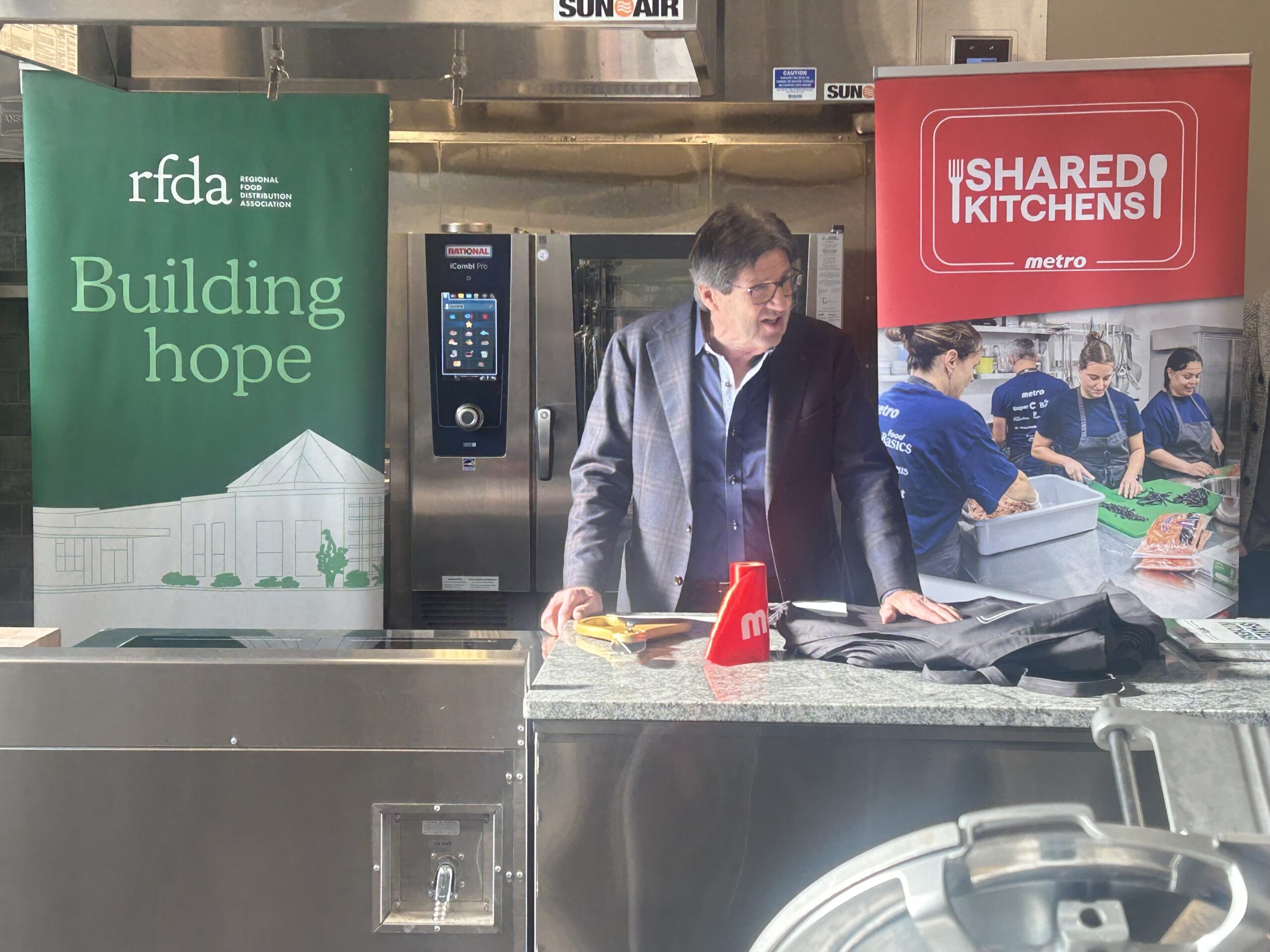
After achieving it’s $6.9 million fundraising goal, the Thunder Bay Regional Food Distribution Association is officially opening a 5,200 square foot facility expansion.
Funding went towards a community training kitchen, a multi-purpose gathering hall, and spaces designed to strengthen community-led solutions to food insecurity and poverty.
RFDA Campaign Chair Bruno Niederer said they met their goal in a single year instead of the expected two.
“We feed more people, we are able to have a community kitchen, the people don’t have to be out in a cold warehouse to fill all those hampers,” Niederer said. “These are important steps.”
RDFA Campaign Chair Bruno Niederer speaks at Tuesday’s ceremony (Jacob Henriksen-Willis, February 18 2026)
The public contributed $1.5 million towards the renovations.
“I am moved and blown away by how quickly the community stepped up to reach this goal,” said April Mercier, office manager at the RFDA. “When we were given the opportunity to explain what this building would do and how it would expand our capacity, as soon as we got that message in front of people, we found that they were very willing to support.”
Metro and Feed Ontario collaborated to provide the final $300,000 donation and complete the Metro Shared Training Kitchen. The kitchen provides food banks across Thunder Bay with professional facilities for educational cooking classes, community meals, and food rescue initiatives.
“We wanted to have a concrete place for communities to have access to food and a shared kitchen space,” said Stephanie Bonk, Communications Manager at Metro. “It’s so impressive to see what the RFDA has here. I think it’s going to be a great spot for Thunder Bay.”
The community kitchen will host an essential skills cooking class, providing patrons an opportunity to learn about nutrition and food preparation and get the most out of the food being accessed.
The RFDA says the kitchen is already up and running.
“We’re using our new commercial kitchen to get food out to our community five days a week,” Mercier said. “We’re preparing soup, we’re preparing sandwiches, we’re providing prepared meals that can go out to feeding programs in our community.”
Kiikenomaga Kikenjigewen Employment & Training Services (KKETS) Mawachintoon Anishnabe Miijim (MAM) program is distributing roughly 48,000 pounds of potatoes, carrots, and onions in Thunder Bay and remote First Nation communities.
Some of the produce has been designated for several charitable organizations in Thunder Bay including the Dew Drop Inn, Salvation Army, Grace Place, Shelter House and the Regional Food Distribution Centre while the rest will be shipped further north to remote communities.
“When First Nations communities are food secure, the benefits extend far beyond our Nations,” said KKETS Executive Director David Neegan. “Strong Indigenous food systems contribute to healthier families, a more stable workforce, and greater resilience across the entire region. When First Nations thrive, the region as a whole becomes stronger, more self-reliant, and better prepared for the future.”
The project was funded by a large, out-of-province donation. KKETS says this will help ensure that families have access to fresh and nutritious staples throughout the winter.
“In 2025, we served 81,475 hot meals to our community, and with inflation it’s becoming more challenging to afford fresh produce,” said Champagne Thomson, Development Manager of the Shelter House. “KKETS’s incredible donation of redistributed potatoes, carrots, and onions will go a long way in feeding those experiencing food insecurity in Thunder Bay. We couldn’t do what we do sustainably without the support of generous organizations and businesses.”
A fire at Granite Court has left the St. George and Area Food Bank without most of its supplies, forcing the group into a temporary space.
Food bank president Tony Munn said the fire caused heavy water and smoke damage and destroyed nearly all of their dry goods.
He estimated the loss of food at $50,000 to $75,000, with total damage expected to exceed $100,000 once the cost of equipment is included.
“We were able to save some of the meat because we got a couple of freezers out quite quickly,” Munn said.
“But as far as all dry goods, it’s all gone.”
The food bank reopened on Monday morning from the lower level of the St. George Masonic Hall.
Munn said the Independent grocery store supplied enough food to serve clients on opening day, and donations from residents have been arriving steadily since.
Munn said the biggest challenge now is finding a permanent location.
The food bank serves 300 to 400 clients and also runs 17 to 18 programs, including cooking classes, gardening programs and tax‑filing support.
Those programs are on hold until a long‑term space is secured.
“Passing out food is only one part of what we do,” Munn said.
“The other programs are on hold until we can get a permanent location.”
An emergency food drive is planned for Saturday from 9 a.m. to 4 p.m. at the St. George Masonic Hall.
A live broadcast from 98.1 Charlotte FM will be part of the event, with hosts Mark Downey and Cory Morrow on site to accept food and cash donations.
The food bank will continue accepting donations at the Masonic Hall throughout the week.
The annual Stuff a Cruiser campaign will be taking place this Saturday.
Food items collected will help stock food banks in Fort Frances, Emo and Rainy River.
Several thousand pounds of food were collected last year.
Auxiliary Captain of the Salvation Army Arthur Heathcote says the demand on area food banks has dramatically increased, and the public’s support of the campaign is greater than ever.
“Food insecurity has gotten to a critical point for most people, but because of events like this, it helps us keep our food pantries stocked so that when people do come looking for assistance, they’re able to find some with us,” says Heathcote.
The one-day food collection will take place on Saturday, December 6th, at Beaver Mills Market in Rainy, Cloverleaf at Emo, and in Fort Frances at Walmart, The Place, and Safeway.
It will go from 10 a.m. to 4 p.m.
Heathcote says volunteers will be handing out lists of the food banks’ needs.
“They certainly don’t have to buy everything on the list, but if you pick up one or two items every little bit helps.”
The area’s emergency and law enforcement personnel are lending a hand.
Representatives from the Ontario Provincial Police, Treaty Three Police Service, Canada Border Services Agency, the Ministry of Natural Resources and the Rainy River Paramedic Services are among them.
“We have all kinds of service personnel who step up every year to help make this event happen,” says Heathcote.
“Whenever we approach them, these people are always willing to come alongside and support Stuff a Cruiser.”
All food items collected on Saturday will go to the food bank located in the community where they were received, with Fort Frances donations being split between the Salvation Army and the United Native Friendship Centre.
The manager of the Dryden Food Bank says more people are coming their doors than in 2024.
Al Huckabay says around two per cent more people are using the local food bank on a monthly basis than last year.
He says newcomers who have expired work visas and are out of work make up the most noticable jump in clients, followed by families.
“Because of the cost of food,” says Al Huckabay. “They’re just finding it hard to make ends meet, even though some of them are still working.”
He adds the rising cost of housing and heating is also driving many new clients to use the Dryden Food Bank.
Huckabay says the rising cost of food, in particular, isn’t just contributing to more people needing the food bank’s services.
“We rely on donations,” says Huckabay, adding that includes government and public grants. “Sometimes our grants are drying up or getting smaller and yet the price of food continues to go up so we’re not able to utilize the bang for the buck to try and purchase food (so) we’re able to purchase less food but using more money.”
He says that is forcing Dryden Food Bank to limit handouts as they stretch the food on their shelves as far as possible.
Earlier this week, Food Banks Canada announced that monthly visits to food banks were up 5 per cent nationally over 2024.
In a study, the agency found food banks in Canada saw nearly 2.2 million visits in a single month.
That is double the monthly usage recorded just six years ago.