Katherine Del Salto is a multimedia journalist originally from Guayaquil, Ecuador. She came to Canada in 2021 to pursue a journalism degree at St. Thomas University. If you have any story tips, you can reach Katherine at delsaltok@radioabl.ca.
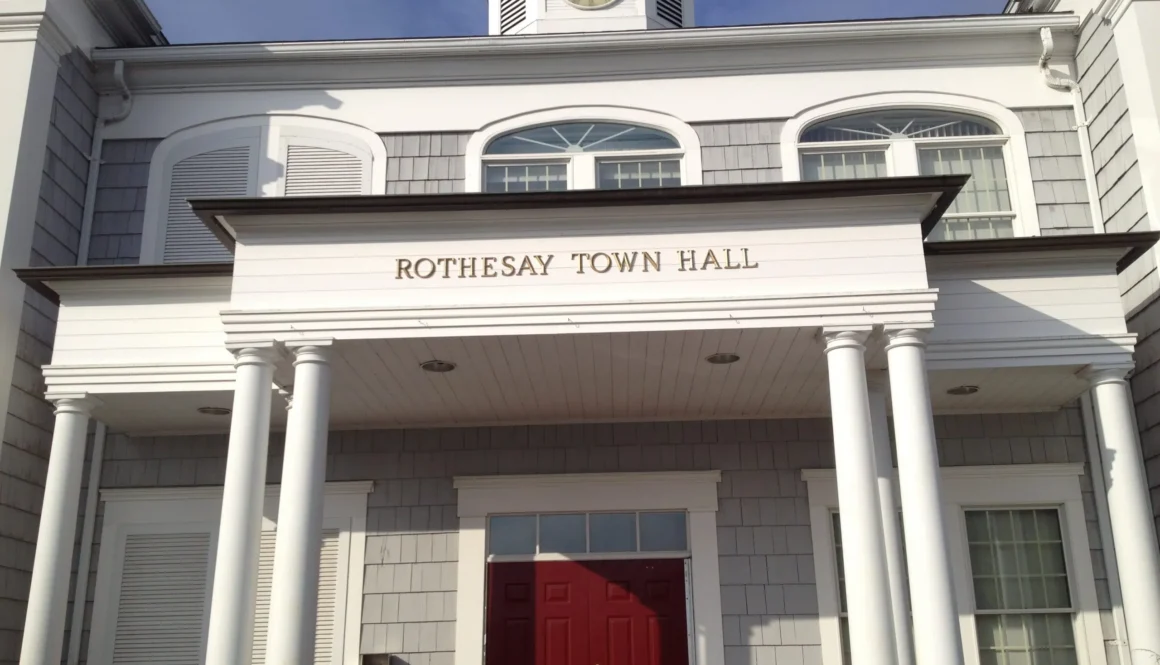
The town of Rothesay is receiving more than $28 million in federal and provincial funding for infrastructure upgrades that will support new seniors’ housing.
According to a press release, the funding will support phase two of the construction of the Maliseet Drive wastewater treatment facility. The facility will use ultraviolet disinfection technology to increase the municipality’s wastewater treatment and management capacity.
The second project involves extending municipal water, wastewater and stormwater services to support the Legacy Village seniors’ housing development on Villa Madonna Road.
The work includes installing one kilometer of each pipe and upgrading roadway infrastructure, enabling the construction of 89 new affordable housing units.
The provincial government is contributing nearly $9.5 million to the two projects, while the federal government is providing about $11.6 million through the Green Infrastructure Stream of the Investing in Canada Infrastructure Program and the Provincial-Territorial Agreement stream of the Canada Infrastructure Fund.
On the other hand, Rothesay is investing a combined $7.2 million on both projects.
“Our government is proud to support these two major water, wastewater and stormwater infrastructure projects in Rothesay,” said Saint John-Kennebecasis MP Wayne Long in the release.
“The expanded wastewater treatment capacity and the pipes to transport wastewater will ensure that Rothesay can continue to build the homes needed for current and future generations.”
Mayor Matt Alexander said in the release the investment will allow seniors who have lived and contributed to the community for many years continue to stay in Rothesay.
“Rothesay has been committed to becoming a truly age-friendly community for nearly a decade,” he wrote. “We listened to our seniors, we’re committed to doing the work, and today we are delivering.”
A small New Brunswick municipality is considering data centre rules to keep development decisions local.
Earlier this month, the municipality of Fundy Shores discussed introducing a zoning by-law amendment to its rural plan to regulate development.
Mayor Denny Cogswell said the move comes as council believes developments like these require community support.
“I think you can check all the boxes for the environmental impact assessments, but without the social license being part of that, then I feel like you are failing people in those communities,” he said.
Cogswell shared the same sentiment in a statement on behalf of the Fundy Shores council last month, when they joined the province’s opposition call for a moratorium on large-scale data centres in New Brunswick—prompted by residents’ concerns over a proposed $2 billion data centre in Saint John.
Council said it is not opposed to development, noting their advocacy for nuclear expansion and opportunities associated with medical isotopes, but said the difference is that Fundy Shores has residents’ approval.
“We have worked to build that social license for nuclear through engagement, transparency, trust, and an ongoing relationship with our residents over the many years. That same standard must be applied to AI data centres,” read the statement.
Council also said the province should not be able to introduce a policy framework that overrides local planning decisions, or “allows large-scale developments to proceed over the objections of communities expected to host them.”
Cogswell added that the discovery of ten data centres interested in connecting to the province’s grid also prompted the measures.
George “Denny” Cogswell is the Mayor of Fundy Shores. PHOTO: Denny Cogswell/Submitted.
He explained that, as a small, relatively new municipality with limited infrastructure, much of its surrounding land is owned by the province or owned by outside agencies.
While no data centre has been proposed in the community, Cogswell said the municipality’s previous rural plan could have allowed one to be built in certain areas without requiring council approval.
According to council documents, the amendment would require any future proposal to seek council approval through a rezoning process, rather than being permitted under existing zoning rules in some areas. It would also temporarily prohibit new data centre development while the municipality finalizes its regulations.
“We are trying to put the power back on the community,” he said.
Prof says by-law change part of a ‘broader trend’
Toronto Metropolitan University communications associate professor Sibo Chen said Fundy Shores’ decision to introduce their own regulations is part of a “broader trend.”
Chen, who studies public discourse surrounding data centre controversies, said peer-reviewed research has shown the environmental impacts of data centres extend beyond their immediate surroundings, leading more neighbouring communities to feel they should have a voice in the decision-making process.
He added that opposition is also being fuelled by broader public skepticism toward large AI corporations and concerns that the economic benefits promised by these projects may be short-lived.
Sibo Chen is an associate professor in the school of professional communication at Toronto Metropolitan University. PHOTO: Sibo Chen/Submitted.
“I think people’s concern is that, say, what would happen if, say, the granting of the social license is a one-off thing?” he explained. “So, we gave our consent, and they are going to just build it, and we as local communities, we’ll lose the ability to actually continue to engage with the reality of living next to such a giant infrastructure.”
Chen said beyond pointing out potential economic benefits in terms of job creation and tax revenue, governments and proponents must translate those abstract economic figures into tangible, long-lasting benefits for residents.
Opponents of data centres praise initiative
In a statement, member of advocacy group Save Lorneville Chris Watson said he is glad to see Fundy Shores introduce regulations.
Watson explained much is still unknown about hyperscale data centres and their impact on nearby communities.
He states that through the Saint John process residents have learned that many city officials and councillors did not understand what a hyperscale data centre was, how one operates one or the scale of its potential impacts when they approved the rezoning.
Chris Watson is a resident of Lorneville and part of activist group Save Lorneville. PHOTO: Chris Watson/Submitted.
“It’s encouraging to see municipalities like Fundy Shores doing what municipalities should do: showing foresight, planning, and putting protections in place for residents before these developments arrive,” he wrote.
“Saint John, meanwhile, seems to have followed the same old approach: getting excited by talks of ‘billions’ in investment, invite the industry in, and worry about the consequences later for nearby residents.”
Municipality hosting public hearing before final decision
Fundy Shores’ proposed amendments have yet to be approved.
The town will host a public hearing session on Nov. 17 to get resident feedback.
Following the public hearing, Cogswell said they will complete three readings of the by-law, hoping to pass it during the first week of December, or by January at the latest.
Cogswell clarified that council is not opposed to Fundy Shores eventually hosting a data centre, but they believe the process should start with residents.
“We are saying, ‘let’s take a step backwards. Let’s pause for a little bit, gather all the information that we can, and then come back to do the assessments as needed,’ but also come back to the community before you do all that and find their views and feelings on it,” he said.
If the amendment passes, Fundy Shores would be the first municipality in the province to officially create its own regulations for data centres.
The province is moving to protect French Immersion entry points.
Education and Early Childhood Development Minister Claire Johnson introduced amendments to the Education Act at yesterday’s legislature session that, if passed, would put the French immersion pathway and entry points into legislation.
According to a press release, the proposed changes would also formally define the French immersion program and allow school superintendents to admit students outside of the traditional Grade 1 and Grade 6 entry points.
“Students and families need stability and predictability in our education system,” said Minister Johnson in the release. “By including French immersion entry points in legislation, families, students and educators can rest assured any future changes will require legislative consideration and scrutiny by the whole legislative assembly.”
The legislation follows years of changes and uncertainty surrounding the French immersion program. Much of the debate has focused on the program’s entry points, which shifted from Grade 1 to Grade 3 in 2008 before returning to Grade 1 in 2017. The program also faced several proposed reforms between 2022 and 2023.
Under the Progressive Conservative government of Blaine Higgs, a plan to replace French immersion with a universal half-day French model for students from kindergarten to Grade 5 was ultimately abandoned following significant public opposition.
Jane Keith, president of Parents for Bilingual Education New Brunswick, said in the release the organization is “absolutely thrilled” to see French immersion receive legislative protections.
“We brought forward the importance of protecting French immersion to the minister and the department of education, and we are incredibly grateful that they listened,” she wrote. “For decades, parents, educators, and communities across New Brunswick have worked tirelessly to build and strengthen this program because they believe in the incredible opportunities bilingualism provides our children.”
“Protecting French immersion in legislation means families can have confidence that this pathway will be there for their children today, tomorrow and for generations to come.”
The bill has passed first reading and now moves to second and third reading.
The University of New Brunswick is adding a new degree to its Saint John campus next fall.
According to a press release, the university is launching a bachelor of data science program.
The four-year degree, coming next September, was developed jointly by the department of mathematics and statistics and the department of computer science, teaching students how to use data responsibly and understand the broader impact data-driven decisions can have on society.
Students will also study programming, data management, machine learning, modelling, and data visualization, while developing communication, project management, ethics, and leadership skills.
The program will also offer opportunities for students to gain experience through industry projects, internships, practicums, applied research, and a capstone project.
Students can choose a general stream or tailor their studies through one of four concentrations, including health, business, engineering and technology, or ecology and environment.
UNB said in the release that graduates of the bachelor’s program will be prepared for careers such as data scientist, data analyst, business intelligence analyst, machine learning engineer, health data analyst, environmental data analyst, and data engineer.
As data becomes increasingly important across industries, the university said the program will help meet rising demand for professionals who can turn data into action.
The Fundy Regional Service Commission is inviting residents to weigh in on its regional transit plan.
As the next phase of its plan, the commission has scheduled eight public sessions across the region and online in October and November.
The plan stems from a provincial mandate to develop a regional transportation system. For the Fundy Regional Service Commission (FRSC), that work will focus on communities outside the Saint John Transit service area.
The service commission already held some pop-up events earlier this year to introduce the project to residents and receive preliminary feedback on initial concepts.
The commission said in a press release that the upcoming public hearings will give residents an opportunity to learn more about the proposed plan, ask questions, and provide feedback on potential options, recommendations, and key considerations.
The first session starts on Oct. 29 via Zoom at 7 p.m.
The remaining hearings will be held between Nov. 2 and Nov. 18 at the following locations:
Quispamsis: Nov. 2, 6:30 p.m. to 8:00 p.m., Q-Plex, Ritchie Lake Room, 20 Randy Jones Way
Hampton: Nov. 4, 6:30 p.m. to 8:00 p.m., Summit Centre Community Room, 300 William Bell Drive
Fundy-St. Martins: Nov. 5, 6:30 p.m. to 8:00 p.m., Community Centre, 73 Main Street, St. Martins
Fundy Rural District (Kingston): Nov. 9, 6:30 p.m. to 8:00 p.m., Moss Glen Legion, 1356 Route 845, Clifton Royal
Rothesay: Nov. 10, 6:30 p.m. to 8:00 p.m., Wells Recreation Centre, 75 French Village Road
Virtual (Zoom): Nov. 11, 6:30 p.m. to 8:00 p.m.
Grand Bay-Westfield: Nov. 18, 6:30 p.m. to 8:00 p.m., Community Centrum, River Valley Room, 609 River Valley Drive. Attendees are asked to use the back parking lot entrance.
The release added in-person hearings will not include presentations and will follow a drop-in format, with display boards for residents to explore and opportunities to ask questions and provide feedback.
Alternatively, virtual sessions will feature a presentation followed by a question-and-answer period, with the same information being presented at each session.
Residents can also share their input through an online survey focused on potential regional transit options. The survey takes 10 to 15 minutes to complete and will be open until Nov. 25.
For registration details and additional information about the public hearings and survey, residents can visit the FRSC website.
The new Hampton Medical Centre is now accepting in-person patient registration from residents who don’t have a family physician or nurse practitioner.
The news was shared last week by Hampton-Fundy-St. Martins MLA John Herron on a social media post.
According to the post, the registration process is available to residents whose postal codes begin with E5N or E5T, covering the town of Hampton and parts of the village of Valley Waters.
To register, residents must provide a valid Medicare card and proof of residency.
The town currently has over 1,500 residents without a primary care provider.
The clinic’s office manager, Shawnnah Staples, said in an email statement Wednesday that while it’s too early to predict how much this approach will shorten their initial timeline, they are optimistic it will help streamline the process.
“This initiative allows us to take a more proactive approach to identifying and registering eligible patients, potentially reducing administrative delays, and improving the efficiency of patient attachment,” she explained.
So far, this latest initiative has brought in over 300 registrations, which the clinic will cross-reference with the NB Health-Link waitlist throughout next week to identify those who have been waiting the longest and ensure they are considered throughout the process, Staples said.
She said that it’s important to recognize that this initiative builds on the significant work already underway at the medical centre.
Staples said approximately 4,000 patients are connected to Dr. Douglas Hall, Dr. Cory Dickson and Dr. Scott Fenwick, while the newer physicians have taken on approximately 1,500 patients transitioning from other practices, along with hundreds of previously unattached patients since July.
She added there is no established deadline to register as a patient at this time.
Acadia Broadcasting also asked whether the clinic had considered helping Hampton seniors and residents with mobility challenges who are currently attached to providers in nearby communities, such as Saint John, Rothesay and Quispamsis, transfer their care closer to home. However, Staples said the initiative is limited to people without a primary care provider.
The initial post reminds residents that the registration is not a medical appointment.
Eligible individuals will receive a new patient registration package. Once completed and returned, they can schedule an initial “meet-and-greet” appointment.
Acadia Broadcasting asked the Department of Health whether other collaborative care clinics plan to introduce similar initiatives and why the Hampton clinic adopted the approach.
The department did not directly answer those questions. However, spokesperson Tara Chislett said in an email statement collaborative care clinics are structured to meet the needs of individual communities.
“We know that every region and community is unique, with different health-care needs,” she said. “Collaborative care clinics are a flexible solution, and each clinic is uniquely structured to meet the needs of their region.”
Grand Bay-Westfield council wants residents to help shape its 2027 budget.
As the budget submission deadline approaches, council is asking residents to share feedback on a final draft.
Town staff presented the draft at Monday’s council meeting, which has an increase in costs of 6.77 per cent over the 2026 budget due to external and financial pressures, including inflation and changes in provincial funding models, according to a press release.
Staff also presented the 2027 Sewerage Utility budget with a recommended annual user rate of $400 to ensure the utility has operating and capital reserves for future operations and maintenance.
The release added that council intends to approve the budget on Nov. 9; however, the town is giving residents until Nov. 3 at noon to share their thoughts.
Residents can review the budget by watching the town’s Oct. 26 council meeting on YouTube or view the proposed budget presentation here.
To submit feedback, residents can email the town at administration@towngbw.ca or mail a letter to the town’s office at 609 River Valley Dr.
A 40-unit housing complex coming to Saint John east will create 18 affordable homes for seniors.
Construction is underway on a Roxbury Drive building thanks to a combined investment of $1.54 million from the New Brunswick Housing Corporation and the City of Saint John.
According to a press release, the province provided private developers Roxbury Drive Developments Ltd. — led by Ali Farahani — a forgivable loan of $1.23 million to support the project.
18 out of the 40 apartments will receive subsidies, with each tenant only paying 30 per cent of their monthly income toward rent, while the rest will be covered by the New Brunswick Housing Corporation.
“Everyone deserves to feel secure in their home,” said Housing Minister David Hickey in the release.
“We know finding an affordable place to live can be stressful,” he added. “These 18 rent-supported homes will help seniors in Saint John find a safe and affordable place to call home.”
Roxbury Drive building. PHOTO: Government of New Brunswick/submitted.
Meanwhile, the City of Saint John provided $310,000 in grants.
Mayor Donna Reardon said in the release that the city is proud to support the project through its Missing Middle and Affordable Housing grants program.
“Housing is the foundation of a strong, inclusive community, and every new housing project helps meet the needs of current and future residents,” she said. “Partnerships like this play a vital role in creating a more vibrant and welcoming Saint John.”
Roxbury Drive Developments also secured bank financing through the Canada Mortgage and Housing Corporation’s MLI Select mortgage loan insurance program.
St. Stephen Mayor Steve Backman is hopeful for change after the province promised to help address the town’s recent overdose surge.
Backman said it’s still unclear what those solutions will look like, but he’s grateful for the government’s support.
He explained that because the province is responsible for healthcare, mental health, and housing, the town feels better equipped to address the situation.
“We as a municipality are really set up to deal with water, sewer pipes, roads, recreation, those kinds of things, so we are not only under-resourced; we don’t have any of the skill sets either,” he added. “So, we are really dependent on the province to come forward and help.”
In a previous interview with Acadia Broadcasting on Tuesday, Backman said the town hoped to introduce wraparound services to address the situation, particularly mental health services and other addiction supports.
Since then, Backman said several cabinet ministers, as well as New Brunswick’s chief medical officer of health and the local emergency response representative, have reached out.
Following that support, Backman said he is optimistic it will help lay the groundwork for a more concrete plan to improve the situation.
“We did have an incident yesterday afternoon again, although on a much smaller scale, but we still don’t want to see those overdoses happening,” he said.
Backman added he hopes those solutions also support surrounding residents.
“The other important concern for us as a council and for the community is not to forget the people who are innocent bystanders and still impacted, so we need to protect their mental health as well,” he said.
Ministers say plan is on the works
The province’s commitment was made during Wednesday’s legislative session by Mental Health and Addictions Minister Rob McKee and Social Development Minister Cindy Miles, after both were repeatedly pressed on the issue by Progressive Conservative MLA Kathy Bockus, who represents St. Stephen.
“The neighbours around the shelter have reached a breaking point,” Bockus told the legislature.
“They deal with fights among the homeless shelter occupants, the constant screaming of insults at all hours of the day and night, and the uproar created by the arrival of emergency personnel at 11:30 p.m. when most are in bed trying to prepare for another workday,” she said.
Bockus later asked the province when neighbours around the shelter could expect relief from “the hellish conditions they are living in,” claiming that the support provided to Lighthouse Lodge by the province is not helping guests but enabling them to continue with “their unhealthy lifestyles.”
“Residents want the shelter gone,” she added.
In response, Minister McKee said the province has engaged addictions, mental health and non-profit partners to coordinate a response to “ensure that communities get the services they need through this situation.”
He added that the province is also pulling from lessons learned from the overdose crisis in Moncton, which saw an unprecedented spike of 50 overdose calls per day for several weeks, starting late May.
Meanwhile, Minister Miles said homelessness is a complex issue, and there is no “one-size-fits-all” solution in Stephen.
“This is a whole multi-department response to this,” she said. “We know numbers are climbing and we know that we can’t support folks if they are not housed and that’s what we are building towards.”
Miles said the province doesn’t want to create more shelters but wants to see people housed “with the dignity and supports they deserve.”
She added the government is committed to working with the people of St. Stephen to find a path forward.
There is still no update about the substance or substances that caused the string of overdoses.
However, Backman said that the drugs used have been sent for testing, which makes him feel positive that the cause will be revealed soon.
Editor’s note: A previous version of this story said New Brunswick’s chief medical officer of health, Dr. Yves Leger, was going to visit St. Stephen, when in fact he is not. We regret the error.
An update on Saint John’s homeless strategy shows the city still has some work to do.
Council reviewed the update on its Housing for All Strategy at Monday’s meeting, which showed fewer encampments.
However, community development manager Greg Cutler told council the inflow of homelessness has not stopped.
“The number is slowly coming down, but you know, it’s work we do every day and need to keep working harder on a few people who for whatever reason, they to tend to find their way back to the red zone,” he said.
Red zones, which include areas near parks and schools, are areas where encampments or other temporary structures are not permitted. Yellow zones are areas of the city where homeless encampments are permitted, while Green zones are designated for government-supported transitional housing.
According to the report, staff have reduced the number of encampments in red zones from 25 September 2025 to six today.
The data also show that between Sept. 23, 2025, and Oct. 13, 2026, staff relocated 100 encampments, conducted 70 cleanups, and engaged in 518 outreach engagements with clients.
Five encampments remain in yellow zones, unchanged from the last update in July, with three deemed compliant.
In addition, 48 of the 66 housing units located within the province’s three designated green zones are now occupied.
However, Culter said there are still “challenging situations” that require work, as individuals continue to return to red zones, cautioning council that the situation can change daily.
Council also heard concerns about a significant increase in chronic homelessness, including figures indicating that 82 people entered homelessness over the summer and another 36 returned to homelessness.
Meanwhile, the Human Development Council latest report on the state of homelessness in the city is from September, and it indicated 578 people experienced homelessness for at least one day of the month, while 321 experienced chronic homelessness.
Coun. Eric Savoie acknowledged the city’s progress, particularly over the summer with supportive and affordable housing, but said more solutions are required.
“We can’t take our foot off the pedal around affordable and supportive housing, but as well, understanding that there are some folks with some really complex needs on our streets,” he said.
“I don’t think we’ve quite wrapped our heads around what the solutions are for those who need help.”
Savoie also shared concerns about the council’s lack of control over all the aspects of the continuum of care.
He emphasized the need to understand, at a system level, how resources are tracked and secured relative to community capacity.
Council also heard an update on efforts to strengthen provincial coordination of homelessness services.
Lisa Kennedy, the city’s director of external relations, said initial discussions with provincial officials have been positive, with additional representatives identified for further meetings.
She said scheduling difficulties have delayed those discussions, but Oct. 27 has been proposed as a meeting date.
Cutler said staff will continue to work on the more challenging cases through community agency Fresh Start.