The CEO of the Halifax Chamber of Commerce says the business community is feeling hope after the democrats swept the U.S. midterm elections.
Democrats gained more than 30 seats Tuesday, giving them a solid majority in the House of Representatives. Key wins were in North and South Carolina, Texas, Ohio and Kansas.
In an interview with Acadia News on Thursday, Don Bureaux says since President Donald Trump was elected, it’s been a time of uncertainty – but now there could be a shift.
“There’s feeling that even in the past 48 hours that with this change in the political landscape in the United States, that the U.S. may be coming to the table with a more, shall we say, fair deal for both sides,” says Bureaux.
He says there is a big sigh of relief that come the new year – when the winners of the election are sworn in – there may be more predictability with what’s happening south of the border.
Since Trump took office, he’s implemented a slew of tariffs.
But it was in August when friction between Canada and the U.S. reached at an all-time high after a trade war was ignited when a deal collapsed. Ottawa says what was offered threatened our country’s sovereignty.
However, now Bureaux says there’s been a number of comments that our prime minister is on the right track, making sure we sign the right agreement.
“There is recognition that some of the trade policies that have been put forward over the past couple of years may be tampered own,” explains Bureaux.
But as for the days of true free trade that we had for many decades, “we think those days are gone.”
According to one expert, the results of the U.S. midterms could make a massive difference in President Donald Trump’s trade war with Canada.
Dr. Asa McKercher is the research chair for Canada-U.S. relations and Associate Professor in Public Policy and Governance at St. Francis Xavier University.
He said that if Democrats take control of the house and senate like polling suggests, it could mean more checks and balances on the current U.S. administration.
“That’s relevant to us because… a lot of the tariffs are enabled by congressional legislation, things like the 232 tariffs that Donald Trump has used, it’s an act of congress that allows the president to use these things,” said McKercher. “There could be efforts to curtail a lot of the tariffs that have been applied by the Trump administration. Particularly the ones where Donald Trump wakes up one day, is angry by something he sees on TV and announces tariffs.”
He noted that many politicians, even Republicans, have begun pushing back against Trump’s unpopular tariffs. Maine’s longtime Republican Susan Collins has spoken out repeatedly against the trade war, and recently Michigan’s Republican senate candidate Mike Rogers recently ran an ad drinking a Labatt beer while calling for the end of tariffs.
McKercher said a lot of the pushback has been because of American foreign policy, like the trade war and the war in Iran, both of which have been key Trump policy decisions.
“He’s done a lot of reaping, and now it’s the sewing, and the sewing is the not very good part,” said McKercher. “It’s the f-ing around and and finding out part.
Even a fifty-fifty result, or a marginal Republican majority could mean an easier path for pushback against the president.
“Donald Trump will be a guy with two years left in office, I think that a lot of the fear that some Republicans have about his ability to tank their careers by empowering primary voters against them might be gone,” said McKercher. “So it might not be so cut and dry.”
McKercher also outlined a world where losing internal power could be a reason for Trump to lash out in an area where presidents typically have a lot more control, foreign policy.
“It’s also possible things could get even worse,” said McKercher. “There could be a lot more Trumpian focus on Canada as a result of that.”
Currently, polling shows that the Democrats are likely to win big in the upcoming midterm elections. McKercher said that although a third impeachment is a historic possibility, last time impeachment led to stronger support for Donald Trump from his party and independents, who felt he was being unfairly targeted.
“The alleged corruption in this administration is off the charts… but that (impeachment) could backfire on the Democrats” said McKercher. “I think probably what we’d see instead is an impeachment of a lot of members of the Trump cabinet.”
Secretary of War Pete Hegseth, Secretary of Health Robert F. Kennedy Jr. and Secretary of Commerce Howard Lutnik would be at the top of the list according to McKercher.
Congressmen Shri Thanedar of Michigan has already pressed to impeach Hegseth for murder, conspiracy to murder in relation to his handling of a vessel off the coast of Venezuela in 2025, and reckless and unlawful mishandling of classified information for accidentally adding a high-ranking journalist to an encrypted Signal group chat with details surrounding an upcoming military operation.
Despite polling showing a strong election cycle being likely for Democrats, McKercher said he realizes polling isn’t always accurate, especially since some Trump voters don’t disclose to pollsters that they’re voting for him, and many are first-time voters.
He said a Republican victory is still a very real possibility.
“I don’t necessarily know if we would see more tariffs, but it could empower Donald Trump to not change course,” said McKercher.
Like many, McKercher recognized the America that Canadians know today is completely different.
“We’ve come a long way from the America of our youth,” said McKercher.
The federal government has announced $14.1 million to help protect Canadian businesses and workers in Nova Scotia.
Minister of Justice Sean Fraser made the announcement at Ace Machining Ltd. in Dartmouth along with local MP Darren Fisher.
“We’re helping businesses here in Nova Scotia, like Ace Machining, adapt to the unjustified U.S tariffs,” said Fraser. “The $14 million in direct support we’re announcing today will help Ace and 26 other businesses and organizations across the provice… our government will continue to make sure our response is fast and agile, so workers and businesses affected by these tariffs get the support they need.”
A total of 27 businesses were announced to be receiving funding.
The funding announced is a part of funding received through the Regional Tariff Response Initiative (RTRI) program.
The federal government has pledged $7.5 billion of support measures for Canadian workers and businesses affected by U.S tariffs.
“As global trade relationships shift, businesses here in Dartmouth need to be ready to compete and seize new opportunities,” said Fisher. “This is the kind of immediate, targeted support Canada’s new government is delivering to help local businesses adapt to tariffs, grow and succeed in a changing global economy.”
The mayor of Halifax is calling on the premier of Nova Scotia and the prime minister to recognize the role Halifax can play amid the uncertainty of tariffs.
Andy Fillmore has written letters to Mark Carney as well as Tim Houston, referring to Halifax as Canada’s Defence City, putting emphasis on the investment and infrastructure needed to build more at home to sell to the world.
“This is a consequential moment for Canada. The economic relationship upon which we have long relied is changing,” says Fillmore in the letter to Carney.
He says our response must be to “build greater capacity and resilience at home while pursuing new opportunities around the world.”
While in the letter to Houston, Fillmore says Nova Scotia and Halifax need a coordinated case to present to Ottawa to make clear how our city can help with Canada’s priorities.
“Halifax is ready to do our part,” says Fillmore.
The move comes amid a trade war with the United States who is poised to slap 50 per cent tariffs on a slew of goods imported into Canada after a deal between our two countries fell apart one week ago.
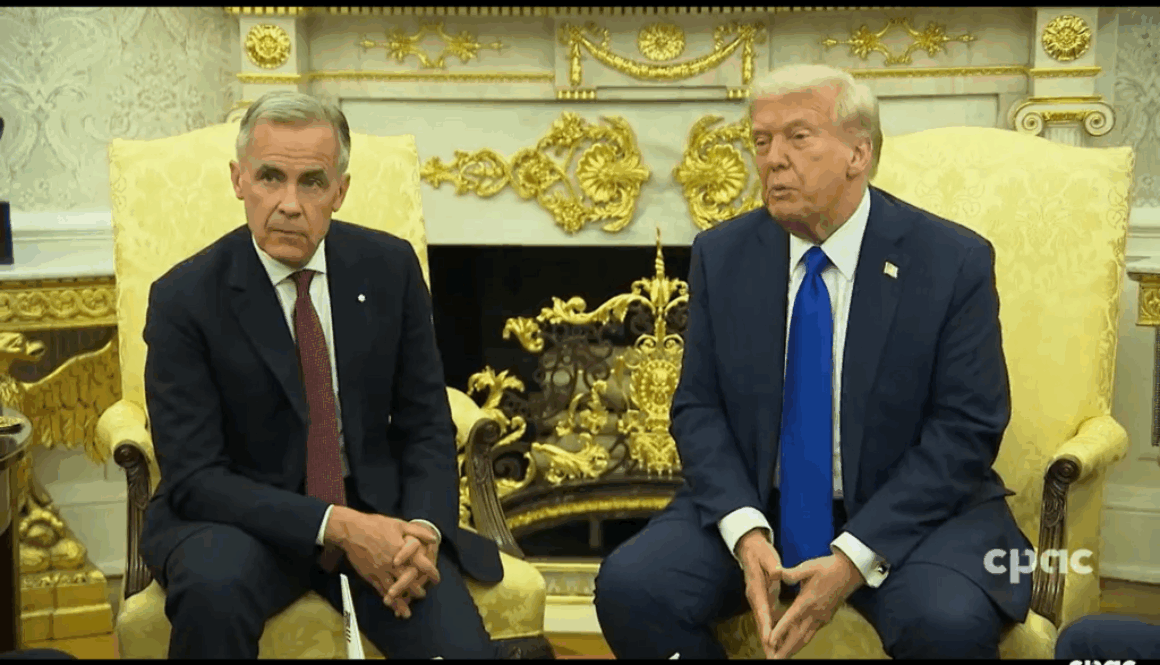
Since the deal tanked, there has been hostile rhetoric from President Donald Trump who has gone as far as to change the name of Lake Ontario to Lake America.
Meanwhile, Carney has stressed Canada is moving away from relying on the U.S., pointing to a number of deals with other countries with infrastructure projects and new trade agreements.
Retaliatory tariffs are expected to go into effect, September 8.
On Friday night, Prime Minister Mark Carney announced that Canada’s trade negotiations with the U.S. were suspended. As a result, the U.S. implemented 50% tariffs on $27.6 billion of Canadian goods.
On Tuesday, Finance Minister François-Philippe Champagne said Canada will match the new tariffs dollar for dollar, rate for rate, with additional Canadian tariffs on American goods.
The Acadia newsroom spoke to Thunder Bay Chamber of Commerce President Charla Robinson for a local perspective.
“We’re currently in talks about the unintended consequences of these counter-tariffs,” Robinson said. “We’re talking to our members [local business owners] about their suppliers, and how we can help if their suppliers are from the U.S.”
The federal government has announced additional supports for Canadian workers and businesses affected by tariffs. Robinson says the Chamber is focused on helping local businesses access that funding and meet eligibility requirements.
“I think businesses are concerned. There’s so much change happening with the U.S. administration and whether they are actually going to do what they say they are going to do,” she said. “It’s easy to drive 45 minutes and sell your wares across the border, but now folks might have to start looking for other opportunities.”
Robinson says interprovincial trade is becoming increasingly attractive as the federal government moves to reduce trade barriers within Canada in response to U.S. tariffs.
“A lot of businesses are looking at internal exploring options that maybe they haven’t looked at before. We don’t have as many import-export rules [between provinces] anymore,” she said.
As businesses adjust to the changing trade landscape, Robinson says Canadians will need to remain resilient.
“We’re going to have to dig in because there will be difficult days ahead. But we’re tough, and we’ll get through this. In the spring we were all being really careful about checking our labels, and then we might have gotten a little complacent. Now I feel like there’s a renewed vigor for customers to buy local and for businesses to choose Canadian products. I think that’s a good thing,” Robinson said.
Canada has announced its counterattack to the latest tariffs imposed by the United States.
Finance Minister François-Philippe Champagne said Canada will match the new tariffs dollar for dollar, rate for rate, with additional Canadian tariffs on American goods.
And Champagne made it clear the Liberal government isn’t messing around.
“We will support our workers, our businesses and our industry with whatever it takes, for as long as it takes,” the minister said.
It’s all in response to President Donald Trump’s order to impose 50 per cent tariff on $27.6 billion of Canadian goods effective Aug. 22.
Effective Sept. 8, Canada will impose counter tariffs of 15, 25 and 50 per cent on products drawn from those targeted by U.S. Section 338 and Section 232 tariffs.
The rate for each product will match the corresponding U.S. rate.
The counter tariffs will apply to products covering $27.6 billion in imports from the U.S., focusing on sectors such as steel, dairy, appliances, agricultural equipment, pulp and paper and electronics.
The government said these sectors are most affected by U.S. tariffs.
According to the federal government, goods subject to 50-per-cent counter tariffs include steel and aluminum products that were previously subject to a 25-per-cent counter tariff.
Furniture and clothing will also be subject to the 50-per-cent rate.
Goods subject to 25-per-cent tariffs include appliances, dairy products, such as cheese, fish and seafood, and certain steel and aluminum derivative products.
Other existing counter-tariffs against the U.S., including autos, remain in place and Canada’s tariff remission framework also remains available to assess requests for exceptional relief.
Additional support for Canadian workers and businesses affected by tariffs was also announced.
A $7.5-billion package will be introduced to bring new measures to assist workers and businesses.
That’s on top of the nearly $25 billion the federal government has provided since the United States implemented tariffs on Canada.
This package includes:
An additional $1.5-billion investment through the Regional Tariff Response Initiative, delivered by Canada’s regional development agencies, to help small and medium-sized enterprises, including liquidity supports to manage the pressures related to tariffs.
A new $500-million liquidity stream under the Business Development Bank of Canada’s Pivot to Grow program to help businesses manage immediate cash-flow pressures in addition to targeted programs for the forestry, steel and aluminum sectors.
Broadened access to the Business Development Bank of Canada’s tariff-related programs by lowering the minimum revenue requirement for applicants to $1 million.
An additional $2-billion investment through the new Canada Strong Diversification Fund, to support tariff-affected businesses with shovel-ready projects that support ongoing capital maintenance. This new initiative will work closely with RDA programming for project intake and triage.
A new suite of $3.5-billion Rapid Response Supports for Workers and Employers to help Canadians affected by tariffs. This will help workers access income support when they need it through extended and additional EI temporary flexibilities; and support their transition into new opportunities through new investments in training delivered in the workplace and enhancements to JobBank.gc.ca. This will also help employers keep their workforce through a difficult period with the help of the new Worker Retention and Retraining Program.
New flexibilities to the Large Enterprise Tariff Loan facility, administered by the Canada Enterprise Emergency Funding Corporation.
As the trade war between the U.S. and Canada develops at a rapid pace, Nova Scotia Premier Tim Houston and New Brunswick Premier Susan Holt say they are ready to support Canada with the next move.
Holt says some businesses have been hit with an “unjustified tariff that will hurt our economy, workers and families.”
“New Brunswickers have been fiercely loyal to our local businesses and producers. Now, more than ever, we need to double down on buying local and supporting New Brunswick businesses and workers.”
Meanwhile, N.S. Premier Tim Houston says he is ready to support and work with Prime Minister Mark Carney on his next move.
Houston says they will do everything possible to protect “the massive number” of Nova Scotians and Canadians affected by the latest round of tariffs from the U.S. and President Donald Trump.
“It’s clear that we cannot trust or rely on the United States as we once did. This reality must make us more determined than ever to make Nova Scotia and Canada stronger,” says Houston in a written statement.
Trade talks broke down ahead of the deadline Friday night, the Prime Minister said it was because of changes that were “unfair, uneconomic, and called into question the reliability of any deal.”
Canada announced they will hit back with dollar-for-dollar retaliatory tariffs the day after Labour Day. For more on that, click here.
The U.S. has said they will hit $28 billion of Canadian goods with 50 per cent tariffs, a tax as the products enter the U.S.
Building resilience
Houston says one of the best ways for Nova Scotia to become more independent of the U.S. is developing our own energy and natural resources, as well as “finding new markets for Nova Scotian goods and services.”
“We have tremendous opportunities and I am fully committed to seizing them,” he says.
“Building up Nova Scotia is the only true path to protecting our future. Potential doesn’t build hospitals and roads. Turning potential into reality does.”
Houston says we need to find common ground to get this work done, to “make ourselves stronger and protect our future.”