Valley Waters renews call for fairer regional cost‑sharing
As municipal elections approach, the Village of Valley Waters is intensifying its call for changes to regional designations and funding models.
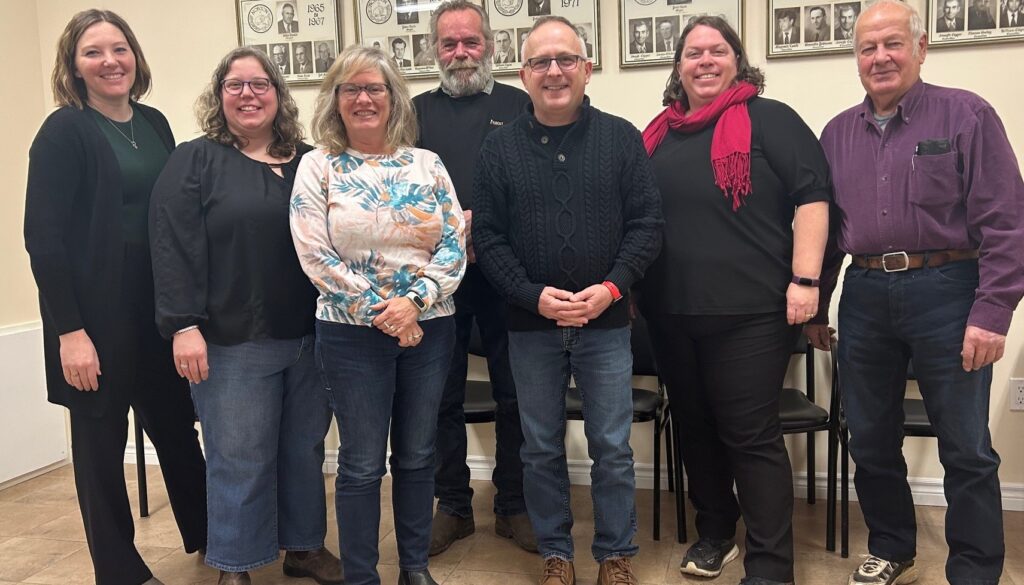
In early March, Mayor Randy McKnight and the council released an open letter addressed to the community.
The letter outlined the village’s push for a fairer distribution of regional service costs and more flexibility to prioritize municipal mandates that better reflect local needs.
In an interview with Acadia Broadcasting last Tuesday, McKnight said the municipality supports contributing to regional services, provided they bring “value to the community.”
However, McKnight and the council argue that community contributions should match the level of service residents receive.
“The way things are set up, everything from solid waste to recreation, we pay far more than what we receive in benefits back to the community,” he said.
McKnight said that following the 2023 local government restructuring, the Kings Regional Service Commission’s budget increased 77 per cent, largely due to new mandates and staff additions.
At the same time, the KRSC — now made up of Valley Waters, Sussex and Butternut Valley — saw its population and tax base shrink after boundary changes, including Hampton’s move to the Fundy Regional Service Commission.
The increase in costs and decrease in tax base created “the perfect storm,” McKnight said.
Under the current funding formula — 50 per cent based on tax base and 50 per cent on population — McKnight said Valley Waters is responsible for 23 per cent of the costs of the Sussex Library and the Nutrien Civic Centre.
However, the village’s letter notes Valley Waters residents represent only about 4 per cent of users at the Nutrien Civic Centre.
“In effect, we are forced to subsidize other communities in the region,” McKnight said.
He added that the facilities are difficult for residents to use because they are nearly 30 kilometres from the village, leaving them underused by the community.
According to the letter, Valley Waters’ contribution to the two facilities will reach $137,000 in 2026.
As affordability concerns rise, McKnight said the village is trying to consider the overall tax burden on residents.
To ease that burden, he said the municipality has had to scale down some local plans.
The letter notes McKnight and the council would like to invest in their own recreation assets, such as the Belleisle Community Pool.
However, given the KRSC’s past and current governance practices, McKnight said the municipality often feels it has little influence over which facilities are designated as regional services or how the associated funding is allocated.
Because of this, the municipality has spent the last couple of years advocating for a fairer distribution of the tax burden among KRSC members, along with more transparent decision‑making around regional service funding.
The village has pursued legal and legislative avenues — including applications to the N.B. Local Governance Commission, the Ombudsman, and provincial elected officials — with little success, McKnight said.
As municipal elections approach, he said the council felt it was important to update residents on where the municipality stands and the advocacy work they intend to continue.
KRSC is open to talks but defends its current regional services
John Jarvie, the trustee of the KRSC, said the commission understands Valley Waters’ concerns but believes the regional services should remain, as they are public services that residents do use and are available when needed.
“There are other kinds of services that governments provide that everybody doesn’t use, but they are there and available,” Jarvie said.
He said the commission is following longstanding practices, but added that exploring a different funding formula would not be off the table if municipalities wish to pursue it.
Jarvie said there may also be room to designate a new or different regional facility, but — as with changing the funding model — municipalities would need to work through the process together and reach consensus.
“It needs to be recognized that to get changes, [Valley Waters] has to work with the other people in the region,” he said.
“If things don’t exactly evolve the way that they would like, they still have obligations, and one of those obligations would be to continue to participate.”
Government says reforms and upcoming review will guide future changes
Acadia Broadcasting reached out to the Department of Environment and Local Government, which did not provide an interview.
In an email statement sent Wednesday last week, spokesperson Vicky Lutes said the government remains committed to “ensuring the local governance framework functions effectively for local governments, rural districts and other partners across the province.”
She said that commitment is reflected in a broader fiscal reform framework that took effect Jan. 1, which increases funding available to local governments over the next five years and supports their capacity to deliver services and respond to community priorities.
Lutes said the department has also commissioned a review of the effectiveness of regional service commissions, with results expected in the coming weeks. The findings will help inform future considerations related to the regional service delivery model.
She added that the department remains committed to supporting regional collaboration and encourages local governments to work through their regional service commissions on shared priorities.
“The department also remains open to local governments on opportunities to strengthen the current model,” she said.
What’s next
McKnight said he and the council plan to reoffer in the upcoming elections because they believe their work is not done.
He said the main challenge has been an unwillingness at the provincial level to consider alternative regional funding models and service designations.
However, McKnight said he and the council are seeking re‑election not only to continue advocating on regional issues, but also to focus on improving the community locally — including exploring housing affordability initiatives and addressing other concerns raised by residents.