New crisis response program launching in Greater Moncton
A new crisis response program is set to change how mental‑health and addiction calls are handled in Greater Moncton.
The one‑year pilot will begin daytime patrols on March 11 through a partnership between Horizon Health Network, Vitalité Health Network and the Codiac Regional RCMP.
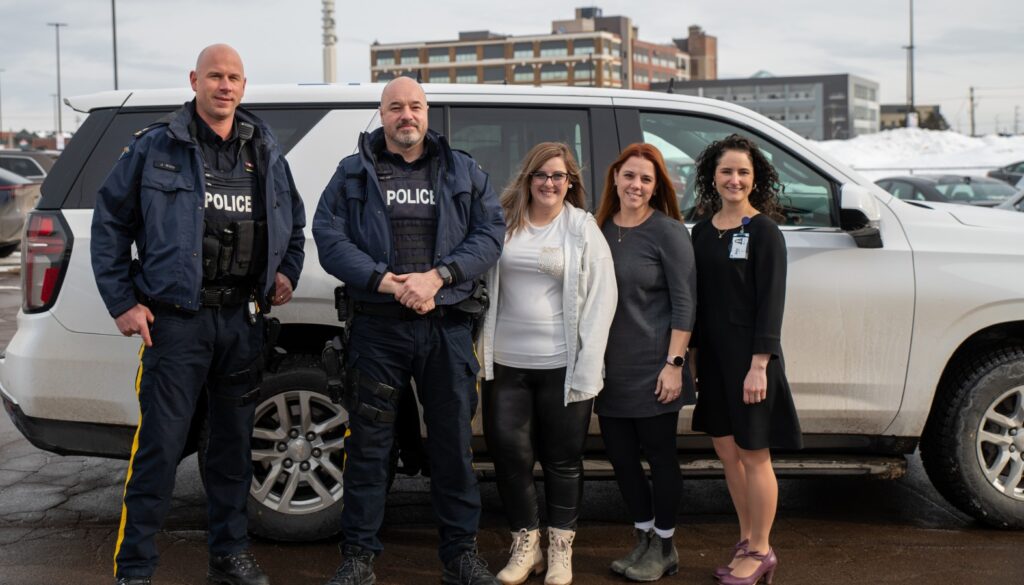
The initiative pairs a social worker with an RCMP officer in an unmarked vehicle.
The unit will respond to situations involving emotional distress, addiction concerns, mental‑health challenges and other complex social needs in Moncton, Dieppe and Riverview.
Both health networks say the goal is to reach people earlier and offer support before situations escalate.
Horizon said the model combines clinical expertise with community‑based policing.
“Car 67 brings together the unique skills of highly trained social workers and experienced RCMP officers, creating a team that can respond effectively to complex situations in the community,” said Amy Whiting, program manager of Addiction and Mental Health Services at Horizon.
Whiting said the approach helps the unit connect with people earlier, deliver timely interventions and improve outcomes.
Vitalite explained the program uses a preventative, community‑focused approach by engaging with the public, identifying concerns and offering support when needed.
“This approach reflects our desire to expand outreach programs to meet people where they are,” said Valérie Saulnier, interim director of Adult Community Mental Health and Addiction Services at Vitalité.
Saulnier added that the initiative also demonstrates the RCMP’s commitment to working collaboratively with mental‑health and addiction services to better support vulnerable populations.
The RCMP said the partnership strengthens its ability to respond compassionately to people in crisis.
“By working side by side with our mental health partners, we are able to provide more compassionate, timely and effective support to individuals in crisis,” Insp. Jonathan White, officer in charge of operations for the Codiac Regional RCMP said.
He said the model helps ensure people receive the right care at the right moment and could serve as a framework for other communities in New Brunswick.
The program is the first of its kind in the province and is inspired by a similar model in British Columbia.
The pilot is supported by the New Brunswick Department of Health, and the Friends of The Moncton Hospital Foundation provided funding for mobile emergency response training.
Both health networks stated that the initiative complements existing mobile crisis services already operating in the region and aims to reduce stigma, improve understanding of mental‑health needs and strengthen collaboration between health services and police.