Sam Goldstein is a 2025 graduate of the Seneca Polytechnic journalism program. Sam’s great passions are for history, politics, and food. Born and raised in Toronto, he works as a multimedia journalist in Thunder Bay. You can reach him at goldsteins@radioabl.ca.
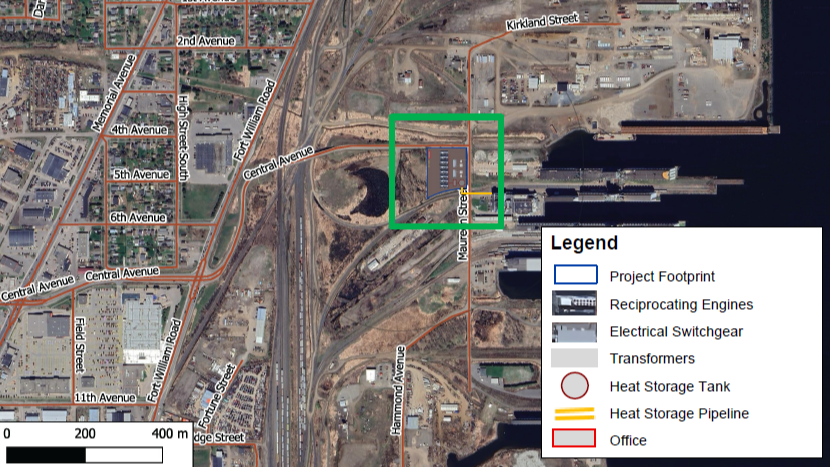
Versorium Energy Ltd. is an Alberta-based company proposing the construction of a new natural gas facility at the intersection of Maureen Street and Central Avenue.
The proposal comes in collaboration with Interflex Ltd., which will be responsible for engineering, procurement, and construction of the proposed facility, and Canada Malting, which will be buying the waste heat generated by Versorium for use in their malting process.
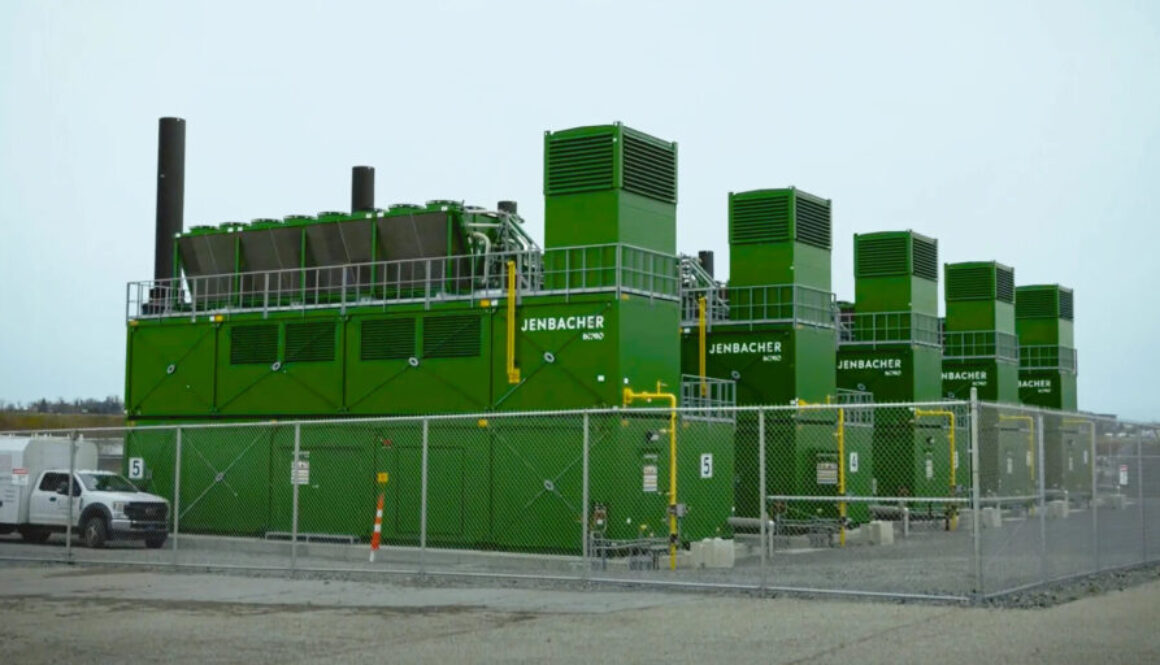
The project is estimated to cost between $50 and $80 million to construct and will generate 31 megawatts of electricity for the local grid using eight natural gas engines.
Jeff Trynchy, Manager of Stakeholder and Community Engagement and Public Relations for Versorium, says the city can benefit from the project. “It helps boost economic activity to local businesses. Obviously we’re enhancing the grid reliability and developing energy locally. We’re also big supporters of the community in our long-term operation.”
Trynchy explained that the operation could run for at least 20 years, with the possibility of extending the project with new engines down the line. “It’s just a great project for the community in general,” he added.
If the project goes forward, Trynchy expects 15-20 jobs to be generated during the construction process, which would take approximately one year. During the operation of the facility, the city can expect two or three jobs at the site.
A plan of the facility and its possible location. (Versorium Energy Ltd.)
Chris Codd is the vice president of asset development and regulatory at Versorium. He says different types of pollution will be emitted from the facility: “one is noise, and there are strict requirements within Ontario to ensure we’re not making too much noise for nearby residents. The current design we expect to comply completely with those requirements.”
Another source of pollution is greenhouse gases. Codd says that even with greenhouse gas emissions, the facility will still be a net-positive. “Not only are we offsetting emissions associated with Canada Malting’s operation and how much fuel they would need to use in their boilers, but we’d also be offsetting emissions elsewhere in the province to bring other generation into the northwest as demand grows here.”
The final form of pollution would be Nitrous Oxides, but Codd says the actual amount will be low thanks to selective catalytic reducers installed on the engines. “That will mean the Nitrous Oxide output is very, very low for the facility and will comply with all requirements in Ontario for this type of facility,” Codd assures.
Chris Codd, Vice President of Asset Development and Regulatory, and Jeff Trynchy, right, Manager, Stakeholder and Community Engagement and Public Relations, at an open house on Wednesday for Versorium Energy Ltd.’s project at the Slovak Legion, September 24, 2025.
The timeline for Versorium to develop an energy facility spans years. On Tuesday, they presented themselves to Thunder Bay City Council’s Growth Standing Committee. The business will require a municipal support resolution to proceed.
Versorium Energy Ltd. must also bid for the contract with the Ontario government. Should the company receive municipal support and be awarded its contract, construction is expected to begin in late 2027 and be completed by late 2028 or early 2029.
Thunder Bay police have closed Hudson Avenue between Otto and Toledo Streets while they investigate a collision.
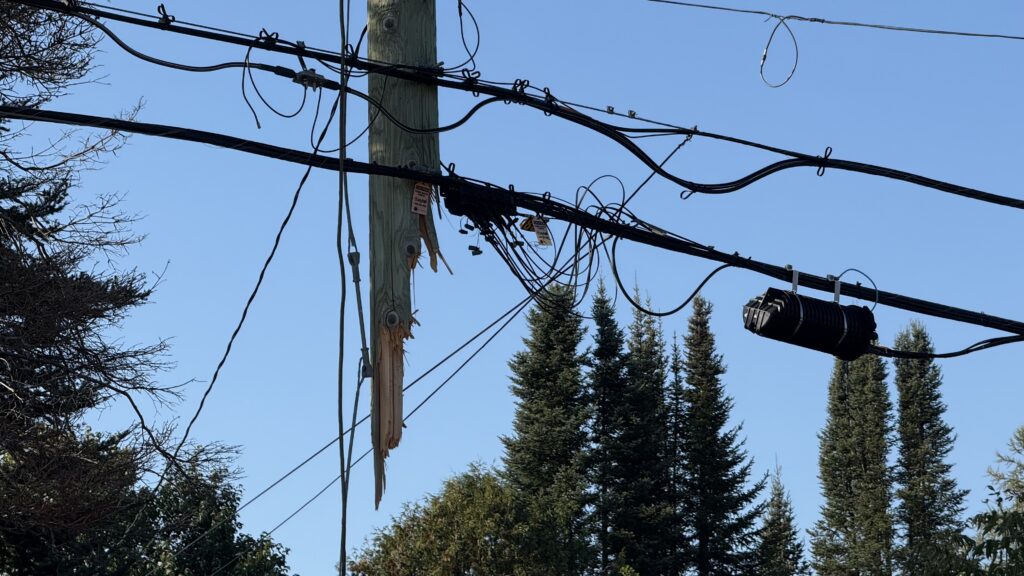
On Thursday at around 2 a.m., a Ford F-150 collided with a bus shelter, two power lines, and eight vehicles.
So far, no injuries have been reported.
This is an ongoing story, and may be updated as more information comes to light.
Eight vehicles sustained varying degrees of damage from the collision. September 25, 2025Debris and broken glass from a destroyed bus shelter cover the street. September 25, 2025Workers at the scene collect miscellaneous car parts and debris. September 25, 2025The lower half of a power pole is knocked over, leaving the upper half suspended by wires. September 25, 2025
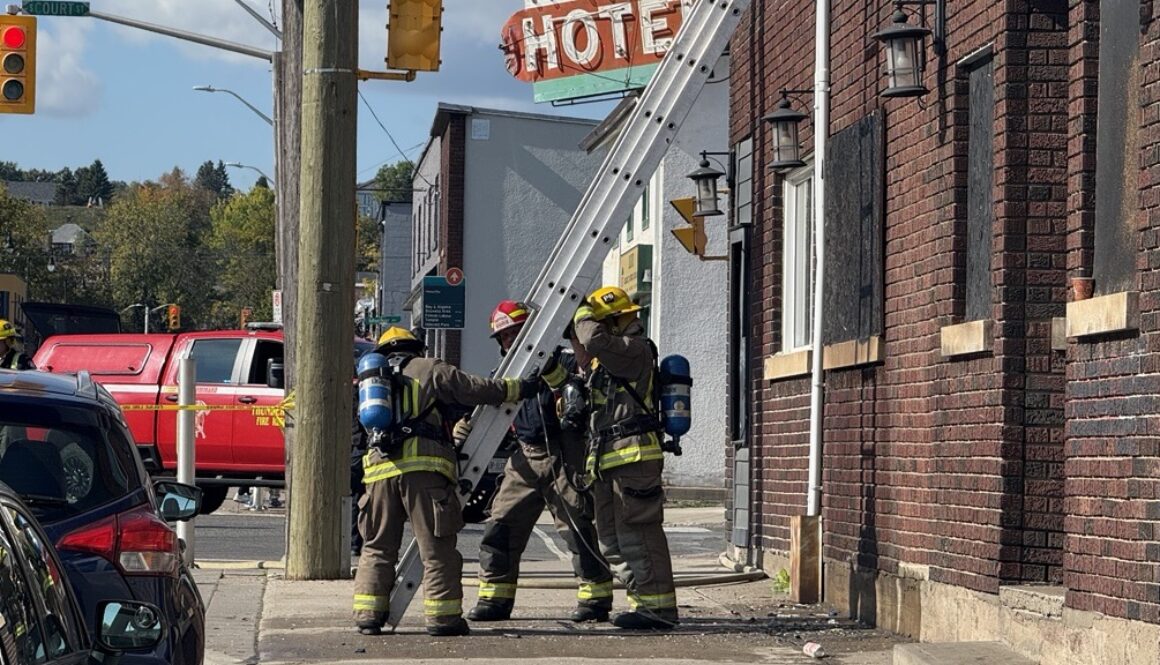
Fire crews responded to an emergency at the Royalton Hotel on Wednesday.
Platoon Chief Jo Rucchin of Thunder Bay Fire Rescue says the cause of the fire is still unknown.
“It was a fire of some significance on the second floor,” Rucchin said.
Scorched windows at the Royalton Hotel. September 24, 2025.
There were no injuries, and everyone in the building was successfully evacuated.
One wiener dog had to be rescued by fire crews, but the dog was given oxygen, checked over by the firefighters, and ultimately returned to his owner in good health.
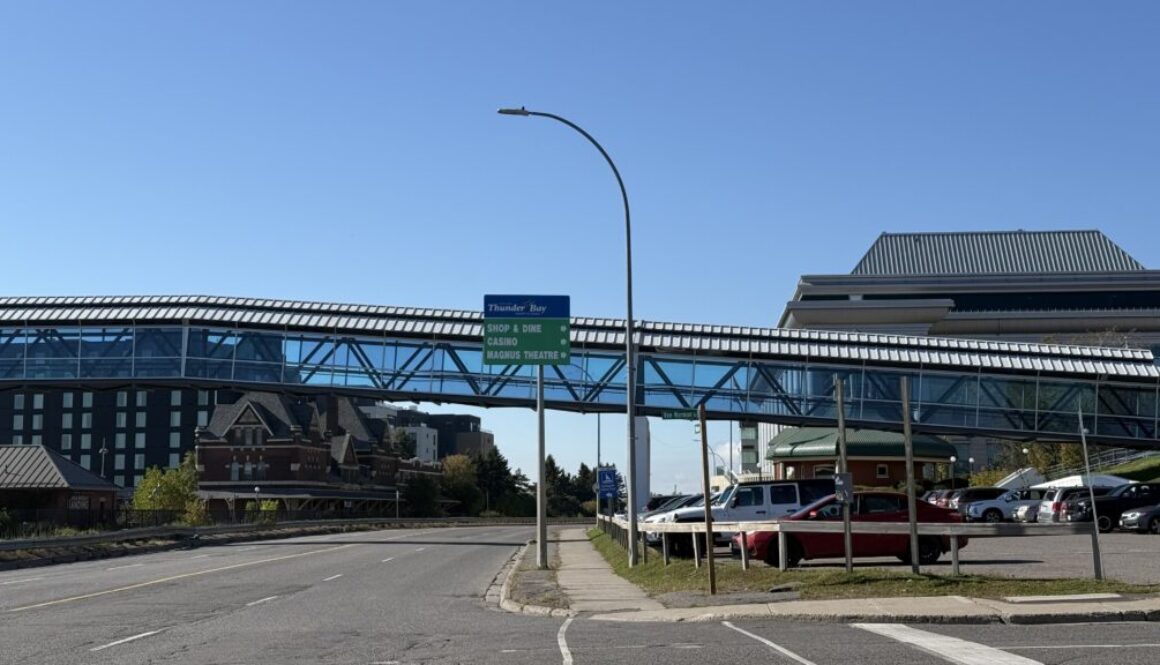
The city government is moving forward with a plan to close the Marina pedestrian overpass between the hours of 11 p.m. and 6 a.m. every night.
City administration justified the decision with concerns of vandalism, loitering, and general cleanliness.
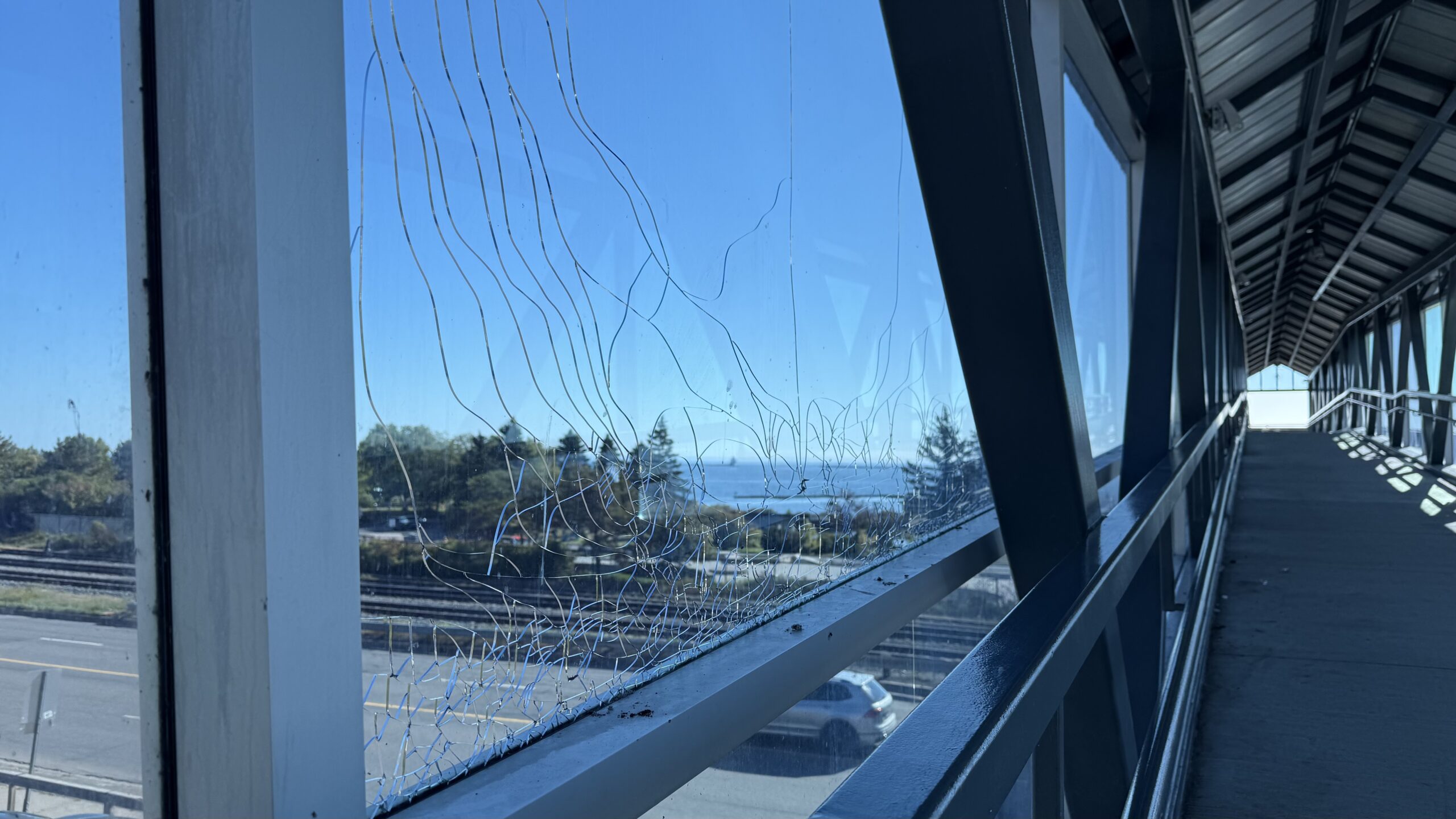
The decision is also motivated by repair costs: since 2021, seven panes of glass have required replacing, each costing $4,500. An additional 15 glass panes are damaged but not yet to the point of replacement.
Several glass panes along the overpass are in varying states of disrepair. Taken September 24, 2025.
The decision was discussed at the city’s first Quality of Life standing committee on Tuesday.
“I actually use this overpass quite often… I don’t think I’ve ever seen it really clean,” said Councillor Shelby Ch’ng during the meeting.
Referring to the broken glass, she remarked, “It’s quite disheartening because I know how much we’ve spent on this.”
Fences and gates will be installed to keep the overpass inaccessible while closed.
When asked about surveillance, City Manager John Collin stated that he expects the city to consider installing cameras at the site in the coming months.
The Department of Infrastructure and Operations, which proposed the closure, consulted with local businesses before recommending the change. Signage will be posted at the overpass to direct pedestrians to the alternative ground-level crossings at Pearl Street and Camelot Street.
The overpass could operate with a different schedule during special events at the marina.
Minister of Justice Sean Fraser introduced the Combatting Hate Act on Friday. If passed, it will amend Canada’s criminal code to address rising incidences of hate crimes over the past few years.
Specifically, the proposed legislation will make it a crime to intimidate or obstruct people from accessing places such as schools, community centres, and places of worship that are associated with specifically identifiable groups of people.
The law will also attempt to more clearly define hate as a motivation for crimes and make it criminal to promote symbols of hatred.
These symbols include Nazi symbols and symbols associated with groups the government classifies as terrorists.
“We cannot ignore hate in our communities and expect that it will not fester,” said the minister at a press conference introducing the new act.
“If we do not take action, we will be responsible for the hate that will continue to impact communities across this country.”
Responding to questions from the press, the minister clarified that “bubble zones,” which cities such as Toronto have codified as areas where protest is banned, will not be addressed by the legislation.
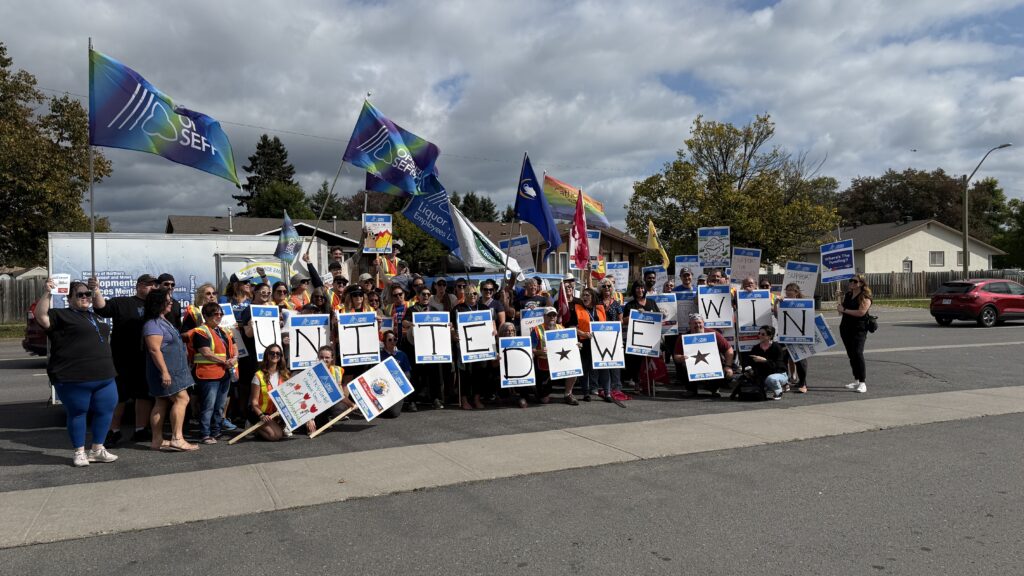
Members of the Ontario Public Service Employees Union (OPSEU) met outside the office of Kevin Holland, MPP for Thunder Bay-Atikokan to protest the provincial government’s public service cuts.
While tens of thousands of OPSEU members are currently on strike as Ontario public college support staff, an additional 150,000 members in sectors including teaching and healthcare are currently in bargaining with the province.
At the center of OPSEU’s conflict with the Ontario government is Bill 124, which in 2019 limited pay increases for public sector workers to 1% annually. Though the law was repealed after Ontario courts ruled it unconstitutional last year, public service employees continue to feel as though they’ve fallen behind after years of high inflation rates.
OPSEU strikers rallying outside the office of Kevin Holland, MPP Thunder Bay-Atikokan, September 17, 2025
An attack on working people
Representatives from OPSEU consistently voiced the belief that these provincial cuts to public services are designed to bring about the degradation and privatization of public services.
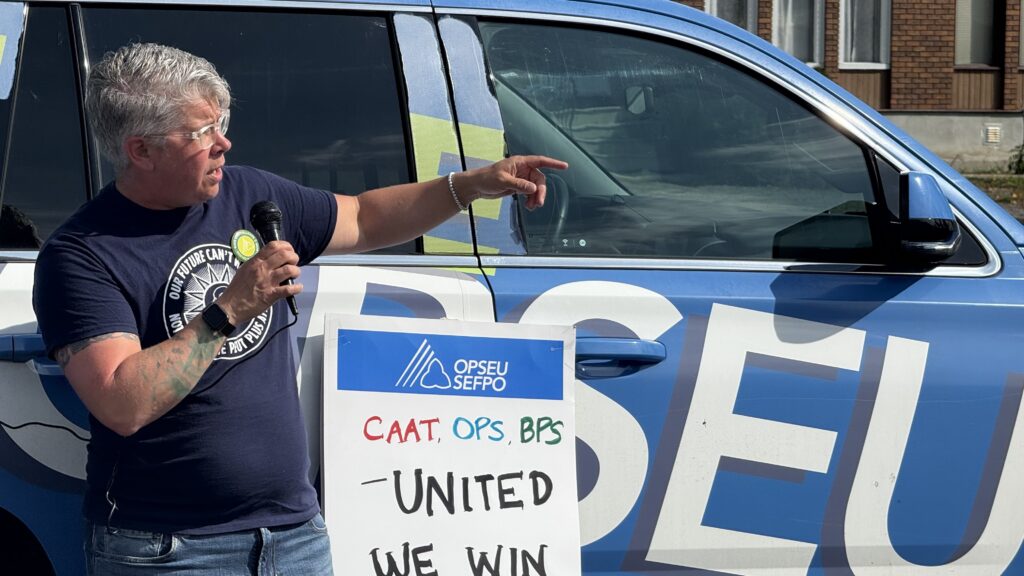
“We’re very concerned that they’re about to try to close colleges or privatize colleges,” said OPSEU president JP Hornick. “Meaning more and more students are going to get left behind.”
Hornick referenced the closure of 650 public college programs: “This is something that should be striking fear in the hearts of Ontarians.”
JP Hornick, president of OPSEU, at a rally outside Kevin Holland’s office on September 17, 2025.
Carlos Santander-Maturana, president of the Thunder Bay and District Labour Council, echoed the feelings of Hornick. Asked about the public service cuts, Santander-Maturana pointed to the high inflation rates of the past few years – particularly in areas of basic necessity like food.
“Rent is skyrocketing, mortgages are high, and it’s very difficult for workers to make ends meet. Many of them have to start looking for a second or third job in order to pay the bill, so any cuts to wages and salaries are going to be felt by working families.”
“There is no question this is an attack on working people,” continued Santander-Maturana.
NDP MPP Lise Vaugeois, representative for Thunder Bay-Superior North, attended the rally in support of OPSEU. In alignment with the general theme of the day, she accused the Ford government of underfunding colleges with calculated purpose, with spending cuts “to the tune of at least $10,000 per student.”
A particularly stinging loss for Thunder Bay was the now-cancelled culinary program at Confederation College, which Vaugeois said was important for restaurants in the community.
Nobody’s Listening
Asked whether OPSEU had heard anything from the office of MPP Kevin Holland, JP Hornick stated they’d heard “nothing but crickets.”
“He’s not very keen on meeting with people who will have opposing political points of view,” said Carlos Santander-Maturana.
This reporter contacted the office of MPP Kevin Holland for a response, but at press time had yet to receive a comment.
Owen Smith, president of OPSEU Local 731, in a costume outside the office of MPP Kevin Holland on September 17, 2025.
President Owen Smith of OPSEU Local 731 could be seen in a tongue-in-cheek costume meant to call out CEO Graham Lloyd of the College Employer Council. OPSEU’s negotiations with the College Employer Council have been at a standstill for more than a week.
Asked whether he felt the provincial government was listening, Smith said no. “It’s sad that it seems to be falling on deaf ears, that we have to go on strike to get people to take notice.”
Smith maintains that the striking OPSEU public college support staff want to go back to work.
“People are falling behind… it’s unfair,” said Smith. Referencing the 10,000 layoffs of public college support staff, representing one-fifth of staff in the sector, Smith said workers were stressed by the large reduction in staffing.
“We’re trying to do more with less… Overtime is not allowed in most departments. So how do we keep up? We can’t. Things are going to fall through the cracks for us, and specifically at colleges, students are going to fall through the cracks.”
Ontario’s Liberal Party leader Bonnie Crombie resigned yesterday after only 57% of her party expressed support for her leadership.
While 57% may seem like a lot, Dennis Pilon, Chair of the Department of Politics at York University, argues it’s a poor showing: “I think people feel that the leader needs not just the majority, but a significant amount of support.”
Now, the Ontario liberals will have to choose a leader for the third time since 2018, following three third-place defeats. Dr. Pilon believes that losing her own riding was a big factor in Crombie’s downfall. “It’s really hard to retain the leadership of a party when you’re not in the house… obviously not winning the election is a failure, but not even winning your seat is even lower,” Pilon says.
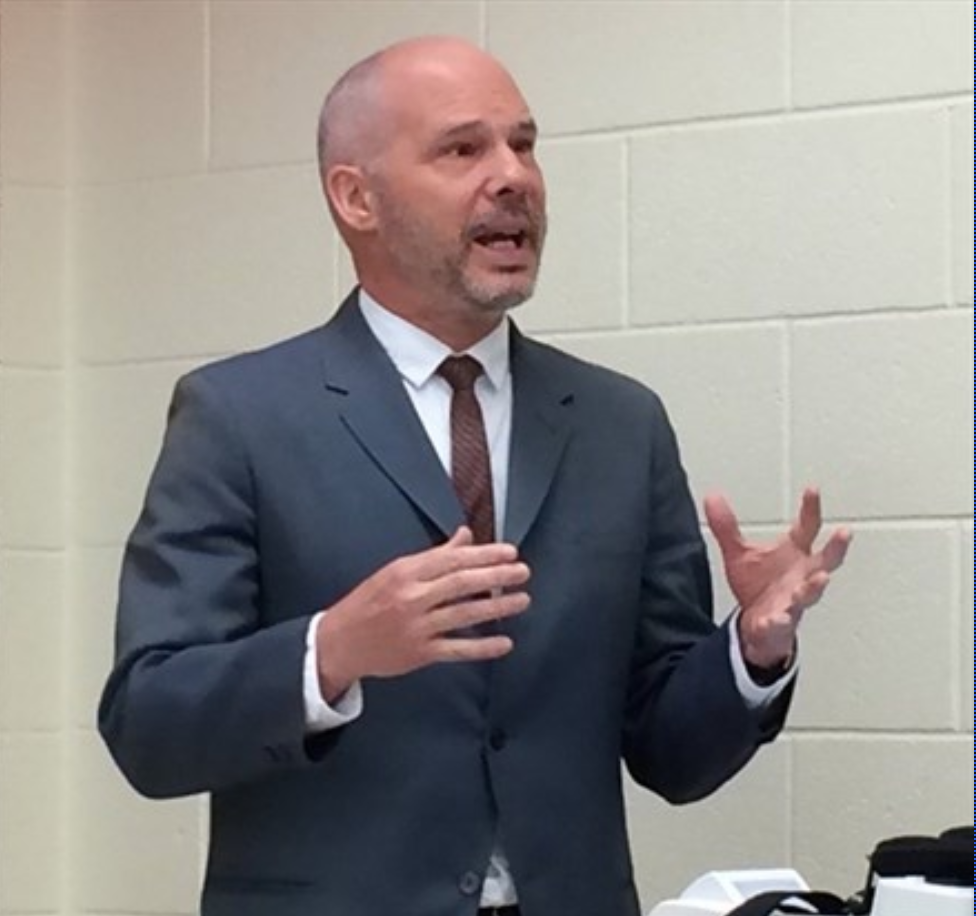
Dennis Pilon, Chair of the York University Politics Department.
Voter turnout matters
Ontario’s 2025 election saw 45% of eligible voters show up to the polls… up 1% from 2022. But the two most recent provincial elections have together seen far lower turnout than prior elections: in 2018, turnout was more than 56%.
Dr. Pilon says voter turnout has played an important role in election outcomes.
“In many ways, the provincial government is more important than the federal government. In terms of day-to-day lived reality, the control the provincial government has over health, over education, over the way jobs are regulated: all that kind of stuff is provincial… and yet, people didn’t race to the polls.”
Pilon points out that the province’s Progressive Conservative (PC) Party has a very satisfied and loyal group of voters, while the other parties are currently more dependent on their voters’ willingness to support them.
“Basically, it was an election about Doug Ford. He was larger than life: people knew who he was, they had a sense of what he was about. The others? Yeah. You know, they just didn’t have a sense of who these people were, and what they represented.”
Who will lead the Liberals going forward?
“You’re asking the 64 million dollar question,” Dr. Pilon said when asked who may lead the Liberals. “A great deal of analysis of elections is really kind of alchemy. Nobody knows exactly what triggers a shift in the public sense of which way the wind is blowing.”
Dr. Pilon believes Bonnie Crombie appeared on paper to be an ideal candidate, by blending the Liberal Party’s business and social bases. “She should have been a dream candidate. She should have been able to walk all over Doug Ford.”
But that certainly didn’t happen. “Doug Ford struck a chord with a certain kind of voter. Not because he’s the greatest performer politically, but because he’s the most authentic performer,” Pilon says.
“He comes across as a real guy that average folks can relate to. You know, maybe that’s what the Liberals and the NDP need to be thinking of in terms of the leadership. Maybe a little less on the polished and university educated, and a little bit more on somebody of the people who’s got some life experience that average voters can relate to.”
The Sustainable CAP is a joint venture between Canada’s federal and provincial governments to help support investments in the country’s agriculture and food (agri-food) industries.
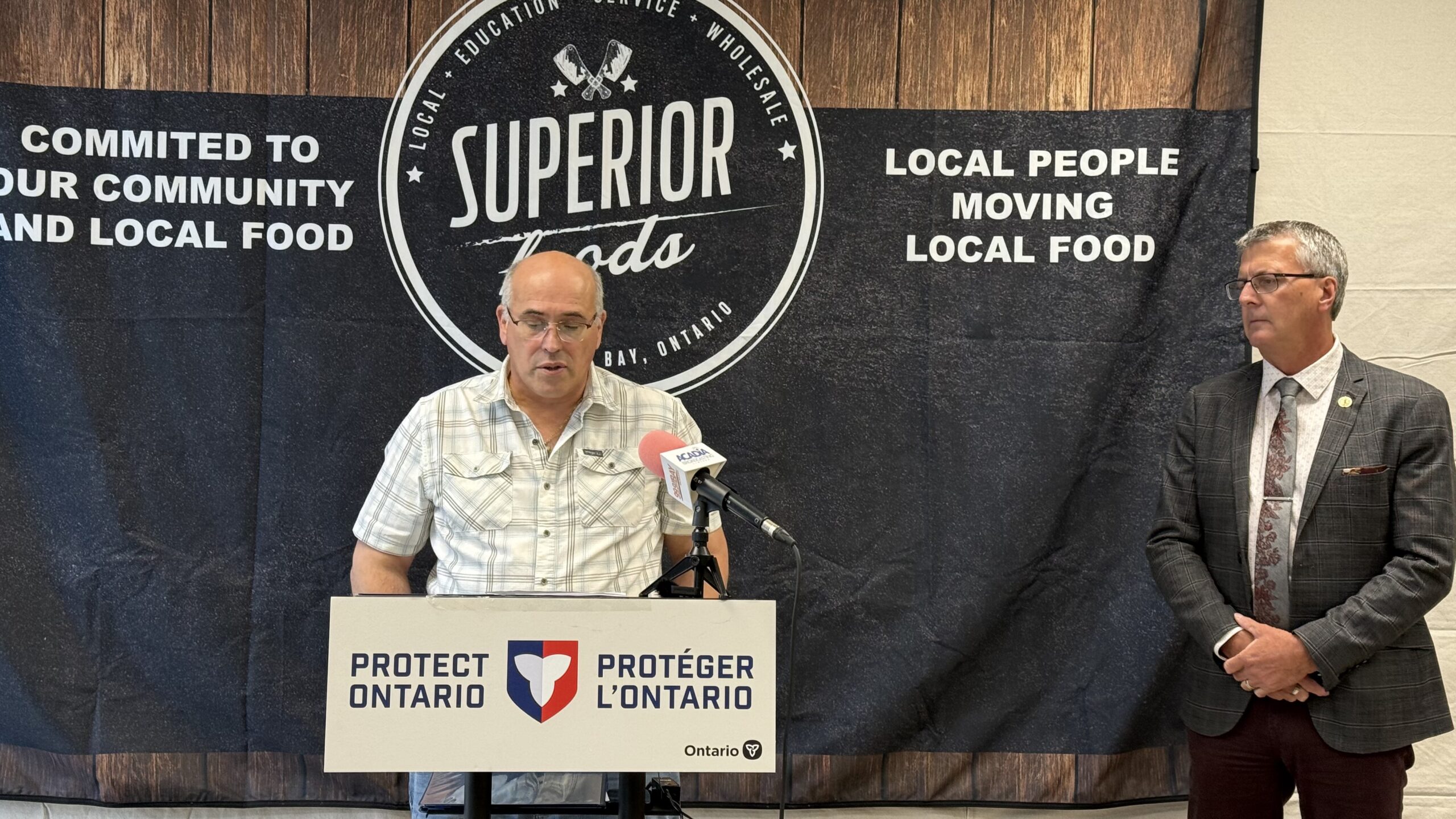
Luis Alves, owner of Superior Foods, was joined by Ontario Associate Minister Kevin Holland on Friday at the business to announce the partnership.
Luis Alves, owner of Superior Foods, pictured left, and Ontario Associate Minister for forestry and forestry products, MPP Kevin Holland (Thunder Bay—Atikokan), pictured right.
The Sustainable CAP’s Food Safety and Growth Initiative is a $4.4 million investment that will cover 50% of a small business investment in food safety, traceability, and general growth of the Agri-food industry up to $75,000.
Mr. Alves of Superior Foods has used the partnership to invest in new meat packaging and labelling machinery, which he hopes will allow the facility to do more business with locals.
“The big opportunity, I think, is in the meat industry,” says Alves. “Thunder Bay is well set with the farmland that’s here, that’s perfect for raising cattle. That’s being underutilized.”
Alves says for the local farmers, the bottleneck to growth is in the city’s processing facilities. He hopes that the new upgrades to Superior Foods allow for more local meat processing.
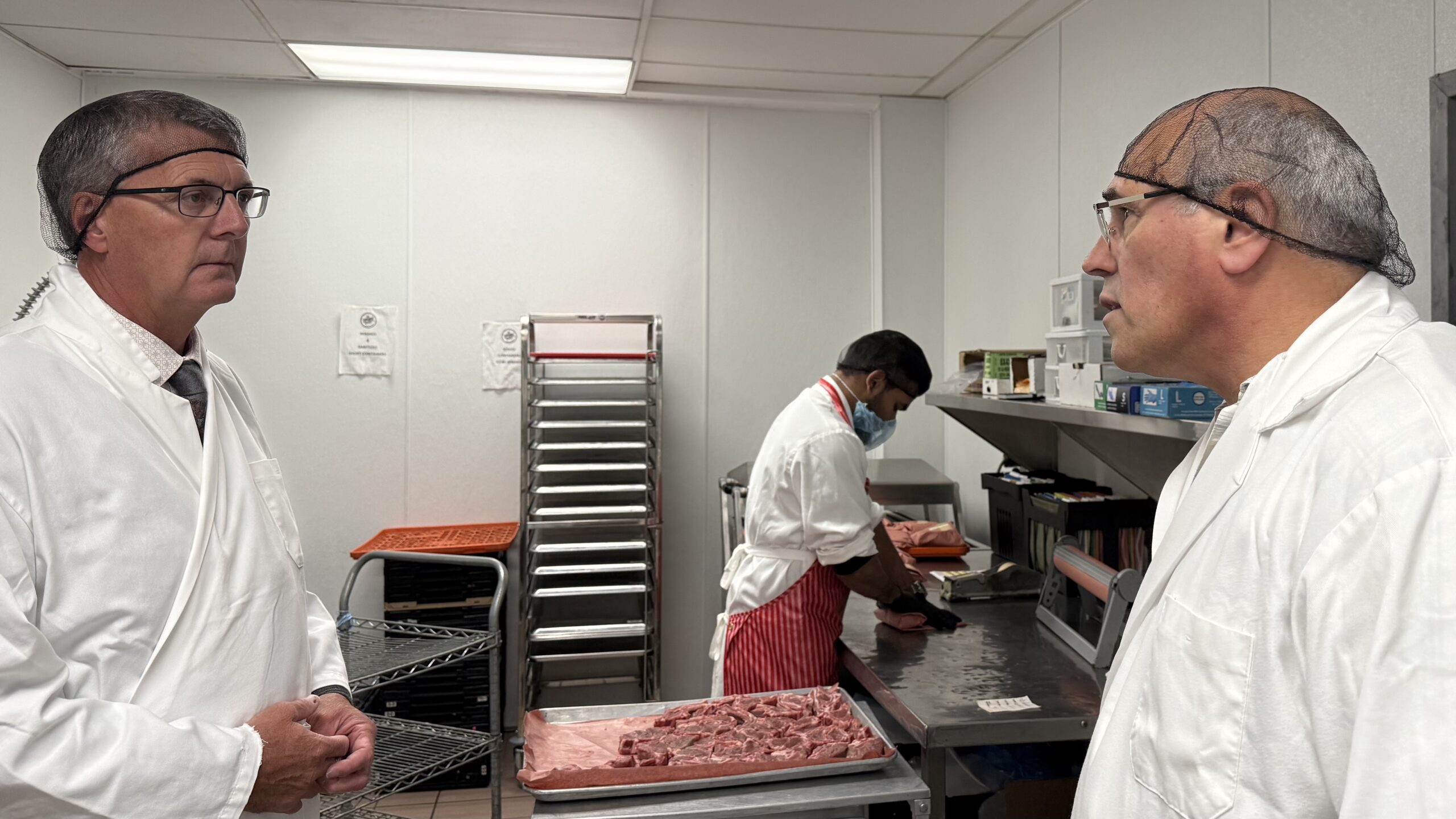
Luis Alves, pictured right, shows Associate Minister Holland, pictured left, the labelling process for meat packages.
The Sustainable CAP was created long before Canada’s trade war with the United States, but it takes on new importance in the current context.
“It’s all about growing our local agri-business here: you know, grow-local-buy-local type things,” says Associate Minister Holland.
He adds, “If we’re growing and selling and consuming local foods, it’s not subject to tariffs. So this is just great to support the Agri-food business in Northwest Ontario and provide them another opportunity to get that beef and pork processed, packaged, and distributed to our stores for consumers.”
Poland, a member of the North Atlantic Treaty Organization (NATO), says 19 Russian drones entered Polish airspace on Wednesday during a massive Russian drone attack on Ukraine.
Now, the country’s allies in NATO are being called upon to deliberate and come up with a response.
NATO’s Article 4 asks that member states come together to consult when one of them feels under threat.
“It’s not something that happens every day,” says Susan Pond, who directs the Glendon School of Public and International Affairs at York University. Article 4 has only been invoked eight times since 1949.
Article 4 was most recently used in 2022, following Russia’s invasion of Ukraine, to determine NATO’s response to the war.
Susan Pond, Director of the Glendon School of Public and International Affairs at York University.
With Article 4 invoked, member nations will convene to exchange information and determine whether or not they feel Russia’s drones were sent into Poland with intention.
“I’m reassured that the allies will want to lower the temperature, while at the same time just making it clear to Russia that this is completely unacceptable.” Director Pond adds.
While the evidence is not yet stacked up, director Pond believes Russia’s incursion was no accident, but “an attempt to test the resolve and the response times of allies.”
What about Article 5?
Article 5 is the most important of NATO’s treatises. It calls upon member states to respond to an attack. It has only been invoked once: on September 12, 2001 by the United States.
When Article 5 is invoked, every country in NATO must reach a consensus before action is taken.
Article 5 has not yet been declared, but there is a possibility – however slim – that Poland could invoke the treaty if it feels sufficiently threatened, bringing NATO into direct conflict with Russia.
Director Pond feels Canadians shouldn’t panic, however. She points to Canada’s new plan to spend up to 5% of our GDP on defence (including 1.5% for infrastructure and other indirect forms of security).
“Canada, I think, and NATO are prepared for any future conflicts. We hope that we don’t have to act, but be reassured: NATO and other allies are going to stand firm with Poland and Ukraine.”