Randy Thoms is a veteran news broadcaster with over 40 years' experience. He is based in Fort Frances and covers stories across northwestern Ontario. Contact Randy at thoms.randy@radioabl.ca.
School children took time on this Remembrance Day to remember those who fought for their freedoms.
Many classes used the weeks leading up to November 11th to learn about the two World Wars and Canada’s involvement.
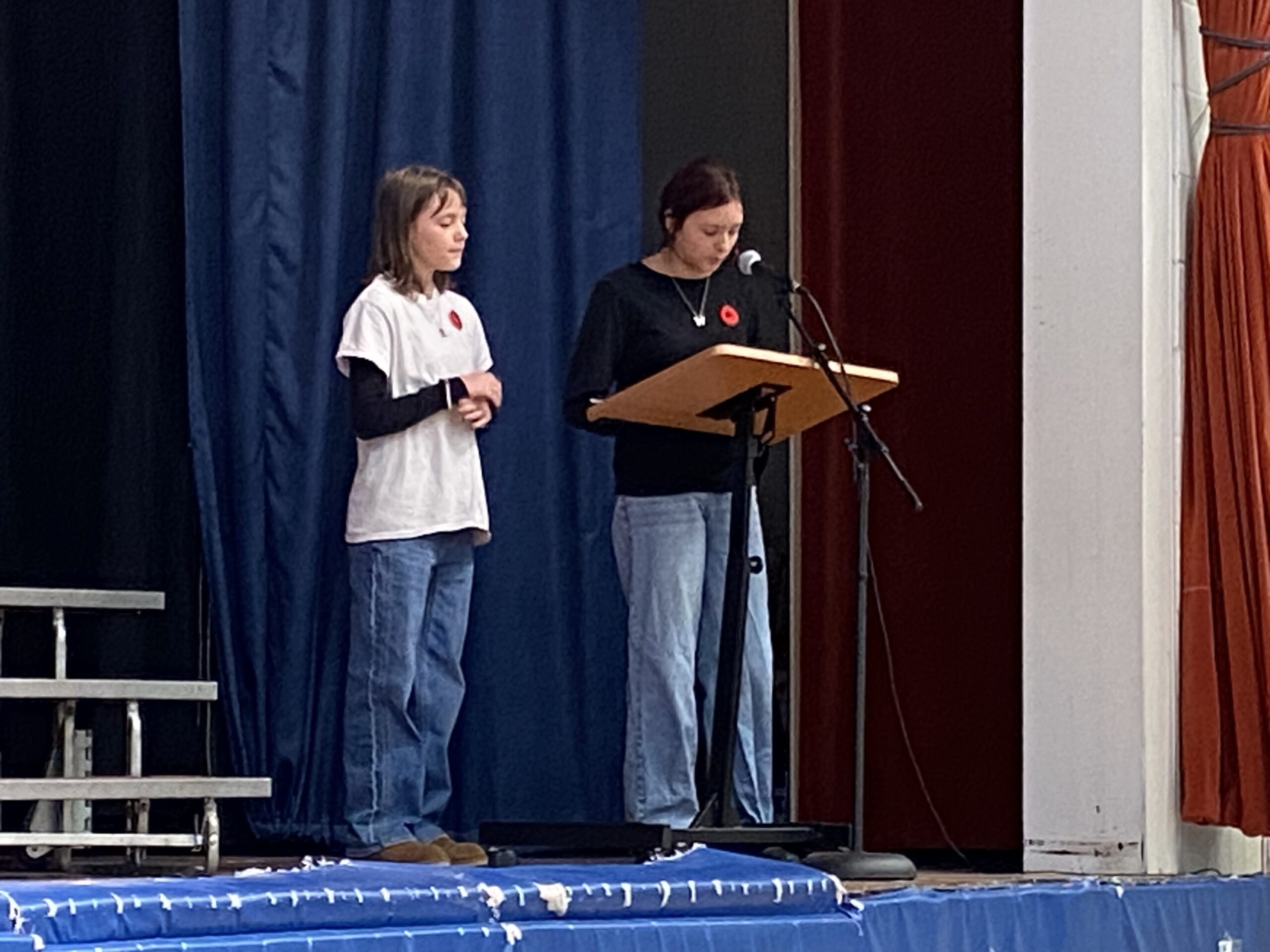
At Robert Moore School, students took part in a Remembrance Day service that included classes reading poems, singing and explaining what peace means to them.
Members of the Royal Canadian Legion provided a Colour Guard, while the Last Post and Reveille were played over the gymnasium’s speakers.
The poem, In Flanders Fields, was cited in French and in English.
Grade 2 students concluded the ceremony by describing what the letters in Remember mean to them.
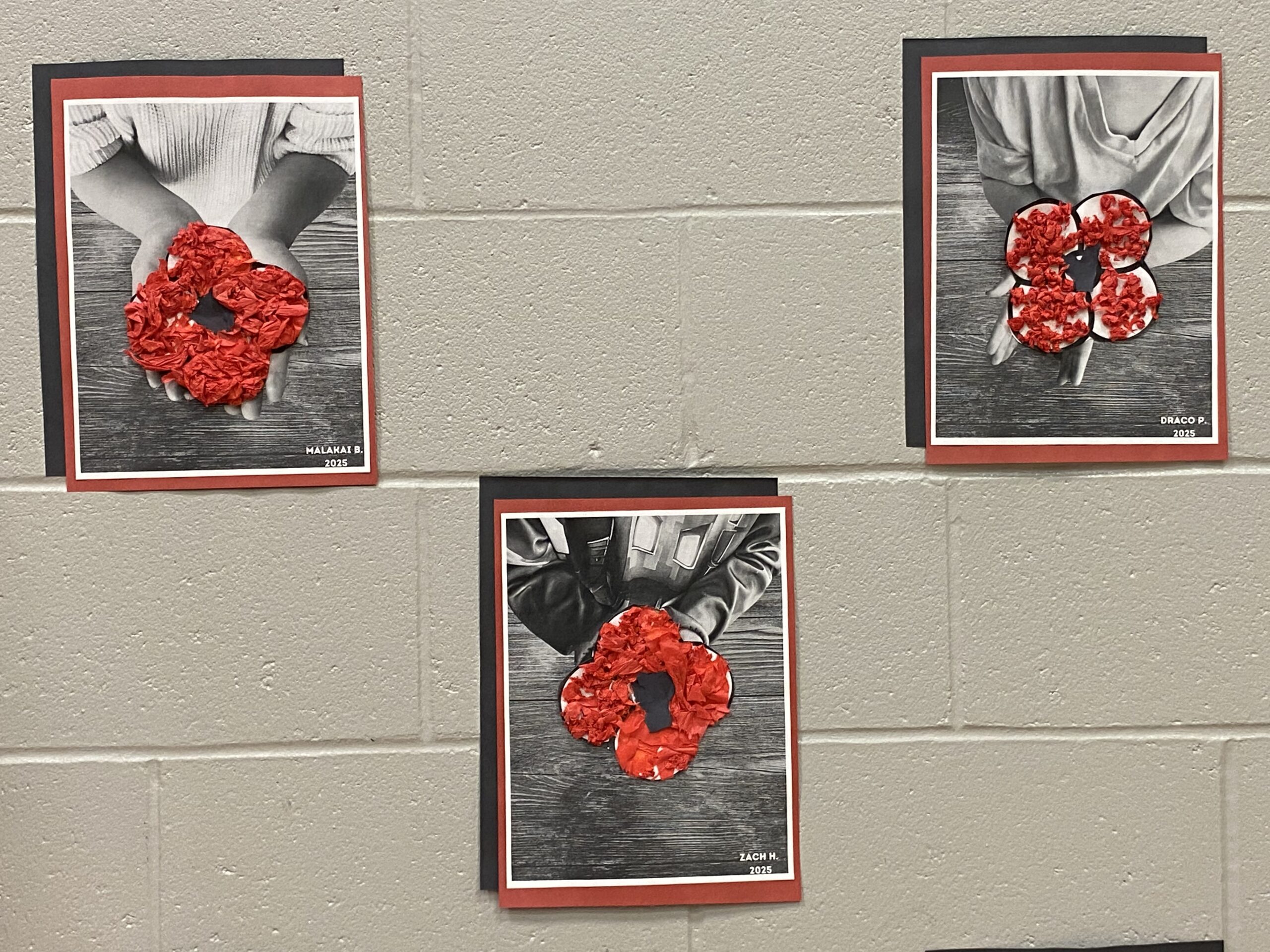
Student artwork was displayed on the gymnasium walls.
Residents across the Rainy River District are gathering at cenotaphs to pay their respects to the men and women who served in Canada’s military.
Separate ceremonies were scheduled in Fort Frances, Atikokan, Couchicing First Nations, Emo, Devlin, Barwick, Stratton, Rainy River First Nations and Rainy River.
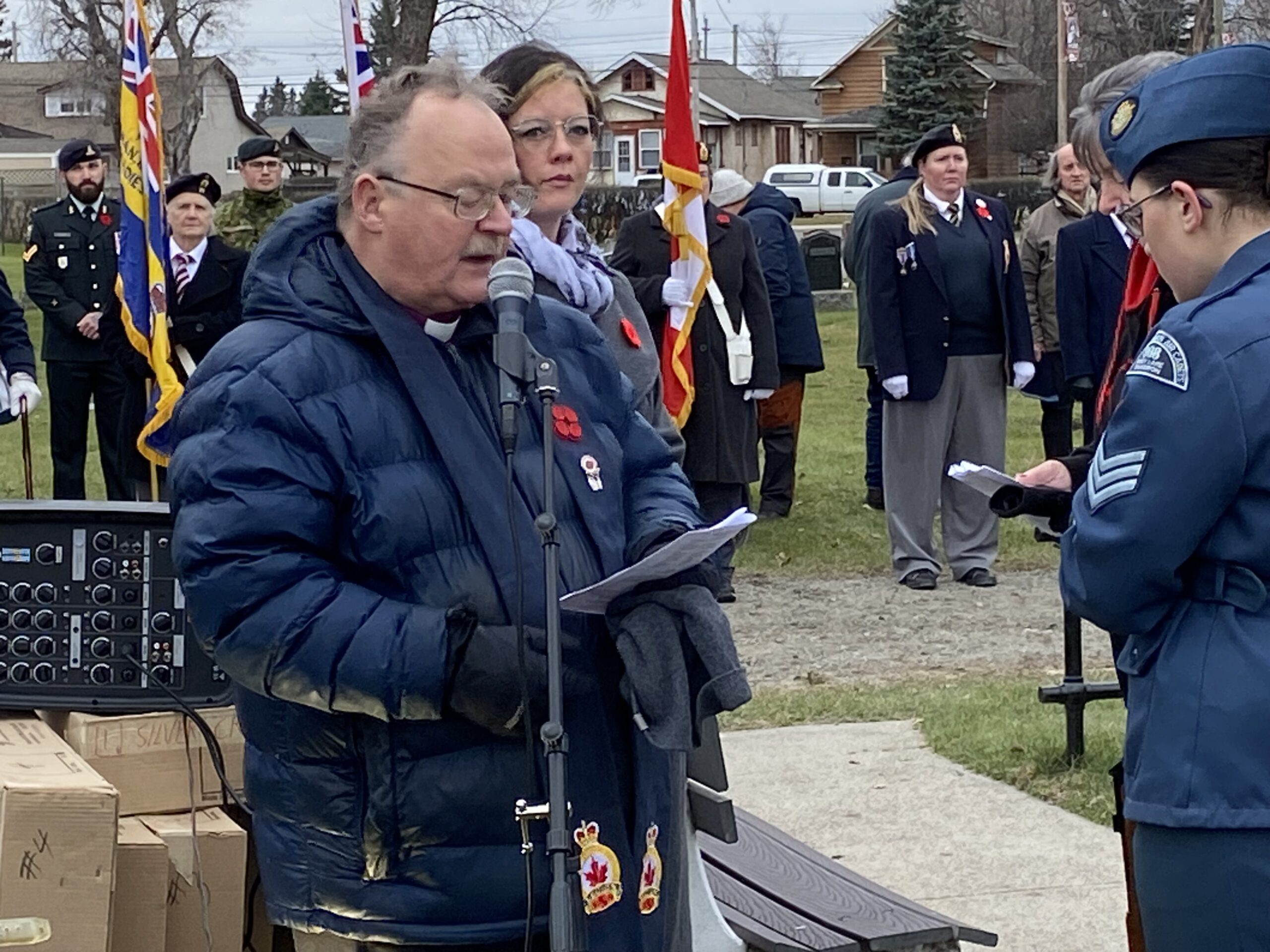
Moments of silence, prayers and the laying of wreaths took place.
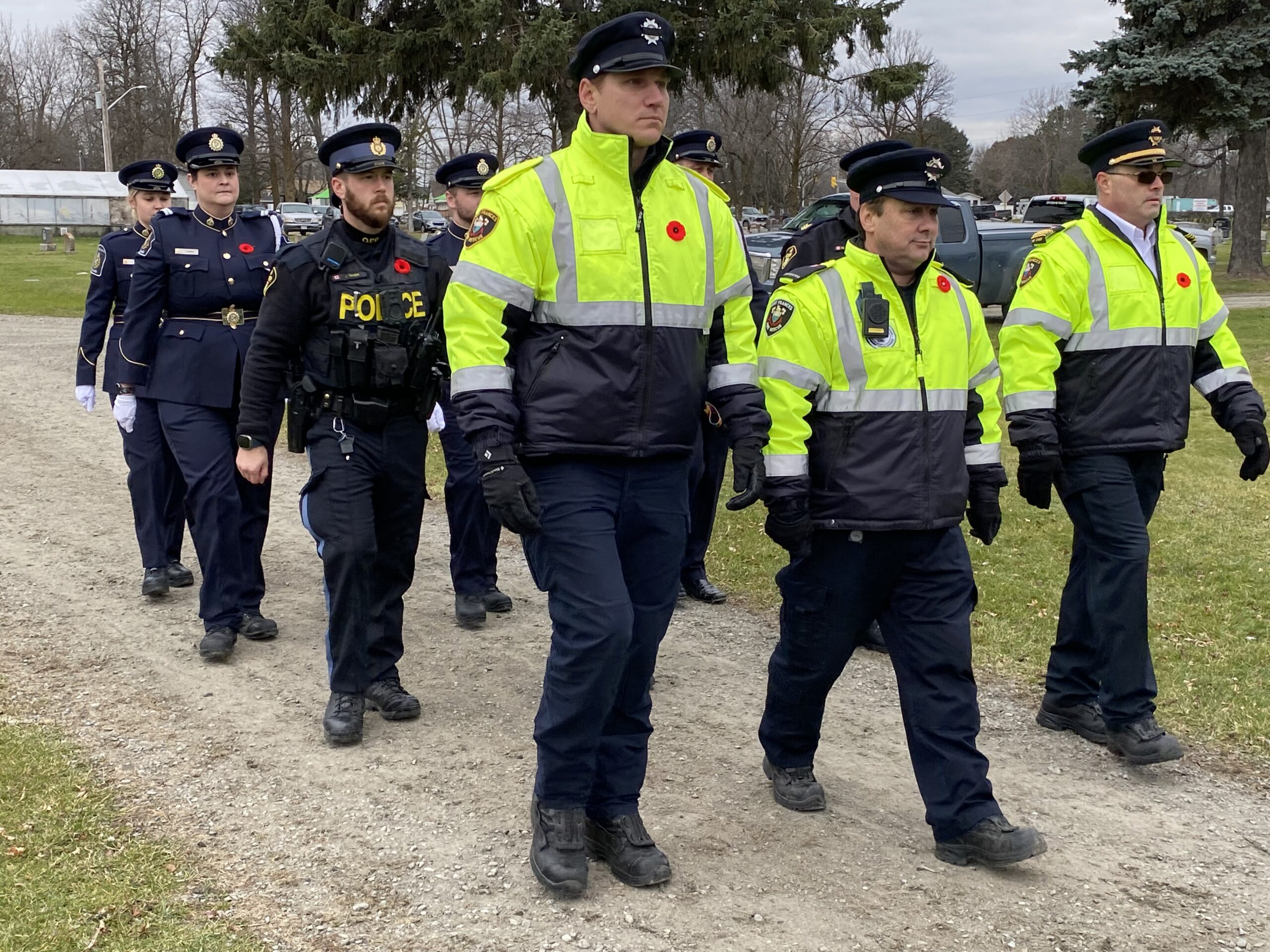
Here are moments in pictures from the ceremony held at the cenotaph at the Fort Frances Cemetery
The newest hotel in Fort Frances will open its doors to the public on November 15th.
The Studio 6 Extended Stay Hotel Fort Frances, located in the west end of Fort Frances, is owned by Mitaanjigamiing First Nation and managed by Rideout Bay Management, a real estate development firm based out of Winnipeg.
Construction started late last year.
“We’re thrilled to bring this project to life,” states General Manager Chris Martin in a release.
“Our team has worked tirelessly to prepare for this opening, and we can’t wait to welcome our first guests and showcase what makes Studio 6 Extended Stay Hotel Fort Frances special.”
The 70-room hotel features several amenities, including a mini-hockey room.
“This opening represents more than a new hotel. It’s a proud moment of collaboration between Indigenous ownership and local business leadership,” states Ed Morrison of Mitaanjigamiing First Nation.
“We’re creating jobs, strengthening tourism, and providing a new level of hospitality for visitors to our region.”
The hotel will host a Community Open House on Saturday, November 15, from 11 a.m. to 3 p.m. to celebrate the opening, which will take place later that week.
A new A&W Restaurant is also slated for the same site.
Rideout Bay is also collaborating with First Nations in the Sioux Lookout and Dryden areas on similar projects that are scheduled to open in the near future.
The Ontario Health Coalition is turning to the federal government to halt private clinics in Ontario from over-billing patients.
The Coalition is petitioning the government to enforce the Canada Health Act, which prohibits such charges.
The healthcare advocacy group documented several cases last summer where patients paid thousands of dollars for cataract surgery.
It accuses the Ford government of redirecting thousands of surgeries from public hospitals to private clinics, a move intended to eliminate a backlog caused by the COVID-19 pandemic.
The Coalition says the clinics are violating the Canada Health Act by charging patients.
Attempts by patients and the Coalition to recoup the money were made, but they have not seen any action or a response from the provincial Ministry of Health.
More than 5,000 have signed the petition.
The Coalition hopes thousands more Canadians will sign it before it presents the petition to the government in the coming months.
The Police Chief for Treaty Three Police says her department continues to struggle with underfunding.
Cheryl Gervais told a recent federal committee looking into Indigenous policing that the funding issues they face are having an impact on the communities they serve.
“Treaty Three Police Service was formed to reclaim our relationship with policing,” says Gervais.
“Yet 20 years later, we continue to struggle to meet the needs of our communities.”
Gervais points to the funding model that Indigenous police services are required to follow.
She says it does not reflect their unique needs.
“This is systemic racism in practice when structures built without us are still imposed on us,” says Gervais.
“The expectations for us to use models or systems that are not built for us, that don’t take the cultural responsiveness piece into consideration, the expectations of our communities on Treaty Three Police Service to provide effective service and equitable service to them in terms of public safety and them feeling safe in our communities, we are failing.”
Gervais says innovative policing programs have been implemented, but the progress made is slowed by one-time funding that fails to recognize the need for ongoing training, staffing or infrastructure.
“No other police service in Canada is asked to compromise so consistently between safety, wellness and sustainability.”
Treaty Three Police, along with Anishinabek Police Service (APS) and United Chiefs & Councils of Manitoulin (UCCM) Anishnaabe Police, turned to the courts two years ago after refusing to accept the government’s terms for a new funding deal.
It did result in an interim decision to flow funding.
The three police services are also part of a Human Rights case against the federal government that is still pending.
Gervais says there are some bright spots, citing a community cadet program and the introduction of a campaign that encourages positive interaction between youth and police.
Gervais says they have also become used to doing more with less, but it has a downside for her officers.
“Brings challenges when it comes to the mental health of my staff because of the geography we cover, the types of calls for service we respond to, the lack of supports and even resources when we’re trying to support our communities.”
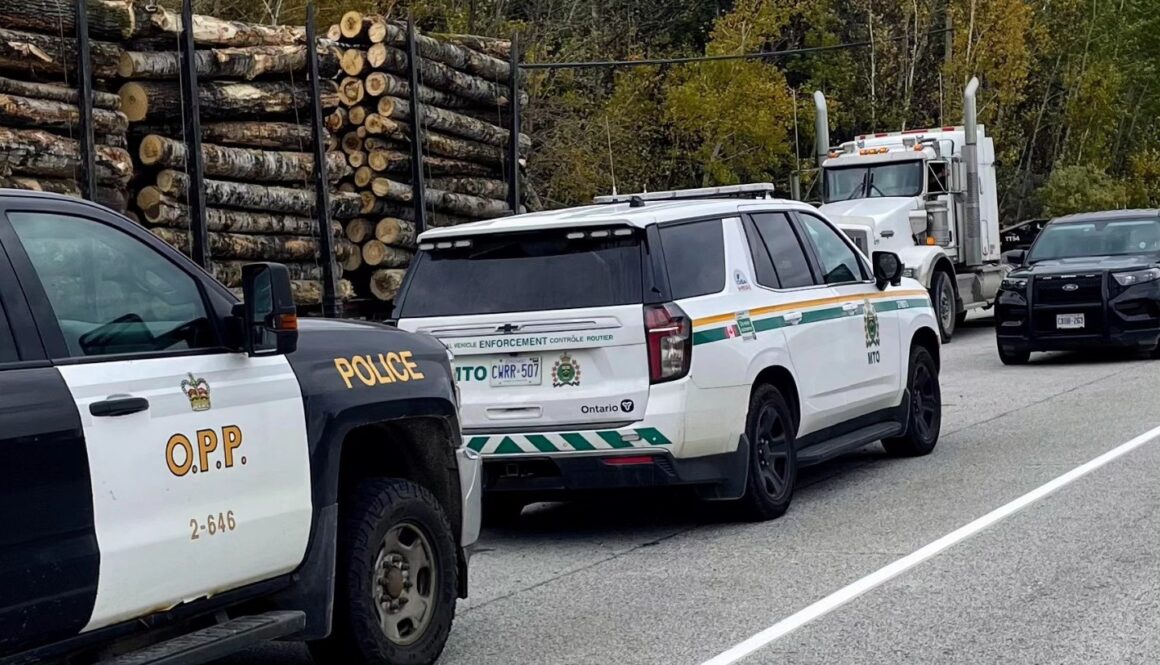
The provincial NDP continues to lobby for measures that improve road safety in northern Ontario.
A Private Member’s Bill was voted down at Queen’s Park earlier this year.
MPPs informed the legislature on Thursday that highways in northwestern Ontario have been shut down more than 550 times this year.
Many of the closures have been related to collisions involving transports.
Timiskaming MPP John Vathof dismisses the government’s explanation.
“The minister yesterday said that’s because the police closed them, the OPP closed them,” says Vanthof.
“The OPP doesn’t just close them for fun. They close them because of accidents, because of people getting run off the roads by badly-trained cross-country truck drivers.”
The Private Member’s Bill had proposed increased enforcement by Ministry of Transportation inspectors and that truck inspection stations stay open longer.
Thunder Bay-Superior North MPP Lise Vaugeois says an inspection station near Thunder Bay is rarely open.
“The Minister of Transportation has said that inspection stations should be staffed 24/7. Yet our brand new $30 million inspection station in Shuniah is almost never open,” says Vaugeois.
Transportation Minister Prabmeet Sakaria says they have more than doubled the number of MTO enforcement officers working in the north from 19 to 50.
He adds they conducted over 90,000 inspections since January, a 35% increase over last year.
The province’s Finance Minister is calling it a Plan to Protect Ontario.
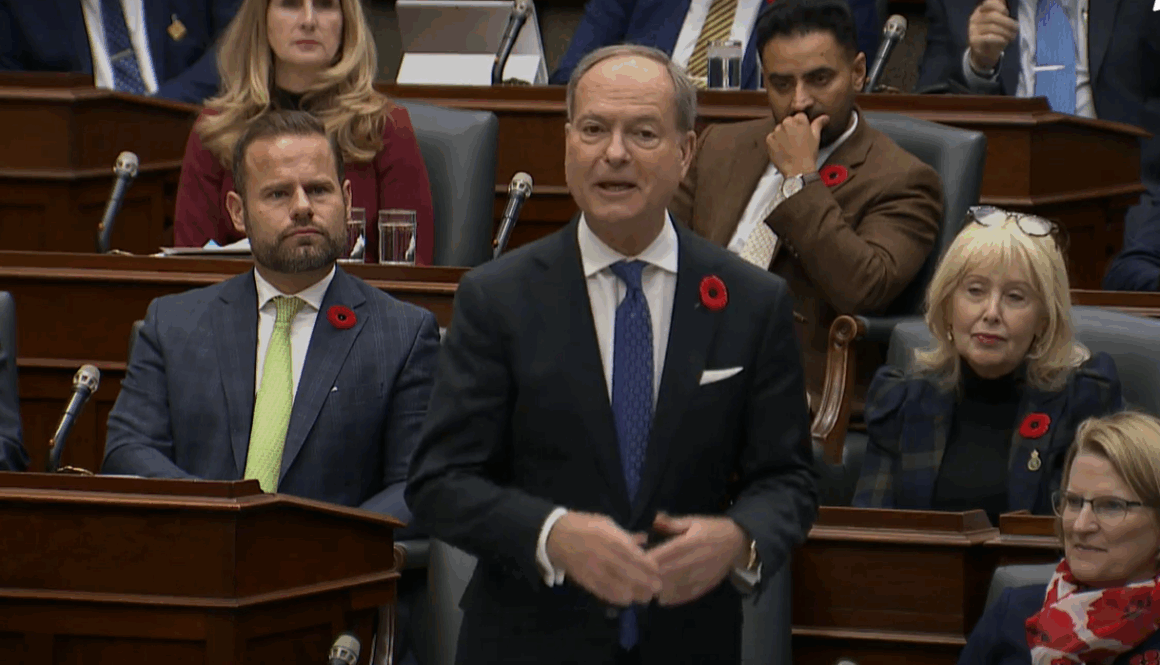
Peter Bethlenfalvy released an economic statement that includes measures designed to combat the impact of U.S. trade tariffs.
It includes the development of a Tax Action Plan that updates provincial personal and corporate income taxes to encourage more business investment.
An extra $100 million is being put into the Ontario Together Trade Fund (OTTF), designed to help small and medium-sized enterprises diversify into new markets.
There is also additional help for Ontario manufacturers and processors, with the Ford government proposing to enhance the tax credit rate from 10% to 15% and expand eligibility to the credit as a non-refundable version to corporations that are not Canadian-controlled private corporations (CCPCs).
The province is also preparing to release additional funding through the $5 billion Protect Ontario Financing Program (POFP).
One billion dollars went this year to businesses directly impacted by higher tariff rates placed on steel, aluminum, and copper and the auto sector.
Bethlenflavy notes that nearly $30 billion in relief and support have already been issued.
“In this year alone, our government is enabling $11.5 billion in financial relief for people and families and $11.7 billion in cost savings for businesses, including $5.6 billion of which would go directly to helping small businesses,” says Bethlenfalvy.
“And we’re going to keep going, keep finding more ways to lower taxes and fees and drive our economy.”
Statistics Canada says more than 700,000 people in Ontario are unemployed.
The economic statement projects the province will see 70,000 new jobs by the end of the year, but offers little in new initiatives to help those looking for work.
Bethlenfalvy says that is because the province reacted quickly to address the job loss.
“$30 billion of tariff supports, $9 billion in deferrals, $2 billion of WSIB rebates that are flowing to businesses so they can stay open. They can meet payroll and compete,” says Bethlenfalvy.
Bethlenfalvy says their approach will still help the province bring forward a balanced budget by 2028.
“We can maintain our commitment to balance, but at the same time, our commitment to grow the economy, to invest in infrastructure, to invest in workers, and continue to provide world-class services and invest in social infrastructure.”
A deficit of $13.5 billion for the 25-26 fiscal year is predicted, an improvement of $1.1 billion from the outlook published in the 2025 budget.
The government expects the deficit to be cut in half the following year before enjoying a slight surplus in 2027-28.
The Rainy River District is again shining the light on woman abuse.
November is Woman Abuse Awareness and Prevention Month, and Riverside Health Care, with the Rainy River District Women’s Shelter of Hope, is promoting the Shine the Light campaign.
It is a campaign that raises awareness and promotes an end to woman abuse and gender-based violence.
It was first developed by the London Abused Women’s Centre in London, Ontario and has since expanded to other communities in Ontario.
Jacquee Loerzel, a community and family counsellor at Riverside Community Counselling Services, says it is an important initiative for the district.
“It’s an ongoing issue in our area, and it’s important that we continue to have the conversations and continue to shine a light on this ever-present issue that we continue to face in our own community,” says Loerzell.
The campaign was formally recognized at the Fort Frances Civic Centre on Thursday with a flag-raising ceremony.
Mayor Andrew Hallikas also proclaimed November as Woman Abuse Awareness and Prevention Month in the community.
“Only by standing together can we eliminate women abuse,” says Hallikas.
“This is an issue that should be a priority for all of us. Every woman and child has the fundamental right to live in safety and security. The Town of Fort Frances officially supports and participates in the Shine the Light on Women Abuse campaign,” says Hallikas.
There are other events associated with the campaign.
Loerzel says campaign posters are being distributed throughout the community to help promote awareness and show support.
The Pink Parasol Tea Room will host a tea and scones fundraiser on Thursday, November 13, from 9:00 a.m. to 5:00 p.m.
November 15 is Wear Purple Day, which encourages the public to wear purple to spark important conversations about ending violence against women and gender-based violence.
“Campaigns like Shine the Light remind us that community involvement plays a vital role in creating change,” says Loerzel.
“When we wear purple, we show survivors that they are seen, supported, and not alone. It’s a small gesture with a powerful message that together, we can help build safer, more compassionate communities.”
For more information about the Shine the Light campaign or to obtain posters, contact Riverside Community Counselling Services at 807-274-4807 (ext. 1).
To learn more about the campaign, visit lawc.on.ca/shine-the-light-on-woman-abuse-campaign, or explore additional education on gender-based violence at stayingisntchoosing.ca.
Casey Badiuk won Riverside Health Care’s latest 50-50 cash draw, taking home $11,730.
The win comes just weeks after her family welcomed a new baby at La Verendrye General Hospital, describing the experience of receiving “excellent care and compassion” that inspired her to support Riverside’s fundraising efforts.
“It’s a no-brainer when even if you don’t win, the money is supporting your local hospital,” states Badiuk.
The win also scratched a goal off her bucket list.
Badiuk had always dreamed of holding a big cheque.
It is the first time that the draws, taken over by Riverside earlier this year, have offered a cash prize of over $10,000.
“We’re seeing incredible momentum with this fundraiser,” states Holly Kaemingh, Director of Fundraising, in a release.
“Reaching and surpassing the $10,000 prize mark is a major milestone, and it’s only the beginning. November ticket sales are already off to a strong start.”
Riverside is using the draw to help raise money for a new MRI unit.
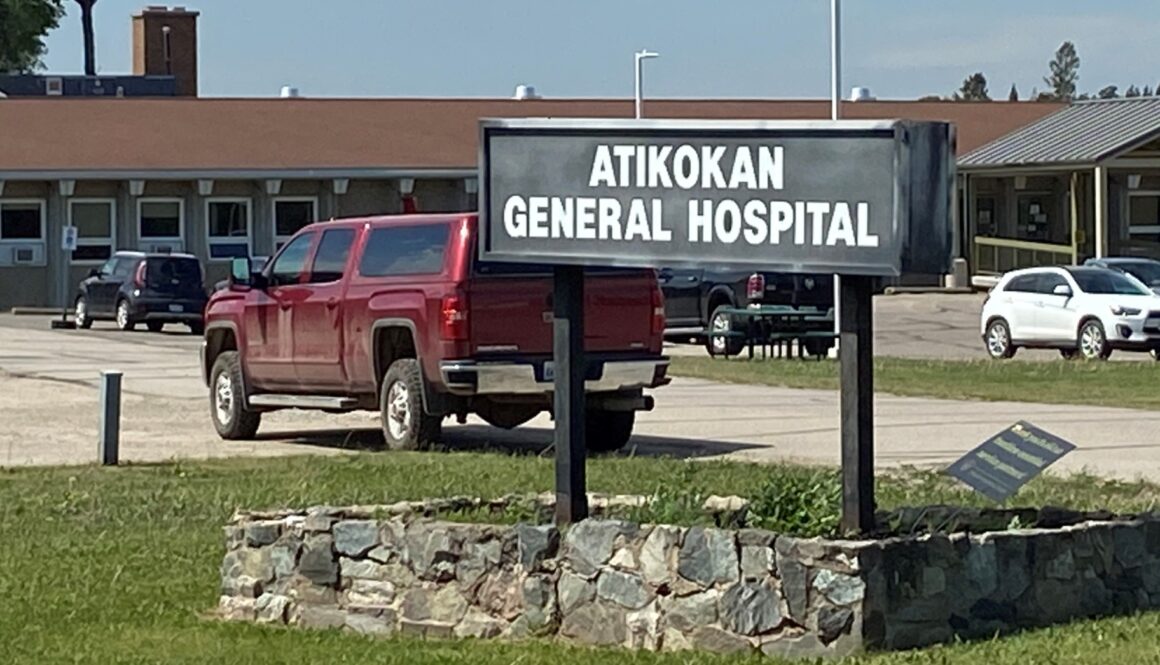
New union representation for some healthcare workers at Atikokan General Hospital.
The Ontario Nurses’ Association will now represent medical laboratory technologists, technicians, x-ray and ultrasound technologists, radiation technologists and other health-care professionals in future bargaining.
The ONA says they voted overwhelmingly to join.
“These health-care professionals have put their trust in ONA to represent them, overwhelmingly voting to join ONA’s 68,000 members to use their collective voices to improve their working conditions, to fight attacks on the publicly funded and delivered health-care system and improve patient care,” states ONA President Erin Ariss in a release.
The hospital’s nurses were already members of the ONA.
“This highly skilled group of health-care professionals bring enormous value to the community,” states Ariss.
“The work they perform and the skills they bring to those seeking care at Atikokan General Hospital are vital to the diagnosis and care of patients. They more than deserve respectful working conditions, transparency and workplace protections from their employer.”
ONA represents more than 68,000 registered nurses and health-care professionals, as well as 18,000 nursing student affiliates, providing care in hospitals, long-term care facilities, public health, the community, clinics and industry.