After 14 years in municipal politics, Rothesay’s mayor Nancy Grant isn’t reoffering.
With nominations for the municipal election around the conner, Grant, who was Rothesay’s deputy mayor for four years, and mayor for ten, said she felt it was time for some “new blood.”
“I think I’ve used all my ideas, and I think it’s time for new ideas,” she said.
Under Grant’s mandate the town has accomplished several projects, particularly in the past five years, Rothesay has expanded its housing strategy, adding 504 units of housing, and achieved significant recreational upgrades, like the creation of the Wells Recreation Park.
More recently, the town has been working on the development of a $36 million intergenerational community complex, for which Rothesay received a $6-million infusion from the government.
Grant said the municipalities’ achievements wouldn’t have been possible without the work of Rothesay’s council and staff.
“It’s been a great team effort,” she added.
After stepping down from the role, Grant said she will continue working on the development of the intergenerational complex.
She said she is part of the community’s fundraising board, which has a goal of raising $3-million dollars for the construction of the complex.
“I really want to help see that through,” she said.
Nominations for the municipal elections officially start on March 23.
Grant said the town has made progress in community building, and she hopes the next mayor will build on that work and prioritize community development.
Grant doesn’t have any other immediate plans once she finishes her term.
She says she’ll likely pick up something to stay busy, but in the meantime, she’s focusing on spending more time with her family.
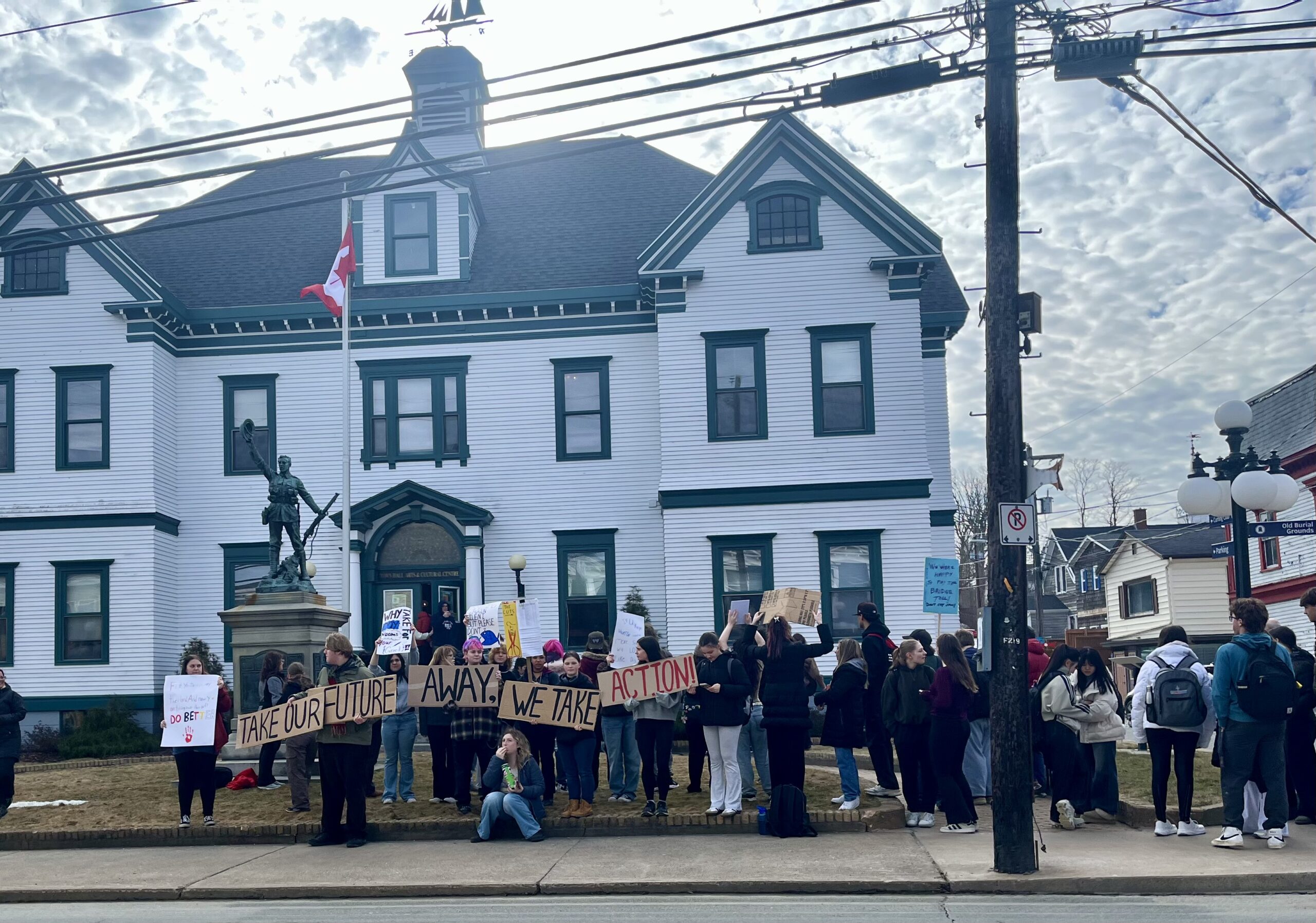
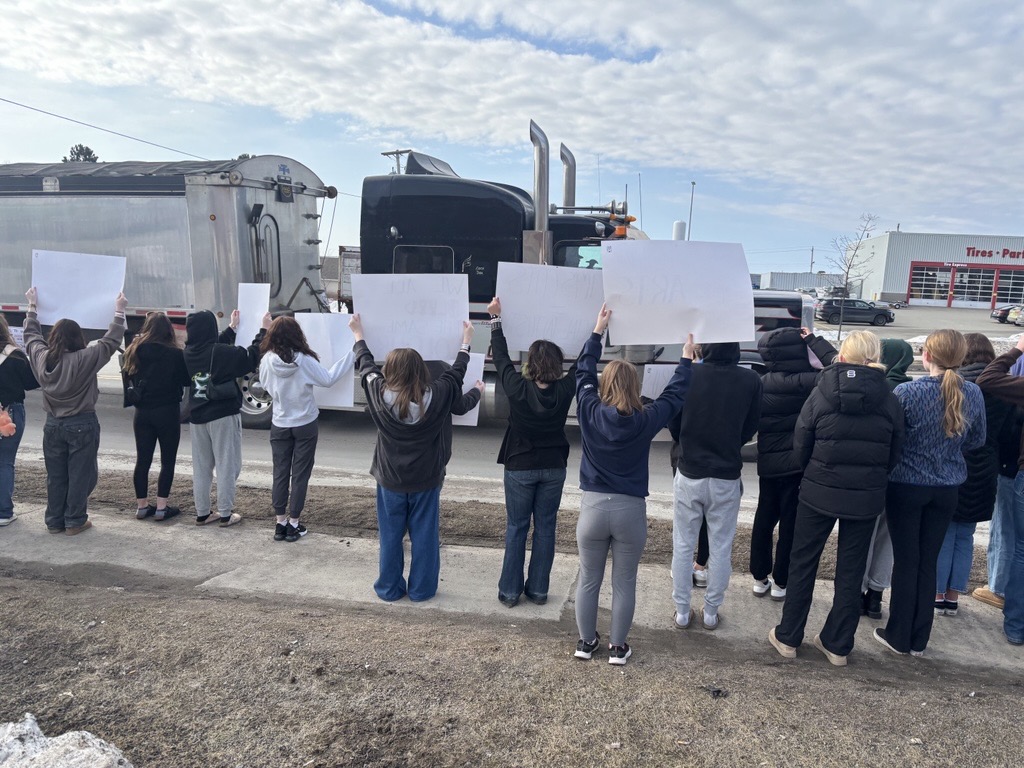
Hundreds of students across Nova Scotia took part in a coordinated walkout on Wednesday morning to protest cuts in the provincial budget.
It started at 10 a.m., with demonstrations planned at schools and according to posts on social media, action was motivated by concerns over cuts affecting education, arts programming and scholarship funding.
In several communities, students also organized marches to local MLA offices to raise their concerns directly with elected officials.
Liverpool students raise concerns over arts and scholarship cuts
In Liverpool, around 100 students walked out of Liverpool Regional High School and marched through town.
Students first stopped outside Queens MLA Kim Masland’s constituency office before continuing to the Astor Theatre where local student band Life and Colour performed.
Students gather outside the Astor Theatre in Liverpool during a walkout protesting elements of the provincial budget, including concerns about arts funding and scholarships. (Evan Taylor photo)
Students gather outside the Astor Theatre in Liverpool during a walkout protesting elements of the provincial budget, including concerns about arts funding and scholarships. (Evan Taylor photo)
Students at the rally raised concerns about cuts affecting scholarships, grants and arts programming, saying those supports are especially important in smaller rural communities where families may have fewer financial resources.
A student holds a sign during a walkout in Liverpool as part of a province-wide protest over the Nova Scotia budget. (Evan Taylor photo)
Astor Theatre executive director Velta Vilkmanis said it was encouraging to see young people organizing around issues that affect them and this was a great way to express anger.
“For them to come out and actually organize this kind of a thing… I think it’s incredible,” Vilkmanis said. “A lot of these kids perform on our open mic stage. They participate in our clubs,” she said.
Halifax JL Isley high schooler’s take to streets of Spryfield
JL Ilsley High School students marched down Herring Cove Road toward the busy intersection near the Spryfield Shopping Centre, drawing attention from passing drivers—many of whom honked in support.
Acadia News spoke with several students who took part in the protest. Many said they were concerned about cuts to arts programming, the impact on student mental health, and the loss of independence tied to transportation changes.
Nora Pickrem had tears in her eyes when said arts give life meaning.
“I know that the arts have saved like more people than I can count including myself,” she says as cars pass, honking in support.
Despite feeling discouraged by the government’s decisions, the group says they have no plans to stop speaking out.
Port Hawkesbury students rallied against cuts to arts and culture
Nearly 100 students from Strait Area Education Recreation Centre (SAERC) came together to protest recent cuts to arts, culture, bursaries and scholarships on Wednesday morning.
Grade 11 students Shayla Spencer and Miranda MacRae were two of the organizers of the walkout from classes.
Organizers of SAREC Student Rally – Shayla Spencer & Miranda MacRae. Credit: Jessica Laing / Acadia Broadcasting
“The first thing that raised warning bells for me was when I found out the bursaries and scholarships, a lot of them were defunded or partially defunded, which really threw off my course for postsecondary,” shared Spencer.
She said she got involved because the proposed cuts impact her, her family and her classmates directly in an extremely negative way.
“We are hoping for Tim Houston to rethink his budget cuts and takes most of them back. Although he did take some back the other day, it’s not nearly enough compensation that what we deserve as students,” expressed MacRae.
She shared that their message to the government is that their budget cuts affect real people, and real people have voices and they will speak up.
An investigation has uncovered that approximately 900 litres of chromium that spilled onto several Fredericton area roadways, including Vanier Highway, came from XL Plating & Machining.
On Wednesday, the New Brunswick Deputy Minister of Environment identified the company responsible for the chemical spill last week.
Deputy Minister of Environment and Local Government Charbel Awad confirmed the company will be responsible for the cleanup and remediation costs, but did not give an estimate on costs.
“The province acts underneath a polluter pays principle, so once a responsible party has been identified, the onus is on them, both in the cleanup and the remediation and the impacts of the incident itself,” said Awad. “The extent as to all the impacts and potential ramifications of that, they will come as the event continues.”
In a social media post on Wednesday, New Brunswick’s Green Party Leader David Coon, questioned why it took two days to warn the public and begin the cleanup.
Awad said that when the substance was identified, the province began to understand the severity of the situation.
Social media users began commenting about the spill on March 4, noting the distinct yellow colour of the solution on the ground. Speculation continued after the City of Fredericton officially announced the spill on the morning of March 6. Roads were closed as an environmental consultant went to the scene.
The Government of New Brunswick says the spill was first reported to the Department of Environment and Local Government on March 5. Samples were taken during that time and sent for testing. The government says the results were received on March 6.
Preliminary testing identified traces of sodium carbonate, sodium hydroxide, and hexavalent chromium. The New Brunswick Emergency Measures Organization (NBEMO) was then activated at Level 2.
Hexavalent chromium is a carcinogen. The chemical is commonly used in industrial plating and metalwork.
“Hexavalent chromium can sound alarming, and I can certainly understand why,” said Dr. Rita Gad, regional medical officer of health.
“It is true that exposure to this substance over a long period of time can increase the risk of certain cancers. However, I want to stress that one-time or short contact with hexavalent chromium does not increase your cancer risk.”
The doctor added that in this situation, the chemical was dispersed over a long distance on the highway, and the possibility of exposure was considered to be low.
When asked why officials did not close the affected roads when first notified 24 hours prior, the Department of Transportation’s Director of Operations, Mark Scott, said the decision to close roads is not taken lightly.
“Closing a road takes a significant amount of time and resources to do so. We need to do it in a safe manner for both our crews and the travelling public. Once we had a better understanding late into March 5 and early into March 6, that is when we decided to close [the affected roads]. Of course, part of it being the Trans-Canada Highway adds a significant layer of complexity to that,” said Scott.
A car wash was also set up for affected vehicles, and the last day it will be offered is on Thursday, March 12.
It is located off the Vanier Industrial Highway on Beek Court.
EFI Global has been hired to clean up the affected areas.
Anyone with questions about the situation should contact EFI Global on their 24/7 Emergency Spill Line at 1-866-530-4086. Callers should indicate that they are contacting them regarding the chemical spill in Fredericton, N.B.
After dozens of surgeries were postponed or relocated, operations are set to return to normal by the end of the week at the Victoria General in Halifax.
Nova Scotia Health says within the next 24 hours they will replace a transformer that caused the issue at the Centennial Building of the QEII Health Sciences Centre.
“Completing this work will require a planned power outage lasting up to two hours,” says NSH in a statement, Wednesday.
It was just before midnight on March 6 when the facility lost power. Power was restored, very early Saturday morning.
When the power went out, the generators were functioning but a transformer “experienced a problem.”
Medical equipment that is critical has dedicated battery power.
Five ICU patients were transferred to the Infirmary as a precaution.
As of Tuesday, 21 surgeries were relocated from the VG to other sites, and 39 surgeries had been rescheduled.
If you are impacted, you will be contacted by your care team.
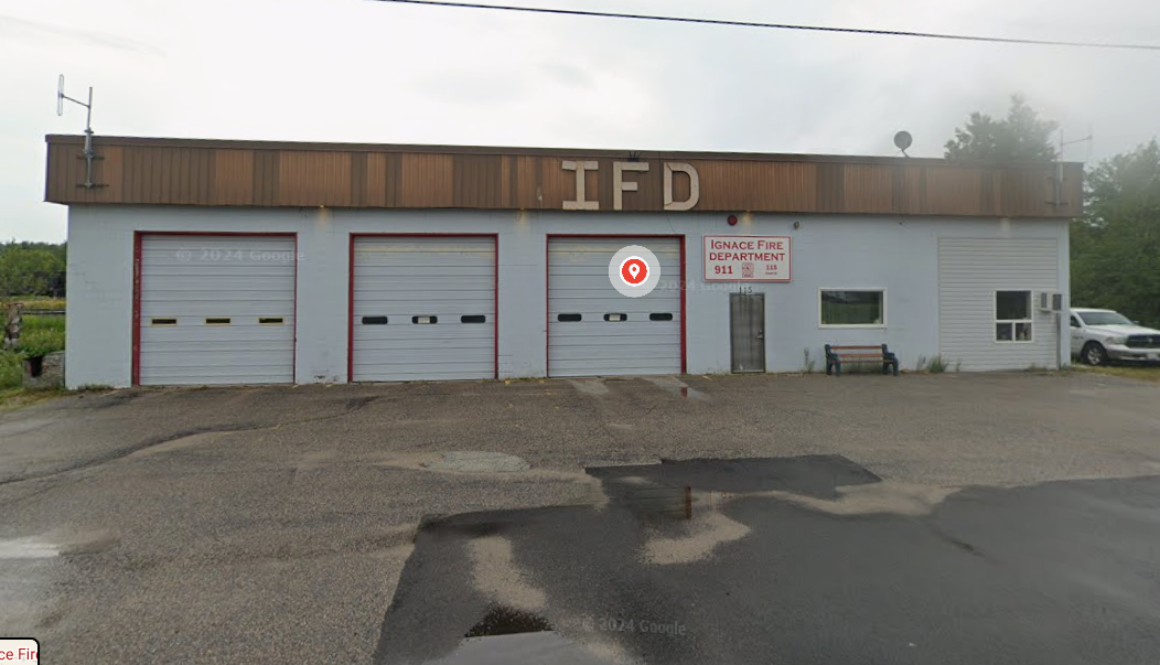
A consultant’s report recommends Ignace build a new fire hall.
It feels a site on Lilly Pad Lake Road would be more strategic.
Ignace commissioned the report to evaluate the existing fire hall on Front Street and identify potential locations for a new one.
Bill Lorimer, Fire and Life Safety Manager with Loomax, says the existing hall’s age, size and location all point to the need for a new building.
“The current facility may lack the ability to accommodate recommended services and equipment, especially as certification requirements and demands for service both increase,” says Lorimer.
The study explored four potential locations.
Sites on Davy Lake Road and Pine Street were cited as being too close to Ignace Public School or further from firefighter homes.
A site near the Public Works Garage on Lily Pad Lake Road was seen as the most advantageous.
“The site is in close proximity to where current firefighters live, as well as where future firefighters may choose to live,” says Lorimer.
“The site is in close proximity to various critical infrastructure, and the site has minimal exposure to schools and pedestrians.”
It would be close to Ecole Immaculee Conception, but Fire Chief Sean De Tracey says it would offer multiple routes to access emergencies, especially to those on Highway 17.
The report does not comment on the cost of a new building.
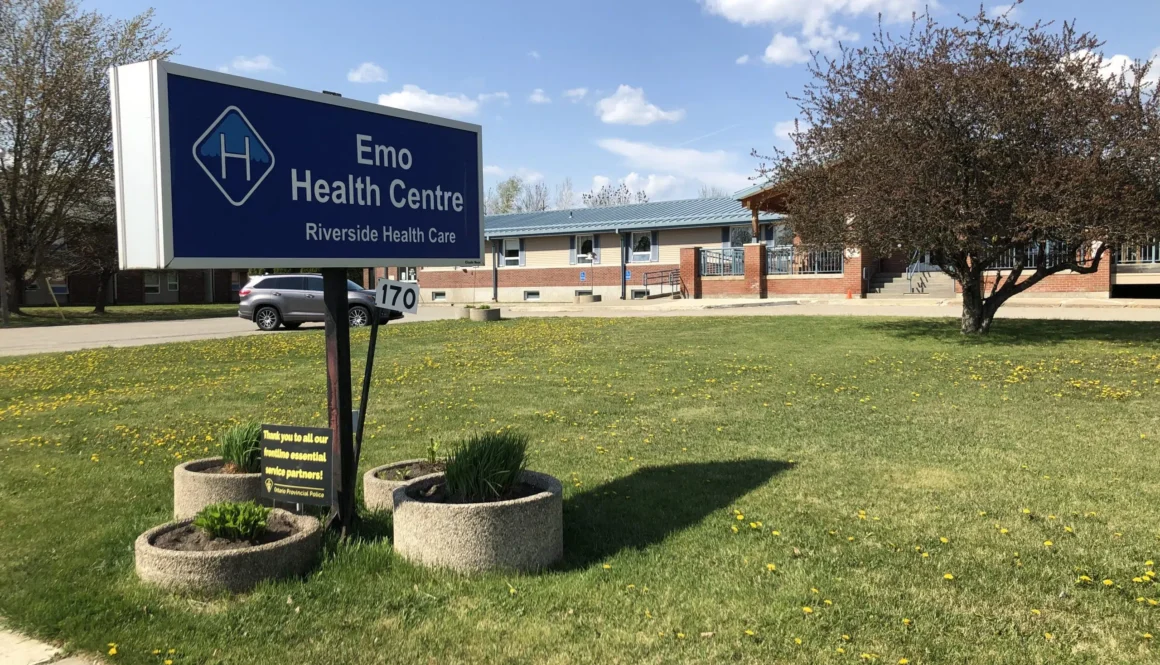
The centre experienced limited water near the end of February, prompting Riverside Health Care to issue a Code Grey emergency code, used to designate an infrastructure failure.
It also forced the need for alternative bedside bathing procedures.
Riverside says its maintenance crews and outside contractors have since been working to correct the problem.
It reported on Thursday that repairs have been completed and the hot water is again flowing normally.
Elementary teachers are getting some financial help with the purchase of classroom supplies.
The province is giving each homeroom teacher $750 in September.
Education Minister Paul Calandra says it leaves the purchasing power up to teachers.
“It’s not us that is going to decide what the teachers need,” says Calandra.
“It’s the teachers who are going to decide what they need because every class is unique. Every class may be different.”
The money will come in the form of a card to be used on a new online site where teachers can obtain supplies.
Calandra says they will be visiting schools and speaking with educators to get a list of what teachers need and make them available through the site.
It is expected to offer a grade-by-grade selection of commonly used classroom items, including writing supplies, notebooks, calculators, chalk, arts and crafts materials, tissues and paper towels.
Many teachers are paying for the items up front and wait to be reimbursed.
The province has provided school boards with funding, but Calandra says not all of the money is necessarily flowing to teachers.
In some cases, teachers are told to purchase items through their board’s preferred vendors, which are often higher in cost than going to big box stores.
Calandra says that by using the purchasing power of Service Ontario, prices will be the same no matter where teachers are.
“Sometimes the cost of supplies is much more expensive in the north than it is in the south. That’s why we are bringing the purchasing power of the province together.”
-Annual health spending account increased to $600 for full-time and $450 for part-time
-Implementation of a defined benefit CAAT pension plan in 2026
-$5/hour working-alone premium
-Mileage increased 20%, from 50 to 60 cents/km
-Meal allowance increased 21%, from $70 to $85 per day
-Additional bereavement leave for nieces, nephews, aunts, and uncles, as well as pallbearing and eulogy leave
-$75 annual vehicle insurance reimbursement
-Vision care increased to $400 for full-time and $200 for part-time employees
-Eye exam coverage increased to $100
-Part-time sick leave increased by eight hours to 44 hours annually
-Double-time pay for employees working extended overtime shifts
Unifor Local 324 President Katrina Peterson said the strong membership support clearly helped move negotiations forward after talks stalled late last year.
“Recent 100 per cent strike votes late last month helped overcome the bargaining impasse we faced in November and allowed us to secure a number of important language and monetary gains in both agreements”, says Peterson.
“These solid three-year contracts will provide well-deserved security for our Unifor members as they focus on providing critical support for some of the most vulnerable people in our communities.”
The contract is retroactive from September 1st, 2025, and runs until August 31st, 2028.
(Photo supplied by Unifor-Left to right: Unifor Northern Area Director Stephen Boon, Bargaining Committee Members Laura Santos, Cassie Lundy, Shawnda Bell, Mercy Hill, Danielle Morash, Mary Ingram and Unifor Local 324 President Katrina Peterson)
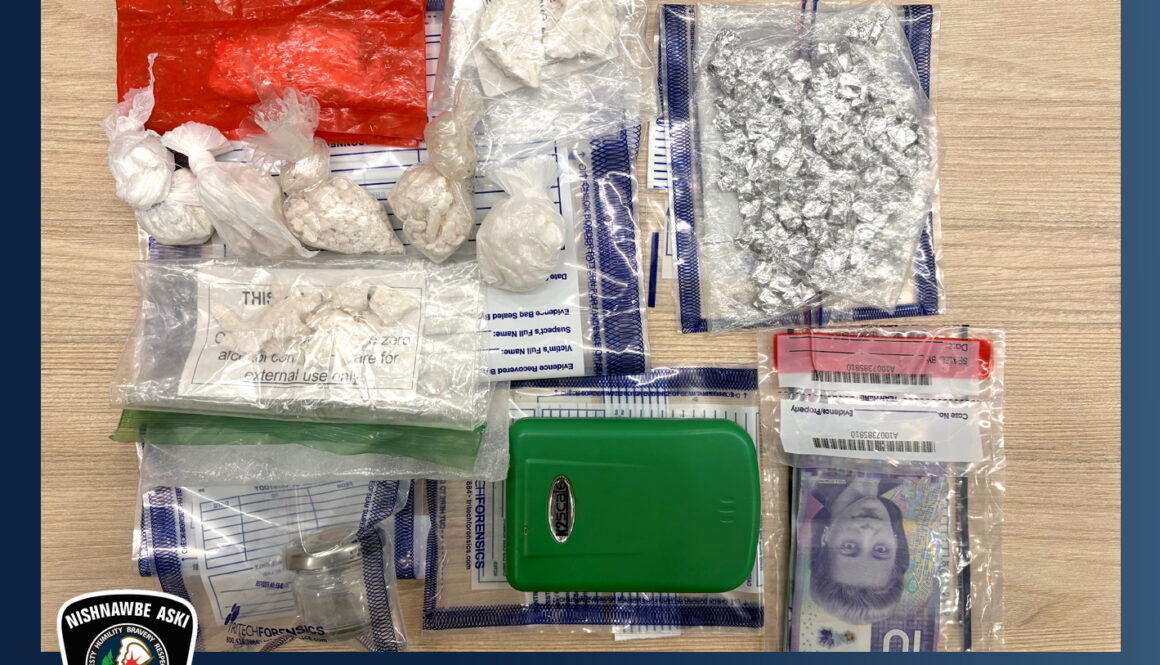
Officers from the Nishnawbe Aski Police Service seized nearly $150,000 worth of cocaine and crack cocaine in a search of two Nibinamik First Nation homes.
Three women, one from Winnipeg and two Nibinamik locals, are charged with possession of cocaine for the purpose of trafficking and possession of proceeds of property obtained by crime under $5,000.
The woman from Winnipeg appeared for a bail hearing on Tuesday and was remanded into custody with a future court date. The other two suspects have been released from custody with conditions and a future court date. The names of suspects are withheld until charges against them have been sworn in before the courts.