The Artemis II mission, which will launch three Americans and one Canadian around the moon on a ten-day voyage, has been delayed until early March due to a liquid Hydrogen fuel leak.
The mission was slated for February 8, but has now been pushed to the next launch window of March 6 to 11.
The leak was discovered during a “wet dress rehearsal,” when NASA takes the rocket through every stage of the launch process, including fueling and loading the crew, only stopping in the last few minutes before the rocket would liftoff during the real deal.
Canadian Space Agency (CSA) Director of Space Exploration Development Jamie Sevigny says the rehearsal did its job.
“The point of those wet dress rehearsals is really to test everything and to make sure everything is going as planned, and thanks to that, they were able to find some little issues.”
Sevigny says the delay will “give the engineers time to take a look at the data, assess it, analyze it, so that we can have another stab before the second launch opportunity.”
A Canadian space milestone
The Artemis II mission marks the first time since 1972’s Apollo 17, the last moon mission, that a human will venture beyond “Low Earth Orbit,” and fly around the moon.
CSA astronaut Jeremy Hansen is the prime Canadian crew member on the mission, which will make him the first Canadian to voyage to the moon.
“He’s also going to make Canada the second country to send a human around the moon,” says Sevigny, “So this is pretty big.”
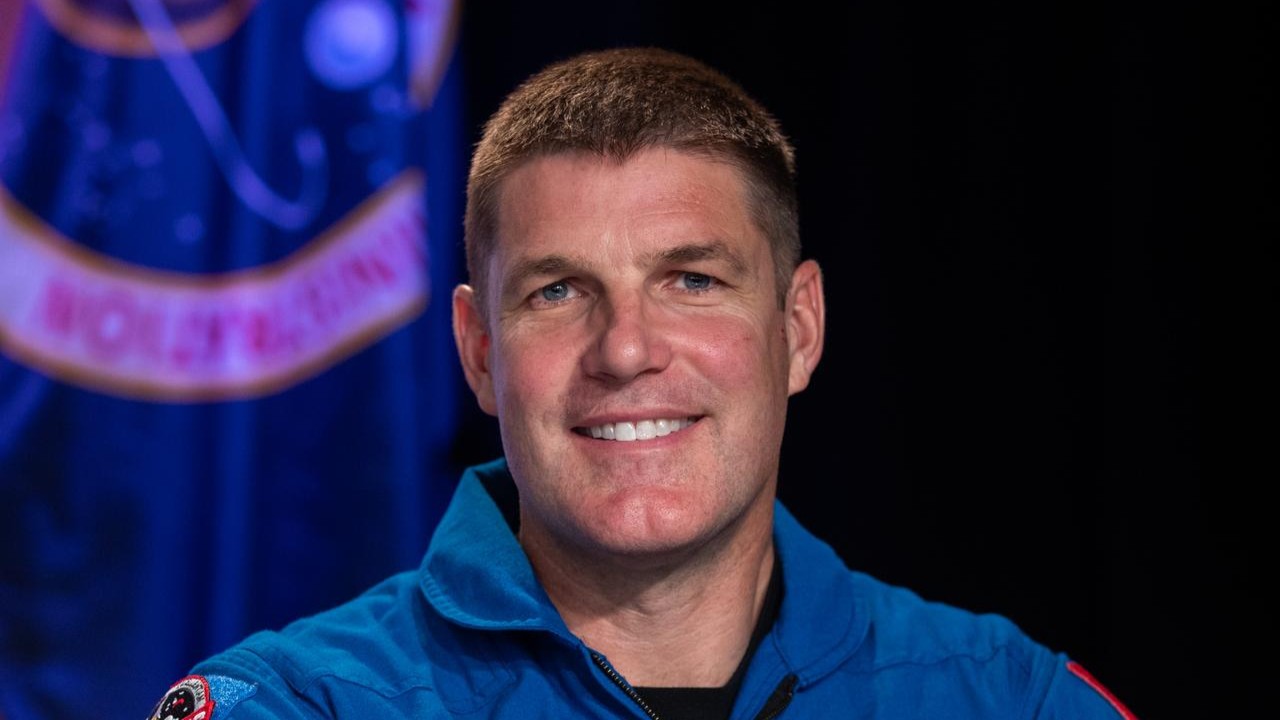
CSA (Canadian Space Agency) astronaut Jeremy Hansen, Artemis II mission specialist, participates in a NASA news conference on Aug. 8, 2023, at the agency’s Kennedy Space Center in Florida. (Cropped, via NASA/Kim Shiflett)
Sevigny says the long-running partnership between the CSA and NASA got a Canadian onto the mission.
But she says the most important part was “our contribution of the Canadarm 3, which is a next-generation advanced autonomous robotic system.”
Canada contributed the first-generation Canadarm robotic arm to the Space Shuttle in its heyday, and the second-generation arm to the International Space Station.
The new model robotic arm will eventually be used in the Lunar Gateway, a planned space station orbiting the moon to be built by a large coalition of countries, and meant to support future manned moon missions.
Returning to the moon
The Artemis II is meant to be the first in a series of lunar missions, all building towards a prolonged human presence beyond Low Earth Orbit and eventually towards other planets.
The next flight will be the first time the SLS (Space Launch System) rocket and the Orion crew capsule fly with a human crew.
The Orion will carry its four-person crew around the moon on a “fly-by” over ten days before returning to Earth, gathering data on the function and performance of the vehicle in preparation for Artemis III, which plans to land humans on the moon for the first time since the Apollo program.
A map of the Artemis II mission plan. (Via the NASA press kit.)
To prepare the Orion for its next missions, the crew will test out its ability to manoeuvre.
“They’ll be doing simulations of proximity docking, so they’ll be turning around the Orion spacecraft, looking at the previous stage and seeing if they can line up with it properly,” explains Sevigny. “They’re really setting up for the next Artemis III mission, making sure that everything’s functioning properly.
The mission will also take advantage of the chance to conduct scientific experiments on human health in space, and practice emergency procedures and crew safety drills.
“They’re trying to jam in a whole pile of things within the limited time that they have for the mission,” Sevingy says.
While the Artemis II mission is not guaranteed to launch in the March window, NASA plans to launch by April 6.
A Minnesota man had died in a snowmobile collision south of International Falls.
It happened on Tuesday at around 12:30 p.m. on the Arrowhead Snowmobile Trail near Orr.
The St. Louis County Sheriff’s Office says two machines side-swiped each other as they approached each other on a curve.
This caused one of the snowmobiles to roll several times, ejecting the 57-year-old operator.
Multiple first responders and emergency personnel responded to the scene, including the Minnesota Department of Natural Resources, Bois Forte Police Department, Virginia Fire Department Sprint Medic, Life Link III air ambulance, Orr Ambulance, Orr Fire Department and Kabetogama First Responders.
Despite extensive lifesaving measures, the man, who has been identified as being from the south metro area, was pronounced dead at the scene.
The name of the victim has not yet been released pending notification of family members.
The driver of the other snowmobile was not injured.
Swimming coach Ryan Allen has been named Swimming Canada’s Coach of the Year for the Paralympic Program.
The local was appointed as Paralympic Program National Coach Lead last February, leaving behind his position as head coach of Moncton’s Club de Natation Blue et Or, where he coached for more than a decade.
Allen has also been a long-time coach for fellow Monctonian Danielle Dorris, who was just named Swimming Canada’s Paralympic Female Swimmer of the Year.
The young talent performed well in the 2025 World Para Swimming Championships, winning a medal of each colour. Allen served as Canada’s head coach for the championship, where he played a key role in preparing Dorris.
According to Swimming Canada, Dorris’ remarkable showing led to Allen’s receiving the title. He told Swimming Canada that he was honoured to be recognized for his work with Danielle and that it is a testament to what she does as an athlete.
Allen will be entering his second year as the national coach lead for Swimming Canada’s Paralympic swimming program.
Danielle Dorris is Swimming Canada’s Paralympic Female Swimmer of the Year.
The world Paralympic champion from New Brunswick shared the recognition in 2023, but this time her nomination went undisputed.
She said that the feeling of being named swimmer of the year does not get old and that winning it on her own is special. The swimmer shared the title with Tess Routliffe two years ago.
Dorris’s performance in her fourth world championship brings her total of career medals to 9, having won a medal of every colour: the Monctonian’s 50-meter butterfly earned gold, her 100-meter backstroke earned silver, and her 50-meter freestyle earned bronze.
Her 50-meter butterfly placed her alongside fellow Canadians Benoît Huot and Aurélie Rivard, making her the third Canadian in history to win the same event in three consecutive World Para Swimming championships.
Dorris could not be prouder of herself for the achievement. She said that becoming one of them is something she will always cherish.
The Paralympian looks forward to the 2028 Paralympics in Los Angeles, where she will be going for her third title in a row.
After nearly two weeks of deliberations, city councillors convened on Tuesday to ratify the proposed 2026 municipal operating budget.
This year’s proposed $412 million tax-supported operating budget calls for hiring new city employees, funding new programs to support the city’s growth plan, and transit improvements aimed at making the bus service more reliable.
City staff successfully managed to cap city service budget increases at 2.6 per cent this year, but plan to raise property taxes by 4 per cent before growth.
Services that the administration cannot directly control, including the Thunder Bay District Health Unit (TBDHU), the Thunder Bay Police Service (TBPS), and the District of Thunder Bay Social Services Administration Board (TBDSSAB), are raising their budgets above the 2.6 per cent target, which the city is using as a justification for raising the tax rate above their goal.
In a meeting on January 26, at the second of four meetings discussing the budget, councillors Rajni Agarwal and Mark Bentz questioned the hiring of 57 new Full-time equivalent (FTE) employees.
Many of the new hires will be employed in two upcoming security and safety-based pilot programs: the Mobile Safety and Security Response Pilot, focused on safer transit rides, and the Downtown Community Safety Ambassador Program, focused on working with businesses in the city’s north and south side downtown cores.
Councillor Bentz wondered aloud what so many new safety personnel could mean for the city: “We continue to hire security guards. Every place has a security guard. We’ve got police being hired… ambassadors, people monitoring. Are we heading towards a police state?”
City Manager John Collin rejected the label, placing blame on the opioid crisis as a challenge municipalities didn’t have to worry about just a few decades ago.
City Manager John Collin speaks during a City Council meeting. (Sam Goldstein/January 28, 2026)
“We are seeing policing costs across the board increase substantially in all municipalities, and we do see most municipalities exploring other options to enhance safety and security, because, quite frankly, in some cases, you don’t need a fully qualified police officer at a fairly expensive wage rate,” he explained.
Among the larger city expenses to come under scrutiny were Workplace Safety Insurance Board (WSIB) costs, paid out for city service members who are injured on the job.
City staff determined that the most expensive cost is for Post-Traumatic Stress Disorder (PTSD), which affects many paramedics and firefighters.
Prevention is one of the focal points of the administration for reducing WSIB costs, with Collin pointing to “slips, trips, and falls” as the primary focus of a revamped safety program.
Collin says the city is “going in the right direction with this,” as WSIB costs are expected to come down 15 per cent compared to last year.
Shane Muir, Chief of Superior North EMS, came before council to offer context on WSIB costs for city paramedics.
He explained that the EMS service has developed wellness services for paramedics in partnership with NWO Psychology Services, which he framed as “one of the most robust wellness programs in the province… It’s been spotlighted by our provincial services as a model to follow, something that we’re very proud of.”
Muir believes the paramedic service’s WSIB costs will go down in the future, arguing that much of the WSIB costs come from historical insurance claims, from before the new wellness programming was developed.
Election costs also came under the microscope during deliberations.
The city uses a reserve fund for its municipal elections, and plans to up its yearly contribution to the reserve by $100,000 per year.
The 2026 election was expected to cost $600,000 when the fund was established, but the expectation is now that it will cost $750,000.
City Clerk Krista Power attributed most of the rising costs to online voting, which has become increasingly relevant as an accessibility tool for those who have difficulty voting.
“There’s additional security measures. There’s additional requirements for accessibility. And staff wages increase every four years as well, and we need staff to run our elections,” she added.
At the meeting on January 28, the third of four, councillors questioned the Thunder Bay Public Library’s (TBPL) increased budget.
Mayor Ken Boshcoff wondered whether the rise of digital services, such as e-books, might lead to decreased costs, but TBPL CEO Richard Togman dashed those hopes.
“There’s no cost savings there,” Togman explained. “In fact, it’s a budgetary issue that we have to manage. It’s significantly more expensive to provide e-resources.”
Togman also mentioned that the library has seen growing demand for its services.
“There’s still really very strong and growing demand for people in this community to physically come into the branches, and we definitely need the staff to be able to accommodate that demand,” he added.
TPBL intends to double its security contingent, from two to four security guards.
The library has had to deal with rising security and safety challenges since the COVID-19 Pandemic, including violent incidents and even one assault on a staff member.
Councillor Brian Hamilton questioned whether hiring new security staff was quantifiably a benefit.
Since the library’s first two security guards were hired, Togman says there has been a 50 per cent decrease in incidents, and an even larger decrease in violent incidents.
Beyond just decreasing incidence rates, he also says both library staff and members of the public report feeling safer and more comfortable in the downtown library branches.
The TBDHU, TBPS, and TBDSSAB, being services whose budgets the city cannot directly control, earned greater interest from City Councillors at budget proceedings.
The TBPS proposed a 9.1 per cent budget increase, which earned the most skepticism from some city councillors.
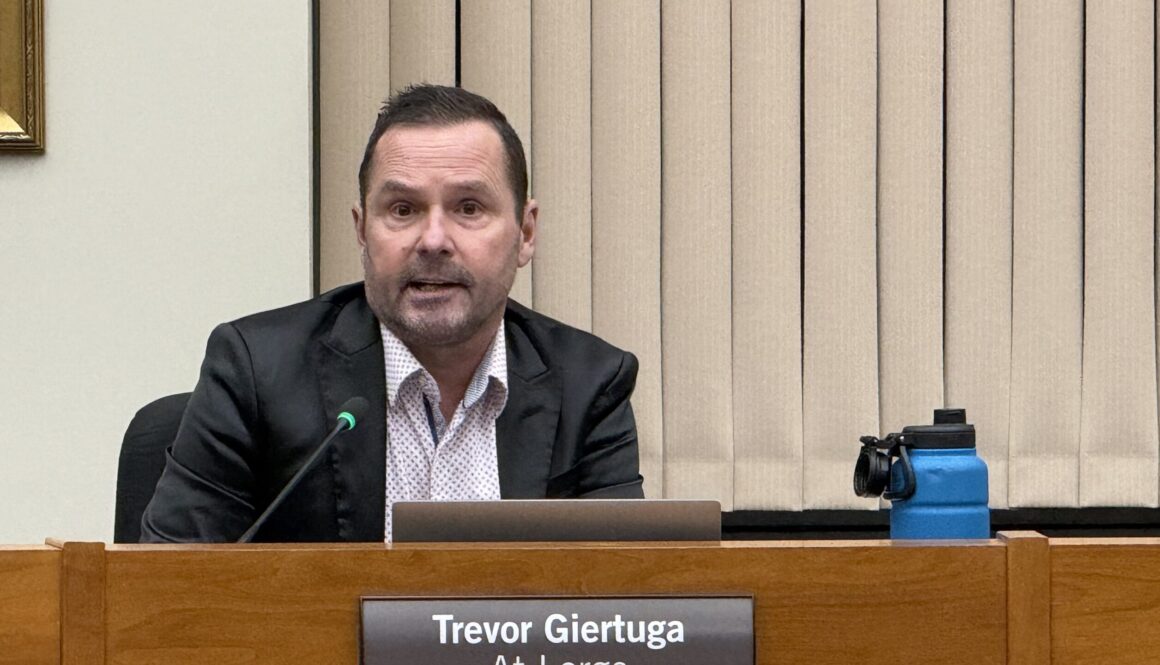
Councillor Trevor Giertuga proposed a motion to send the budget back for police to take a second look, but Council was split down the middle, and his motion ultimately failed in a 6-6 tie.
On Tuesday, City Council re-litigated their motion to send the budget back.
While Councillor Trevor Giertuga continued to frame the vote as a way to send the budget back, Councillor Mark Bentz, who also supported the vote, defined it more as a way to send a message to the province that continued police budget increases are unsustainable.
“It’s not taking this to an arbitration or anything. It’s a symbolic pushback saying we really have to start doing things differently,” Bentz explained. “What we will see if things don’t start changing, and this is across the province, is that police services are gonna start eating into municipal services.”
Councillor Kristen Oliver was absent during the first motion to send back the budget, but opposed the re-vote on Tuesday.
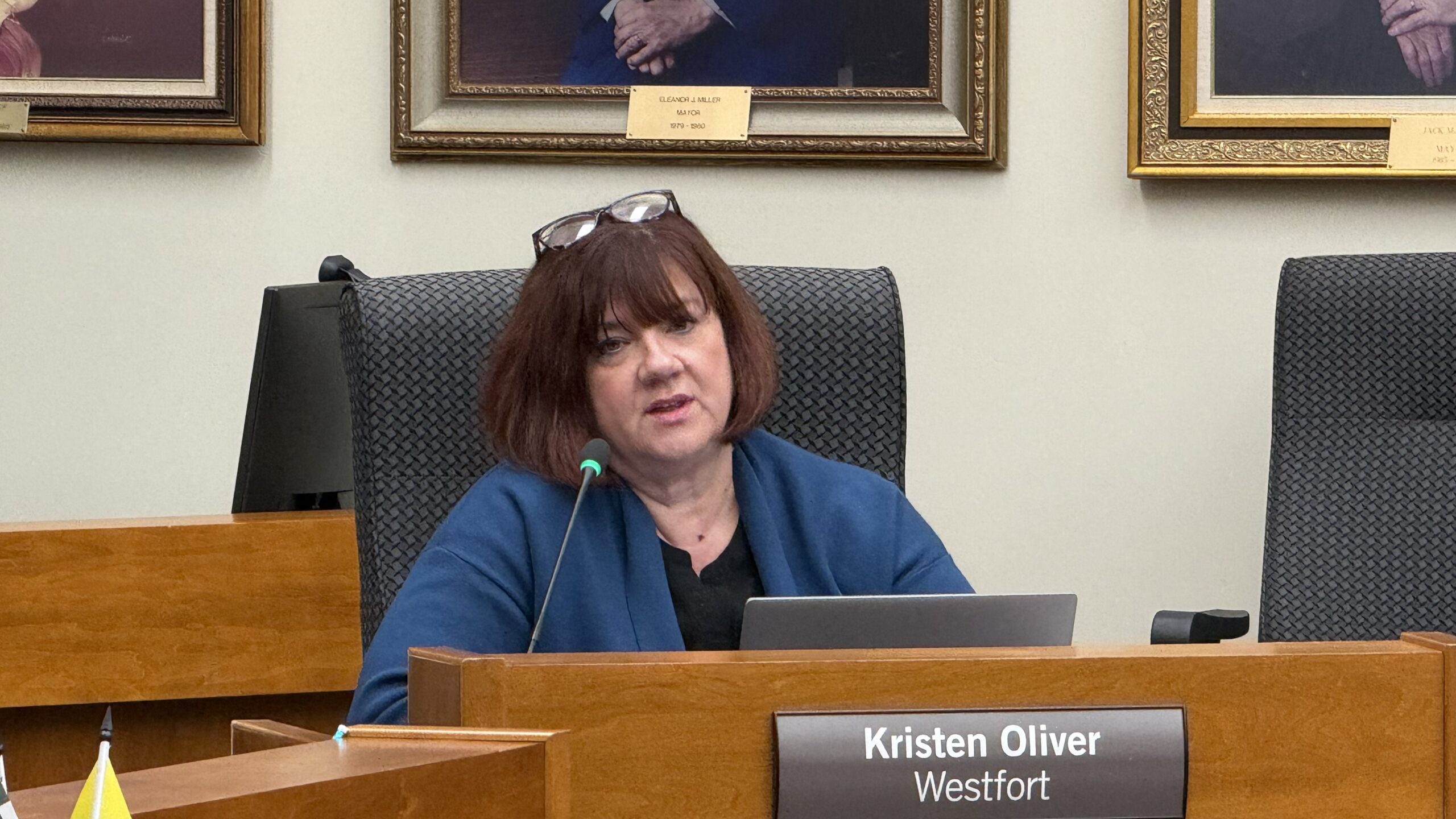
Councillor Kristen Oliver speaks during a City Council meeting. (Sam Goldstein/February 3, 2026)
Though Oliver was a former TBPS board member, she held some criticisms in agreement with many councillors in opposition to the police budget.
“It is not palatable. It is not sustainable. We cannot continue this way for years to come,” she said.
But Oliver still believed the budget needed to be passed: “But I think at this point, the police services need support. The community wants to see policing.”
The re-vote on the motion to send the police budget back for reconsideration failed, with 7 councillors voting NO and 6 councillors voting YES.
Councillors Dominic Pasqualino, Kristen Oliver, Brian Hamilton, Andrew Foulds, Kasey Etreni, Shelby Ch’ng, and Albert Aiello voted NO to the motion.
Councillors Michael Zussino, Greg Johnsen, Trevor Giertuga, Mark Bentz, Rajni Agarwal, and Mayor Ken Boshcoff voted YES to the motion.
With the police budget accepted, City Council then voted to ratify the operating budget, voting in favour with a 12-1 vote.
Councillor Trevor Giertuga was the sole dissenting vote.
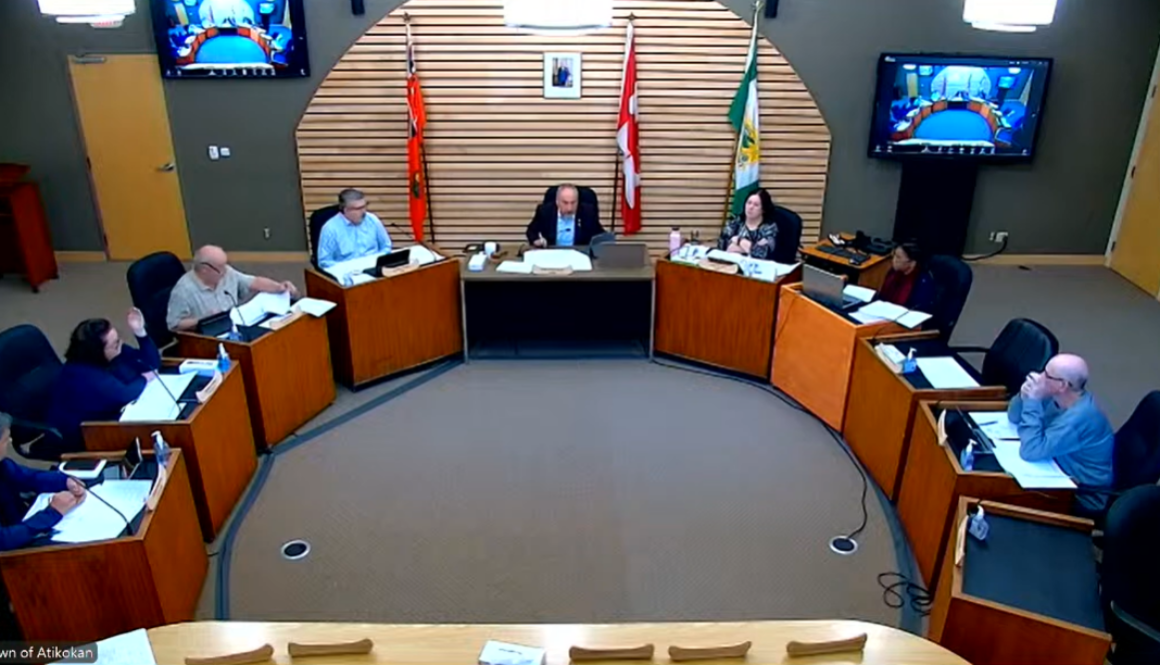
The town of Atikokan intends to spend more than $29 million this year.
The proposed budget reflects Mayor Rob Ferguson’s directive last fall for a budget that included a tax increase of no more than 2%.
He says the use of new legislation achieved the goals he wanted.
“Using my strong Mayor’s powers was, one, to have the budget out earlier, which we’ve been talking about for years,” says Ferguson.
“By getting the budget out earlier, that gives the department heads a clear vision of what they’re going to do and how they’re going to spend their money.”
Ferguson says it also allows the town to get projects moving more quickly and seek out contractors sooner in hopes of getting a better price.
Capital spending is listed at $15.9 million.
The biggest expense will be replacing the bridge on McKenzie Avenue, estimated at $5.5 million, with grants covering about 40% of the construction costs.
The town expects to have more money to work from, with revenue projections to top $20 million.
This includes more than $5.7 million coming from the provincial government and $855 thousand from the federal government.
User fees will account for another $3.7 million.
“This ended up way better than I anticipated,” says Treasurer Brandy Coulson.
“I thought it would be more money from reserves, but because of all the extra revenue we’ve had this year and last, we’re going to be taking less, way less from reserves than I expected.”
The town budgets for more than $5.7 million in funding from the provincial government and another $855,000 from the federal government.
User fees will account for another $3.7 million.
Atikokan will pay about $42,000 more to the District of Rainy River Services Board, $6,500 more to the Northwestern Health Unit and $81,000 more on its policing contract with the Ontario Provincial Police.
Formal approval of the budget is expected to come within the next month.
By Carl Clutchey, Local Journalism Initiative Reporter
Source: The Chronicle-Journal
Support appears to be growing among rural municipalities for federal legislative changes that would back up homeowners who defend themselves in the event of violent home invasions if they act “in legitimate self-defense.”
Some Northern municipalities, like Moosonee, have put the demand for changes in writing, citing in particular longer police-response times in rural areas.
“Rural residents often experience police response times that can exceed 30 minutes or more, leaving citizens without immediate protection when confronted with life-threatening emergencies” such as a violent invasion, says a Moosonee council resolution.
The resolution adds: “Violent home invasions have increased in several regions of Ontario, creating growing fear and frustrating among residents.”
Under the Criminal Code, homeowners are allowed to use force to defend themselves, but the force must be proportionate to the threat. A judge may determine that the amount of force used was excessive.
Last summer, Premier Doug Ford appeared to champion so-called castle laws, telling reporters at a news conference, “You should have the right to protect your family and your home without worrying you’ll end up in handcuffs.”
Ford added: “If someone breaks into your house, you shouldn’t have to second-guess defending yourself or your loved ones.”
Moosonee’s resolution has circulated among municipalities in rural Thunder Bay. Neebing’s council recently supported a similar resolution.
Moosonee’s initiative is demanding that a home invasion be classified as a “distinct” criminal offence, “allowing for accurate tracking, targeted enforcement, and informed public policy.”
Though the municipality applauds the Ontario government for advocating for like-minded changes, it says the province also has to up its game by “taking stronger action to monitor, publish and improve police response times in rural and northern communities.”
The province should also take steps to “ensure that residents are not left unprotected due to (police) resource shortages,” the resolution adds.
By Sandi Krasowski, Local Journalism Initiative Reporter
Source: The Chronicle-Journal
Northwestern Ontario needs to accelerate the harvesting of Canada’s resources that are needed on the world stage.
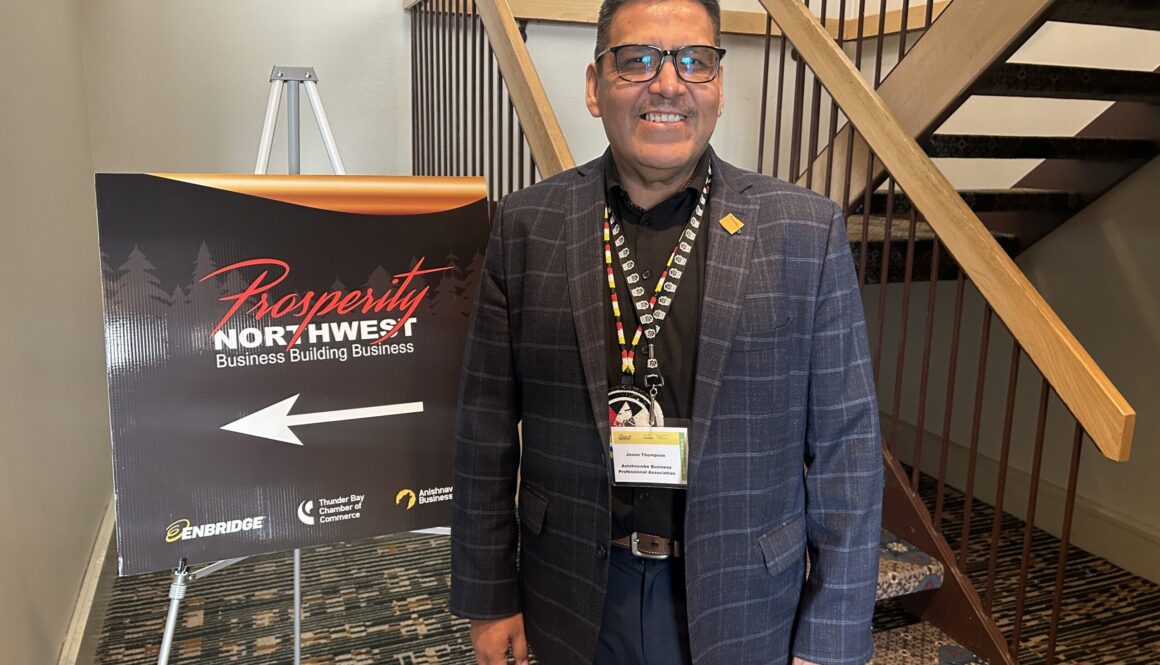
That was the message from David Pierce, the vice-president of government relations for the Canadian Chamber of Commerce, who spoke at the Prosperity Northwest conference last Wednesday. Pierce brought to the gathering in Thunder Bay insight into how trade, tariffs and global competition are shaping Canada’s position and the impacts on the Northwestern Ontario economy.
“It’s optimism for the Northern Ontario economy,” he said. “We’ve got so many resources up here that the world needs for feeding the (artificial intelligence) boom and the tech revolution that’s upon us.”
He said the challenge now is to harvest those resources responsibly by working with First Nations and communities because the product will feed North American security and help secure Canada’s national security.
“Trade and tariffs have both created new opportunities and posed challenges for Canadian businesses and the resource sector,” he said.
“While the era of crisis is not over, Northwestern Ontario is significantly better positioned than a year ago to weather impending storms and even capitalize on emerging opportunities south of the border and beyond.”
As Canada continues to strengthen its independence and sovereignty, there is a time frame to be considered. Although the country’s resources are needed now, infrastructure such as roads and power transmission lines still need to be built.
And that takes time.
“The Ring of Fire was developed and discovered in the 2000s and we’ve been talking about a road there since,” Pierce said.
“The silver lining of the past year is that everybody is coming to the realization that we need to get there. The time for discussion is now, to get moving and get jobs going.”
He added that there are jobs building the roads and infrastructure, and then there are the long-term jobs and economic benefits of being able to harvest those resources.
“We have to do it, and this is a potential boom opportunity for Northern Ontario,” he said.
The geopolitical situation and the relationship between Canada and the U.S. are under stress and Pierce says U.S. President Donald Trump has many levers of control.
“The Canada-U.S.-Mexico Agreement (CUSMA) trade deal between our countries is economically helpful for both sides. Companies can flourish using it,” he said.
“We’re able to have jobs and economic growth on both sides and because of it, there’s been tremendous growth since 2019 when it was renewed.”
Meanwhile, in Northwestern Ontario, he said policy leaders, politicians and business leaders appear to be aligned, with economic growth as key.
“We have the opportunity, for the first time in several years, to really focus on what businesses need to succeed and compete,” Pierce said. “A year and a half ago, we didn’t see ourselves competing with American companies. We’re now competing not just with Americans, but around the world, as we’re starting to diversify, and our companies.”
He added that these companies can no longer deal with the red tape they’ve had to deal with for years, and the country will likely see moves on that which will improve the economy overall.
Pierce added that “it’s great” to watch Prime Minister Mark Carney pushing trade deals.
“We’ve got a stack of trade deals at Global Affairs, dollars that are collecting dust,” Pierce said.
“Meanwhile, businesses don’t even know that they can do business overseas using some of these deals. Once these deals are signed, how do we educate businesses to start using those deals, to help grow, ultimately creating jobs and economic opportunity in Canada? That’s the big challenge for growing that pie.”
The federal government is being pushed to help the forest industry in northwestern Ontario.
Workers at mills in Ear Falls, Ignace and Thunder Bay have been impacted by recent closure announcements.
The sawmill in Ear Falls has been idle since October, while the Ignace mill will halt production in March.
The closures impact a combined workforce of about 330 workers.
Last week, it was announced that the newsprint line at Thunder Bay Pulp and Paper will be shut down.
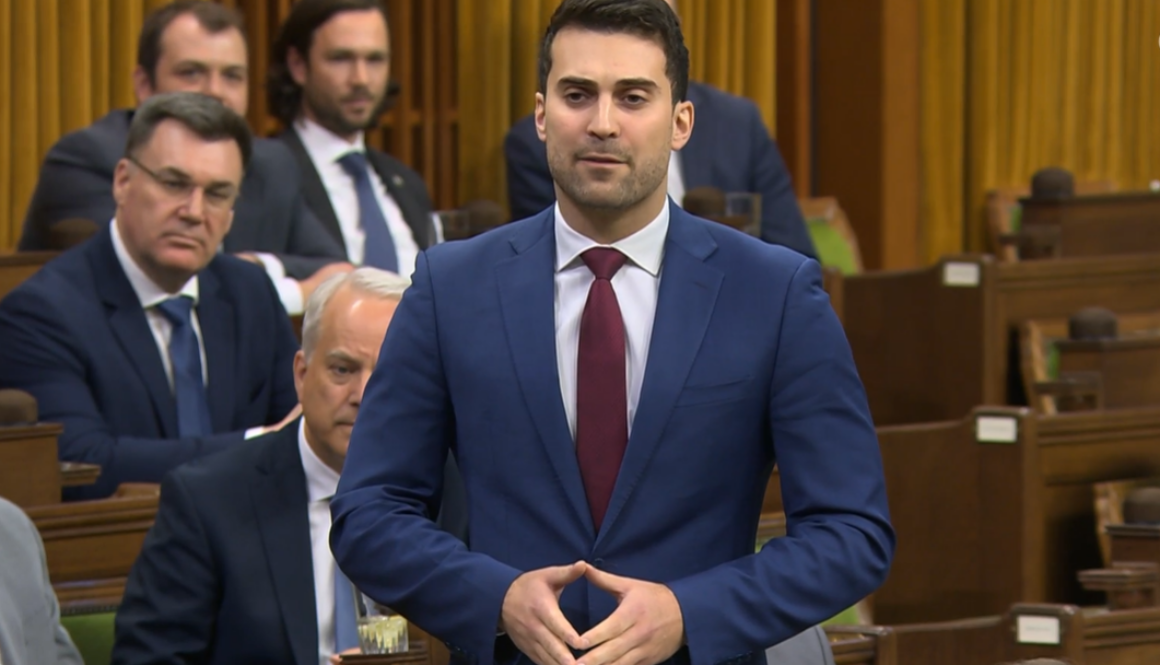
Kenora-Kiiwetinoong MP Eric Melillo recently raised the issue in the House of Commons.
“Every day, more closures are announced,” states Melillo.
“These are good-paying jobs for hard-working Canadians that are now gone. The government’s rhetoric of supporting workers is not matching the reality of the workers who are losing their jobs.”
The Liberal government insists that it is helping the forest industry.
“The government stands with forestry workers,” said Corey Hogan, Parliamentary Secretary to the Minister of Energy and Natural Resources.
“We have announced $2.5 billion in supports. We have a task force active right now looking at additional supports.”
Last fall, Prime Minister Mark Carney announced a $1.25 billion aid package to support the softwood lumber sector.
It included $700 million in loan guarantees to help companies confront immediate pressures facing the softwood lumber sector, and another $500 million to diversify products and markets.
Another $50 million has been earmarked for workers to reskill and find employment elsewhere.